The Iron Perimeter: A Former SEAL Defends His Last Sanctuary Against A Calculated Suburban Usurper
CHAPTER 1: THE TREAD PATTERNS
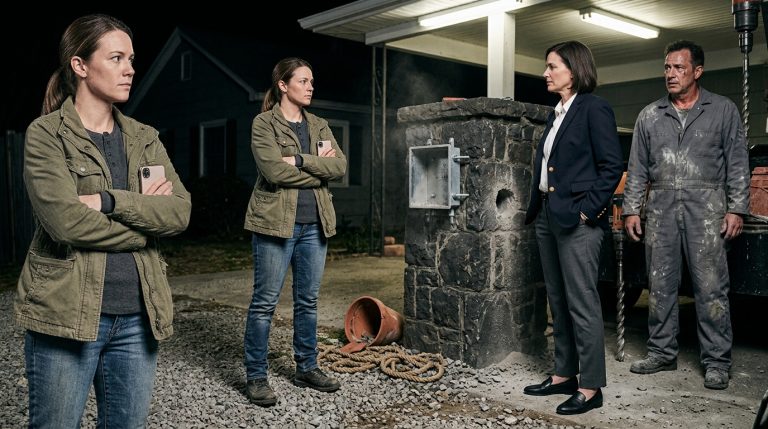
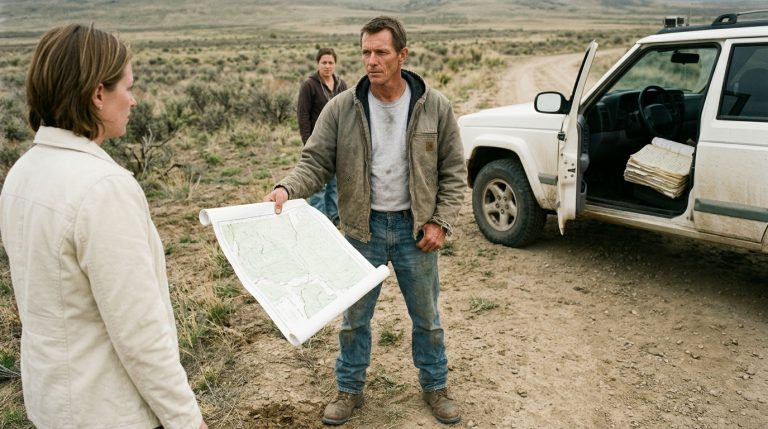
The gravel driveway of the old house usually spoke a specific language—the rhythmic crunch of tires, the soft padding of Rex and Valor’s paws, the shifting settling of stone under a hot sun. Today, it spoke of friction and unwanted presence. I knelt, my back giving a sharp, familiar protest, and traced the deep ruts etched into the surface near the shed.
These were heavy. A pickup, likely a dual-rear-wheel configuration, and the tread pattern wasn’t standard. It was aggressive, designed for off-road mud, completely out of place on a manicured suburban cul-de-sac. I pulled my hand back, feeling the grit of iron-rich dust against my callouses.
Behind me, Rex and Valor stood like iron sentinels. Their breathing was low, steady, a synchronized hum that acted as the heartbeat of the property. They didn’t growl; they didn’t need to. They simply watched the street, their heads held at that precise angle—ears twitching at the sound of a closing gate three houses down.
I stood up, the pain in my lower back radiating like a dull, steady pulse, but I kept my breathing shallow, disciplined. It was the same rhythm I used when the air was thin in the mountains, years ago, when every misstep meant a tactical collapse. This wasn’t a mission, but it felt like one. The HOA stationery shoved into my pocket felt heavier than it should have, the glossy finish cold against my skin.
Unauthorized alterations detected. K-9s must be restrained immediately.
I didn’t need to look at the document to know what it said. Evelyn Harrow’s hand was all over it. The typeface was sterile, the tone arrogant, and the intent crystal clear. She had been testing the perimeter for weeks, using fines and arbitrary setbacks as a probe, trying to find a soft point in my defense. She wasn’t just after the yard; she was trying to prove that I didn’t belong in the space I had fought to maintain.
A metallic click echoed from the direction of the street. I pivoted, my movement fluid despite the injury. It was just a trash can lid, wind-blown, hitting the asphalt.
I turned my attention back to the shed. The lock showed faint, spiderweb scratches—the kind left by a flathead screwdriver or a tension wrench. Someone had tried to force the door, and they had failed. But the fact that they tried meant they were moving from administrative harassment to physical violation.
I looked at the house, the structure that was the last piece of land with a clear, uncompromised deed in the district. If Evelyn wanted it, she was going to have to deal with more than just a piece of paper. I took a slow, deliberate breath, and for the first time in months, I felt the sharp, rusted edge of reality cutting through the suburban delusion.
The wind shifted, bringing the smell of dry earth and impending rain. It was going to be a long night. I signaled to Rex and Valor, a small movement of my fingers that they recognized instantly. We were not leaving the perimeter, and whoever had left these tread marks had already made their last mistake.
CHAPTER 2: THE SURVEYING SHADOWS
The morning didn’t bring the clarity I usually counted on. Instead, it brought a heat that shimmered off the asphalt in waves, distorting the edges of the cul-de-sac. I adjusted my position behind the weathered cedar of the fence, the wood rough against my palms. My back throbbed, a dull, rhythmic ache that kept me tethered to the reality of my own physical limits, but I didn’t shift. I kept the camera pressed to my eye, the lens focus ring clicking almost imperceptibly as I tracked the black SUV that had just rolled to a stop at the curve.
Two men stepped out. They moved with a practiced, casual rhythm that felt entirely artificial. One adjusted his belt—a heavy-duty utility rig hidden beneath an oversized jacket—while the other whipped out a clipboard. They weren’t looking at the neighborhood; they were looking at the geometry of my backyard.
As I framed the shot, the view through the high-powered zoom triggered a sudden, unwanted phantom: the dry, scorched landscape of a forward operating base, the smell of cordite and ozone thick in the air, and the absolute, paralyzing tension of waiting for a target to cross a kill zone. I blinked, forcibly pushing the memory back into the dark corner where it belonged. This wasn’t a war zone. This was a suburban street. But as the man with the clipboard pointed directly at the shed, my grip tightened on the camera body.
Rex and Valor were absolute statues. Valor’s ears were swiveled forward, locked onto the distant, low-frequency rumble of the men’s voices. He didn’t whine; he only let out a puff of air through his nostrils, his massive frame vibrating with latent, coiled potential. They were my shield, the only thing keeping the encroaching chaos from turning into an actual breach.
The men moved toward the property line, their measuring tapes extending with a sharp, mechanical zip-whir that sounded like a warning. They were measuring the setbacks, calculating distances, and scribbling numbers that would undoubtedly end up on a glossy, threatening HOA letterhead by evening. I kept recording, capturing every detail: the specific make of their boots, the way they avoided looking at the neighbors’ windows, and the precise moment they gestured toward the lock on my shed.
It was methodical. It was bureaucratic. And it was a lie.
I shifted slightly, my knee popping with a dry, harsh sound that seemed deafening in the silence. The man with the clipboard stopped mid-step, his head snapping toward my fence line. He didn’t see me, but he felt the weight of observation. He lingered, his eyes narrowing as he scanned the wood, his hand drifting toward his jacket pocket. I didn’t breathe. I watched, my heart rate steadying into a calm, predatory pace.
They didn’t cross the property line today. Instead, they took a photo of the back fence, turned with a dismissive smirk, and retreated to the SUV. The engine turned over with a deep, throaty roar that left a cloud of exhaust hanging in the stagnant air.
When they were finally gone, the silence that rushed back in felt heavier, weighted with the knowledge that the probe had been successful. I lowered the camera and leaned my head back against the fence, the rough grain digging into my skin. They had been checking the terrain, measuring the physical obstacles, and confirming the layout. This wasn’t about fines; they were performing a site assessment for a larger, more permanent extraction.
I looked down at the safe, half-hidden by the shadow of the shed. It contained the only real proof I had, the original, notarized deeds that shattered Evelyn Harrow’s administrative illusions. I knew then that the next move wasn’t going to be a letter. It was going to be an attempt to strip the foundation out from under me.
I called the dogs to my side with a soft, two-fingered whistle. They trotted over, their weight familiar and grounding. As I walked toward the house, I caught my reflection in the glass of the sliding door—a man with tired eyes, a stiff gait, and a resolve that was slowly hardening into something dangerous. The HOA was going to keep pushing, but they hadn’t realized that the person they were pushing against had spent a lifetime learning exactly how to defend a position.
CHAPTER 3: THE NIGHT OF THE CROWBARS
The transition was subtle, then absolute. The dry heat that had defined the afternoon collapsed, replaced by a sudden, biting drop in temperature that turned the dust of the cul-de-sac into a swirling, abrasive grit. Above, the sky bruised into a deep, sickly purple. My back, stiff from the hours of crouching, burned with every movement as I retreated from the fence line to the porch.
Rex and Valor didn’t wait for a command. They flowed toward the shadows near the shed, their movements fluid and silent. They felt it too—that specific, electric charge in the air that usually preceded a kinetic event.
I checked the mag-lock on the safe one last time, my fingers brushing the cool, oxidized steel. The metal was pitted in places, a testament to years of exposure, but the mechanism remained rock solid. It was the only thing standing between the history of this land and the people who wanted to rewrite it. I didn’t return to the house. Instead, I took up a position in the dark void between the shed and the perimeter fence, settling into the familiar, uncomfortable crouch.
It wasn’t long. The sound arrived before the sight—a rhythmic, metallic scraping against the gravel of the driveway, too intentional to be the wind. Two figures emerged from the gloom, their silhouettes jagged against the distant streetlights. They were moving low, shoulders hunched, and the way they carried themselves—weighted, cautious—confirmed my suspicions. They weren’t inspectors. They were recovery specialists.
One of them carried a short, industrial-grade crowbar, the iron glinting with a dull, matte finish that didn’t catch the light. The other held a bundle of tools, the jangle of metal muffled by gloved hands. They moved with a practiced, singular focus, heading straight for the shed’s primary latch.
I felt the tension in my chest, a cold, hard knot. They were close enough now that I could smell the faint, acrid scent of engine oil and stale tobacco clinging to their clothes. I didn’t speak. I didn’t move. I simply exhaled, letting my focus sharpen until the rest of the world—the threat of the weather, the pain in my spine—faded into a peripheral blur.
When the man with the crowbar reached the shed, he hesitated. He looked back at his partner, gesturing toward the shadows where I sat. He was scanning, looking for the security camera he suspected was there, looking for the movement that would give away my position.
That was the mistake.
I gave the signal—a sharp, high-frequency snap of my fingers, barely audible over the rising wind.
Rex launched first. He was a hundred and forty pounds of muscle and kinetic intent, a blur of dark fur that cleared the distance in a single, silent leap. He hit the man with the crowbar mid-stride, the impact sounding like a heavy door slamming shut. The man went down with a grunt of shock, his crowbar skittering across the concrete with a long, lonely clatter that seemed to ring out for miles.
Valor was right behind him, a mirror image of the first strike. He pinned the second intruder, his weight driving the man into the gravel, his jaws locking onto the thick fabric of the intruder’s utility jacket. The man screamed—a thin, jagged sound that was cut short as he scrambled backward, only to find himself pinned by a wall of fur and teeth.
“Don’t,” I said, my voice steady, stripped of all inflection. I stepped out from the shadows, the beam of my tactical flashlight cutting through the swirling dust and illuminating the chaotic tableau.
The men were frozen. Rex stood over the first one, his growl a low, subsonic rumble that vibrated through the very foundation of the shed. The intruders were breathless, their eyes wide and white in the harsh light, their hands raised in instinctive, trembling surrender. They looked less like predators now and more like broken, panicked laborers who had bitten off far more than they could chew.
I approached them, the gravel crunching beneath my boots. I didn’t threaten. I didn’t need to. I simply stood there, waiting for the reality of their failure to settle in. They were here for the safe, but they had found something much older and much sharper than they were prepared to face.
“The next move,” I said, my voice barely above a whisper, “isn’t going to be a negotiation.”
The wind gusted, sending a spray of grit against the metal shed, and in that moment, I knew they were just pawns. The real fight, the one that Evelyn Harrow was directing from the safety of her climate-controlled office, was only beginning. These men were replaceable, but the evidence in the safe… that was permanent.
As I watched them, I noticed a piece of paper sticking out of the second man’s pocket—a printout, glossy, with the unmistakable header of the HOA. I realized then that they weren’t just stealing the deeds; they were clearing the way for a legal filing that was already in progress. The physical intrusion was a diversion. The real crime was happening in the paperwork. I reached down, my hand steady, and plucked the paper from his pocket, the slick, cold texture a chilling confirmation of my suspicions.
Everything was connected. And tonight, for the first time, I had the leverage I needed to start pulling the threads apart.
CHAPTER 4: THE PAPER TRAIL
The silence of my kitchen was no longer the peaceful quiet of a home; it was the tense, sterile stillness of a command post. Outside, the wind still whipped against the siding, but inside, the only sound was the rhythmic hum of my laptop and the occasional shifting of Rex and Valor on the hardwood. I sat at the table, the HOA printout spread flat under the glare of a desk lamp.
The document was a masterpiece of bureaucratic deception. It looked official—watermarked, timestamped, and formatted with the same cold, corporate precision that Evelyn Harrow projected in every meeting. But beneath the surface, it was a hollow shell. I pulled up the county’s public access portal on my screen, my fingers moving with a familiar, mechanical precision. I cross-referenced the file numbers.
My pulse quickened—not from fear, but from the cold satisfaction of discovery.
The metadata for the property reclassification was riddled with inconsistencies. The filing dates didn’t align with the subdivision’s original charter, and the signature on the authorization form—ostensibly from a county clerk I knew had been retired for three years—was a digital forgery. Evelyn wasn’t just using the HOA to harass me. She was using it to manipulate the entire district’s property registry. By filing these fraudulent changes, she was effectively wiping out the historical boundaries of the cul-de-sac.
It was a brilliant, predatory move. If she succeeded in getting these “amended” deeds recorded, she wouldn’t just own my land; she would control the legal title to every home on this street.
I leaned back, the chair groaning under my weight. My back flared with a sharp, lightning-hot reminder of my limitations, but I ignored it, focusing instead on the screen. The financial implications started to unfurl like a map of a disaster area. I traced the money trails—the exorbitant “maintenance fees,” the unapproved emergency assessments, the legal fines that went into a private, untraceable account.
She wasn’t building an empire; she was stripping one for parts.
I pulled out my external drive, the one I used for encrypted backups. I started moving the documents, the videos of the intruders, the timestamped footage of the tampered locks, and the forged filings into a single, comprehensive file. I needed a lawyer, but not just any lawyer. I needed someone who understood the specific, oily mechanics of property law and public corruption.
I picked up the phone. My thumb hovered over the contact list, but stopped. Every call, every digital footprint, would likely be monitored. Evelyn was smart; she had cameras, maybe even software designed to alert her to incoming inquiries about the HOA’s filings. I set the phone down and looked at the safe. It was still there, a dark, reassuring presence in the corner of my vision. The original deeds were my ultimate leverage, but they were no longer enough on their own. I needed to bridge the gap between this private property dispute and the systemic rot she had cultivated beneath it.
Rex stood up suddenly, his ears pinning back. Valor followed, heading toward the front door. The dogs didn’t bark; they just stiffened, their bodies turning into solid blocks of alert potential. I stood, my movements quiet, and moved to the window.
A car was idling down the street—a familiar, nondescript sedan that had been lingering in the periphery for the last two days. It didn’t have the markings of an HOA vehicle, and it didn’t belong to any of the neighbors. It was sitting at the edge of the light, the silhouette of the driver perfectly still.
The escalation was no longer abstract. They knew I had something, and they were watching to see how I would move. I turned off the desk lamp, plunging the kitchen into shadows. I wouldn’t call anyone tonight. Not yet. I would let them watch. I would let them think they were winning.
I moved to the back door, checking the lock, then walked over to the safe. I opened it, my heart slowing to a rhythmic, steady beat. I checked the contents one last time—the physical deeds, the real, tangible proof that held the truth of this ground. If they wanted a fight, they were going to get one that would be fought on my terms, with evidence that no amount of bureaucratic tampering could erase.
I felt the weight of the moment—the exhaustion of the last few days, the ache in my joints, and the singular, cold clarity of my purpose. Evelyn Harrow thought she was dealing with a homeowner who would eventually fold under the weight of her rules. She had no idea she was dealing with a man who had spent his life holding the line against things much larger and much more dangerous than a suburban HOA president.
I sat back down in the dark, watching the street, the flickering glow of the computer monitor casting long, dancing shadows across the walls. The trap was set, but not for me.
CHAPTER 5: THE FINAL CONFRONTATION
I stood up, the chair scraping sharply against the wood—a sound that seemed to shatter the house’s silence. Rex and Valor were already at the door, their hackles raised, their low, rhythmic growls creating a wall of sound. The headlights cut through the front window, sweeping across the walls like the beam of a searchlight. It wasn’t a slow arrival; the sedan accelerated, the tires spitting gravel as it pulled to a hard stop inches from my gate.
Evelyn Harrow didn’t wait. She emerged from the driver’s side before the engine had even fully died, her heels clicking against the asphalt with a frantic, staccato rhythm that betrayed the polished image she wore. She was holding a clipboard, her face a mask of calculated fury. I didn’t wait for her to knock. I pulled the front door open, stepping out into the cold, abrasive night.
Behind her, the shadows of the street seemed to lengthen. I realized then that she hadn’t come alone; two more figures, darker, heavier than the ones from the night before, stepped out of the idling vehicle. They weren’t there for a inspection.
“You are in breach,” she started, her voice sharp, cutting through the wind like a razor. She didn’t look at me; she looked at the house, her eyes scanning the property line as if she were already measuring it for her own purposes. “I have the authorization to reclaim this site, Mercer. Your persistent interference has become a liability to the community’s integrity.”
I didn’t answer. I stood on the porch, my hands tucked into the pockets of my jacket, my breathing steady. I could feel the weight of the encrypted drive in my pocket, the sheer volume of proof that would dismantle her fake reality.
“The deeds, Cole,” she said, her voice dropping, losing its performative edge. She stepped onto my porch, her eyes flicking to the shed. “I know they’re in the safe. You think you’re protecting something, but you’re just standing in the way of necessary progress. The community has already voted—your property is being annexed for safety and code-compliance revisions.”
“There was no vote, Evelyn,” I said, my voice quiet, cutting the air.
She paused, her gaze finally locking onto mine. For a flicker of a second, the mask slipped. Behind the practiced authority, I saw a raw, jagged edge of panic—the fear of someone who realizes their architecture is beginning to tilt. She reached for her phone, her fingers dancing across the screen. “You have no idea what you’ve involved yourself in. This isn’t just about the land. It’s about the entire financial viability of this district.”
She was right, though not in the way she intended. The mention of ‘financial viability’ confirmed it. The embezzlement, the laundering, the sheer scope of the systematic fraud—it was all there, the paper trail leading straight back to the private accounts she’d been siphoning through the HOA’s “maintenance” funds.
“I have the records, Evelyn,” I said, stepping off the porch.
The two men behind her moved in, their hands drifting toward their jackets, but I didn’t flinch. I let out a sharp, low whistle—a sound that cut through the night like a gunshot. Rex and Valor appeared instantly, flanking me, their presence a physical barrier of solid muscle and teeth. The men froze, their bravado shattering against the reality of two apex predators who didn’t care about bureaucratic authority.
Evelyn’s face drained of color. She looked at the dogs, then at the house, then back at me. She was a woman who had built a kingdom on the assumption that no one would ever look closely enough at the foundation to see it was built of sand.
Then, the sound came—a low, distant wail of sirens, cutting through the darkness. Not one, but three, coming from different directions, converging on the cul-de-sac.
Evelyn’s composure finally evaporated. “What did you do?” she hissed, her voice trembling.
I looked down the street, where the first flash of blue and red light washed over the houses. “I stopped maintaining your illusions,” I said.
She turned to run, to scramble back to her car, but the street was already blocked. The sedan’s path was cut off by a patrol vehicle that pulled up with a heavy, screeching halt. More followed, their lights turning the cul-de-sac into an impossible, strobe-lit arena.
The two men behind her didn’t even try to reach for their weapons. They stepped back, their hands raised high, watching as the deputies swarmed out of their vehicles. I stood still, the dogs holding their positions, the wind whipping around us, carrying the smell of wet pavement and the end of a long, cold lie. As the deputies closed in on the driveway, Evelyn let out one final, sharp cry—a command, a plea, or a protest—but it was swallowed by the heavy, rhythmic thrum of the sirens. Her kingdom wasn’t falling; it had never existed at all.
CHAPTER 6: THE QUIET AFTERMATH
The strobe lights continued to sweep over the driveway, but their rhythm felt detached now, part of a world that was already moving on. I stood in the doorway, my boots planted firmly on the threshold of my home. The air smelled of ozone, burnt rubber, and the damp, metallic tang of the cooling earth.
Evelyn Harrow didn’t struggle as the lead deputy guided her toward the transport vehicle. Her posture had collapsed—that rigid, manufactured elegance replaced by a slumped, heavy fatigue. She looked like a stranger, stripped of the glossy authority that had defined her for so long. As they passed me, she didn’t look up, her gaze fixed on the gravel she had spent months trying to steal. The clipboard, now empty and useless, had been discarded on the asphalt, a relic of a failed coup.
The county attorney, a man whose face was etched with the weary lines of someone who had seen too many white-collar frauds, walked toward me. He stopped at the edge of the porch, looking at the documents I held.
“The records on the drive,” he said, his voice low. “They aren’t just for the boundary dispute, are they?”
“No,” I replied, my voice raspy from the night’s tension. “It’s everything. The maintenance fund siphoning, the private accounts, the systematic forgery of the entire district’s property history. She wasn’t just grabbing land; she was laundering the HOA’s entire capital into her own accounts under the guise of legal ‘reclassifications’.”
He took the drive, his expression darkening as he scrolled through the preview files on his tablet. “This is a massive scale, Mercer. She’ll never see the outside of a courtroom again.”
He moved away to confer with his team, and I was left with the silence. I turned back toward the house. Rex and Valor were sitting at the edge of the porch, their muscles finally relaxing, their attention shifting from the intruders to the simple, rhythmic motion of my hand reaching out to stroke their ears. They were more than shields; they were the only reason I hadn’t had to use anything more than patience to survive.
The legal process that followed was slow and deliberate. Over the next few weeks, the veneer of the HOA’s “authority” peeled away completely. The county initiated a full audit, and neighbors who had once been afraid to speak started coming forward with stories of coerced fines and predatory legal threats. The truth, once allowed to breathe, dismantled Evelyn’s kingdom with a speed that felt like justice.
I walked out into the backyard on a Tuesday morning, the air crisp and clear. The fence line—the source of so much unnecessary friction—was being rebuilt by a licensed crew, following the original survey maps I had held in the safe for months. It felt strange to see the activity, the mundane clatter of hammers and the scent of fresh-cut cedar, but it was the right kind of friction. It was the work of maintenance, of setting things right.
I walked over to the shed and touched the heavy metal of the safe. It was empty now, the deeds and the digital backups safely in the hands of the authorities, but it remained a monument to the last few months. I felt a strange urge to leave it, to let it stay as a reminder that the land was mine, not just by right of title, but by the right of having stood my ground when the ground itself was being bought and sold by liars.
My back ached, a reminder of the physical cost of the fight, but as I stood there, looking out over the property, the pain felt different. It was the ache of a job finished, of a boundary defended. I looked down at the grass, where I had tossed the tennis ball the day before. Rex trotted over, his tail swaying in a slow, contented arc, and dropped it at my feet.
I picked it up, the rubber worn and dusty, and threw it across the open space. The dogs took off, a blur of motion against the backdrop of the hills.
There would be more HOA meetings. There would be new boards, new rules, and new people, but the dynamic had shifted. The neighborhood was breathing again. People were talking over fences, sharing tools, and finally looking each other in the eye instead of watching their backs.
I sat down on the edge of the porch, the wood cool against my palms. I wasn’t just a former SEAL living in a house; I was a neighbor, a person who knew the cost of peace and was willing to pay it. I watched the sunset catch the edge of the fence, the wood glowing in the warm, low light. The house stood solid, the property lines finally accurate, the rust of the past cleared away.
For the first time in a very long time, I didn’t feel like I was waiting for the next breach. I felt like I was finally, truly, home.