The Iron Rafters: A Hardworked Everyman’s Stand Against Suburban Tyranny and Corruption
CHAPTER 1: LINE IN THE CEDAR
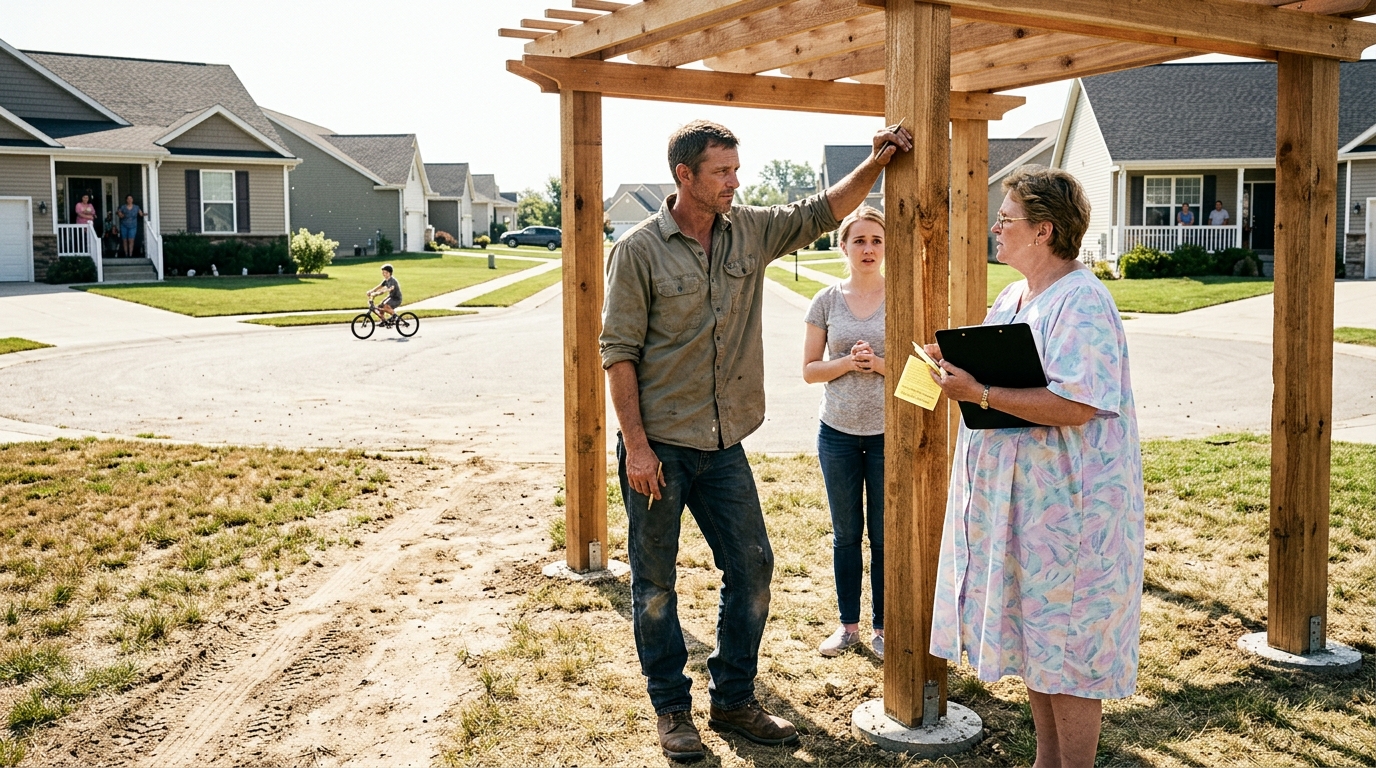
The brass barrel of my pen clicked once—a sharp, mechanical snap that cut through the humid afternoon air. I held it loose between two fingers, my forearm resting on the top rail of the cedar pergola. The wood was still rough under my thumb, fresh-cut and smelling of pine resin and heavy summer heat.
“It comes down by Friday, Jack,” Karen said. She didn’t step off the sidewalk onto my lawn, but her shadow stretched far enough to touch the base of the main support post. She held a black vinyl clipboard in her left hand, her thumb hooked over a stack of yellow violation slips. In her right, a half-eaten glazed donut left a smudge of white sugar on her upper lip. “If you don’t have a crew here to dismantle it, I’ll hire one myself and tack the invoice onto your monthly dues.”
Beside me, Sarah’s fingers tightened around my wrist. Her skin was cold despite the heat. “Karen, we checked the guidelines before we bought the timber,” Sarah said, her voice steady but thin. “It’s well within the height restrictions for rear-lot structures.”
“The guidelines require prior approval from the Architectural Review Committee,” Karen replied. She didn’t look at Sarah; her eyes stayed locked on mine, small and hard behind gold-rimmed reading glasses. “The committee hasn’t met because I haven’t called a meeting. That makes this structure unauthorized. An eyesore. It disrupts the visual harmony of the cul-de-sac.”
I clicked the brass pen again. Snap.
“There’s no committee to meet, Karen,” I said, keeping my tone flat, the way I used to speak to supply sergeants who tried to hoard vehicle parts. “It’s just you, Sheila, and Barry. And you haven’t held a quorum since last November.”
Karen’s jaw set, her chin lifting just enough to crease the floral fabric of her collar. “The board operates under executive discretion when community standards are threatened. You’ve lived here two years, Jack. You know how this neighborhood stays pristine. We don’t allow rogue additions.”
“It’s on my property,” I said. “Six feet back from the fence line. Anchored four feet deep in concrete.”
“It’s within the jurisdiction of the covenants you signed at closing,” she countered, taking a single step onto the grass. Her flat-soled shoes sank half an inch into the sod. “One hundred dollars a day starting Saturday morning. By next week, we file the notice of non-compliance with the county.”
She turned on her heel before I could answer, her muumuu snapping around her knees as she headed toward her golf cart parked at the curb. The electric motor whined into life, and she rolled smoothly down the pavement without looking back.
Sarah let out a slow, shaking breath, her shoulders dropping an inch. “Can she actually do that? Just decide on her own?”
I clicked the pen once more, sliding it into my front shirt pocket before leaning down to pick up my tape measure off the patio stone. “She thinks she can because nobody’s ever made her read her own rules out loud.”
CHAPTER 2: PAPER FORTIFICATIONS
My thumb rested on the frayed corner of the three-ring binder. The vinyl was cracked along the spine, exposing grey cardboard beneath. Two hundred pages of residential covenants, written in the late nineties by developer lawyers who wanted to protect their equity before dumping the subdivision onto an unpaid volunteer board.
“Section Four, Subsection B,” Sarah said, her voice dry as parchment. She sat across from me with a red pen between her knuckles, tapping the barrel against her glass of ice water. Condensation dripped onto the place mat. “It says all external structural modifications require a ninety-day review window by the ARC.”
“Read the 2007 amendment,” I told her, my thumb sliding down to the tab marked Exhibits. “The one they pushed through when the original developer went bankrupt.”
Sarah flipped three pages back. Her glasses slipped down the bridge of her nose, caught by the slight sheen of sweat on her skin. The house was quiet, save for the hum of the refrigerator in the kitchen and the steady, metronomic click-snap of my brass pen on the table.
“Here,” she murmured. “‘In instances where a conflict arises between association guidelines and municipal codes, the stricter standard shall apply.’” She stopped, her eyes running along the dense, small-print paragraph. “Jack, this doesn’t say anything about local approvals automatically clearing us. It says if the HOA rule is stricter than the town, the HOA rule wins.”
I pulled the binder toward me, the heavy rings clanking against the oak. She was right. The city permit wasn’t just missing from my safe—it wouldn’t have saved us even if I had one sitting on the table. Karen didn’t need a city code inspector. She had a vague, iron-clad blanket clause that gave her three-man board total veto power over aesthetic harmony.
“Then we don’t fight her on the structure,” I said. “We fight her on the procedure.”
“What procedure? She didn’t hold a meeting.”
“That’s the point.” I clicked the brass pen once and turned the legal pad toward her. “Article Nine, Section Twelve. ‘Any fine assessed without a formal hearing before the Board of Directors, granted upon written request of the homeowner within ten calendar days, is rendered null and void.'”
The front porch light flickered outside, casting long, barred shadows through the blinds across our dining room wall. I didn’t look up, but I heard the high-pitched whine of a small electric engine creeping past our driveway.
Karen’s golf cart. Moving at walking pace.
Sarah froze, her red pen hovering an inch above the paper. “Is she taking pictures?”
“Let her,” I said. “She’s building a file on a structure she hasn’t formally cited in writing yet. Every day she drives by without handing me an official certified notice is a day the ten-day clock hasn’t even started.”
I reached into my shirt pocket, pulled out the brass pen, and unthreaded the cap. On the fresh page of the legal pad, I wrote the date, the time—8:42 PM—and the exact speed of the cart as it idled near the oak tree at the edge of the lawn.
The whir of the motor faded toward the cul-de-sac, but the quiet that followed felt heavier. A white envelope fluttered down from the gap in the front door mail slot, striking the hardwood entry hall with a dry, hollow slap.
Sarah started to stand, but I caught her sleeve. “Don’t rush,” I said softly. “Let it sit on the floor.”
I walked over slowly, picked up the plain paper envelope—no stamp, no postmark, just my house number scrawled in black marker—and slid my thumb under the flap. Inside was a single sheet of yellow paper.
Notice of Uncured Violation. Daily Assessment: $100. Total Outstanding: $300. Hearing Request: Denied per Executive Order 4B.
I stared at the handwriting. It wasn’t typed. It wasn’t signed by a secretary or a property management firm. It was Karen’s blocky, pressurized scrawl, the ballpoint cutting so deep into the cheap paper that the back felt like braille.
“She skipped the mail,” Sarah said, standing in the doorway of the dining room, her hands tucked tight into the pockets of her cardigan. “She didn’t even use the post office.”
“She can’t prove delivery without a signature,” I said, sliding the yellow paper directly into a plastic sheet protector inside my binder. “Which means she just handed me my first exhibit.”
CHAPTER 3: THE AUDIT TRAIL
I set the ceramic mug down beside the three stapled sheets of paper spread across the counter. They were printouts of the annual financial disclosures—the single-page summaries mailed to every homeowner once a year right before the holiday freeze.
Sarah leaned against the edge of the sink, her arms crossed over her chest. “The figures don’t match the bank letters we got during the drainage assessment two years ago,” she said, her voice quiet in the dim morning light. “Look at the maintenance line.”
I unscrewed the cap of my brass pen and used the tip to trace the column for Groundskeeping & Lawn Maintenance.
Twenty-four thousand dollars three years ago. Thirty-four thousand two years ago. Forty-eight thousand dollars last year. A forty percent jump in twenty-four months, on a development with eighty-two identical quarter-acre lots and less than two hundred yards of common fence line.
“Fuel prices went up,” I said, reading off the small-print footnote at the bottom of page two. “‘Contract adjusted for regional equipment overhead.'”
“Fuel didn’t go up forty percent,” Sarah countered. She pulled her smartphone from her robe pocket, her thumb tapping the screen twice before sliding it across the laminate counter toward me. “Look at the state corporate registry. I ran the business name while you were brewing.”
The screen showed a public filing for Greenleaf Landscaping LLC. Incorporated twenty-six months ago. Registered agent: Dennis Albright.
I didn’t need to ask who Dennis was. I’d seen him twice at the neighborhood summer picnic—a quiet man with a sunburned neck who wore a faded polo shirt and stayed near the keg while Karen handled the raffle tickets. Her husband’s younger brother.
“No bidding process,” I murmured, clicking the brass pen against the counter. “The bylaws require three competitive quotes for any service contract exceeding ten thousand dollars annually.”
“She didn’t put it out for bid,” Sarah said. She pointed to a line near the bottom of the second page. “She classified Greenleaf as an ‘Emergency Preservation Contractor’ under Section 12-A. That bypasses the bidding rule entirely.”
I looked out the kitchen window. Beyond the grass, the cedar posts of my pergola stood straight and dark against the grey morning sky. Forty-eight thousand dollars of community money paid to a family member without a single public meeting or vote.
“It’s not just a petty grudge over a timber frame,” I said. “She can’t let anyone question her authority on small things, because if people start looking closely at the small things, they start asking for the receipts.”
Sarah touched my shoulder, her fingers cool. “Jack, if you bring this up to her privately, she’ll just hide the records or file the lien before the end of the week.”
“I’m not bringing it up to her privately,” I said. I slid the corporate printout into the binder right behind her handwritten violation slip. “The quarterly general meeting is next Tuesday. We’re going to let her read her financial report out loud to thirty of her neighbors first.”
CHAPTER 4: THE CLUBHOUSE AMBUSH
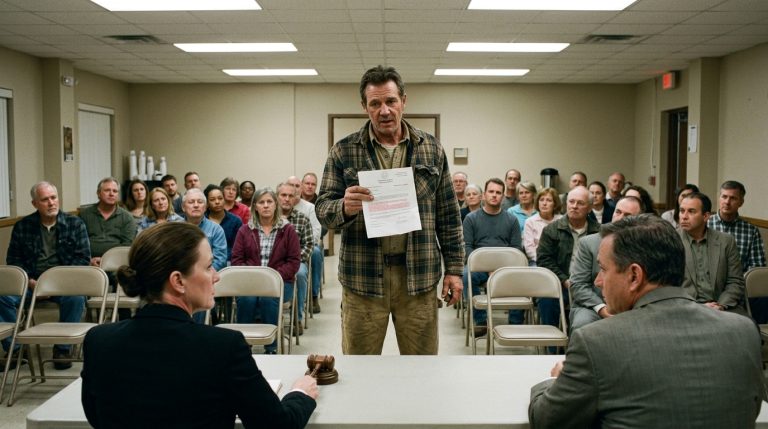
Karen didn’t look up from her three-ring binder. She sat behind the long plastic table, draped in a yellow floral dress that bunched around her shoulders, flanked by Sheila and Barry. Barry was chewing the edge of his thumb, his gaze locked strictly onto his lap.
“Item four on the agenda,” Karen boomed, her voice echoing off the painted cinderblock walls of the clubhouse. “Grounds maintenance report. As noted in the summary, Greenleaf LLC has completed seasonal clearing under the emergency preservation mandate. We move now to open homeowner comments—”
“Point of order, Madam President,” I said.
I stood up from the back row. The metal legs of my chair scraped loud against the linoleum. Every head in the room—twenty-eight neighbors jammed into four rows—turned toward the wall where I stood.
Karen’s hand froze over her gavel. “Open comments are restricted to three minutes per lot at the conclusion of official business, Jack. Sit down.”
“According to Section Six of the association bylaws,” I replied, bringing my black vinyl binder out from under my arm, “any homeowner may request a point of order regarding unapproved agenda items prior to the treasurer’s motion.”
Barry flinched, his head jerking up. He looked at Karen, his mouth open just enough to show his front teeth. “Karen, he’s…”
“He’s out of order,” Karen snapped. She slammed the gavel down a second time. “The board determines the agenda sequence. You will wait your turn like everyone else, or I will have you removed for disturbing an official proceeding.”
“You don’t have a sergeant-at-arms, Karen,” Mr. Miller called out from two rows ahead of me. His knuckles were white where he held his cane. “Let the man speak.”
I unclipped the brass pen from my collar, holding it vertically between my thumb and forefinger. “I’m not here about my pergola,” I said, my voice dropping into the flat, even register I used during brigade inspections. “I’m here about Section Twelve-A.”
Sheila shifted in her chair, her plastic water bottle crinkling loudly under her grip. “What is he talking about?” she whispered toward Karen.
“Section Twelve-A covers emergency vendor contracting,” I continued, stepping into the aisle. “It bypasses competitive bidding for structural crises—like a main line pipe burst or a downed tree blocking the entry gate. Last year, forty-eight thousand dollars was disbursed under Twelve-A to Greenleaf Landscaping.”
Karen stood up so fast her chair skidded backward, hitting the wall behind her with a thud. “This is a private administrative matter! It is not subject to general floor debate without prior written notice!”
“The registered agent for Greenleaf Landscaping is Dennis Albright,” I said, opening my binder to the state printout. “Your brother-in-law. The company was incorporated two months before it received its first no-bid check from this board.”
The room went dead quiet. The air conditioning unit in the wall clunked, hummed for two seconds, and cut off completely.
“That’s a lie,” Karen hissed. Her face turned a dark, mottled red, the skin around her nose tight and white. She reached across the table, her doughy fingers grasping for her gavel, but her hand knocked over Barry’s styrofoam coffee cup instead. Dark liquid pooled across her pristine disbursements ledger. “You’re spreading slander because you refuse to follow community guidelines! You’re trying to hide your illegal backyard construction behind personal attacks!”
“I have the state corporate filing right here,” I said, holding the paper up so Mr. Miller and the Garcias could see the blue state seal at the top. “And I have the three-year line-item breakdown. Every check was signed by you alone, without Barry’s co-signature as required by Section Three.”
“This meeting is adjourned!” Karen screamed, her knuckles white as she slammed her palms onto the wet table. “Adjourned!”
Nobody moved toward the exit. Mr. Miller stood up slowly, using his cane for leverage, and turned his back on the board to face the room.
“She’s not closing this meeting,” he said to the crowd. “We have a quorum of residents right here.”
Karen grabbed her black clipboard, shoving her papers into her tote bag with jerky, desperate movements, but her gaze stayed fixed on me—wide, bloodshot, and burning with pure, unadulterated fury. “You think you’re smart, Jack,” she spat, her voice dropping into a raspy whisper that barely carried past the first row. “You just guaranteed a lien on your house by eight o’clock tomorrow morning.”
CHAPTER 5: LEGAL CHECKMATE
“Jack Miller?” he asked, his eyes darting once toward the cedar pergola in the backyard before returning to my face.
“That’s me,” I said, taking the envelope. It was thick, stiffened by a cardboard backing to keep the legal seal from bending.
“Notice of Encumbrance and Lien,” he recited flatly, already stepping backward toward his faded hatchback parked at the curb. “Filed with the county clerk at seven-fifteen this morning.”
I didn’t open it on the porch. I walked back inside, set the envelope on the kitchen counter, and tapped the speaker button on my phone. Dave Riley’s voice came through instantly, loud and cutting over the hum of the refrigerator.
“—tell me she actually did it, Jack.”
“It’s in my hand, Dave,” I said, pulling the brass pen from my pocket and slicing the top edge of the paper open. “Four thousand two hundred dollars. Accumulated daily fines plus eight hundred in ‘administrative legal expenses.'”
Dave let out a low, raspy laugh. “She filed a cloud on your title without providing a thirty-day cure period or holding a board hearing. That’s a direct violation of state property law, and it drops her straight into the Fair Debt Collection Practices Act. She just stepped off the curb into oncoming traffic.”
“What’s the counter-filing look like?” I asked, unthreading the brass cap and lining up my yellow notepad.
“We file the injunction by noon,” Dave said, his tone turning sharp and precise. “Breach of fiduciary duty, selective enforcement, and personal liability under Section 5312. But we don’t stop at the courthouse. You said the local news producer called you back?”
“Maria,” I replied. “Channel Five consumer unit. She saw the corporate filing for Greenleaf.”
“Give her the lien paper,” Dave said. “Give her the whole binder. An illegal lien is boring to a judge, but a neighborhood tyrant putting a cloud on a veteran’s home over a structure while handing no-bid money to her brother-in-law? That airs on the six o’clock broadcast.”
By four afternoon, the news van was idling in my driveway. Maria stood on my lawn in front of the pergola, her microphone held tight in a gloved hand, while her cameraman framed the cedar beams against the sunset.
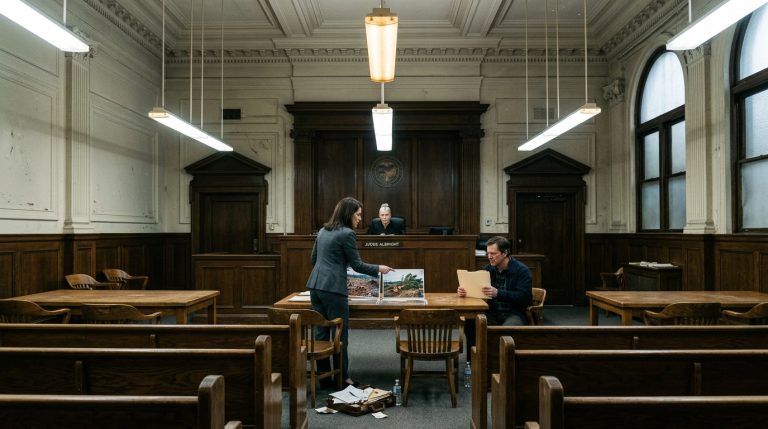
“We tried to speak with HOA President Karen Albright at her home,” Maria spoke directly into the camera, her voice carrying across the quiet street. “She refused to answer the door, but public records confirm a countersuit naming her personally was filed in county court today.”
Across the street, a curtain twitched in Karen’s front window. The white floral pattern parted three inches, revealing a flash of gold-rimmed reading glasses before snapping shut.
Ten minutes after the news crew packed up, my phone vibrated on the porch table. It was a text from Sheila.
Karen is calling an emergency executive session for tonight. She’s trying to use reserve funds to pay her retainer. Barry and I refuse to attend. We’re handing the financial log to your lawyer.
I stared at the screen, the brass pen heavy in my palm. The wall was held together by thin paper, and the first tear was already spreading.
Karen wasn’t going to negotiate. She was going to double down until the timber crushed her.
CHAPTER 6: COLLAPSE AND REBUILDING
Karen didn’t look down at her lap this time. She sat rigid in the front row, her hands gripping the vinyl handle of her handbag so tight her knuckles were yellow. Sweat had pooled along the crease of her neck, darkening the collar of her floral dress.
“For the office of board president,” the representative read aloud, his voice flat under the buzzing fluorescent tubes of the clubhouse. “Robert Miller, fifty-eight votes. Karen Albright, three votes.”
A single, hard breath escaped Mr. Miller’s chest beside me, followed by a sudden wave of applause that hit the cinderblock walls and rattled the metal window frames.
Karen stood up before the cheering cleared. Her chair didn’t scrape—she knocked it flat onto its back with the back of her legs.
“This vote is invalid,” she shouted, her voice breaking into a dry rasp as she pointed a trembling, thick finger at the management agent. “The petition was circulated using defamatory claims published by an unaccredited news segment! My lawyer is filing an emergency injunction to stay this result!”
“Sit down, Karen,” Mr. Garcia called from the third row, not even bothering to raise his voice.
“You have no authority to tell me to sit down!” She spun toward the crowd, her chest heaving, her eyes wild behind her reading glasses. “I built this association! I kept your property values from falling through the floor when half this county was defaulting! You want to let people build whatever monstrosity they want in their backyards? You want the whole street looking like a trailer park?”
“The vote is recorded, Mrs. Albright,” the management agent said quietly, leaning over the table to mark the official ledger. “The board is officially reconstituted. Mr. Miller is now the presiding officer.”
Karen glared at him, then at me. Her top lip twitched, powdered sugar still lingering in the fine lines above her mouth from a morning habit she hadn’t broken. She waited for someone to stand up with her—for Sheila, for Barry, for anyone. Nobody moved. Sheila kept her gaze fixed on the floor, and Barry had already left his keys on the table twenty minutes ago.
Without another word, Karen grabbed her bag, shoved her way past the end of the front row, and walked out the side emergency exit. The heavy steel door swung shut behind her with a thud that echoed through the room.
The forensic audit arrived six weeks later. It didn’t just catch the inflated Greenleaf contracts—it exposed eighty-two thousand dollars in unauthorized transfers over three years, masked as “administrative catering” and “grounds maintenance reserves.” Under threat of criminal fraud charges from the county prosecutor, Dennis Albright transferred the overcharged funds back to the HOA bank account before the first court date.
Karen’s house went on the market before the autumn leaves finished falling. The moving van came on a Tuesday morning while the street was empty, loading up her vinyl lawn chairs and three-ring binders before pulling out onto the main road.
I stood under the pergola on a quiet Saturday afternoon, a cordless driver in my hand.
The cedar had weathered to a soft, silver-grey, the resin completely set in the grain. I reached up and tightened the final lag bolt on the corner post, giving the steel ratchet three firm turns until the washer bit tight into the wood.
Sarah walked out from the back porch, carrying two clear glasses of iced tea. She set one on the arm of my wooden patio chair and rested her hand against the main timber.
“Solid?” she asked.
“Solid,” I said, sliding the driver into my tool holster and picking up my glass.
Across the yard, Mr. Miller waved from his side of the fence, holding a box of brass hinges for his front door, taking his time in the afternoon sun.