The Weight of Silence: A Mother’s Search for Truth Behind the Parade Deck’s Guarded Gates
Chapter 1: The Gatekeepers Hesitation
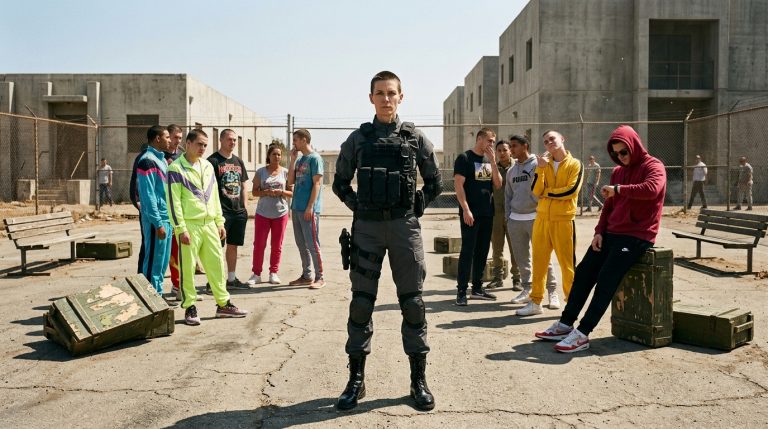
The air hung heavy and humid, smelling of hot asphalt and the faint, metallic tang of distant heavy machinery. Brenda kept her hands loose at her sides, though the internal rhythm of her heart was a steady, disciplined drum. Beside her, the parade deck was a sprawling expanse of concrete baking under the midday sun. It was a space designed for precision, for order, and for the kind of rigid conformity that turned young men into cogs in a machine.
Captain Haze continued to hold the visitor pass, his gaze fixed on it with a focus that bordered on the obsessive. He didn’t look at her. He looked through the paper, his thumb rubbing against the corner where the official seal was pressed.
“Adam Lo,” he murmured, the name sounding foreign on his tongue, stripped of the affection a mother would attach to it.
Brenda tilted her head slightly, her expression the practiced, soft-edged mask of a civilian. She leaned into the role—the concerned parent, the woman out of her element. “He’s been looking forward to this for weeks, Captain. He said he’d be leading his squad in the formation today.”
The Captain’s eyes flicked up to hers, and for a fleeting second, the granite expression cracked. There was no malice there, only a profound, exhausted hesitation. He shifted his weight, his boots crunching against the gravel. The silence that stretched between them was thick, pressurized by the heat rising from the ground.
“Recruit Lo,” he started, then stopped, his jaw tightening. He looked past her, toward the massive grandstands overflowing with families, then back to the restricted path behind him. “There seems to be an issue with the authorization on this document, Mrs. Lo. The terminal is… glitching.”
Brenda felt the fine hairs on her arms stand up. She watched his hand, the way he squeezed the paper just hard enough to make the fibers groan. He was lying. The paper was clean, the information verified twice over at the main entrance. This wasn’t a technical error; this was an obstruction, a deliberate barrier.
“I’m sure it’s just a misunderstanding,” Brenda said, her voice steady, though she felt the shift in the air. She reached out, her fingers brushing the edge of the paper still held in his grip. “If there’s a problem, perhaps you could point me to the command tent? I’d hate to miss the start of the ceremony.”
Haze pulled the pass back just an inch, his eyes narrowing. “You won’t be going to the command tent, ma’am. In fact, you shouldn’t be here at all.”
He leaned in, his voice dropping to a harsh, private whisper that didn’t reach his eyes. “You need to look at that pass again, Mrs. Lo. Really look at it.”
Brenda pulled her hand back, her heart hammering against her ribs as she looked down at the document. Below the official seal, in the shadow cast by the Captain’s uniform, she saw it: the faint, distinct imprint of a symbol she hadn’t seen in over a decade. It was the mark of a facility that, according to everything she knew, had been burned to the ground years ago.
CHAPTER 2: The Hall of Echoes
The silence in the wake of the Captain’s accusation was not empty; it was heavy, pressed tight between them like air trapped in a glass jar. Brenda felt the texture of the card—not just paper, but a specific, high-fiber stock that had been obsolete for years. It was a phantom piece of her own history, a relic of a project she had tried to scrub from her memory as thoroughly as she had scrubbed her life of the life she once led.
“I don’t know what you’re implying,” Brenda said, her voice remaining carefully modulated, a soft melody against the harsh, industrial backdrop of the base. She tucked the pass into her bag with a practiced, steady motion, refusing to let her hands tremble. “I only know that I’m here for my son’s graduation.”
Captain Haze didn’t move. He stood like a sentry, his shoulders broad and blocking the path that led toward the gleaming, white-stone structures of the administrative quarter. His eyes, fixed on her, seemed to be calculating the cost of this interaction. He wasn’t just guarding a gate; he was guarding a perimeter of lies.
“Your son,” Haze repeated, and this time, there was a jagged edge to his voice. He shifted his gaze toward the distant, rhythmic thud of boots hitting the parade deck—the sound of hundreds of recruits moving as one. “Adam Lo isn’t among those in formation, Mrs. Lo. And he hasn’t been for quite some time.”
The words hit her with the physical force of a cold draft. Brenda felt a sudden, sharp recollection—the smell of ozone and wet concrete, the low hum of a fluorescent light overhead in a room that didn’t exist on any map. It was a memory from a time when she was a different person, one who carried passes exactly like the one currently burning a hole in her bag. The familiarity of the sensation was like a ghost brushing against her skin. She forced the image back, burying it under layers of maternal concern and the immediate need to maintain her cover.
“If that’s true,” she said, keeping her tone light, almost dismissive, “then there must be some sort of administrative error. I spoke to his recruiter just last week.”
“Recruiters don’t always have the full picture,” Haze replied. He stepped closer, his shadow falling over her, the shade cool and biting. “You have choices, Brenda. You can walk back to the grandstands, take your seat, and watch a ceremony that is largely symbolic, or you can understand that being here—holding that specific document—makes you more than just a civilian visitor.”
Brenda felt the grit of the parade deck under her heels. She had come here seeking clarity, looking for a boy who had promised to stand on that stage. Instead, she had found a man who knew the language of her past. She looked toward the grandstands, where hundreds of people sat in the bright, unfiltered sun, clutching programs and waiting for a moment that, according to Haze, might never come.
“I’m not leaving without answers,” she said. It wasn’t a demand; it was a statement of fact, stripped of all artifice.
Haze sighed, a weary sound that betrayed his own internal exhaustion. He looked at the gate, then back to the path that wound behind the main hangar—a path that led toward the older, less-maintained structures of the base, places that smelled of rust and damp earth.
“The command tent is a dead end,” he muttered, turning slightly to the side, his posture relaxing just enough to hint at a lack of hostility. “If you really want to find him, don’t go where the crowds are. Follow the maintenance corridor toward the ventilation shaft. There’s a side entrance to the Hall of Echoes. It’s not on the tour, and it’s not for guests. If he’s anywhere, he’s in the archives or the holding cells connected to that sector.”
Brenda hesitated. The advice felt like a trap, or perhaps the only lifeline she was going to get. The heat of the day seemed to intensify, the sun reflecting off the metal siding of the nearby buildings, creating a shimmering, distorted heat haze.
“Why are you telling me this?” she asked.
Haze didn’t look at her. He adjusted his cap, his jaw set. “Because looking at that pass reminds me that some secrets are meant to be kept, but others… they have a way of eating the people tasked with burying them. Go now. Before the relief guard arrives.”
Brenda didn’t look back. She turned toward the path he’d indicated, her feet finding purchase on the cracked, uneven concrete. The transition from the crowded, bustling energy of the parade area to the quiet, dusty periphery of the base felt like moving between two different worlds. Every step was a calculation, a careful negotiation with the silence of the facility. She was no longer just a mother looking for her son; she was a woman stepping back into a labyrinth she had hoped was closed forever.
The maintenance corridor was narrow, hemmed in by rusted storage containers and lengths of discarded copper piping. The air here was stagnant, heavy with the scent of old oil and dry, decaying earth. As she walked, her fingers brushed the fabric of her bag, the corner of the paper pass still sharp against her palm. She needed to reach the Hall of Echoes, but more than that, she needed to understand why her son’s name—and his future—had become collateral in a game she hadn’t realized was still being played.
CHAPTER 3: The Missing Dossier
The maintenance corridor narrowed until Brenda had to turn slightly sideways, her shoulders brushing against rough, sweating concrete. The air here tasted of rust and stale ozone, a stark departure from the polished, manicured environment of the parade deck. Ahead, the corridor terminated in a heavy steel door marked with a faded, peeling stencil. It was a service entrance, likely forgotten by the current command, its hinges orange with oxidized neglect.
She reached for the handle, her movements deliberate. Her heart was a steady, rhythmic thrum against her ribs, but her mind was elsewhere, dissecting the path behind her. She had been careful—too careful, perhaps. She had avoided the security cameras by sticking to the blind spots where the overhead lights had burned out long ago. But the nagging doubt remained: Captain Haze had pointed her toward this sector with a familiarity that suggested he wasn’t just stalling her; he was funneling her toward something he couldn’t personally touch.
The handle turned with a shrill, protesting scrape that echoed down the long, hollow length of the pipe-lined shaft. Brenda stepped through into a small, windowless alcove that functioned as a janitorial substation. It was quiet, but it was not empty.
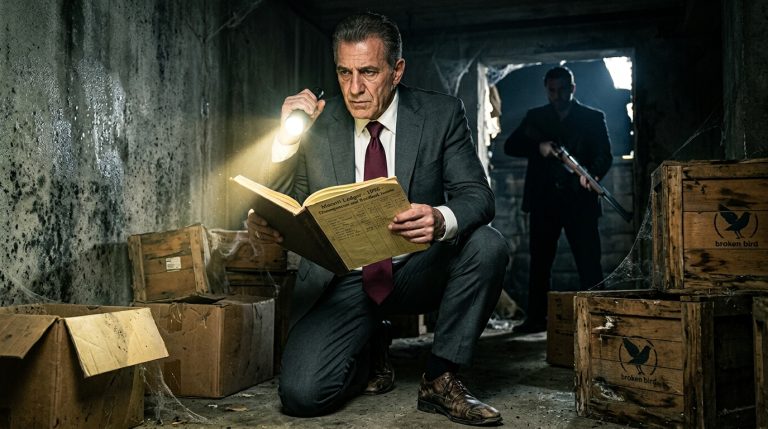
A metal locker sat in the corner, its door hanging slightly ajar. Brenda approached it, her eyes scanning the dim space. She didn’t expect to find Adam here—that would be too easy, a contrivance of fate that felt entirely wrong for the cold, calculated environment of the base. Instead, she found a ledger resting on a stack of discarded coveralls. It was a standard, government-issue logbook, but the spine was reinforced with black electrical tape, and the edges were frayed from heavy use.
She opened it. The entries were not logs of maintenance or supply counts. They were rosters—names of recruits, dates, and a series of alphanumeric codes she recognized from her own past, though she forced herself to view them through a lens of professional detachment. She flipped through the pages, her pulse quickening as she saw the name Lo, Adam.
Beside his name, the entry didn’t list a squad or a platoon. It listed a transfer date that was three weeks prior to the graduation, and a location code that was blanked out with heavy, black ink.
Brenda stood perfectly still, the ledger heavy in her hands. The room was bathed in a thin, sickly light filtering through a high-set ventilation grate. She looked closely at the ink—it wasn’t just a simple redaction. It had been applied with a specific, acidic marker, the kind used to permanently seal sensitive records. It was a physical discrepancy, a sign that someone had gone out of their way to ensure this specific piece of information remained hidden from anyone who didn’t possess the clearance to decode it.
She felt a sudden, sharp pang in her chest—the Kintsugi of her own history, the cracks in her life widening under the pressure of this new reality. She wasn’t just a mother investigating a misunderstanding; she was someone who understood exactly what it meant when a record was scrubbed this violently.
She turned the page, looking for a date, any hint of where Adam had been sent, but the next several pages had been torn out, leaving only ragged, white edges of paper. The deliberate nature of the removal was a testament to the urgency of the secret. Someone had been here recently. The air in the alcove still held the faint, lingering scent of a specific, synthetic solvent—the same kind used to clean high-end optics and sensitive instrumentation.
A muffled thud sounded from the other side of the wall—the rhythmic, distant cadence of a marching squad. The graduation ceremony was beginning, the grand finale of a performance that Brenda now knew was a hollow, curated deception. She felt a surge of cold, focused anger. It wasn’t the kind of rage that made her reckless; it was the kind that sharpened her senses, turning her concern into a precise, tactical instrument.
She tucked the ledger into her bag, the weight of it settling against her side, a solid, undeniable proof that the story she had been told was a lie. She needed to leave, to find a way to reconcile the rosters in her hand with the reality of the base. As she stepped back toward the maintenance door, she noticed a smudge of grease on the floor—a boot print, fresh and distinct, pointing not toward the exit, but deeper into the archives, toward the restricted sector that Haze had mentioned.
The silence of the room was suddenly broken by the low, distorted crackle of a radio somewhere nearby. It was a security patrol, their voices low and sharp, communicating in a shorthand that she realized, with a chill, she almost understood. She backed into the shadows of the alcove, her breath shallow and controlled. The game had shifted. She was no longer just the seeker; she was now, by the very act of possessing this logbook, a potential threat to the integrity of the base’s carefully maintained silence.
She leaned her back against the cool, vibrating steel of the locker, closing her eyes for a heartbeat. She thought of Adam—not the recruit she had been told to expect, but the boy she knew, the one who had written home about the humidity, the grueling marches, and the camaraderie. She had to find the truth, not just for herself, but to bridge the gap between the mother who loved him and the secret-keeper she had been forced to become to protect him.
The security patrol was getting closer; the heavy, rhythmic clatter of boots resonated through the floor. Brenda didn’t panic. She pulled the collar of her jacket up, checked her reflection in the glass of the locker door—a woman, tired but composed—and prepared to step out into the hallway. The path forward was no longer a simple search; it was an extraction of truth, and she was the only one left to perform it.
CHAPTER 4: A Whisper in the Mess Hall
The rhythm of the boots didn’t stop. They passed the service door, the sound of heavy heels on polished concrete a sharp, dissonant contrast to the quiet, dusty silence of the substation. Brenda held her breath, her fingers instinctively curling around the ledger in her bag. The patrol’s voices were low, muffled by the thickness of the steel door, but they weren’t speaking about administrative errors or parade schedules. They were discussing transport logs and something called “The Void Protocol.”
As the last echoes of the patrol faded, a sharp, buzzing vibration hummed through the walls. The overhead lights flickered, casting long, frantic shadows before plunging the substation into a deep, bruising violet gloom. The power grid was cycling, likely a routine maintenance shift, but for Brenda, it was a necessary tactical complication. The electronic locks on the inner service doors would be cycling as well, granting her a window of vulnerability she could exploit.
She didn’t hesitate. She stepped out into the hallway, the air significantly cooler here, smelling of industrial cleaning agents and sterile, filtered oxygen. She needed to reach the Mess Hall—not to eat, but because it was the only central hub on this level where the personnel logs were accessible via public-access terminals. It was a risk, but staying in the maintenance corridors was becoming a trap.
Her path was interrupted by a sudden, intense flare of light from an exposed wiring conduit near the ceiling, a shower of sparks cascading down like golden rain. The short-circuit was a physical manifestation of the instability she felt—a butterfly effect of her own presence. She had to navigate the darkened, restricted wing, avoiding the high-traffic areas where the residual heat of the afternoon would still be attracting staff.
As she moved, she encountered the Mess Hall’s rear entrance, a heavy sliding door that hissed open with a slight tremor. The space was mostly empty, save for a few late-shift technicians clustered in a corner, their voices little more than static-filled murmurs against the background drone of the facility’s ventilation system. Brenda took a seat at a booth near the far wall, keeping her head low, her movements fluid and unassuming.
She pulled the ledger from her bag and laid it open under the table, using the surface as a makeshift desk. She needed to cross-reference the codes she had found with the public-access terminal, which was currently flickering through a loop of upcoming training modules and security announcements. Her eyes darted between the ledger and the screen, her mind working with a cold, analytical precision she hadn’t tapped into in years.
Then, a voice—soft, deliberate, and entirely unexpected—spoke from the booth directly behind her.
“You’re looking for something that’s already been moved, Brenda.”
She didn’t flinch. She kept her posture steady, her hand still resting on the ledger. The voice belonged to a man, its timbre layered with the same fatigue she had seen in Captain Haze. She didn’t turn around. She knew, with a sinking, visceral certainty, that she was being watched.
“I’m looking for my son,” she replied, her voice steady, the words hanging in the air between them like a challenge.
“Your son is part of a sequence, not a person,” the voice said, the cadence measured, almost academic. “And if you continue to peel back the layers of this particular sequence, you’ll find that the only thing you’re truly unearthing is the reason why you were the one chosen to be left behind.”
Brenda felt a chill crawl up her spine. This wasn’t just a guard or an administrator; this was someone who knew her history, someone who knew why she had been capable of finding the ledger in the first place. She finally turned her head, catching a glimpse of a figure in the dim light of the far corner—a person whose face was obscured by the shadows of a cap, but whose stance was unmistakably familiar.
“Who are you?” she asked, her voice a low, dangerous whisper.
The figure stood up, the chair scraping sharply against the floor—a sound that, in the quiet hall, was like a gunshot. “I’m the consequence you tried to ignore when you walked away from the work. You thought you could be a mother, Brenda? You thought you could bury the truth and simply live?”
He stepped into the periphery of the light, and Brenda’s breath hitched. It was someone she had worked with, a ghost from the project she thought had been permanently dismantled. The sight of him triggered an avalanche of fragmented, sharp-edged memories—the weight of responsibility, the taste of betrayal, and the crushing realization that her past was the very thing she was currently fighting to survive.
He didn’t stay to talk. He turned and walked toward the exit, his movements efficient and utterly devoid of wasted motion. Brenda didn’t follow—she couldn’t, not without drawing the attention of the technicians who were now looking their way. She sat frozen, the ledger still open beneath the table, the reality of her predicament shattering the last remnants of her civilian mask. The decoy secret she had found—the roster and the reassignments—wasn’t the end of the mystery; it was just the opening act of a much larger, darker performance that she was now firmly trapped within.
CHAPTER 5: The Discrepancy Found
Brenda remained in the booth, her hand trembling slightly as she closed the ledger. The man—the ghost—had been right about one thing: she had been chosen to be left behind. The realization didn’t paralyze her; it served as a brutal, cold awakening. The Mess Hall, once a place of bustling noise, now felt like a tomb. The technicians in the corner were silent, their focus entirely on their screens, their presence acting as a silent, monolithic barrier.
She didn’t rush to leave. She waited, letting the tension coil in her stomach like a spring. When she finally rose, she moved with the efficiency of someone who had practiced the art of disappearing in plain sight. She navigated the perimeter of the room, her eyes fixed on the map of the facility she had memorized from the ledger. But as she moved toward the rear hallway, the geography shifted. The corridor, which should have been a straight, uninterrupted path toward the archive wing, now curved inward, the walls closing in like the ribs of a cage.
She blinked, shaking her head. The fluorescent lights overhead seemed to pulse, a rhythmic, nauseating beat that made the corners of the room bleed into one another. Was it the fatigue, the shock of the encounter, or was the facility itself a mechanism designed to disorient? She paused, bracing herself against a wall that felt unnaturally cold, its surface textured with a fine, gritty dust that stained her palms.
She focused on the discrepancy. In the ledger, the archive wing was designated as “Sector 7,” but the signage on the door she reached now read “Storage 4.” It was a deliberate, physical misdirection, a shell game played with architecture. She reached into her pocket, pulling out the visitor pass—the original one, the one that Captain Haze had scrutinized. Held up to the faint, flickering light of the corridor, the paper didn’t look like a standard document anymore. The watermark, once a simple insignia, now shifted, the lines converging to form the same alphanumeric codes she had seen in the ledger.
The “pass” wasn’t just an entry ticket; it was a key.
She pressed the corner of the pass against the lock panel of the door marked “Storage 4.” The scanner chirped—a sound that was almost too human, a soft, melodic beep. The door slid open, not into a storage room, but into a sterile, brightly lit elevator shaft. There were no buttons, only a single, glowing interface that pulsed with the same rhythm as the hallway lights.
She stepped inside. The doors closed behind her with a final, weighted thud, sealing her away from the rest of the facility. The elevator began to descend, but it didn’t move with the mechanical clatter of a standard lift. It descended smoothly, silently, the weight of the base pressing down on her like a physical hand. She watched the floor indicators: they weren’t numbers, but names—or rather, designations. Recruit Processing. Logistics. Void Protocol.
She had found the truth, or at least the jagged, terrifying beginning of it. Adam hadn’t just been reassigned; he had been moved into the very mechanism she was now descending into. The weight of the ledger in her bag felt immense, the paper a manifesto of a life being systematically erased. She thought of the parade deck, the families sitting in the sun, the lie being told to them even now. They were watching a ghost formation, a display of order meant to soothe, while in the dark, the real work—the “Void Protocol”—was being executed.
The elevator slowed to a stop. The doors opened to a subterranean hallway, lit by the stark, unforgiving white light of a research facility. The air here was different—crisp, dry, and devoid of the dust and oil of the upper levels. It smelled of ozone and something sharp, metallic, like fresh blood on steel.
She stepped out. The hallway was empty, stretching away into a blur of identical white doors. At the end of the corridor, she saw a figure standing in front of a terminal. It was a recruit—tall, unmistakable, his back turned to her.
“Adam?” she whispered, the name escaping her lips before she could catch it.
The figure stopped. He didn’t turn, but his shoulders went rigid. The silence that followed was absolute, a void that seemed to swallow the very air in the room. She had reached the destination, but as she took her first step toward him, she realized the trap wasn’t just the facility; it was the fact that the person standing there, in this place, was no longer the boy she had come to rescue. He was a component of the protocol, and in this sterile, white silence, her maternal bond was the one variable they had failed to account for—and the one that was about to cost her everything.
CHAPTER 6: The Uninvited Departure
The recruit didn’t turn. His posture was too perfect, his spine aligned with the unnatural rigidity of a machine. Brenda took a halting step forward, the sound of her own breathing amplified by the sterile, vaulted ceiling of the corridor. “Adam?” she repeated, her voice cracking the heavy silence.
The recruit finally turned. The face was indeed her son’s, but the expression was a barren landscape. There was no flicker of recognition, no warmth of a shared history. His eyes, fixed on her, held a terrifying, empty clarity. When he spoke, the voice was modulated, stripped of the cadence she had raised him with. “You are not authorized for Level 4, Mrs. Lo. Your presence constitutes a violation of the Void Protocol.”
Brenda felt the world tilt. This was the final, devastating truth: Adam had not been recruited; he had been harvested, his personality replaced by a cold, operational construct to serve the facility’s ends. She looked at the terminal he had been working on, realizing that the data scrolling past—thousands of names, including her son’s—was the machinery of a forgotten war, one that was being fought in the dark, using the children of unsuspecting families as its soldiers.
“I’m not leaving without you,” Brenda said, her voice finding a sudden, iron strength. She reached into her bag, not for a weapon, but for the visitor pass. She realized now that the Captain had given it to her not as an obstruction, but as a bypass. She slammed the paper against the override panel on the wall behind the recruit.
The facility groaned. Alarms didn’t sound; instead, the lights shifted from blinding white to a soft, emergency amber. The override triggered a purge of the local cache, the very data that had been used to overwrite Adam’s mind. The recruit staggered, his hand clutching his head as if the sudden influx of reality was a physical assault.
“Mother?” the word was small, distorted, but it was there—a flicker of the boy she remembered.
Brenda surged forward, catching him as his knees buckled. She didn’t let go, even as the walls began to tremble and the ventilation system whined, venting the toxic, stale air of the subterranean levels. The facility was self-destructing, the “Void Protocol” unable to sustain itself once the data stream was severed.
They scrambled back toward the elevator, the hallway behind them beginning to crack, pipes bursting and venting steam that smelled of scorched copper. They reached the lift just as the doors groaned, jammed by the shifting floor plates. Brenda forced the mechanism, her fingernails tearing against the cold, unyielding metal. With a final, desperate heave, the doors parted, and they tumbled inside.
The ascent was a chaotic, jarring ride. The lift bucked and swayed, the emergency systems fighting to remain operational. When it finally slammed into the ground floor—the maintenance alcove where she had started—the air outside was rushing in, cold and clean.
She dragged Adam through the service entrance, stumbling out into the fading twilight of the parade deck. The grandstands were empty now, the graduation ceremony long since concluded, leaving only the scattered debris of celebration: torn programs, abandoned coffee cups, and the heavy, lingering silence of a ghost town.
They reached the perimeter fence, the shadows long and stretching. The base was a hive of activity, searchlights sweeping the sky, but they were focused on the subterranean vents, unaware that the target had already escaped. Brenda walked past the guard booth, keeping her head down, her arm locked firmly around Adam’s waist, supporting his weight.
They reached the treeline where she had parked her car. The engine started with a smooth, quiet purr. She didn’t look back at the base. She didn’t look at the lights glowing against the horizon. She focused on the road ahead, the asphalt ribbon stretching into the dark.
Inside the car, the silence was different. It was heavy, but it was alive. Adam sat in the passenger seat, his head leaning against the window, his eyes finally showing a spark—not of the protocol, but of the fear, the exhaustion, and the profound, aching humanity of a boy who had been returned to himself.
Brenda reached over, her hand trembling as she found the small, silver heirloom pin on her lapel. She unfastened it and pressed it into his palm. It was the same pin he had given her when he was a child, a trinket he had bought with his allowance. The touch of the metal was grounding, a piece of the world that still made sense.
“We’re going home,” she said, her voice barely a whisper, but firm enough to hold the weight of everything they had survived.
She turned the wheel, pulling onto the main highway. The base was a fading memory in the rearview mirror, a silhouette against the rising moon. She wouldn’t be the same person when they returned home, and neither would he. The scars would remain, the memory of the Void would linger in the quiet hours of the night, but they were together. She looked over at him; he was watching the road, his fingers tracing the edge of the pin. The path back would be long, and the truths they had unearthed would haunt them, but as she pressed her foot to the gas, she felt a profound, quiet peace settling in. The machine had been designed to create soldiers, but it had failed to account for the one thing that couldn’t be quantified or scrubbed: the enduring, stubborn, and absolute resilience of a mother’s resolve. The night air rushed through the open window, cool and smelling of pine and dry earth, and for the first time in years, Brenda allowed herself to finally, truly breathe.