A Ghost Recalibrated: The Obsidian Protocol and the Silent War for a Daughter’s Future
CHAPTER 1: The Weight of Steel
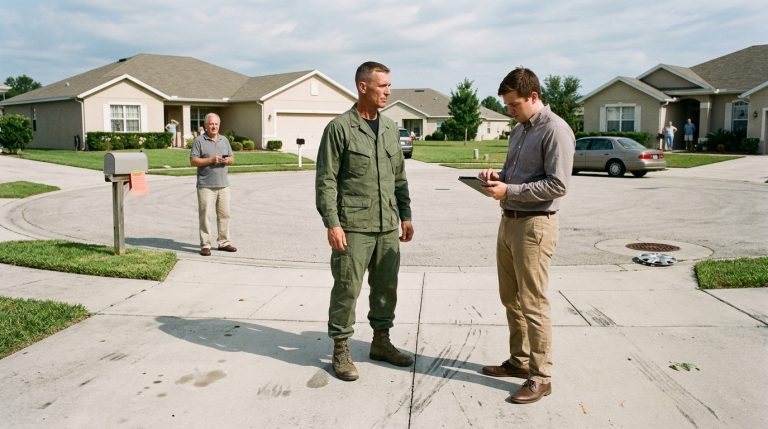
The wind off the water didn’t carry the scent of salt; it carried the metallic tang of rust and cold concrete, the signature perfume of a place where men went to stop existing. Dempsey shifted his weight, the gravel crunching with a sound that felt too loud in the sudden silence of the annex perimeter. Beside him, Wells was already scanning the horizon, his movements stripped of everything but the necessary.
Then she walked out of the shimmer—a small, steady figure against the stark industrial sprawl. She didn’t look like a threat. She looked like a child, her windbreaker zipped too high, her stride rhythmic and precise, avoiding the loose shale near the service road. Dempsey’s gut tightened, a singular, cold point of pressure that he hadn’t felt since the mission that cost them their leader.
Callen moved first, his hand ghosting over his kit, eyes locking onto the girl. “We’ve got a kid, Chief,” he murmured, his voice as dry as the air.
Dempsey didn’t look at him. He didn’t look at the MPs rotating near the main gate. He looked at the girl, at the scuffed white toes of her shoes, and at the way she held her arms—rigid, hands at her sides, palms flat. She wasn’t wandering. She was approaching.
“Eyes on,” Dempsey said, his voice a low vibration that held the team in place.
She stopped ten yards out. The distance felt like a tactical gap, a kill zone she was navigating with a composure that set Dempsey’s nerves on edge. She didn’t look at the perimeter fence. She didn’t look at the soldiers. She looked directly at the inside of his forearm, where his sleeve had slipped down to reveal the simple, circular tattoo—the mark of a team that had been erased from the official record three years ago.
She pointed, her finger steady as a sniper’s aim. “My mom had that same tattoo.”
The world turned brittle. The wind seemed to drop out of the trees, and the ambient noise of the base—the distant idling of transport trucks, the hum of the cooling units—faded into a suffocating, heavy quiet. The other four seals went dead still. No one reached for a radio. No one signaled for backup. They simply reassembled, their bodies forming a protective arc that instinctively walled off the girl from the rest of the compound.
Dempsey’s hand drifted, almost reflexively, to pull his sleeve down over the ink, but it was too late. The secret was out. He watched the girl reach into her pocket, her movements deliberate, and pull out a weather-worn piece of paper. As she unfolded it, Dempsey noticed the way her shadow stretched long and dark across the gravel, a jagged line that seemed to point directly at his own past.
He didn’t ask how she knew. He didn’t ask who had sent her. He only looked at the photo she held—a faded, overexposed image of a woman, a child, and a mark that was supposed to have been buried in a shallow, redacted grave. The information gap hit him like a physical blow, a sudden, terrifying realization that if this girl was here, the woman who led them hadn’t just survived—she had been waiting to be found.
He took a half-step forward, his boots clicking sharply against the concrete, and saw a black sedan creeping slowly toward the service road, its headlights extinguished. It wasn’t the base security. It was the sweep team, and they weren’t here for the child.
CHAPTER 2: The Geometry of Silence
The sound of tires on wet gravel cut through the stillness like a jagged blade. It wasn’t the slow, casual roll of a visitor; it was the measured, low-torque advance of a vehicle that didn’t want to be heard until it was already within striking distance. Dempsey didn’t move, but his shoulders shifted, the fabric of his jacket pulling taut over the concealed body armor beneath.
Beside him, Wells didn’t glance at the car. He stayed crouched near the girl, his peripheral vision locked onto the sedan’s trajectory. The vehicle—a nondescript, matte-black sedan that screamed ‘government issue’ without ever displaying a badge—was slowing to a stop twenty yards from their perimeter.
“We have company,” Morales whispered. His voice was barely a breath, but it carried the weight of a gear-lock clicking into place.
Dempsey kept his focus on the girl, Ellie. She hadn’t flinched. She hadn’t even looked toward the incoming threat. She kept her gaze fixed on the weather-worn photo in her hands, her thumbs tracing the curled, frayed edges of the paper. It was a mundane action, but in the context of the encroaching sedan, it was a profound act of defiance. The tactile memory of that image seemed to insulate her from the external pressure, a psychological barrier that Dempsey found himself respecting.
The photo triggered a flicker of memory in Dempsey’s own mind—the harsh, monochromatic light of a briefing room years ago, the taste of stale coffee, and the cold, unyielding voice of their former leader instructing them on the ‘Circle-Split’ code. He remembered the specific, biting ozone smell of the desert during that last insertion. That memory, sharp and jagged, pricked at his consciousness, reinforcing the reality that they weren’t just dealing with a lost child; they were dealing with the fallout of a ghost-class mission.
“Stay with her,” Dempsey murmured to Wells, his voice devoid of emotion.
Dempsey rose slowly, his movements deliberate. He wasn’t reaching for a weapon—doing so would escalate the encounter to a terminal level—but his posture was now the geometry of a man preparing to defend a claim. He stepped out from behind the utility post, placing himself between the girl and the sedan. The car’s door opened with a hiss of hydraulic pressure.
Two men stepped out. They wore sharp, charcoal-gray jackets that didn’t match the coastal humidity. Their shoes were polished, too clean for the gravel pullout, and their movements were synchronized, efficient, and utterly devoid of civilian warmth. They didn’t look at Dempsey; they looked at the girl.
“Chief,” the lead man said. His voice was thin, polished, and carried the sterile echo of administrative command. “You’re off-protocol. Move aside.”
Dempsey didn’t blink. He felt the weight of the air, the cold, sharp edges of the steel fencing behind him, and the rhythmic thumping of his own heart. “This isn’t a restricted zone,” Dempsey replied. The words were flat, transactional. “And you’re trespassing on a secondary perimeter.”
The man in the charcoal jacket smiled, but it didn’t touch his eyes. It was a cold, practiced expression, the kind meant to intimidate subordinates into compliance. He took a single, controlled step forward. “We are here for the retrieval of a displaced asset. Your presence is an unnecessary complication.”
Behind Dempsey, he heard the faint, subtle scraping of boots on gravel. Callen and Morales were repositioning, forming a wider, more dominant arc. The ‘Equal Intellect’ rule applied here; the retrieval team wouldn’t escalate unless they were sure they had the leverage, and Dempsey knew they wouldn’t use force if they could use bureaucratic intimidation first.
Ellie suddenly tucked the photo into her pocket, the movement sudden and clean. She stood up, her face a mask of practiced indifference that mirrored her mother’s. She looked at the lead man, not with fear, but with a calculated appraisal that felt chillingly adult.
“You’re the ones who knocked,” she said.
The lead man’s expression wavered. For a split second, the polished mask slipped, revealing the confusion of a predator finding the prey had anticipated the pounce. He looked at Dempsey, then back at the girl, his hand drifting slightly toward his waist.
“This is not a debate,” the man said, his voice tightening. “The asset is coming with us.”
Dempsey felt his pulse quicken, but he didn’t reach for his sidearm. Instead, he took another step forward, closing the distance until he was chest-to-chest with the man. The smell of gun oil and cheap, synthetic fabric radiated from the stranger. Dempsey kept his voice low, a gravelly friction of sound. “This isn’t an asset. This is a private citizen on federal land.”
“She’s a liability,” the man snapped, his composure finally fracturing.
“She’s a witness,” Dempsey corrected, his gaze fixed on the man’s throat, watching the swallow, the subtle shift in weight that signaled an intent to move.
The standoff hung in the humid air. The wind rattled the loose chain-link fencing, a sound like chattering teeth. The other retrieval agent had drifted to the side, his eyes scanning for a chink in the team’s formation, but he found nothing. The five SEALs were a wall, a single, unified organism that had been forged in a fire that none of these bureaucrats could ever understand.
Dempsey knew they were stalling for time, waiting for the retrieval team to either blink or reach for a weapon. He had to force a tactical shift before the men in gray could coordinate a move. He glanced back at Wells, who held a small, black radio, his finger hovering over the transmission button.
“Let’s be clear,” Dempsey said, his tone turning into the cold steel of a combat instruction. “You walk away, or you have to deal with the report of an unauthorized engagement on a Tier-1 secure site. We’ve already logged the civilian presence. Are you ready to explain why you’re here?”
The lead man’s hand froze near his belt. He looked at the base gate, where the MPs were now standing, their attention drawn by the presence of the sedan. The geometry of the situation had changed; they weren’t in a secluded shadow anymore. They were in the open, and the light was starting to turn against the hunters.
For the first time, the man hesitated. He turned, his gaze scanning the fence, the cameras, and the shifting posture of the team. He was realizing, perhaps too late, that the ‘ghosts’ he had come to collect were no longer hiding in the dark. They were standing in the light, and they were ready to bite.
CHAPTER 3: The Shadow Path
The high-beams hit them like a physical force, turning the dark gravel lot into a glaring, bleached-out stage. The lead man in the charcoal jacket shielded his eyes, his hand instinctively snapping to his side, but Dempsey was already moving. He didn’t run; he flowed, his weight shifting onto the balls of his feet as he signaled the team to break formation.
“Clear,” Dempsey breathed, the command barely audible above the wind.
The retrieval agents were momentarily blinded, their tactical advantage stripped away by the light of the base security patrol. Dempsey grabbed Ellie by the shoulder—a firm, controlled pressure—and pivoted toward the labyrinthine stacks of shipping containers that lined the far end of the dock. Wells and Callen moved in a staggered line, their bodies angled to shield the girl from any potential line of sight from the sedan.
The sound of the patrol vehicle’s engine grew louder, a mechanical growl that vibrated through the soles of Dempsey’s boots. This wasn’t the time for a standoff; it was the time for the ‘Ghost’ protocol. They moved with the silent, predatory efficiency that had defined their years in denied territory. No heavy footfalls, no wasted motion. They merged with the shadows of the containers, the metallic scent of oxidized iron and saltwater clinging to the air.
“Where are we going?” Ellie whispered. Her voice was steady, lacking the tremors of a child in the middle of a tactical extraction.
“To the limit of the wire,” Dempsey replied, his eyes scanning the gloom. He noticed a gap in the containers, a narrow passage where the security floodlights couldn’t reach. It was the kind of blind spot that only an operator who had spent years training in the dark would ever spot.
They slipped into the narrow, dark aisle. The air here was cooler, stagnant, and thick with the smell of damp earth and rust. Dempsey signaled for a halt, pressing his back against the corrugated steel of a container. He adjusted his earpiece, listening to the muffled static of the base radio. The retrieval agents were still at the gate, their voices rising in frustration, arguing with the MPs who were now demanding credentials for an unauthorized vehicle.
“They’re stalled,” Callen whispered, peering around the edge of the container.
“They’re persistent,” Wells corrected. “Briggs won’t let them walk away empty-handed. Not if he wants to keep his own neck in the noose.”
Dempsey looked at the girl. She was watching them, her expression unreadable. She wasn’t an observer; she was an asset, and she knew it. She had led them here for a purpose, and that purpose was now beginning to manifest in the way the entire base was reacting to their presence. The tension was spreading, a ripple effect that was slowly destabilizing the very facility meant to contain them.
“You said your mom is waiting,” Dempsey said, his voice low. “How much longer?”
Ellie looked at her watch—a small, inexpensive digital thing that looked entirely out of place on her thin wrist. “She said if you weren’t here in twenty minutes, she would have to move. The truck can’t sit idle for long. They watch the heat signatures on the engine blocks.”
Dempsey felt a cold shiver run down his spine. The precision of the plan was staggering. She wasn’t just relying on them to be there; she was timing her mother’s survival against the rigid, automated systems of the base. It was a strategy born of desperation and honed by the necessity of being hunted.
“We move,” Dempsey decided. “Morales, you take point. Watch for the IR sensors on the perimeter fence. Callen, stay on the girl. Wells, you’re with me.”
They transitioned again, moving across the open ground between the containers. Every step was calculated, a dance of shadows and steel. The wind picked up, carrying the distant, rhythmic crash of the surf against the breakwater. It felt like the entire world was conspiring to keep them hidden, a temporary reprieve in a battle that had been going on for years.
They reached the perimeter fence—a double-stacked barricade of razor wire and motion-sensitive mesh. It was the hardest point of the extraction. Dempsey stopped, checking the perimeter with a thermal optic. The gate was quiet, but the red pulse of a camera swept slowly over the ground every ten seconds.
“Dead zone,” Morales signaled, pointing to a small, dark patch near the base of the fence where the camera’s rotation didn’t reach.
Dempsey nodded. He knelt, checking the tension of the fence. He didn’t reach for wire cutters; that would leave a trace. Instead, he pulled a small, customized tool from his kit—a bypass wedge that could spread the links without snapping them. It was a subtle, precise tool, designed for situations where leaving a signature was as dangerous as being caught.
As he worked, the metal groaned, a faint, metallic complaint that sounded like a scream in the quiet of the night. His hands were steady, his mind entirely focused on the mechanics of the bypass. He could feel the weight of the moment—the girl’s future, the mother’s secret, and the entire weight of the Obsidian project resting on this one, small physical act.
“Dempsey,” Wells said, his voice tightening. “The sedan. They’re moving.”
Dempsey looked over his shoulder. The black sedan was rolling slowly toward the dock area, its high-beams scanning the shipping containers with a clinical, systematic intensity. They were hunting, and they were getting closer.
Dempsey applied pressure to the wedge. The metal parted with a final, soft ping. The gap was just wide enough for a person to slide through.
“Go,” he ordered, gesturing toward the opening.
Ellie didn’t hesitate. She squeezed through the gap with a fluidity that was unnerving. Callen followed, then Morales, then Wells. Dempsey took one last look at the approaching high-beams, the glare turning the world into a sharp, blinding white. He stepped through, pulling the fence back into place with a practiced, seamless motion.
They were out, but the port was just the beginning. The real challenge lay in finding a truck in a sea of identical containers, all while being hunted by men who didn’t care about the rules—only about the erasure of the mark on his arm.
CHAPTER 4: The Intersection
The metal of the fence shivered against the concrete footing, a low vibration that traveled up Dempsey’s spine. He didn’t look back at the glare of the high-beams painting the razor wire behind them. The lot was behind them now. Ahead was the loading dock, a sprawling expanse of concrete and shadow, choked with the skeletal frames of idle gantry cranes and the hulking shapes of fifty-foot containers.
It was a graveyard of commerce, and right now, it was their only cover.
Dempsey moved with a fluid, rolling gait, keeping his profile low. The air here tasted of diesel and salt, a heavy, suffocating mixture that clung to the back of his throat. He checked his six. Wells was right behind him, his silhouette a tight, controlled knot of muscle and gear. Callen trailed with Ellie, his hand hovering inches from her shoulder, a physical barrier between the girl and the dark. Morales brought up the rear, his head constantly swiveling, reading the negative space between the stacks.
“Which way?” Dempsey asked, his voice barely a rasp.
Ellie didn’t point. Pointing was a commitment, a way to draw attention. Instead, she tilted her chin toward a far lane, an aisle that ran parallel to the main loading ramp. “Lane seven. She said to look for the cab with the cracked deflector shield.”
Dempsey processed the information, mapping the grid in his mind. Lane seven was deep, near the edge of the water where the sound of the surf would mask the noise of an idling engine. It was smart. It was exactly the kind of tactical positioning their former leader would choose.
They wove through the containers, the silence broken only by the grit crunching softly beneath their boots. The temperature was dropping, the coastal chill seeping through Dempsey’s jacket, but he felt a strange, simmering heat in his chest. It was the heat of anticipation, the physical manifestation of a ghost story suddenly taking shape in the real world.
He found lane seven. It was darker than the rest, the overhead arc lamps either burnt out or deliberately smashed. At the far end, silhouetted against the gray line of the ocean, was a truck. It wasn’t a standard hauler; it was a ruggedized cab, the kind used for overland logistics.
Dempsey held up a clenched fist. The team stopped instantly.
He dropped into a crouch, peering around the corner of a rusted Maersk container. The truck was silent. No engine hum, no lights. But the driver’s side window was rolled down an inch, just enough to let in the air and the sound.
“Callen,” Dempsey breathed. “Flank left. Morales, hold the lane. Wells, on me.”
They moved, a synchronized separation that required no further words. Dempsey covered the distance to the truck in a low, swift glide, his eyes fixed on the cracked deflector shield on the cab’s roof. He pressed his back against the front tire, the rubber cold and unyielding.
For a long second, there was nothing but the sound of the wind. And then, a voice—flat, devoid of inflection, and entirely familiar.
“You’re late.”
Dempsey closed his eyes for a fraction of a second. The voice hit him like a physical blow, a sudden, jarring connection to a past he had spent three years trying to bury. He stepped out from the cover of the tire, moving toward the driver’s side door.
She was sitting in the cab, a contractor’s windbreaker pulled tight over her shoulders, a ball cap shadowing her face. She didn’t look like a ghost. She looked tired, the lines around her mouth deeper than he remembered, her posture lacking the coiled-spring tension she used to carry.
“We had an unexpected delay,” Dempsey said, his voice carefully neutral.
She finally turned her head, the brim of the cap lifting just enough for him to see her eyes. They were the same—cold, calculating, completely unsentimental. “I saw the sweep team at the gate. You shouldn’t have brought her here.”
“I didn’t have a choice,” Dempsey replied, stepping closer. “She knew the mark. She knew the code.”
Before the woman could respond, a small figure broke past Wells’s guard. Ellie didn’t run, but her pace quickened, a sudden burst of momentum that carried her straight to the cab door. She didn’t reach up. She didn’t cry. She just stood there, looking at her mother.
The woman didn’t open the door immediately. She looked at the girl, a long, agonizingly slow appraisal, as if checking for physical damage. Then, with a movement that seemed to cost her an immense amount of effort, she pushed the door open and stepped down onto the concrete.
She was thinner than Dempsey remembered. The fatigue wasn’t just in her face; it was in the way she held herself, a subtle listing that suggested a structural failure she was fighting to conceal.
“Did they follow you?” she asked Ellie, her voice barely a whisper.
“No,” the girl replied, her tone matching her mother’s—flat, factual. “I did what you said. I didn’t stop.”
The woman reached out, a fleeting, hesitant motion, and rested her hand on the girl’s shoulder. It wasn’t an embrace. It was an anchor point.
Dempsey watched the interaction, the analytical part of his brain processing the scene. This wasn’t a reunion. This was a tactical assessment. She wasn’t holding the girl out of affection; she was holding her to gauge her stability.
“Chief,” Callen’s voice crackled softly in Dempsey’s earpiece. “We have movement. Two heat signatures, moving fast down lane six. Parallel to us.”
Dempsey’s head snapped toward the gap between the containers. “Copy that.” He turned back to the woman. “They’re here. We need to move you.”
She didn’t react with panic. She didn’t reach for a weapon. She simply looked at him, a strange, almost pitying expression crossing her face.
“I’m not going anywhere, Dempsey,” she said, her voice tightening with a sudden, harsh edge.
Dempsey stepped forward, his brow furrowing. “We didn’t cross a secure perimeter to leave you here. We’re extracting you.”
“Extracting me to where?” she countered, her gaze locking onto his. “They have my biometric markers. They have the continuity files. If I run now, I’m just dragging you into the fire. And I can’t keep running. My lungs… they’re shutting down.”
The words hit Dempsey like a physical weight. Layer 1 Reveal. The decoy secret snapped into place. She hadn’t sent the girl to get rescued so she could disappear again. She had sent the girl because she was physically failing. She was cornered, exhausted, and dying. This was a final, desperate play for protection, a plea for her old team to shield her child when she no longer could.
The realization shifted the entire dynamic of the extraction. They weren’t rescuing a ghost; they were guarding a casualty.
“Then we hold,” Dempsey said, his voice dropping to a low, dangerous rumble. He turned to Wells. “Form a hard line. Nobody gets to this cab.”
Wells nodded, his posture widening, his hand finally dropping to the sidearm at his hip. He didn’t draw it, but the threat was now explicit.
The sound of footsteps echoed off the corrugated steel—deliberate, synchronized. Two men stepped out from the shadows of lane six, blocking the only viable exit route. They were different from the agents at the gate. These men didn’t wear charcoal jackets. They wore tactical soft-shells, and they moved with the heavy, balanced grace of operators.
They weren’t bureaucrats. They were cleaners.
The taller of the two men stopped ten feet away. He didn’t look at Dempsey. He didn’t look at the team. He looked directly at the woman standing by the cab.
“Ma’am,” he said, his voice carrying the sickeningly polite cadence of a man executing a death warrant. “You’ve been flagged for relocation. This doesn’t have to be difficult.”
Dempsey shifted his weight, his body tense, a coil ready to snap. The air in lane seven suddenly felt very small, very cold, and incredibly lethal.
CHAPTER 5: The Leverage
Dempsey didn’t answer. He didn’t have to. The sound of a heavy, industrial lock clicking open somewhere behind the containers signaled that the base security patrol was no longer a deterrent—it was a deadline. The cleaners were not going to negotiate; they were going to sanitize.
The man in the tactical soft-shell repeated himself, his voice devoid of any human inflection, a recording played on a loop. “You’ve been flagged for relocation. This does not have to be difficult.”
Wells took a half-step forward, his shoulder brushing against the edge of the truck’s cab. “It’s already difficult,” he said, his voice a low, gravelly growl. “You’re trespassing on an active reset compound. We have the logs.”
The cleaner’s eyes didn’t flicker. He looked past Wells, his gaze fixed on the mother. He reached into his jacket, not for a weapon, but for a slim, black device—a secure-issue interface. The subtle glow of the screen cast a pale, sickly light over his face. “Continuity status is absolute. You are an un-authorized deviation. Your retrieval is mandated by the Obsidian directive.”
The name hit the air like a detonation. Obsidian. The mother’s hand tightened on the cab door, her knuckles turning white. Dempsey saw her breath hitch, a shallow, ragged intake that confirmed the physical toll of the stress. She was struggling, her lungs laboring against the cold, and the cleaners knew it. They were waiting for her to collapse.
Dempsey looked at the man’s wrist. A tactical watch, perfectly synchronized to a central clock, was counting down with a soft, persistent tick-tick-tick. It was a psychological tool, a way to pace the engagement, to force the tempo.
“Morales,” Dempsey said, never taking his eyes off the cleaner. “Check the perimeter.”
“Clear,” Morales whispered, though the tension in his voice suggested otherwise. “But we have a problem. The gate is closing. Someone just locked the lockdown sequence on the entire sector.”
They were being boxed in.
Dempsey realized then that the decoy—the idea that this was just a simple retrieval—was beginning to fray. The cleaners weren’t here to bring her in quietly. They were here to ensure that nothing, and no one, left the port alive. The ‘Obsidian’ directive wasn’t just a mission file; it was an erasure protocol.
The lead cleaner took another step, his hand now hovering near his side, his fingers splayed in a way that suggested a draw. “Give us the phone,” he said, shifting his focus to Dempsey. “We know she passed it to you.”
The realization hit Dempsey with the force of a physical impact. The phone. The woman had tossed him a device earlier, something he had tucked away in his kit without thinking. He had forgotten it was there, buried beneath his gear, a piece of leverage he didn’t even know he possessed.
The woman inside the cab leaned out, her face pale, sweat beading on her forehead. “Don’t give it to them,” she hissed. “It’s not just a phone. It’s the key to the entire retrieval chain. If they get it, they close the file. If we keep it, we keep the gate open.”
Dempsey’s hand drifted to his pocket. He could feel the weight of the device—a cold, dense rectangle of black glass and steel. It was the leverage they needed, the ‘Decoy’ secret that the cleaners were desperate to retrieve, but he knew the true cost of keeping it. If they held onto it, they were holding onto a target, making themselves the primary objective for every cleaner on the continent.
“You’re making a mistake,” the lead cleaner said, his voice losing its rehearsed politeness. He took a step, his stance hardening into an offensive position. “You don’t know what you’re holding.”
“I think I do,” Dempsey said, his voice turning cold, sharp, and lethal. “I think I’m holding your career, your clearance, and your entire chain of custody.”
The cleaner froze. The tick-tick-tick of his watch seemed to grow louder in the silence, an erratic rhythm that betrayed the sudden spike in his heart rate. Dempsey saw the man’s eyes flick toward the phone, then back to Dempsey’s face, searching for a sign of hesitation.
Dempsey didn’t blink. He stood his ground, his body a silent monument to the years of training that had taught him that the only way to beat a system was to understand the mechanics of its own collapse. He wasn’t just holding a phone; he was holding the center of their spiderweb, the one thread that, if pulled, would bring the entire structure down on top of them.
“You want it?” Dempsey said, his hand slowly, deliberately coming out of his pocket. He held the device up, the light reflecting off the screen, a small, dark mirror of their own impending fate. “Then come and take it.”
The cleaner lunged.
The move was lightning-fast, a blur of motion designed to close the gap before Dempsey could react. But Dempsey didn’t move to defend. He moved to pivot. He let the man close the distance, then used the momentum against him, a simple, brutal application of leverage that sent the cleaner sprawling across the wet concrete. The device skittered across the ground, sliding into the darkness between the containers.
The second cleaner drew his sidearm.
“Drop it!” Dempsey roared, his own weapon drawn and leveled, the barrel steady as a stone.
The standoff exploded. Wells and Callen mirrored Dempsey’s move, their own weapons aimed at the second man. The loading dock was suddenly filled with the sound of steel sliding against leather, the sharp, metallic snap of weapon slides locking into place.
The lead cleaner rolled to his feet, his face twisted in a snarl of rage. He didn’t reach for his gun; he looked toward the dark where the phone had landed. He wanted that phone more than he wanted the woman. He wanted the secret buried, the chain restored, and his own existence protected from the fallout of the ‘Obsidian’ legacy.
Dempsey stood in the center of the intersection, his weapon unwavering. He had shattered the decoy. The retrieval wasn’t about the woman anymore; it was about the secret contained in a small piece of black glass.
They had moved from being the prey to being the guardians of the only truth that could break the system. And looking at the desperation in the cleaner’s eyes, Dempsey knew the final phase of their mission had just begun.
CHAPTER 6: The Escalation
The air in the loading dock felt thick, static-charged, and heavy with the promise of violence. Dempsey kept his sidearm leveled at the center mass of the cleaner, his vision flickering as the adrenaline began to ebb, replaced by a dull, throbbing ache in his shoulder. He wasn’t just tired; he was operating on a razor-thin margin, the kind where every micro-movement could be the difference between a clean extraction and a body bag.
“Drop the weapon,” Dempsey said. His voice was steady, but he could hear the tremor beneath it, a tiny, vibrating fissure in his resolve.
The cleaner stood motionless. The weapon in his hand remained holstered, though his stance was predatory—shoulders squared, knees slightly bent, weight centered. He was waiting for a mistake. He was waiting for the moment when Dempsey’s focus wavered, when the cumulative exhaustion of the last few hours finally forced a blink.
“You’re out of time, Chief,” the cleaner replied, his tone chillingly conversational. “Base security is already in route. You think you’re holding a weapon, but you’re just holding a ticket to a tribunal. You don’t know what you’ve unleashed.”
Dempsey didn’t argue. He knew exactly what he was holding—the phone, the key to the Obsidian file, the single thread that could pull the entire Continuity apparatus into the light. He also knew that they couldn’t stay here. The loading dock was a trap, a concrete box designed to funnel them toward an inevitable, pre-scripted end.
“Wells,” Dempsey murmured, his voice low enough that it wouldn’t carry to the cleaners. “Status.”
“Morales is reporting lockdown,” Wells hissed, his eyes darting toward the narrow gaps between the shipping containers. “They’ve isolated the sector. No egress via the primary road. We’re pinned.”
Dempsey looked at the woman sitting in the cab. She was still pale, her breathing shallow, but her eyes were alert, tracking the movement of the two cleaners. She knew the layout of this base better than anyone, and she knew the weaknesses in the security grid. She reached out, her hand grazing the console, her fingers tapping out a silent, rhythmic pattern—a code.
Three quick taps. Two long drags. One pause.
Dempsey recognized it instantly. A maintenance hatch override. It was a detail buried in the legacy files, the kind of structural flaw that shouldn’t exist, but did because the base had been built in haste, using older, forgotten schematics.
“The vent,” Dempsey whispered to Wells. “East side. Check for the hatch.”
Wells didn’t question it. He began moving, his posture hunched, sliding along the shadow-line of the nearest container. The cleaner watching Dempsey noticed the shift, his eyes darting toward Wells, his hand finally moving toward his hip.
“Stop!” the cleaner barked, drawing his weapon.
The sound of the slide locking back was like a gunshot in the stagnant air. Dempsey didn’t hesitate. He fired—not to kill, but to force movement. The shot pinged off the concrete floor, sending a spray of gravel into the cleaner’s face. The man recoiled, his aim thrown off, and in that split second, Dempsey surged forward.
He wasn’t fighting for leverage anymore; he was fighting for space. He smashed into the cleaner, driving him backward into the side of a container. The impact was sickening—a dull, meaty thud of bodies colliding with heavy steel. Dempsey didn’t stop. He pivoted, throwing a short, brutal elbow into the man’s throat, then spinning away before the second cleaner could find a clear shot.
“Move!” Dempsey yelled.
The entire team erupted into motion. They didn’t run toward the gate; they broke toward the east wall, where the containers were stacked in a jagged, uneven pyramid. Morales reached the wall first, his hands scrambling over the rusted metal, his fingers finding the seam of a recessed hatch.
“Got it!” Morales shouted.
Behind them, the cleaners were recovering, their movements fast, efficient, and lethal. They weren’t just chasing; they were herding, pushing the team toward a specific point in the loading dock where the light was brightest. It was a kill box, and they had walked right into the center of it.
Dempsey looked back one last time. The woman had climbed down from the cab and was moving toward the hatch, her steps heavy and labored. Ellie was at her side, her face set in a mask of grim determination that looked far too old for a ten-year-old. They were closing the distance, but the cleaners were faster.
A shot rang out—a sharp, high-pitched crack that whistled past Dempsey’s ear. He ducked, his shoulder screaming in protest, and pushed the mother and daughter toward the hatch.
“Through!” he ordered, shoving the hatch open.
The air that poured out of the vent was cold, recycled, and smelled of ozone—the smell of the machinery that kept the facility running. It was a narrow, dark space, a throat that led deep into the bowels of the base.
Dempsey turned back, his own sidearm raised. He was the rearguard. He was the friction. As the mother and Ellie disappeared into the dark, he saw the lead cleaner standing fifty feet away, his weapon drawn, his face a mask of cold, professional rage.
“You’re a dead man, Dempsey,” the cleaner said, his voice amplified by the steel walls of the dock. “You have no idea what you’re protecting.”
“I know exactly what it is,” Dempsey replied, his thumb sliding the safety off his weapon. “And that’s why you aren’t getting it.”
He didn’t wait for the man to move. He fired again, a controlled burst of suppression, and then, with a final, desperate leap, he dived into the dark of the hatch, pulling the heavy steel cover shut behind him.
The latch clicked into place with a definitive, jarring sound, sealing them in the dark. The air inside was stifling, the acoustics of the vent amplifying the sound of their own panicked breathing. Dempsey leaned against the wall, the cool metal biting into his back. His chest felt like it was being compressed in a vise, the pain in his shoulder blossoming into a bright, hot flare of agony.
They were in the walls of the machine now. They were ghosts in the system, and the system was beginning to wake up.
CHAPTER 7: The Obsidian Strike
The ventilation shaft was a narrow, vertical throat of galvanized steel. It was slick with condensation, smelling of burnt electrical casing and the stale, recycled breath of a building that had been sealed off from the outside world for years. Dempsey led the way, his movements sluggish. The pain in his shoulder had transitioned from a sharp flare to a dull, throbbing weight that pulled at his core with every inch he crawled.
Behind him, Morales and Wells moved with the quiet efficiency of men who had spent their lives learning how to disappear, but even they were beginning to show the strain. The mother, however, was worse. She was trailing behind Ellie, her breathing labored, a wet, rattling sound that cut through the silence of the crawlspace like a warning bell.
“Keep moving,” Dempsey whispered, his voice catching in the dry, dust-choked air. “We’re almost to the maintenance sub-level.”
He pushed forward, the sharp edges of the vent biting into his knees. Every movement required a deliberate, agonizing application of force. He wasn’t just navigating a path; he was fighting the building itself. The architecture was designed to keep people out, but it was also designed to keep things contained—and right now, they were the ‘things’ that didn’t belong.
Dempsey paused, pressing his ear against the metal wall. Above them, the thudding of boots grew louder, rhythmic, mechanical. The search teams weren’t just scouring the dock; they were methodically clearing every pipe, every vent, every seam in the building’s skin. They knew the schematics. They knew this path.
“They’re tracking the thermal bleed,” Dempsey realized, his eyes widening. He looked back at the woman. “They aren’t just looking for us. They’re closing off the sectors, forcing us into the central core.”
“The sub-level is an exit,” she replied, her voice strained. She reached out, her hand finding the sleeve of Dempsey’s jacket. “If we hit the main power shunt, we can trigger a hard reset of the facility’s security grid. It’ll kill the lights, the cameras, and the internal locks for sixty seconds. That’s our window.”
Dempsey looked at her. He saw the calculation in her eyes, the same cold, tactical brilliance that had once led them through a dozen denied territory insertions. She wasn’t asking him to help her run; she was asking him to help her burn the system down.
“If we trigger a hard reset, we’re exposing every record in the building,” Dempsey said, the implications slamming into him. “That includes the Obsidian file.”
“That’s the point,” she whispered. “We don’t need to run from the files. We need to force them to become public. Once the system loses its internal integrity, the logs get mirrored to the external servers. Everyone will see the directive. Everyone will know what they did.”
Dempsey felt the weight of the phone in his pocket—the leverage, the decoy, the secret. He realized now that the phone was just a trigger. It wasn’t the information itself; it was the key that unlocked the vault. By forcing a hard reset, they weren’t just protecting the mother and child; they were weaponizing the truth.
He moved forward, the vent suddenly opening into a wide, dark chamber filled with the hum of massive, industrial-grade servers. This was the heart of the facility—the central node where the data that had erased her existence was being generated, stored, and protected.
“Morales, get to the terminal,” Dempsey ordered, his voice gaining a sudden, renewed clarity. “Wells, set a defensive perimeter. We have sixty seconds once that grid goes down.”
The team moved. It wasn’t a tactical retreat anymore; it was an assault. They were no longer the hunted; they were the infection, and they were about to bring the entire machine to its knees.
Morales scrambled toward the main terminal, his fingers flying across the interface. The room was bathed in the blinking green and amber lights of the servers, a digital landscape that looked like a forest of static.
“I’m in,” Morales said, his voice tense. “Uploading the bypass now.”
Dempsey stood in the center of the room, his weapon drawn. He could hear the sound of the maintenance door being forced open in the hall outside. The heavy, metallic thud of tactical gear, the sharp, authoritative commands of a lead officer, the sound of the sweep team moving in.
He looked at the woman. She was standing by the terminal, her face illuminated by the flickering data streams. She didn’t look like a victim anymore. She looked like a force of nature, a woman who had finally decided that if the world wasn’t going to let her live, she would make sure it knew exactly what it had tried to kill.
“Initiating now,” Morales said.
The world went dark.
The power surge was instantaneous, a visceral, physical wave of energy that felt like the building itself was exhaling. The hum of the servers died, the screens flickered and went blank, and the sound of the facility’s ventilation—a constant, drone-like presence—vanished into a profound, heavy silence.
“You have your window!” Morales shouted, his voice cracking.
Dempsey didn’t wait. He stepped toward the doorway, his weapon raised, his eyes scanning the darkness for the first sign of movement. The facility was blind. The security grid was dead. The secret, the true, agonizing reality of the Obsidian directive, was currently bleeding out into the open, a digital ghost spreading across the network, invisible, unstoppable, and permanent.
He had triggered the collapse. Now, he just had to survive long enough to see what came out of the ruins.
CHAPTER 8: The Static Horizon
Dempsey stood in the center of the server room, his weapon lowered, the cold steel of the floor vibrating beneath his feet as the facility’s auxiliary power kicked in with a low, mournful groan. The servers were already cycling down, the frantic green status lights replaced by a steady, cooling blue.
The woman was slumped against the console, her breathing now calm, almost rhythmic. She didn’t look at the screen; she watched the doorway. The cleaners—the men who had been inches away from taking her life—were stalled in the corridor outside. The hard reset had done more than kill the lights; it had wiped their digital authorization, locked their entry protocols, and effectively severed their connection to the command chain that had directed them there. They were no longer hunters. They were unauthorized personnel on a high-security base, suddenly standing in the crosshairs of the base’s own internal response teams.
“It’s done,” she whispered, her voice barely audible over the hum of the cooling fans. “The file is live. The directive is null.”
Dempsey didn’t celebrate. He watched the monitor as a line of text scrolled slowly across the blank screen: AUTHORIZATION TERMINATED. CONTINUITY LOCK DISENGAGED.
He felt a strange, hollow sensation in his chest. It wasn’t relief; it was the quiet, settling weight of a task completed. He turned and saw Morales and Wells already securing the perimeter of the room, their weapons still drawn, but their posture shifting from aggression to defensive vigilance. They were no longer fighting a war; they were waiting for the inevitable arrival of the fallout.
The door to the corridor burst open. But it wasn’t the cleaners. It was a squad of base MPs, their weapons leveled, their faces masked by the harsh glare of tactical flashlights. The lead officer took one look at the scene—the five SEALs, the woman, the girl—and paused. He checked the display on his wrist unit, which was currently flickering with a red, flashing notification of the Obsidian data leak.
Dempsey didn’t move. He kept his hands where they could be seen. “We’re secure,” he said, his voice hard, authoritative. “The threat is neutralized.”
The officer looked at the cleaners, who were backing away from the door, their identities now scrubbed from the facility’s secure logs, their own security badges showing as ‘DENIED.’ The officer hesitated, then lowered his weapon. The reality of the situation was unfolding in real-time; the system had turned on its own, and in the wake of the Obsidian exposure, there was no one left to give the order to fire.
“I need your identification,” the officer demanded, though his voice lacked the expected edge of command.
Dempsey reached into his kit and pulled out his service credentials. He slid them across the floor. He knew what happened next. There would be questions, debriefs, and a long, agonizing process of cleaning up the mess they had just left. But none of that mattered. The mother’s record was now legally protected under the custodial exception, and her daughter was safe behind a new, impenetrable wall of digital red tape.
Later, in the quiet, dim light of the transitional housing unit, Dempsey stood on the porch. The air was cool, scented with the salt of the nearby coast, a sharp, cleansing change from the stale, metallic smell of the facility. The mother and Ellie were inside. They were leaving before dawn, moving to a life that had no name, no history, and no markers.
Ellie stepped out onto the porch, her small frame wrapped in a windbreaker that looked far too large for her. She stopped a few feet from Dempsey and held up a small, weathered object—the photo, the edges now frayed beyond repair from all the times she’d gripped it.
“She said thank you,” Ellie whispered.
Dempsey nodded, the motion a simple, heavy acknowledgment. He reached into his pocket and pulled out the folded, printed record he had kept—the one detailing her new, protected status. He handed it to the girl. “Make sure she keeps this. It’s the only thing that officially says she’s real.”
Ellie took the paper, her fingers brushing against his, and for a second, the cold, calculated distance that had characterized the entire ordeal finally fractured. She looked up at him, and he saw not a strategic asset, but a child who was finally, for the first time in years, allowed to be young.
She turned and went back inside, leaving Dempsey alone on the porch. He looked out at the water, where the horizon was just beginning to bruise with the first hints of a pale, gray dawn. The conflict had ended, not with a grand resolution, but with a quiet, settling peace. He could hear the low, rhythmic ticking of his own watch, a sound that no longer felt like a countdown, but like the steady, grounding heartbeat of a world that was, for now, back in balance.
He looked at the empty space on his forearm where the tattoo remained, a mark that would never be public, never be acknowledged, and never be forgotten. It wasn’t a brand of shame; it was the seal of a promise kept. He turned away from the water and started the long, quiet walk back to the staging area. The shadows were fading, the ghosts were finally at rest, and for the first time in a long time, the only thing he had to worry about was the road ahead.