The Steady Pulse: A Story of Quiet Resilience and the Unseen Threads That Bind Us Together
CHAPTER 1: THE TERMINAL SIGNAL
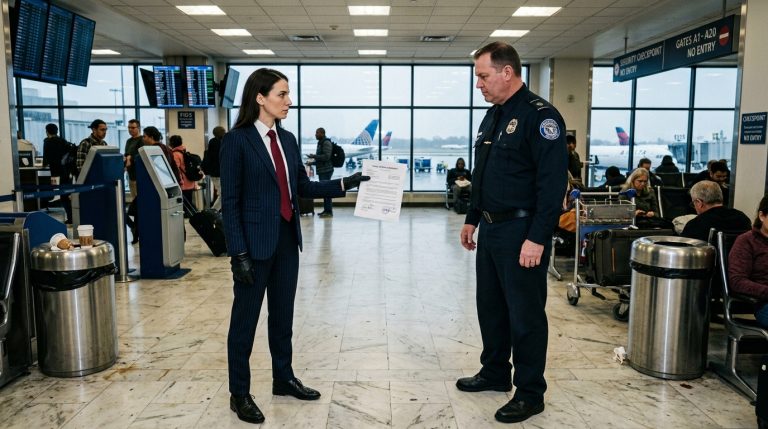
The airport terminal hummed with the discordant symphony of thousands—rolling luggage, announcements garbling into white noise, the rhythmic clicking of heels. To Elena Cruz, the noise felt physical, a pressure building behind her eyes. Her fingers, calloused and stained with the faint, lingering scent of antiseptic, tightened around the shoulder strap of her bag. The bag felt heavier than it should have, weighted down by her mother’s medical records and the crushing, quiet terror that this flight might be their last tether to stability.
She stood near a pillar, trying to make herself small. Her scrubs were a faded shade of navy, the fabric thinning at the cuffs after months of twelve-hour shifts that stretched into seventeen.
Then, she saw him.
Commander Nathan Cole stood across the hall, a pillar of rigid discipline in a sea of frantic travelers. He wore his dress uniform like armor, his posture so perfectly still that the crowd seemed to flow around him like water around a stone. He was scanning the terminal—not with the casual glance of a civilian, but with the systematic, sweeping precision of a man trained to find a threat before it manifested.
Elena’s heart skipped a beat, then slammed into her ribs. She hadn’t seen him since that frantic, blood-slicked disaster relief camp years ago. She had been a terrified teenager then, holding a compress to a stranger’s wound while he stood over her, his voice a low, steady anchor in the storm.
He hadn’t seen her yet.
Elena felt the tremor return to her hand. She thought of the hospital, of the cold, fluorescent-lit halls where empathy was treated as a liability and where she had spent the last week terrified that her next mistake would be her last. She looked at her wrist—the skin there felt phantom-prickly, a muscle memory of the training he had once imparted.
I recognize you. I need help. I trust you.
She took a breath that tasted of jet fuel and recycled air. She didn’t call out; she didn’t wave. She simply turned her wrist, her fingers brushing the skin twice—a sharp, deliberate motion.
The reaction was instantaneous.
Nathan Cole’s head snapped toward her. The predatory stillness in his shoulders didn’t leave, but his expression shifted, the hard lines of his face softening into a flicker of profound recognition. He moved toward her, not running, but cutting through the crowd with an efficiency that left a path in his wake.
As he closed the distance, the air around Elena seemed to chill. He stopped three feet away, his gaze darting to the medical bag, then back to her eyes.
“Cruz?” his voice was a low rasp, steady and devoid of the chaos surrounding them. “You look like you’ve been fighting a war.”
“I am,” she whispered, her voice cracking. “But the enemy isn’t wearing a uniform.”
Before he could respond, a shadow fell over them. A man in a tailored charcoal suit walked past, his phone pressed to his ear, his face a mask of cold, administrative efficiency. It was the CEO of her hospital. He didn’t look at them, but as he passed, he dropped a stack of files into a nearby trash bin—a quick, dismissive gesture.
Elena’s pulse thrummed. She recognized the file folder color: the same shade as her disciplinary warning.
Cole followed her gaze, his eyes narrowing. He looked from the CEO’s retreating back to the file, then back to Elena. The information gap hit her—why was he here? Why was the CEO here? And why, as the CEO walked away, did he pause to look at his watch, glancing back at Elena with a look of recognition that was far more chilling than the commander’s?
CHAPTER 2: THE WEIGHT OF THE SCRUBS
The silence following the CEO’s departure was not empty; it was heavy, suffocating, and charged with a static electricity that made the fine hairs on Elena’s arms stand up. The man—the CEO, the architect of her professional purgatory—hadn’t just walked away. He had discarded a file. It lay in the plastic basin of the trash bin, a stark, accusing pop of color against the grimy interior.
Elena stared at it, her lungs refusing to draw in more than a shallow sip of air.
“Cruz,” Commander Cole’s voice dropped, snapping her focus back to the present. He was still standing there, his presence a stabilizing, albeit intense, anchor in the shifting crowd. “You know him?”
“He’s my CEO,” she murmured, the words feeling like glass shards in her throat. She hadn’t expected the man who held her career in his palm to be standing twenty feet away in an airport terminal, least of all behaving with such calculated disregard. “I didn’t know he was traveling. I didn’t know he knew who I was.”
“He knows,” Cole said, his eyes scanning the terminal again, not for threats this time, but with a lingering, sharp appraisal of the man in the charcoal suit. “His reaction when I caught his eye? That wasn’t confusion. That was identification.”
Elena shifted her weight. Her feet ached—a deep, rhythmic throb that pulsed in time with the airport’s hum. She looked down at her hands, still trembling. The fabric of her scrubs was fraying at the wrist, a small, worn tuft of cotton catching on the zipper of her medical bag. It felt emblematic of her entire existence: frayed, held together by sheer stubbornness, and perpetually on the verge of unraveling.
“I need to go,” Elena said, her voice firmer now, driven by the sudden, sharp need to protect the fragile truth of her mother’s journey. She reached for the handle of her bag, her knuckles white. “My mother is at the gate. If he sees me, if he starts asking why I’m here instead of the ward, I—”
“You’re a nurse, Elena,” Cole interrupted, his voice steadying her. “Not a fugitive. Whatever he’s doing, whatever power he thinks he holds, it doesn’t change the fact that you’re doing your job.”
“Does it?” she retorted, the bitterness bleeding through her fatigue. “Because the last time I did my job—the last time I saved a life because the protocols were too slow to keep up—he called it ‘unauthorized clinical intervention.’ He signed the paper that told me I was a liability.”
She walked past him, her gait stiff and determined, ignoring the way her shoulder brushed against his crisply pressed uniform. The contrast between them was agonizing: he, the personification of order and strength; she, the embodiment of exhaustion and institutional attrition.
She navigated the crowded terminal, her eyes locked on the departures board, tracking the flight number she had memorized three days ago. Her mother, sitting in a wheelchair near Gate B-12, looked smaller than she had a week ago. She was dozing, her head tilted at an uncomfortable angle, a thin hospital blanket draped over her knees.
Elena reached her, the sight of her mother’s fragile, sleeping form stripping away the adrenaline and leaving behind only a raw, aching vulnerability. She knelt beside the chair, tucking the blanket closer to her mother’s chin.
“Elena?” Her mother blinked, her eyes hazy with sleep and the medication that kept the sharpest edges of the pain at bay. “Did you… did you get everything?”
“Everything’s fine, Mama,” Elena lied, the words flowing with a practiced, soothing rhythm she had perfected over months of false optimism. “Just a delay. We’re still on time.”
She looked back toward the terminal. Commander Cole hadn’t followed her, but she could feel the weight of his gaze from a distance. And then, there was the other presence—a shift in the air, the rhythmic, confident click of leather soles on polished tile.
The CEO was walking back. He wasn’t looking at his phone anymore. His eyes were scanning the rows of seats with that same, predatory, administrative precision he had used when surveying the hospital floor. He was looking for someone.
Elena felt the cold seep into her marrow. He wasn’t just walking; he was searching. And as his gaze settled on the area near Gate B-12, she realized with a sickening jolt that he hadn’t discarded the file because he was done with it. He had discarded it because he didn’t need the paper anymore.
He was coming for her.
CHAPTER 3: THE SILENT ERROR
The CEO’s shoes did not click. They absorbed the sound of the terminal floor, a muted, rubber-soled approach that felt more like a predator stalking through tall grass than a businessman navigating a public space. Elena remained on her knees, the cold tile leaching through her thin scrub pants, her hand still resting on the edge of her mother’s wheelchair.
She could feel the air pressure change as he neared—the faint scent of expensive, sharp citrus cologne cutting through the stale, recycled atmosphere of the terminal.
“Ms. Cruz,” he said. His voice was smooth, devoid of the jagged edge she had feared. It was the voice he used when speaking to board members: resonant, controlled, and utterly disarming. “I didn’t realize you were traveling today.”
Elena stood slowly, her joints protesting the sudden movement. She didn’t look at him directly; she kept her focus on a point just above his shoulder, a tactic she’d learned in the ward to avoid the crushing intensity of authority. “I’m on leave, sir. Personal business.”
He stopped, his presence looming. He wasn’t looking at her; he was looking at her mother. His expression shifted—the sharp, analytical mask sliding away to reveal something that looked, for a fleeting, terrifying second, like genuine empathy.
“Your mother?” he asked.
Elena nodded, her throat tightening. “Yes. She’s… she’s receiving treatment out of state.”
“I see.” He turned his gaze back to Elena, and the professional mask snapped back into place so tightly it was as if it had never left. “The ward is short-staffed this week, Ms. Cruz. We had a difficult shift last night. A patient in the ICU—a respiratory failure. It reminded me of your report, the one concerning your… unsanctioned procedure last month.”
Elena’s heart hammered against her ribs. The transition was so abrupt, so surgical, that she barely had time to process the shift. He was linking her past ‘error’ to the present failure of his own system. Was this it? Was he going to terminate her here, in the middle of a terminal, surrounded by thousands of strangers?
“I acted on my training, sir,” she said, her voice steadier than she felt. She forced herself to look at him, to meet the cold, calculating gray of his eyes. “The patient was declining. I had the knowledge, and I had the tools.”
“And you disregarded the chain of command,” he countered softly.
“I prioritized the life,” she replied.
As she said the words, a flash of white-hot memory surged through her: the disaster camp, the smell of mud and ozone, Commander Cole’s hand pressing against her shaking shoulder as he taught her how to set a tourniquet. Courage isn’t about rank, Elena. It’s about being the person who doesn’t look away.
She saw the CEO’s eyes flicker. A tiny, imperceptible twitch at the corner of his mouth suggested he wasn’t just hearing a subordinate’s excuses—he was hearing something he recognized.
“You have a tendency to be noticed, Ms. Cruz,” he said, his gaze drifting to the medical bag she had slung over her shoulder. “That can be a dangerous quality in a high-compliance environment. It makes you a target for both praise and… correction.”
He reached into his inner jacket pocket and pulled out a small, metallic card—the hospital’s secure access key, the one she had been forced to turn in after her formal warning. He held it between two fingers, weighing it.
“I was planning to sign your final separation papers upon my return to the office,” he continued, the silence between them stretching into a wire-thin, agonizing tension. “But I find myself curious. Most nurses in your position would have quit weeks ago. They would have crumbled under the weight of the reprimands and the lack of support.”
He held the card out, but didn’t give it to her. He kept it suspended in the air, a bridge or a barrier, she couldn’t tell which.
“Why stay, Elena?”
She looked at her mother, who was drifting back into a fitful, shallow sleep. She thought of the long hours, the empty bank account, the exhaustion that had become her constant companion. She thought of the patients who didn’t have anyone else to advocate for them.
“Because the patients don’t care about the chain of command, sir,” she said, her voice dropping to a low, intense whisper. “They care if someone is there when they stop breathing. And if I’m not there, the system will just let them go.”
The CEO’s face went entirely still. The ambient noise of the airport—the luggage wheels, the garbled announcements, the distant roar of engines—seemed to fade away, leaving only the two of them in a pocket of profound, uncomfortable quiet.
He didn’t hand her the card. Instead, he tucked it back into his pocket.
“Your flight is boarding, Ms. Cruz,” he said, turning on his heel. He didn’t look back. “We shall see if your dedication is as durable as your conviction when I return to the city.”
He walked away, leaving her standing there, her pulse racing, her hands cold. He hadn’t fired her. He hadn’t apologized. He had left her in a state of suspended animation, a pawn in a game she didn’t fully understand.
She turned to her mother, pulling the blanket tighter, but her mind was elsewhere. She watched the CEO disappear into the crowd, his gait purposeful and precise, and for the first time, she noticed something she hadn’t seen before: he was limping, just slightly, favoring his left leg with every step.
It was a small, humanizing detail that didn’t fit the picture of the cold, administrative giant. It was a crack in the armor. And as she wheeled her mother toward the gate, Elena knew that the next time they met, it wouldn’t be in a hospital office. It would be on her terms, and she would have to decide if she was playing to survive—or playing to win.
CHAPTER 4: THE DISCIPLINARY SHADOW
The automated doors at Gate B-12 hissed shut, a sound like a guillotine blade sliding home. Elena stood in the narrow glass-walled corridor, the hum of the boarding process vibrating through the soles of her shoes. Her pulse was a frantic, muffled drum against her eardrums. Every face in the boarding line—a sea of tired, gray-toned travelers—seemed to take on the sharpness of an accusation.
She pushed her mother’s wheelchair onto the gangway, the transition from the terminal’s carpet to the metal floor producing a jarring, metallic rattle. Her mother was awake now, her gaze drifting toward the small, circular window that revealed only the dark, industrial expanse of the tarmac.
“You seem far away, Elena,” her mother whispered, the tremor in her voice matching the fragile state of her hands.
“Just thinking about the ward,” Elena lied, the fabric of her scrub top clinging to her skin with the heat of the cabin air. “Just hoping I didn’t leave any charts incomplete.”
It was a reflex, a habit born of a year spent under the shadow of disciplinary review. But as she helped her mother navigate the narrow aisle toward their seats, Elena’s mind wasn’t on the ward. It was on the CEO—on the way he had held that access card, and more importantly, on that slight, betraying hitch in his step.
She buckled her mother into the seat, the click of the seatbelt sounding unnaturally loud in the confined space. Once she had stowed their meager belongings, Elena retreated to the small galley area near the front of the plane, feigning a need for water. The cabin was a cocoon of recycled, dry air that smelled of ozone and cheap coffee.
She reached into her bag to retrieve her mother’s updated treatment authorization forms, her fingers brushing against the stiff, laminated edges of the documents. She pulled them out, intending to double-check the physician’s notes, but as she unfolded the thick paper, a different sheet fell out—one she didn’t recognize.
It was a printout, a digital manifest of the hospital’s recent disciplinary filings. Her name was at the top, followed by a series of codes she had never seen before. But it wasn’t the codes that stopped her breath; it was the margin notes. They were handwritten in a sharp, slanted script that Elena recognized from the disciplinary warning she had received in the CEO’s office.
Observation: Insubordination or survival? Re-evaluate case file #882.
Her fingers curled around the paper, the texture of the ink feeling raised, almost tactile. The document wasn’t a warning; it was an internal dossier. And it wasn’t just about her. As she scanned the lines, she saw other names—other nurses she knew, colleagues who had been quietly dismissed or transferred over the last six months for “procedural discrepancies.”
A cold sensation washed over her, the kind that had nothing to do with the air conditioning. This wasn’t just a CEO cleaning house; this was a systematic audit of the hospital’s most independent staff. And she was the focal point.
A flight attendant moved past her, the movement causing the light to flicker across the document. Elena quickly shoved the paper back into the depths of her bag, her heart hammering against her ribs like a trapped bird. She needed to look at it again, to understand the pattern, but she couldn’t risk it here.
She turned to walk back to her seat, but stopped dead.
Commander Cole was two rows behind her, his posture relaxed, his eyes fixed on a magazine. He hadn’t acknowledged her, but as she passed, he adjusted his glasses, a slow, deliberate movement.
“The wind changes quickly in this sector,” he murmured, his voice so low it was almost a vibration in the air.
Elena didn’t slow down. She continued to her row, her mind racing. The Commander was here—on the same flight. He wasn’t just a passerby at the airport; he was connected. The CEO’s presence, the file, the Commander—the threads were no longer disparate; they were weaving a web, and she was already caught in the middle of it.
She sat down next to her mother, who had drifted back into a restless, light sleep. Elena stared at the seat back in front of her, the frayed fabric catching the light. She realized then that her “leave of absence” was a fiction. This flight wasn’t an escape; it was a deployment. And for the first time in her life, she felt the heavy, terrifying responsibility of knowing something she wasn’t supposed to know.
She pulled her bag closer, her hand resting on the hidden document, and watched the tarmac through the window. The ground crew was pulling away, the shadows stretching long and dark across the concrete. The plane began to move, a slow, shuddering start that felt like the heavy, inevitable turning of a gear. Elena closed her eyes, the texture of the document still burned into her fingertips, and prepared for the turbulence she knew was waiting in the clouds.
CHAPTER 5: THE RECOGNITION
The cabin lights flickered, a momentary death of the electronics that left the passengers in a suspended, terrifying darkness. Then, the plane shuddered—a violent, metal-groaning lurch that threw the entire row into a sudden, chaotic tilt.
Elena was thrown against the window, her shoulder slamming into the plastic shade. Beside her, her mother gasped, a frail sound that was immediately swallowed by the scream of the engines climbing to compensate for the sudden loss of altitude.
“Mama!” Elena lunged for her mother’s hand, her fingers gripping the seat’s armrest to anchor herself.
“What’s happening?” her mother cried out, the oxygen mask above them swinging wildly like a pendulum, a stark, yellow plastic specter in the dim emergency lighting.
Elena didn’t answer. She was watching the cabin, her eyes darting between the emergency exits and the flight attendants who were frantically trying to regain control. Then, she saw him. Two rows up, Commander Cole had turned around. He wasn’t reaching for an oxygen mask. He was scanning the cabin with that same tactical, predatory focus she had seen in the airport. His eyes caught hers, and for a split second, he signaled—a sharp, downward gesture with his palm.
Stay low.
Elena obeyed, ducking her head against the headrest, but the document—the dossier she had hidden—slid out from the side of the seat. It hit the floor, the pages spreading across the aisle like a fan of white, incriminating wings.
She reached for them, her heart hammering against her ribs, but her mother’s grip on her hand tightened, pulling her back. “Elena, don’t! Stay with me!”
Elena looked at the floor, then at the Commander, who was rising from his seat, moving against the violent swaying of the cabin with an unnatural, practiced grace. He was moving toward the front galley, toward the cockpit door, his face a mask of iron.
The turbulence escalated. The floor tilted so sharply that Elena’s feet left the carpet, her entire body weight pulling against the buckle of the seatbelt. She had a choice: reach for the documents, the proof that the hospital was systematic in its destruction of its staff, or remain anchored to her mother, who was currently struggling to breathe as the cabin pressure began to fluctuate.
She looked at the papers. They were inches away, trapped in the narrow space between the seats. If she lost them, she lost the only leverage she had. If she reached for them, she risked being thrown against the bulkhead as the plane pitched again.
She let the papers go.
Her mother was more important. Elena pulled the oxygen mask down, pressing it firmly against her mother’s face, her own breath coming in ragged, desperate gasps. As she did, she watched the Commander disappear into the front galley, and through the sliver of space between the seats, she saw a figure emerge from the flight deck.
It wasn’t a pilot.
It was the CEO.
The man in the charcoal suit was standing in the galley, his face ghostly pale in the strobe-like flickers of the emergency lights. He was holding something metallic—a small, handheld device that pulsed with a dull, rhythmic blue light. He wasn’t panicked. He was adjusting a setting.
Elena felt a surge of adrenaline that was colder and sharper than any fear she had ever known. The CEO wasn’t just a passenger; he was involved in something that required the redirection of the flight, something that made the safety of the plane—the safety of everyone on board—secondary to whatever mission he was carrying out.
The plane leveled off for a fraction of a second, the violence of the turbulence subsiding into a low, menacing rumble. The silence that followed was worse than the noise.
Commander Cole reached the galley, his voice rising above the hum of the engines. “Shut it down! Now!”
“You’re out of your jurisdiction, Commander,” the CEO replied, his voice calm, terrifyingly flat. “This is an internal hospital transfer. You don’t have the clearance to interfere.”
“Clearance?” Cole moved, a blur of motion that ended with his hand locked onto the CEO’s arm. “You’re jeopardizing two hundred lives for a board room cleanup!”
Elena realized then that the decoy—the “disciplinary review”—had been a distraction. The core truth was something much larger, something involving corporate control and the literal, physical erasure of the hospital’s most valuable assets. She hadn’t been fired because she was incompetent; she was being removed because she was the only one who had the training to recognize what the CEO was doing to the ward.
The CEO shoved Cole back, his composure finally fracturing. “You think you can save them all? You’re just as broken as she is, Nathan. You think a little bit of empathy makes you a hero? It just makes you a casualty.”
He turned, his eyes locking onto the row where Elena was sitting. He saw her. He saw the way she was staring at him, and in his expression, there was no surprise—only a cold, hollow pity.
“She knows,” he said, nodding toward Elena. “And that, Commander, is the most terminal mistake of all.”
The plane lurched again, the nose dropping as the CEO turned back to the instrument panel. Elena looked at the documents on the floor, the pages now scattered and unreadable, and realized they were no longer her weapon. Her weapon was the only thing the CEO couldn’t account for: the fact that she was still breathing, and she was still watching.
CHAPTER 6: THE REVIEW
The cockpit door—a heavy, reinforced barrier—was mere feet away, but the distance felt like a yawning chasm. The plane continued its aggressive, shuddering descent, the engines screaming in a high-pitched, harmonic protest against the abrupt change in trajectory. Elena didn’t wait for an invitation. She shoved her mother’s oxygen mask deeper into the woman’s trembling hands, her voice a desperate, urgent rasp: “Do not move. Keep the mask on, no matter what. Understand?”
Her mother nodded, her eyes wide, reflecting the erratic, flickering glow of the emergency lighting.
Elena didn’t look back. She pushed off the seat, her body reacting with a muscle memory forged in years of twelve-hour shifts and hospital emergencies. She didn’t think about the protocol, the law, or the consequences. She thought only of the pitch of the floor beneath her boots—the downward incline that spelled catastrophe for two hundred souls.
She scrambled into the galley, the metal flooring cold and slick under her palms. Commander Cole was a flurry of movement, his body a barricade between the CEO and the cockpit control panel. The CEO, though, was not reacting like a corporate executive; he was moving with the precise, methodical efficiency of someone who had practiced this moment hundreds of times in a simulation. He swiped at a keypad on the bulkhead, the blue light of his device casting long, spectral shadows across his face.
“You’re killing them all!” Cole roared, throwing his shoulder into the CEO’s chest. The impact sent them both skidding across the narrow galley. The CEO’s head hit a storage locker with a sickening, hollow thud, but he didn’t stop. He rolled, his fingers dancing across the keypad once more.
“I’m preserving the asset,” the CEO spat, his tie askew, his expression devoid of panic—only a cold, unwavering focus. “The hospital is not a building, Commander. It’s an idea. And ideas require a foundation of silence.”
Elena saw her opening. She lunged, not for the CEO, but for the device he was holding—the source of the blue pulse. Her fingers closed around the cold, hard casing, and she twisted, throwing her entire weight backward. The device skittered across the floor, sliding under the galley cart and out of reach.
The CEO froze. He looked at the floor, then at Elena. For a moment, the mask slipped. His eyes were not cold; they were weary—a bottomless, ancient exhaustion that shocked Elena more than his malice.
“You don’t understand what you’ve done,” he whispered, his voice trembling. “That device wasn’t a bomb. It was a reset.”
The plane’s nose surged, the sudden lift pressing them all into the floor. The cockpit door opened, and a pilot stumbled out, his face pale, eyes unfocused. The plane had been put into a manual override, a blind descent intended to scrub the flight’s data, to create a ‘mechanical failure’ that would bury the hospital’s records—and everyone on board—under the anonymity of an air disaster.
“Get to the controls!” Cole shouted at the pilot, shoving him back toward the cockpit.
The CEO stood up, his face bloodied from the hit against the locker. He didn’t move to attack. He stood there, watching as Cole wrestled the pilot into the seat. Elena held her ground, her back against the galley wall, her hands shaking. She could see the cockpit display from where she stood: a digital map of their current location, the line of their flight path ending in a sharp, red-inked drop toward the coastline.
“Why?” Elena asked, her voice cracking. “Why go this far? For a board meeting? For a budget review?”
The CEO didn’t look at her. He was watching the altimeter, his gaze tracking the flickering numbers as they climbed. “You think you’re a hero because you saved one patient?” he asked, his voice a low, bitter irony. “I’ve spent twenty years trying to save the entire institution from being torn apart by the very people who claim to love it. My ‘past,’ as you might call it, isn’t a secret. It’s a tragedy. I was the nurse, once. I was the one who saw the system break, and I decided I would rather be the one to break it first than let it continue to fail.”
He collapsed onto a jump seat, his head falling back against the wall. The plane leveled off, the scream of the engines dropping to a manageable, steady hum. The danger was receding, but the gravity of his admission hung in the air, a thick, suffocating weight.
He wasn’t an antagonist acting out of greed. He was a man who had been consumed by the very trauma he was trying to prevent. Elena felt a surge of cold clarity. The secret she had uncovered wasn’t just a record of malpractice—it was a chronicle of institutional rot that had started with a man who simply cared too much.
She walked over to him, her movements slow, cautious. She looked down at his bloodied hands, the hands that had signed her disciplinary papers, the hands that had almost sent them all into the sea.
“It’s over,” she said, the words heavy with the knowledge that the path back to ‘normal’ no longer existed.
The CEO looked up at her, his eyes hollow. “It’s never over, Ms. Cruz. You’ve only just started the shift.”
CHAPTER 7: THE OFFICE CALL
The transition from the screaming turbulence to the eerie, forced stability of a stabilized flight path was disorienting. Elena remained anchored to the galley wall, her knuckles white, her breath shallow. The CEO—her CEO, her tormentor, and now, a man broken by the weight of his own creation—sat huddled on the jump seat, his gaze fixed on nothingness. Commander Cole stood over him, his hand hovering near his side, his posture that of a man guarding a prisoner who had already been sentenced.
“You think this stops here?” the CEO muttered, his voice barely audible over the drone of the engines. “You think you can just land this plane and walk away with your integrity intact?”
“We aren’t looking for integrity,” Cole replied, his voice a low, hard line of steel. “We’re looking for accountability.”
Elena looked at them, then at the cockpit door. The pilot was still wrestling with the controls, his hands moving with frantic, jerky motions. She realized then that the ‘reset’ the CEO had attempted wasn’t just a physical action; it was a psychological one. He had believed that if he could erase the records, if he could create a clean slate, he could start over. He hadn’t realized that the people he was trying to erase—the nurses, the staff, the very people he treated as expendable—were the ones holding the records of his fall.
“I need to call the hospital,” Elena said, her voice sounding strange to her own ears.
Cole turned to her, his expression softening just a fraction. “Not yet, Elena. Not until we’re on the ground. We don’t know who else is connected to this. The network is deeper than a single board member.”
She nodded, the pragmatic truth of his words settling into her chest. She turned and walked back into the cabin. The passengers were quiet, a collective, stunned silence filling the space. She reached her mother’s row and sat down, the fabric of the seat feeling abrasive against her skin. She pulled her mother’s hand into hers, feeling the steady, rhythmic thrum of the woman’s pulse.
It was strong. Steady.
She opened her bag, the one she had barely managed to secure during the descent. The dossier—the pages that had spilled across the aisle—were crumpled and torn, the ink smudged where they had been walked on during the turbulence. She began to smooth them out, one by one.
She noticed something she had missed before. In the bottom margin of the final page, there wasn’t a name, but a coordinate. And beneath it, a string of names—the names of the nurses who had been ‘transferred’ over the last six months. She traced the lines with her finger, her heart aching. They hadn’t just been fired; they had been reassigned to a series of remote satellite clinics that the hospital board had been quietly shuttering.
They weren’t being erased; they were being isolated.
The realization was like a key turning in a lock. The CEO hadn’t been acting alone; he had been acting under the direction of an institution that valued the suppression of potential over the growth of human talent. She looked at her phone, the screen dark, reflecting her own face—pale, determined, and entirely changed.
The plane began its descent, the wheels unfolding with a hydraulic moan that shuddered through the airframe. As they touched down, the impact a jarring, metallic jolt, Elena realized that the hospital wasn’t just a place of work. It was the arena where the battle for the future of their profession was being decided. And she was no longer an observer.
As the plane taxied toward a remote, unlit section of the airfield, she saw the lights of black vehicles waiting in the shadows. The authorities. The real ones. She took a deep breath, the taste of the cabin’s stale air finally giving way to the cold, sharp scent of the tarmac. She didn’t look back at the galley, didn’t look at the man who had tried to build a sanctuary by burning down everything else. She focused on her mother, on the life they still had to build, and on the name she would give when the investigators asked for a witness.
“Elena?” her mother whispered, her eyes fluttering open as the plane ground to a halt. “Where are we?”
“We’re home, Mama,” Elena said, her voice a promise. “We’re finally home.”
CHAPTER 8: THE QUIET NIGHT
The hangar doors creaked open, revealing the first, fragile light of dawn. The blue sky above the airfield was pale, almost translucent, and the air held the crisp, biting cold of an early morning. Elena stepped out from the metal shell of the plane, her boots hitting the concrete with a sound that felt entirely too loud in the stillness.
Commander Cole was already outside, speaking to a group of men in dark jackets. He stopped as he saw her, his expression unreadable, and signaled for her to approach. The CEO followed a few paces behind, his movements sluggish, his clothes stained and rumpled. He didn’t look like a titan of industry anymore; he looked like a man who had finally reached the end of a very long, very exhausting shift.
Elena walked toward them, her hands tucked into the pockets of her scrubs. As she reached the group, one of the investigators—a woman with sharp eyes and a clipboard—stepped forward. She didn’t look at the Commander or the CEO. She looked at Elena.
“Ms. Cruz,” the woman said, her voice professional but not unkind. “We have the files. We have the logs. And we have the statements.”
Elena looked at the CEO. He wasn’t fighting back. He wasn’t reaching for a hidden agenda. He just stood there, looking out at the horizon where the sun was beginning to bleed gold over the edge of the world.
“It was never about the efficiency,” he said suddenly, his voice raspy, directed not at the investigators, but at Elena. “It was about the fear of becoming what I hated. I thought if I controlled everything, if I optimized the chaos, I could stop the system from breaking people like us.”
“You didn’t stop it,” Elena said, her voice quiet but steady. “You just made the system worse.”
“I know,” he whispered.
As the investigators moved in to escort the CEO toward the waiting vehicles, a quiet, orderly process, Elena felt a strange, hollow sensation in her chest. The Payoff was here—the sight of the man who had loomed over her life for so long being rendered small, powerless, and ordinary. There was no grand explosion, no cinematic confrontation. Just the mundane, gritty truth of a man whose methods had finally failed him, a victim of his own distorted logic.
Cole walked over to her as the cars pulled away, the sound of the tires on gravel the only noise in the quiet morning. He didn’t offer a platitude. He didn’t tell her it was going to be easy.
“You did the right thing, Elena,” he said, his voice low. “But you know, the hospital… the board is going to try to paint this as a rogue decision. They’ll try to distance themselves from him. It won’t be over until you make sure the truth of the system, not just the man, is recorded.”
Elena looked at the hangar, then back at her mother, who was being assisted down the ramp by a paramedic. The symbolic closure she had been waiting for finally arrived. She reached into her pocket and pulled out the old, taped-together stethoscope—the one she had repaired time and time again, the one that had served her through the worst shifts of her life. She looked at it, then tossed it into the nearby trash bin. It was time for something new.
She turned to Cole, a small, tired smile touching her lips. “I’m not going back to the way it was. I’m going to make sure that when I walk into that building tomorrow, I’m not walking in as a victim of the system. I’m walking in as the one who’s going to rebuild it.”
The denouement felt like a long, slow exhale. She walked over to her mother, who was sitting in an ambulance, wrapped in a warm, clean wool blanket. Elena climbed in beside her, the interior of the vehicle smelling of fresh coffee and antiseptic—a scent that no longer felt like a threat, but like a promise of work to be done.
As the ambulance pulled away, leaving the airfield behind, the world began to wake up. People were starting their days, unaware of the quiet, pivotal collapse that had just occurred in the dark hours of the morning. Elena leaned her head against the window, watching the city skyline come into view.
She was tired, her body aching with a deep, bone-weary exhaustion, but for the first time in years, her mind was silent. The mystery was gone, the secrets were out in the light, and the future—a vast, unpredictable expanse of effort and healing—was waiting for her. She had survived, and more importantly, she had found the courage to see the truth for what it was: not a chain to bind her, but a tool to fix what had been broken.
The quiet was not the absence of struggle; it was the start of something that could finally, truly, last.