The Phoenix Threshold: A Journey of Silent Valor, Reclaimed Integrity, and the Gentle Architecture of Healing
CHAPTER 1: The Weight of Whispers
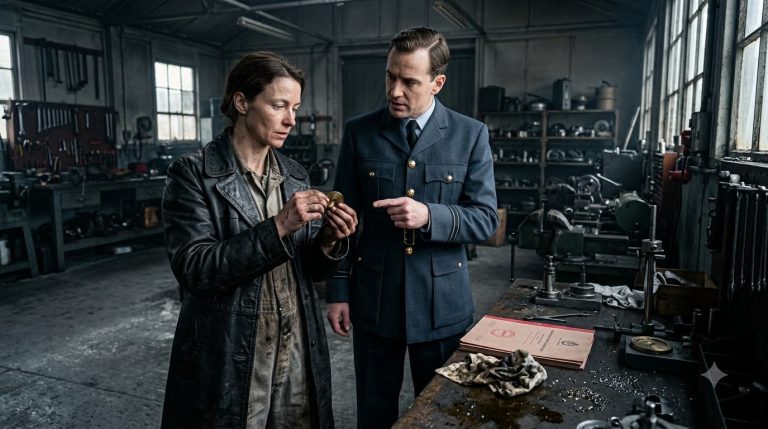
The mess hall at Redmond Base was a cacophony of scraping chairs and the rhythmic metallic clatter of MRE tins, but for Sergeant Nenah Ror, the room was muffled, as if she were viewing it through a pane of thick, frosted glass. She moved through the perimeter of the room, the handle of the industrial floor buffer vibrating against her palms, a hum that fought for dominance against the low-frequency gossip aimed directly at her.
“Heard she didn’t even make it past the tree line before she panicked,” Private Dawson’s voice cut through the air, pitched specifically for her to overhear. It wasn’t a shout; it was a casual, conversational jab, the kind designed to be overheard and internalized. “My squad lead said she’s got a record so black you can’t even read the ink.”
Nenah didn’t flinch. Her shoulders remained set like stone, a posture forged in terrains far harsher than the flat, unforgiving plains of Texas. She watched the dust motes dance in the late afternoon sun, golden and indifferent. Beside her, the floor tiles were a mosaic of scuffs and stains, reflecting the weariness of a thousand footsteps. She focused on the friction—the way the buffer caught on a loose corner of adhesive, the steady, predictable pull of the machine.
She kept her gaze fixed on the intersection of two tiles. If she didn’t look up, they didn’t exist. If she didn’t react, the story they were weaving around her couldn’t take root. It was a strategy of subtraction: remove the reaction, remove the oxygen from their fire.
As she maneuvered the buffer near the far wall, a shadow fell across her path. Corporal Voss stood there, his canteen tilted toward his mouth, a smirk playing at the corner of his lips. He didn’t say anything, just stood in her way, forcing her to alter her trajectory. It was the third time that day. A calculated, minor obstruction, the kind of subtle cruelty that wasn’t a violation of protocol but a deliberate unraveling of dignity.
“Need a hand, Sergeant?” Voss asked, his tone dripping with a mock-concern that made the air feel thin. “Don’t want you getting lost on your own route. Might end up in another mess, yeah?”
Nenah finally killed the motor. The sudden silence in the hall was deafening, drawing a few more heads from the tables nearby. She straightened, the sleeve of her fatigues riding up just an inch, exposing the edge of the dark, geometric ink that snaked around her forearm. She saw Voss’s eyes dart to the mark, his smile faltering for a heartbeat before he hardened it again.
“I know the way, Corporal,” she said, her voice a flat, steady line. She picked up the buffer handle, her fingers firm, her internal focus narrowing to the singular task of the next step. She would finish the floor. She would store the gear. She would exist in the periphery of their judgment, carrying the weight of a secret that would have burned the room down if she ever dared to breathe it out.
But as she turned back to the machine, she noticed something beneath the buffer’s spray: a piece of paper, crumpled and discarded, resting near the edge of the doorway. It was a dispatch notice, standard issue, but it was marked with a red stamp she hadn’t seen since her final debrief. A shiver that had nothing to do with the air conditioning ran down her spine. The past, she realized, wasn’t just buried; it was currently vibrating beneath her boots.
CHAPTER 2: The Geometry of Exposure
The silence in the warehouse felt different now—thicker, heavier, like the air inside a vault that hadn’t been opened for decades. Nenah didn’t reach for the paper immediately. Instead, she let her gaze linger on it, her hands resting on the cool, rubberized grips of the floor buffer. Her heart rate didn’t spike; she had long ago trained that reflex out of her system. Instead, she felt a cold, familiar clarity, the kind that preceded a breach.
She pushed the buffer forward, the machine’s heavy circular head sliding over the floor and effectively covering the discarded dispatch notice. It was a calculated motion, one that allowed her to observe the warehouse’s bay door from the corner of her eye. The junior soldiers had retreated, their laughter echoing into the stairwell, but the sense of being watched persisted. It wasn’t just the hazing anymore; it was the realization that the system was beginning to itch, to question, to seek patterns in the static of her existence.
Her mind drifted, an involuntary slide into the gray, jagged landscape of her memory. Syria. The smell of burning rubber and ozone. The way the light had fractured through the shattered glass of the extraction site. She remembered the weight of the journalist—the man who held the truths that had cost seven lives to preserve—against her shoulder. She remembered the specific, geometric angle of the Phoenix insignia they had been branded with, a mark of total erasure.
The memory was a phantom, intrusive and sharp. It reminded her that she wasn’t just a Sergeant on inventory duty; she was a variable that had been subtracted from the equation of public history. The buffer hit the far wall with a dull, muffled thud, the vibration traveling up her arms and snapping her back to the present.
Nenah cut the power. The sudden cessation of the machine’s hum left a hollow space in the room. She walked back toward the bay door, her movements precise, her gait measured. She bent down, picking up the dispatch notice. It was damp from the floor’s cleaning solution, the red stamp—a classification seal she hadn’t seen in two years—bleeding slightly into the paper. It was a mistake. Someone in Records had been careless, or someone was testing her.
She folded the paper into a small, tight square, tucking it into the hidden inner pocket of her fatigues. The texture of the paper against her side felt like an indictment. She had promised herself she would stay invisible, that she would serve out her time in this administrative purgatory without surfacing, but the logic of the “therefore/but” cycle was inescapable.
Therefore, she possessed the document. But, the document was proof that the Phoenix Variant was not as buried as the Command believed.
She walked toward the supply office, her boots clicking softly on the concrete. She needed to know who had access to these files. She reached the door and saw Lieutenant Carter standing by the inventory terminal. He was hunched over, his brow furrowed, his fingers hovering over a keyboard. He looked young, almost painfully so, and the way he held his shoulders suggested a man struggling under the weight of an internal conflict he wasn’t yet prepared to name.
He didn’t hear her approach until she was three paces away. When he turned, his expression was a cocktail of surprise and something softer—guilt, perhaps.
“Sergeant,” he said, his voice hesitant. He closed the browser window on his terminal a second too late.
Nenah stopped, her face an unreadable mask. “Lieutenant,” she replied. She didn’t press him about the screen. She didn’t need to. The way his eyes flicked to her arm, to the place where her sleeve was partially rolled up, told her everything. He was digging. And in a place like Redmond, digging was a dangerous, solitary profession.
“I was just… auditing the disposal manifests,” Carter said, his attempt at authority failing to mask the tremor in his voice. “There’s a lot of old gear being phased out. Some of the paperwork doesn’t align with the transit logs.”
“That’s a common oversight,” Nenah said, her tone deliberately flat, transactional. She wanted to steer him away, to protect him from the scrutiny that followed her, but she knew the “Earned” rule of their world. He had already seen the cracks.
“Is it?” Carter took a step forward, his voice dropping to a near-whisper. “Because I found a discrepancy in the Tier-series manifest. It’s not just paperwork, Sergeant. It’s a ghost in the system.”
Nenah held his gaze, her heart beating a steady, rhythmic pulse. The air between them felt charged, a silent communication of shared, forbidden territory. She realized then that she wasn’t alone in the shadows of the base. The system was failing to contain its own secrets, and the pressure was beginning to manifest in the curiosity of those who were supposed to be its keepers.
She turned to leave, but stopped at the threshold. “Be careful where you walk, Lieutenant. The floors at this base are thinner than they look.”
She left him in the silence of the office, the crumpled paper in her pocket acting as a weight, a compass, and a warning. She didn’t look back. She had a floor to finish, and now, she had a situation to calibrate. The truth was building momentum, whether she wanted it to or not.
CHAPTER 3: The Geometry of Inspection
The morning didn’t break so much as it cracked open, spilling a harsh, sterile light across the Redmond Base tarmac. Within an hour of her encounter with Lieutenant Carter, the atmosphere in the warehouse had shifted from a place of quiet exile to a pressure cooker. Word of General Myron Keane’s unannounced arrival had traveled through the barracks like a contagion.
Nenah stood near the bay door, her hands occupied with inventory manifests, but her senses were tuned to the vibration of the base. The usual cadence of the morning—the slow, rhythmic slog of the inventory crew—had been replaced by the frantic, dissonant noise of forced perfection. Soldiers were scrambling to hide frayed edges, to scrub away the grime of routine, to construct a facade of readiness that hadn’t existed twenty-four hours prior.
She felt a phantom tightening in her chest. It was the “inspection itch”—that familiar, cold awareness that she was now a liability in a landscape suddenly being scrutinized for weakness.
“Ror! Move that stack of pallets to the back,” Corporal Voss shouted, his voice cracking with an uncharacteristic edge of panic. He was sweating, his uniform collar already showing a dark crescent of stress. He didn’t look at her; he was too busy trying to align a stack of boxes to be perfectly perpendicular to the floor seams. “The General is going to be in this sector by 0900. If he sees one square inch of mess, we’re all getting our heads served on a platter.”
Nenah didn’t argue. She moved to the pallets, her boots hitting the concrete with a practiced, heavy rhythm. The physical labor was an anchor, a way to keep her thoughts contained within the small, manageable geometry of boxes and tape. Yet, her mind was pulled back to the dispatch notice still hidden in her pocket. It felt like a stone, heavy and unyielding against her ribcage.
She caught a glimpse of herself in the polished surface of a metal cabinet: a soldier in grease-stained fatigues, eyes focused on nothing, a ghost trapped in a machine. She wondered if Keane would see the ghost, or if he, like the rest of them, would only see the “failure” stamped into her file. The irony was a bitter taste in her mouth. She had been the one who had seen the real-world consequences of failure—the bodies left in the dust of the Syrian plains—while these people practiced a performance of it, terrified of a general’s glance.
As she stacked the final pallet, she noticed Lieutenant Carter hovering near the supply office again. He looked as though he hadn’t slept. He was watching the bay door, his eyes darting toward every shadow. He looked less like an officer and more like a man waiting for a wrecking ball.
Nenah finished her task and walked past him, keeping her stride steady, her gaze forward.
“He’s not just coming for the gear,” Carter whispered as she passed, his voice barely audible over the hum of a distant forklift.
Nenah didn’t slow down, but she felt the hairs on her neck prickle. She didn’t respond, yet the message landed with the weight of a lead weight. He’s coming for the truth.
She reached the back of the warehouse, where the shadows were long and the air tasted of dry dust and iron. She needed to breathe, to find a moment of stillness before the inspection team arrived. She leaned against the cold metal of a storage rack, closing her eyes for a heartbeat. Her mind flickered—a vision of the Phoenix emblem she wore, not as ink, but as a burning, geometric shape. It was a brand of silence, a mark that identified her as one of the few who had witnessed the impossible.
The floor trembled. The heavy vibration of a motorcade approaching the main gate signaled that the time for preparation had ended. The frantic energy in the warehouse reached a crescendo; soldiers were suddenly standing in lines that hadn’t been there a moment ago, faces rigid, eyes fixed straight ahead. The facade was complete.
Nenah stepped out from the shadows, blending into the periphery of the warehouse floor. She was a silent observer in a play she had once starred in, watching the actors take their positions. The irony wasn’t lost on her—the most prepared person in this room was the one everyone else considered broken.
The bay door groaned open, spilling a blinding white light into the room. General Myron Keane walked in, and the world seemed to shrink to the distance between his polished boots and the concrete floor. He didn’t look at the displays of perfection. He didn’t look at the alignment of the crates. His eyes moved, scanning the room with the calculated, predatory precision of a man who looked for the cracks in the foundation rather than the shine on the surface.
And then, his gaze stopped. It fixed on the periphery, where Nenah stood in the dim, fading light of the warehouse back-corner. The air in the room seemed to evaporate. She held his stare, her hands pressed flat against her sides, the dispatch notice in her pocket feeling like a burning ember. This was the moment the myth had to collide with the reality.
Keane’s expression didn’t shift—he was a master of the mask—but the tilt of his head was the movement of a predator who had just caught the scent of something it hadn’t expected to find in the scrub. The inspection wasn’t over; for Nenah Ror, it was only just beginning.
CHAPTER 4: The Archive of Shadows
General Keane’s stare lingered, a heavy, gravitational pull that seemed to warp the very air around the warehouse bay. Nenah felt every muscle in her body transition from the reflexive stillness of a soldier into the tactical, coiled readiness of an operative. She didn’t look away, but she lowered her chin just enough to break the direct challenge. She wasn’t a soldier in his inspection line; she was an asset he didn’t know how to categorize.
Keane moved on, his voice booming as he directed his team toward the northern wing, but the ripple effect was instantaneous. Corporal Voss, who had been standing a few feet from Nenah, visibly exhaled, his face draining of its frantic color. He didn’t look at her, but he shifted his distance, creating a wider berth, as if her proximity to the General had made her radioactive.
Nenah saw her opening. The warehouse was now a hive of activity, the inspection team moving through racks and lockers with mechanical, distracted intensity. She slipped behind a stack of shipping crates and moved toward the administrative hallway.
She needed to see what Lieutenant Carter had uncovered. He had mentioned the “Black Archive,” a term that shouldn’t exist in any official Redmond Base database. If it did, it was a glitch in the machine, an oversight that could be her only leverage.
The archives were housed in a subterranean level, a place where the base’s central air conditioning hummed with a low, bone-chilling rattle. The lights here flickered in rhythmic, dying pulses, casting long, sickly shadows across the rows of metal filing cabinets. She found Carter’s terminal—the one he’d been using earlier—still logged in, the screen glowing with a soft, green hue that felt alien in the damp darkness.
She sat, her fingers moving over the keys with a muscle memory that bypassed her conscious intent. She wasn’t looking for standard reports; she was looking for the fractures. She bypassed the base’s internal registry, digging into the sub-sectors that required authorization she shouldn’t have possessed. Her heart remained a calm, steady rhythm, but her palms were slick with the cold damp of the room.
She hit a wall of red-lettered prompts. Access Denied.
She didn’t force it. She looked for the error—the logic of the code. She remembered the signature of the Phoenix Variant: its angularity, its demand for specific data protocols. She entered a string of command-line overrides, her movements fluid and devoid of hesitation. The screen flickered, the red text melting away to reveal a directory labeled simply: Redmond_Ghosts.
She clicked. The files were there—hundreds of them—but as she began to scroll, she noticed the discrepancy. Every file had a clearance timestamp, except for one. Her own. There was a missing signature, a void in the metadata that acted like a scream in a silent room. Someone had pulled her record from the active directory and manually replaced it with a forgery.
“You shouldn’t be here, Sergeant.”
The voice came from the shadows behind the aisle. Nenah didn’t jump. She pulled her hands from the keyboard, turning slowly in the rolling chair. Lieutenant Carter stood there, his flashlight beam pointed at the floor, not at her. He looked terrified.
“I found the ghost,” she said, her voice quiet, the texture of the words feeling like gravel in the small room.
Carter took a step into the light. He looked at the screen, then at her, his eyes wide with a mixture of awe and panic. “I saw the signature gaps yesterday. It’s not just you. There are others. Soldiers who went missing in the ‘Triangle of Death’ and were never officially recorded.”
“That’s the decoy,” Nenah said, her eyes snapping back to the screen. “They’re hiding the failure of the mission, but they’re also hiding the identity of the asset we extracted. That’s the real secret. They don’t want the world to know who that journalist was because it proves that Command didn’t save a life—they leveraged one.”
The gravity of the realization hit her, not as a shock, but as a solidification of the past. The mission hadn’t been about rescue. It had been about maintaining a political status quo that kept the gears of the military-industrial complex spinning.
“If we bring this to light, we aren’t just clearing your name,” Carter said, his voice trembling. “We’re burning the base down.”
“Then we make sure we have enough light to see by when the smoke clears,” Nenah replied. She grabbed a portable drive from her pocket and inserted it into the port, the data transfer bar crawling across the screen with agonizing slowness.
Every second was a gamble. The warehouse was still being inspected, and General Keane was only three levels up. She was no longer just standing her ground; she was actively dismantling the structure that had kept her in the dark.
The transfer hit 90 percent when the overhead lights buzzed and went to full intensity. The silence in the archive was shattered by the sound of heavy, rhythmic footsteps echoing down the corridor. They were coming back.
“Carter, get out,” she ordered, her voice low and sharp. “They’ll look for you. I’m the one they expect to be causing trouble.”
“I’m staying,” he said, and for the first time, he didn’t look like a nervous lieutenant. He looked like someone who had chosen a side.
The footsteps stopped right outside the archive door. Nenah pulled the drive, the plastic warm against her skin, and stood. The door to the archive began to swing open, the hinges screaming in the quiet dark.
CHAPTER 5: The Fragile Echo
The door swung back, but it wasn’t the General who stood in the frame. It was his lead aide, Captain Halloway, his hand resting on the holster at his hip. Behind him, two guards stood like statues, their faces devoid of the flicker of humanity that Nenah had seen in Lieutenant Carter.
Carter didn’t retreat. He stood between Nenah and the doorway, his shoulders squared, though the trembling in his fingers gave him away. “There’s nothing here, Captain,” he said, his voice straining for a level of authority that felt fragile in the sterile, high-tension air of the sub-level. “Just old inventory audits. Routine maintenance.”
Halloway stepped into the room, his eyes sweeping over the rows of filing cabinets before locking onto Nenah. He didn’t look at Carter. He looked at the workstation where the data transfer had just finished. “Routine maintenance involves encrypted drives in unauthorized ports, Sergeant Ror?”
Nenah remained seated, her hands resting calmly on the edge of the desk. She felt the weight of the portable drive in her pocket—a small, plastic square that contained the undoing of a career. “I was checking records, Captain. Finding the truth about my own history seems to be a prerequisite for my current assignment.”
Halloway’s lip curled in a thin, mirthless smile. “The truth is a luxury that people in your position lost the right to two years ago. Hand over the drive, Ror.”
Before she could speak, the room shuddered. A low-frequency hum, deep enough to feel in the marrow of her bones, rattled the metal cabinets. Suddenly, the overhead lights didn’t just flicker—they died, plunging the archive into absolute, claustrophobic darkness. It was a grid failure, perhaps a systemic overload from the base’s frantic inspection preparations, or perhaps something more deliberate.
In the sudden void, the texture of the room changed. The smell of ozone—the sharp, electric tang of a short circuit—became the only sensory input. Nenah moved. She didn’t rely on sight; she relied on the spatial geometry she had committed to memory the moment she entered. She slid the chair back, her boots silent on the concrete, and moved toward the ventilation shaft access she had noted earlier, a small, square shadow in the back wall.
“Secure the perimeter!” Halloway’s voice rang out, sharp and discordant in the dark. A flashlight beam sliced through the gloom, hitting the space where she had been sitting a second before.
“She’s moving!”
Nenah reached the ventilation grate, her fingers finding the latch with practiced, efficient speed. The metal was cold and slightly rusted, a grit of oxidation rubbing off onto her skin. She pried the grate open, the sound muffled by the rhythmic thrum of the base’s cooling fans. She slipped inside, the darkness offering a temporary, claustrophobic sanctuary.
Behind her, she heard the sound of the guards struggling with the filing cabinets, the metal doors clanging in the dark. Carter shouted something, an incoherent protest that was cut short by a dull thud—the sound of someone being forcefully silenced. The escalation was no longer abstract; it was violent, and it was fast.
She crawled through the narrow, dust-choked shaft, her elbows and knees scraping against the galvanized steel. Every movement was a calculation. She was moving toward the warehouse exit, away from the archive, away from the net that was closing. But she couldn’t simply run. The drive in her pocket was the only proof that the Phoenix Variant had existed as an operation, not a failure.
She reached the exit grate, looking down into a quiet supply room. It was empty. She dropped silently, landing in a crouch. Her heart was a metronome, counting down the seconds until they realized she had escaped the archive’s perimeter.
She walked toward the light of the bay door. The warehouse was still humming with activity, but the focus had shifted. A group of military police was moving toward the subterranean levels, their movements frantic and uncoordinated.
She stood in the shadow of a stack of crates, watching the chaotic choreography of their response. Lieutenant Carter was being dragged toward the exit, his head bowed, his uniform torn. He had taken the fall to give her the window she needed. The weight of that sacrifice was a cold, sharp blade against her conscience. She had wanted to protect him, but the system had forced a binary choice: the secret, or the person.
She gripped the drive. She had the truth, but the cost was rising. The system wasn’t just hiding; it was hunting. And as she stepped out into the blinding, indifferent light of the Texas sun, she realized that the only way to finish this was to stop running. She had to take the drive to the one place it couldn’t be redacted.
She pulled her sleeve down, hiding the ink of the Phoenix. The journey wasn’t over. It was just entering the final, inevitable friction of the end.
CHAPTER 6: The Phoenix Ascendant
The asphalt of the base perimeter felt different under her boots—less like a cage and more like a bridge. Nenah didn’t look back at the warehouse. She walked with a steady, deliberate gait, the portable drive feeling warm against her palm, a solid, tangible weight of truth. She wasn’t just carrying data; she was carrying the narrative of seven lives that had been systematically erased by a desk-bound policy.
She reached the perimeter fence, the chain-link humming in the heat. A black sedan sat idling by the guard shack, and General Myron Keane stood beside the open door, his uniform sharp against the desaturated horizon. He didn’t look like a man who had been inspecting gear; he looked like a man who had finally seen the structural integrity of his own institution collapse under the weight of its own lies.
He didn’t speak as she approached. He simply held out a hand, waiting.
Nenah stopped, the silence between them filled with the dry rattle of dead grass. She held the drive out, her fingers steady. “The Phoenix Variant wasn’t a failure, General. It was a liquidation. The journalist wasn’t just a asset; he was the witness to the shadow-funding of this sector’s training operations.”
Keane took the drive, his expression shifting from stoic command to a hollow, devastating recognition. “I know,” he said, the admission soft, almost lost in the wind. “I signed the redaction orders, thinking it was for the greater good of the branch. I thought I was protecting the institution from a scandal that would have dismantled our funding.”
“You didn’t protect the institution,” Nenah replied, her voice devoid of bitterness, stripped down to its core, pragmatic truth. “You protected the secret at the cost of the people who held it. And now, you’re the one holding the drive.”
Keane looked at the device, then up at her. For the first time, he looked old. “What now, Sergeant?”
“Now, you do what a general is supposed to do,” she said. “You fix the record. You honor the seven who didn’t come back, and you dismantle the system that treats soldiers like inventory.”
She didn’t wait for his answer. She turned and began the walk toward the distant treeline, moving toward the life she had started to build in the mountains. She felt a profound, quiet shift in her center of gravity. The weight of the secret, the burden of the rumors, the cold, static isolation—it was all dissolving.
Six months later, the mountains of Colorado were a tapestry of late-autumn gold and deep, cooling shadows. The transition center was quiet. Nenah sat on the porch, her hands busy repairing a small, wooden crate that had been splintered in the move. The wood was rough, the grain stubborn, but she worked with a patient, rhythmic focus.
The internal investigation at Redmond had been a seismic event, but it had yielded exactly what it needed to: the truth, finally, had the weight of official record. The Silent Emblem Project was underway, and the names of the seven fallen were being etched into the marble of the war memorial. It wasn’t the kind of victory that changed the world overnight, but it was the kind that changed the architecture of the future.
She reached into her pocket and pulled out the letter from Corporal Voss, the paper frayed at the edges, a testament to how often she had read it. She placed it into the repaired crate, the tactile sensation of the wood grain beneath her fingers a grounding, permanent reality.
A young woman, a former medic from a Tier-series unit, walked out onto the porch, carrying two steaming mugs of coffee. She set one down beside Nenah. She didn’t ask what she was doing. She simply sat, looking out at the mountain range.
“How’s the hand?” the younger woman asked.
“It’s steady,” Nenah said, looking down at her forearm, where the Phoenix tattoo was partially visible beneath her sleeve. It was just ink now—no longer a code, no longer a mark of erasure, but a symbol of the cost of survival.
She took a sip of the coffee, the warmth radiating outward. She wasn’t a ghost anymore. She wasn’t a warning label. She was a woman in a mountain valley, surrounded by the slow, inevitable resilience of life. The silence here didn’t isolate; it was a conversation she finally understood.
The struggle to survive the system had been a crucible, and the person who had emerged on the other side was not the soldier who had walked into the triangle of death, nor the woman who had been bullied on the warehouse floor. She was something else—something forged by the truth, tempered by the long, cold wait, and finally, undeniably, whole.
She watched the sun dip below the jagged horizon, the light casting long, amber shadows across the porch. The work of healing was slow, a constant, quiet maintenance of the soul, but for the first time in years, she didn’t look back. She simply breathed, listening to the wind move through the pines, and waited for the next shadow to arrive—not because she had to, but because she had the space to catch them.