The Paper Archive: A Cold Calculation of Boundaries, Betrayal, and the Inevitable Weight of Truth
CHAPTER 1: THE FIRST BREACH
The notification icon was a small, glowing red circle—a puncture wound on my phone’s lock screen. 6:12 a.m. Most people were still asleep, dreaming of weekend plans, but Karen Whitlock was already hard at work inside the county e-recording system.
I sat up, the sheets sliding off my shoulders. The air in the room was cool, but the blood in my temples felt hot and rhythmic. I didn’t panic. Panic was for people who didn’t keep records. I unlocked the screen, the blue light catching the sharp edges of my desk, the glass of water, the hard, black frame of my monitor.
The document title was clinical, cold, and entirely predatory: Notice of Claim.
They had referenced my parcel ID with the surgical precision of an intruder picking a lock. I tapped the PDF, watching it load. There it was—my address, my deed, and a reference number that shouldn’t have existed. Karen had filed it as an authorized agent. She was moving from brochures to legal clouds.
I set the phone down and walked to the window. Outside, the canal was a ribbon of dark, oily silver under the early morning haze. The shoreline, my shoreline, looked calm. Too calm. She was betting that I wouldn’t notice the document until the dirt was already being moved, until the stakes were deep in the mud and the path was a fait accompli. She was betting on the fact that most people are too tired, too polite, or too overwhelmed to fight a paper empire.
I turned back to the desk. My laptop was already open, the cursor blinking in the search bar. I didn’t feel rage. Rage was a fog. I needed a mirror. I needed to see exactly how she had tried to paint my land as her property.
I opened the county auditor’s portal and initiated the download. I saved the file to my encrypted drive, labeled it with the date, the time, and the instrument number. Then, I pulled up the previous email she’d sent—the one disguised as a “community corridor” brochure—and dropped it into the folder beside the new claim.
Every move she made was now being mapped into a timeline. Every digital footprint she left was becoming evidence. She thought she was building a path for families; she was actually building the very document trail that would eventually dismantle her board, her influence, and her standing in this neighborhood.
I picked up my phone again. The screen felt cold against my palm. I opened my attorney’s email thread, attached the PDF, and typed a single line: They’ve escalated to a recorded claim. File the cease and desist.
I looked back out at the canal. The sun was just starting to crest over the subdivision houses. I knew what would happen next. She’d bring the machines. She’d bring the men in high-vis vests. She would try to physically overwrite my boundary with wood and stone.
But I had something she didn’t: I had the sequence. And she was about to find out that the systems she used to intimidate others were the exact same systems that would hold her accountable.
A sudden, sharp movement caught my eye. Down by the canal, a white SUV pulled up to the curb. It stopped. A clipboard appeared on the dashboard.
CHAPTER 2: THE DIGITAL AUDIT
The white SUV didn’t move. It sat like a blotch of chalk against the gray pavement, the driver’s side window half-down, a silhouette visible behind the glass. I didn’t look away. I stood by the window, my reflection ghosting against the dark glass of the monitor, merging with the lines of the spreadsheet I was building.
The spreadsheet was my anchor. Row one: The initial brochure email, timestamped and analyzed. Row two: The recorded notice from the county portal, instrument number cross-referenced. Row three: The GIS overlay I had pulled from the municipal database. I had the coordinates. I had the proof of the setback buffers. I had the law. Now, I needed the movement.
I moved to my desk, my fingers finding the familiar, cold plastic of the mechanical keyboard. Each keystroke was deliberate, a tactile confirmation of my presence in this battle. My mind drifted—a dangerous, fleeting phantom of memory. I remembered another time, a smaller house, a different neighbor, and the slow, grinding realization that people like Karen relied on one specific human weakness: the hope that a conflict would just fade away if you ignored it. She was counting on my eventual fatigue. She was counting on the belief that I was too tired to process the documentation required to stop her.
I leaned into the desk, the edge of the wood pressing against my forearms. I ignored the phantom memories. They were ghosts; the spreadsheet was steel.
I accessed my title monitoring service again. The dashboard updated with a soft, synthetic chime. There it was—the entry Karen had initiated. I hovered my cursor over the metadata. The system showed the filer’s IP range. It was a digital fingerprint, a trail of breadcrumbs leading straight to her home office.
She was playing a game of jurisdiction, trying to warp the legal landscape to fit her “community corridor” fantasy. But digital files don’t care about community spirit. They only care about authenticity and authority. I exported the metadata to a secure, local drive. This wasn’t just a record; it was a roadmap of her intent.
I watched the SUV again. The driver had stepped out. It was a man, mid-forties, wearing high-visibility gear that looked too crisp, too new. He wasn’t a surveyor. He didn’t have the gear for that. He was a contractor, a tool in her hand. He paced along the curb, looking at the shoreline, holding a clipboard like a shield. He was assessing the grade, the distance from the canal, the physical reality of the ground I owned.
I didn’t step outside. That was exactly what she wanted—a confrontation in the street, an emotional explosion she could record and spin for the neighborhood group. She wanted a “blocking homeowner” narrative to feed her supporters. I would give her nothing but silence.
I picked up my phone and opened the camera app. I zoomed in, not on the man, but on the truck’s door. All-Weather Landscape Services. I took a series of stills, ensuring the license plate and the company logo were perfectly captured. The timestamp in the corner of the frame ticked forward, second by second, a silent witness.
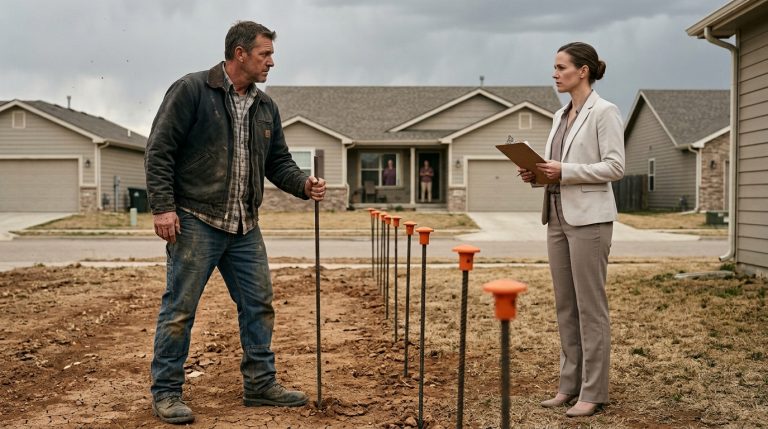
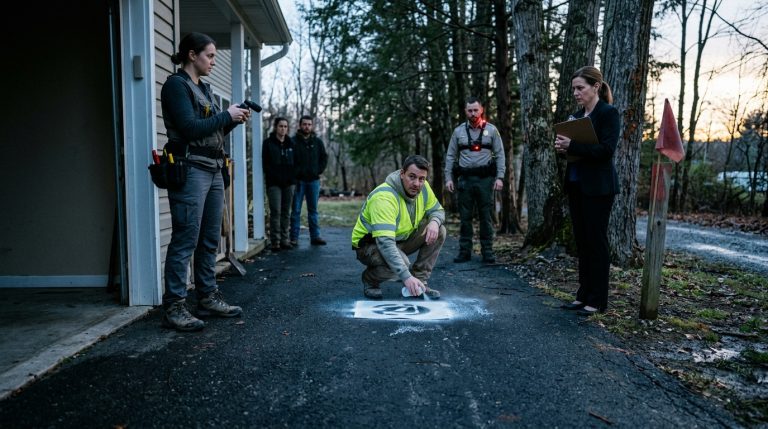
I sat back, my heartbeat steady. The man was setting stakes now—thin, bright orange ribbons of plastic that fluttered in the light morning breeze. They were physically crossing the invisible line of my property, a blatant, visual intrusion.
I recorded it all. I didn’t rush. I didn’t yell. I simply let the camera record the steady, methodical progression of the intrusion. This was the narrative: she was acting, I was documenting.
My phone vibrated. A new email from my attorney. He had received the documentation I’d sent at 6:12 a.m. His response was brief, professional, and devoid of unnecessary comfort: Verified the record. The HOA has no standing on that parcel. Filing for an emergency injunction today. Keep gathering data. Do not engage.
I closed the email. The instruction was clear, but the implementation was up to me. Every stake the man drove into the ground, every measurement he took, was a building block for the case I was constructing. I wasn’t fighting a landscaping company; I was fighting an architect of chaos. And I was going to beat her with the one thing she couldn’t forge: the absolute, chronological truth of a timeline.
I watched the man hammer the final stake, a bright, intrusive neon in the soft morning light. He straightened up, wiped his brow, and looked toward my house. He wasn’t just looking at the property; he was looking for me.
I pulled the curtain just enough to hide my silhouette, but left enough of a gap to keep watching. I was the silent observer of my own defense, the quiet architect of the paper wall that was about to rise between my shoreline and her greed. The game of volume had begun, but she was playing on my field, and I had already calculated the final move.
CHAPTER 3: THE CONFRONTATION
The sound of the hammer hitting wood wasn’t just noise; it was an act of aggression. Each strike vibrated through the floorboards, a rhythmic thud that settled into the soles of my feet. I didn’t move from the window, but my grip on the curtain tightened. The contractor, a man whose skin was weathered by years of sun and dust, stood over the stake, his posture arrogant. He wasn’t just working; he was claiming.
I looked at my watch. 9:17 a.m. Right on schedule.
Down on the curb, Karen Whitlock was a study in practiced performance. She stood near the white SUV, her posture rigid, her head tilted at a precise, welcoming angle. She was holding a clipboard, turning pages with a languid motion that suggested she was conducting an orchestra rather than orchestrating a trespass. Two men were now working along the shoreline, unrolling a heavy, black weed barrier that looked like a scar across my property.
I felt the familiar, cool detachment wash over me. This was the moment where most people would rush out, fueled by anger, only to find themselves shouting into the wind while Karen smiled, recorded, and played the victim. I wouldn’t give her the satisfaction of an outburst. Anger was an open flank.
I checked the screen of my phone. The GIS overlay was ready. I had the survey markers verified by the county data. I walked out the back door, stepping onto the porch with a measured, deliberate gait. I didn’t look at the workers. I looked at the property line, my eyes tracing the exact coordinate where my land ended and the public easement should have been.
As I reached the edge of my lawn, a delivery truck—a massive, humming beast of a vehicle—suddenly lurched into the narrow lane, blocking the view between me and the HOA president. The driver was clearly lost, squinting at a house number across the street. The engine roared, a thick cloud of exhaust plumes drifting over the canal, temporarily obscuring the scene.
I didn’t wait. I used the visual shield of the truck to close the distance. I walked to the edge of the property line, standing perfectly still, my presence a quiet, immovable weight. The delivery truck pulled away, and suddenly, I was standing in plain sight of the construction crew.
The foreman saw me first. He looked up, his hammer pausing mid-air. He looked toward the curb, seeking instructions. Karen turned, her face shifting instantly from a professional, smiling expression to one of simulated concern. She took a step toward me, her heels clicking against the asphalt with practiced, sharp precision.
“We’re just setting the boundary for the community safety path,” she said, her voice a smooth, calculated tenor designed to carry just enough for any witnesses to hear. “There’s no need for hostility, sir. We’re doing this for the families.”
I didn’t address her. I didn’t even look at her. I turned my attention fully to the foreman. My voice was low, steady, and devoid of tremor—a contrast to the noise of the machinery.
“You are currently on private property,” I said, my gaze locked on his, ignoring Karen as if she were a ghost. “I am the owner. I have not authorized this work. I have the survey data, the recorded deeds, and the county GIS coordinates. You have been misled regarding your legal authorization to be here.”
The foreman frowned, the confidence draining from his face as he looked at the stake he’d just driven into my soil. He glanced at the packet he was holding—the one Karen had likely handed him earlier that morning.
“The HOA stated they had authorization,” he mumbled, his voice losing its edge. “They said it was a community corridor.”
“The HOA doesn’t have an easement,” I continued, keeping my tone transactional. “If you continue this work, you are liable for damages and unauthorized trespass. My next call will be to the municipal police to document the trespass and to the county inspector to report a violation of shoreline disturbance rules.”
Karen stepped into my periphery, her face tightening. “You’re being unreasonable! This is for the greater good of the neighborhood!”
I finally looked at her. I didn’t offer a retort. I didn’t engage with the “greater good” argument, because that was a trap—a subjective, emotional framing of a simple, objective fact. I simply raised my phone, the screen already recording, the red light blinking with steady, rhythmic indifference.
“You are being recorded,” I said, my voice echoing in the sudden, heavy silence that had fallen over the canal bank. “Stop the work and leave the property immediately.”
The foreman didn’t argue. He looked at the orange stake, then at the camera, then at Karen. The power dynamic shifted in that single heartbeat. The illusion of authority, fueled by her tone and the fake packet, was colliding with the physical reality of a boundary and a camera. Karen’s smile became a rigid line. She reached out, gesturing to the men, trying to reclaim the momentum, but they were already hesitating.
I held my ground. I didn’t need to shout. I didn’t need to win a debate. I just needed to exist as a physical obstacle that could not be moved by words. The silence stretched, filled only by the distant hum of traffic and the lap of water against the canal bank. I had planted my feet, and for the first time, she was the one who had to decide whether to push, or whether to fold.
CHAPTER 4: THE PAPER EMPIRE
The silence that followed my declaration wasn’t the end of the conflict; it was the birth of the next, more dangerous phase. Karen didn’t storm off. She didn’t apologize. She simply adjusted her clipboard, her expression shifting back into that impenetrable, mask-like neutrality that defined her. She knew, just as I did, that the foreman’s hesitation was only as strong as the next document she could produce.
I turned my back on them and walked toward the house. My pulse was a steady, rhythmic beat, not of excitement, but of tactical focus. I had bought time, but time in this game was a depreciating asset.
As soon as the back door clicked shut, I moved to the desk. The office was quiet, smelling of dry paper and ozone from the laser printer. I didn’t look out the window to see if the crew had left; it didn’t matter. If they left, I won the skirmish. If they stayed, I had the evidence of a willful violation.
I turned on the desk lamp, the light casting long, sharp shadows across the room. My focus was the Notice of Claim. I pulled up the document on my monitor, comparing the instrument number against the county’s actual e-recording index. It was here that I noticed the glitch—a subtle, almost imperceptible discrepancy in the filing timestamp. The notice had been uploaded to the public portal at 6:12 a.m., but the digital audit trail I’d pulled earlier suggested the file had been modified internally within the HOA’s management system at 8:00 p.m. the previous night.
It was a window of nearly ten hours. That was the gap.
I printed the document, the hum of the machine sounding like a heartbeat in the still room. I needed to see it on paper. I needed the weight of the document in my hands. As the paper slid into the tray, I leaned back, looking at the screen. The “authorized filer” line—Karen’s name—felt like a stain on the page.
I picked up the printed sheet. The ink was still warm. I pulled a red pen from the desk organizer and began to annotate the margins. I was mapping her hubris. She had filed the claim as an “authorized agent” without a shred of board-approved documentation, hoping that by the time I caught the discrepancy, the path would already be cut into my soil.
I picked up the phone. My attorney answered on the first ring, his voice crisp and professional.
“I have the filing discrepancy,” I said, skipping the pleasantries. “The timestamp on the public record doesn’t match the internal modification history of the HOA management software. She didn’t just rush the filing; she manufactured the metadata.”
There was a pause on the other end, the sound of a keyboard clicking. “That’s a felony-level misrepresentation if we can prove the intent to deceive,” he replied, his tone shifting into a sharper, more aggressive register. “If she filed as an authorized agent knowing she lacked board consent, we aren’t just looking at a nuisance suit anymore. We’re looking at a breach of fiduciary duty.”
“Can we move for an emergency stay?”
“I’ll file the request for an immediate injunction by noon,” he said. “Do not engage with her. Do not provide her with any more information. Let her think the battle is still about the land.”
I hung up. The plan was solidifying. I wasn’t just defending a boundary; I was dismantling her reputation, one piece of evidence at a time. I looked at the spreadsheet, then at the printed notice in my hand. I was starting to see the architecture of her strategy. She wasn’t building a path; she was building a trap. If she could force me to react, to lose my cool, to commit a mistake—even something as small as blocking a worker—she could pivot the narrative to my “obstruction” and bury the question of her illegal filing under a mound of neighborhood gossip.
I stood up and walked back to the window. The construction crew was packing up. The stakes were still in the ground—a parting shot—but the machinery was being loaded onto the flatbed. The foreman was looking toward my house, his posture slumped. He wasn’t the enemy; he was just a man with a contract that was rapidly becoming toxic.
I didn’t smile. A victory was only a victory if it was absolute, and this was only the first skirmish. I watched them pull away, the truck’s tires churning the dirt near the canal. Once they were gone, I walked down to the shoreline.
The air felt colder here, smelling of damp earth and stagnant water. I stood where the foreman had been. I reached down and pulled the first orange stake from the mud. It was cold, the plastic cheap and brittle. I snapped it in half, the sound a sharp, clean crack that felt like a final period at the end of a sentence.
I looked at the others. There were six more. I walked along the line, pulling each one, the mud clinging to the base of the stakes like a physical manifestation of the mess they’d tried to create. I gathered them in a pile at the edge of the property, a small, pathetic monument to a failed invasion.
I wasn’t done. The paper empire was still standing, and as long as Karen Whitlock held the keys to the HOA board, she would look for another way to force the issue. I headed back to the house, the weight of the orange plastic in my hand a reminder that the real battle was fought in the quiet, sterile offices of the county clerk, and I had only just begun to apply the pressure.
CHAPTER 5: THE STAGED PREVIEW
The silence of the neighborhood had become tactical. I walked from the shoreline back toward the house, my boots crunching on the gravel, each sound amplified in the quiet morning air. I could feel them watching. From behind the perfectly aligned slats of the neighboring blinds, from the safety of their sun-drenched porches, the residents were observing the aftermath. They weren’t just onlookers; they were participants in a narrative I hadn’t yet fully mapped.
As I reached the rear deck, I heard the sound—a low, rhythmic murmur of voices and the clinking of coffee mugs. I didn’t go inside. I pulled a chair into the shadow of the house and listened.
A few houses down, near the central community green, a group had gathered. Karen was there, standing with two of the board members and the contractor foreman. They had set up a small folding table, a brochure-heavy staging area intended to simulate a formal community meeting. I watched through the gap in the foliage, my phone already recording, the lens steady, the zoom dialed in until the lines on their faces were sharp and clear.
“We’re moving forward,” Karen said. Her voice carried, amplified by the thin, still air. “The documentation is clear. The board has vetted the process, and this path is for the families who deserve safe passage.”
She wasn’t talking to the homeowners anymore. She was performing. The two board members stood beside her, nodding like metronomes, their expressions carefully composed. The contractor foreman, looking less like a combatant and more like a man trying to extricate himself from a sinking ship, stood near the table, his hands buried deep in his pockets.
I watched the crowd—mostly young parents with strollers, their faces masks of concern and performative outrage. I knew most of them. They weren’t malicious; they were misinformed. They had been fed a steady diet of “community safety” rhetoric until they believed the very land I owned was an obstacle to their children’s well-being. It was a masterclass in social engineering.
I didn’t storm down there. I waited. My phone screen showed the waveform of their voices—a visual representation of their influence.
The foreman looked toward my house, his eyes scanning the yard, then lingering on the spot where the stakes had stood only hours before. He said something to Karen, pointing toward my property line. She didn’t look back. She just kept speaking, her hands moving in smooth, practiced arcs. She was doubling down. If the physical reality failed, she would substitute it with social pressure.
I stood up and walked to the edge of the property line, keeping the brush between me and them. I needed the work order. If I could get the foreman to confirm, on the record, that he had been acting under her direct, unauthorized instruction, I would have the final thread needed to unravel the board’s collective support.
I walked down the narrow side path, keeping low. As I rounded the corner of the neighbor’s garage, I found myself only twenty feet from the back of their gathering.
“The owner is being difficult,” one of the board members said, their voice dripping with practiced indignation. “He’s blocking the safety of the entire corridor.”
“He’s confused,” Karen corrected, her voice silk-smooth. “He thinks his private deed supersedes the community interest. We’ll have the records updated by the end of the week.”
I pulled out my phone, checking the audio levels. I was close enough. I watched the foreman shift his weight, looking increasingly uncomfortable.
“I need the work order,” I whispered to myself, watching for a gap in the conversation. “I need the proof.”
Suddenly, the foreman turned, walking away from the table toward his truck. This was the moment. I stepped out from behind the garage, not as an antagonist, but as a neutral observer. I walked with purpose, intercepting his path before he could reach the safety of the driver’s side door.
He stopped, his eyes widening. “I’m just doing the job, man,” he said, his voice low, a defensive tremor in his tone. “I don’t want any part of this.”
“I know,” I said, my voice steady, empathetic. “You’ve been lied to, and you’re the one holding the liability. If you want out, you need to provide the proof that you were misled. Give me the work order number, and tell me who authorized the scope.”
He looked back at the folding table, where Karen was still holding court. He looked at me, his gaze shifting, the exhaustion and the fear in his eyes a silent confession.
“44471,” he murmured, his voice barely audible over the sound of the wind. “Client contact: Karen Whitlock. Scope: Install pedestrian walkway along canal. Proceed per HOA president direction.”
I hit the record button again, capturing the confirmation. The sound of his voice, the specificity of the order, the admission of her direct involvement—it was the final brick in the wall. I didn’t say another word. I turned and walked back toward my house, the weight of the information heavier than any stack of paper. The board members were still nodding, the mothers were still listening, but the reality was already fracturing. She had built her paper empire on a foundation of lies, and the first tremor had just hit.
CHAPTER 6: THE DIGITAL MASK SLIPS
I didn’t run, though every nerve in my body was screaming for motion. I walked back toward the house with a rigid, unnatural calm, my footsteps measured on the gravel. I could still see Karen’s silhouette against the bright backdrop of the community green, her hands still moving in that same, infuriatingly rehearsed dance. She had no idea the landscape of her “community corridor” had just been demolished.
The moment I stepped inside, the silence of the house hit me like a physical barrier. I didn’t turn on the overhead lights. The sterile, artificial glare of the monitors was enough. I went straight to the desk, the floorboards creaking under my weight—a sound I suddenly found agonizingly loud.
I plugged the phone into the workstation. The transfer was slow, a progress bar ticking along in agonizing increments. I used the time to breathe, to pull the fragmented thoughts of the last hour into a coherent strategy. The foreman’s admission was the key, but it was raw. I needed to refine it, to strip away the conversational ambiguity and expose the hard, undeniable intent.
I opened the audio editing suite. The waveform appeared—a jagged mountain range of peaks and valleys. I located the snippet: Client contact: Karen Whitlock. Scope: Install pedestrian walkway along canal. Proceed per HOA president direction.
I played it back, the audio tinny through the desk speakers. It was clean. It was damning.
But as I stared at the screen, a deeper, more unsettling thought surfaced. I pulled up the HOA management company’s public file again, searching for older records, past projects, any historical data I could find on the subdivision’s early development. I started cross-referencing names, dates, and authorization protocols from years prior.
Then, I saw it.
The format of the work order wasn’t unique to this project. It was a template. I pulled up a 2022 filing regarding a “community bench installation” near the park—a project that had also been spearheaded by the HOA president at the time. The layout was identical. The phrasing was the same. The “authorized filer” line was a mirror image.
It wasn’t just a mistake; it was a systemic pattern. She hadn’t just forged this easement; she had built an entire career out of simulating authority. The realization hit me with the force of a physical blow. She didn’t just believe she was entitled to the land; she believed she was above the very processes that governed the rest of the neighborhood. She wasn’t an anomaly; she was the architect of an entire, invisible system of administrative overreach.
My hands felt cold. I started scanning, my eyes darting across the screen, pulling up more and more records. Every time I hit a new file, the pattern deepened. She had been operating this way for years, using the board’s collective inertia to hide her individual actions.
A sharp, metallic click broke my concentration. The front door.
I spun around in my chair, my heart rate spiking. The house was locked. I had verified it before the confrontation at the canal. I sat perfectly still, my eyes scanning the room, my hand hovering near the desk, searching for something—anything—that could serve as a weight.
There was no sound of footsteps, just the sudden, oppressive silence of a room that wasn’t as empty as it had been a moment ago. I stood up, moving away from the light of the monitor, hugging the shadows of the bookshelf.
“Who’s there?” I said, my voice low, steady, and entirely devoid of the fear I actually felt.
There was no response, but then, a slight, rhythmic scrape of leather against the floorboard in the entryway. My gaze flicked to the smart-home monitor on the desk. The camera feed for the front porch was dark, the infrared sensor showing a distorted, grainy image of a figure standing just outside the threshold, their hand reaching for the doorbell, their other hand—a dark, angular shape—holding a thick, familiar envelope.
It wasn’t a break-in. It was a delivery.
The doorbell rang—a sharp, shrill sound that pierced the tension in the room. I didn’t move. I stayed in the shadows, my gaze fixed on the monitor. The figure didn’t wait. They slid the envelope through the mail slot and turned, walking away into the dim, artificial twilight of the streetlights.
I walked to the door, my movements fluid, calculated. I looked through the peephole. Empty. The street was still, the hedges casting long, distorted shadows across the pavement. I opened the door. The envelope lay there on the mat, thick, white, and heavy. It had the HOA logo stamped on the front in a harsh, clinical black.
I picked it up. It felt cold, the paper stiff. I knew what it was before I opened it. It was the response to my cease and desist, and by the way it was delivered, I knew it wasn’t going to be an apology. The escalation wasn’t just physical anymore; it was personal. She was bringing the fight to my front door.
CHAPTER 7: THE HEARING
I picked up the envelope, the paper crisp and unnervingly heavy. I didn’t open it immediately. I walked into the kitchen, the floorboards cold beneath my socks, and set the packet on the granite island under the harsh overhead light. It was a formal Notice of Non-Compliance, citing administrative fees and threatening record action—a hollow, performative threat now that I knew the architecture of her deception. She was still operating under the assumption that I was a lone homeowner trying to navigate a maze of bureaucratic noise. She didn’t realize the walls of that maze had already begun to collapse.
I left the house at dawn, the sky a bruised, indifferent purple. The courthouse was a monument to the very structures Karen had attempted to subvert: cold, rigid, and strictly linear.
The hearing chamber felt smaller than I’d imagined. The air was dry, smelling of floor wax and old paper. I sat at the petitioner’s table, my attorney beside me, a stack of organized, tabbed binders in front of us. My phone remained silent in my pocket, its storage laden with the truth.
Then the doors opened. Karen walked in, followed by her attorney and a board member who looked as though they’d been dragged there against their will. She wasn’t the performative HOA president now; she was dressed in a sharp, dark suit, her chin lifted in a pretense of confidence that didn’t quite reach her eyes. She moved with the same fluid, practiced grace, but there was a tremor in her hand as she set her bag down—a small, involuntary betrayer of her internal state.
The judge entered, a man whose face was etched with the weary impatience of someone who had seen a thousand petty property disputes and was allergic to dishonesty. He took his seat, the gavel rapping once, a sharp, crystalline sound that silenced the room.
“Case 44471,” the judge said, his voice gravelly. “The petition for a temporary restraining order regarding the canal-side parcel. Arguments?”
Her attorney stood, a man with a booming voice and a tailored suit. He spoke for ten minutes, weaving a tapestry of ‘community necessity’ and ‘boundary confusion.’ He painted me as the obstructionist, a homeowner unwilling to contribute to the greater good of the neighborhood, and he painted Karen as a tireless advocate for the safety of families. He was good; he used all the right words—harmony, easement, corridor—but he was building on a foundation of sand.
When he finished, he sat down with a satisfied smile.
My attorney stood. He didn’t boom. He didn’t use flowery adjectives. He simply opened the binder. “Your Honor, the petitioner’s argument rests on the assumption of a valid easement. We contend that no such easement exists, and further, that the documentation submitted by the HOA to the county was not merely an error—it was a manufactured instrument.”
The courtroom grew quiet. I watched Karen. She was staring straight ahead, her face a mask of stone.
“We submit, as Exhibit A, the metadata from the HOA management software,” my attorney continued, sliding a printout across the bench. “This document shows the instrument filed at 6:12 a.m. was modified in the HOA system at 8:00 p.m. the night prior, without board approval. And here, as Exhibit B, is the sworn testimony—recorded by the petitioner—of the contractor foreman, confirming he was instructed to bypass property lines by Ms. Whitlock personally, under the false pretense of board authorization.”
The judge leaned forward, his spectacles slipping slightly down his nose. He read the documents in silence, his eyes darting across the pages. The silence in the room became heavy, pressing in on the corners. Karen’s attorney stood, his smile gone, but the judge raised a hand to silence him.
“Ms. Whitlock,” the judge said, his voice low, lacking any trace of warmth. “Explain why you filed as an authorized agent for this property owner after receiving a cease and desist from his counsel.”
Karen leaned forward, the mask finally slipping. Her composure didn’t just crack; it shattered. “We believed we had consent,” she blurted out, her voice thin and sharp. “The community needs that path. We were acting in the best interest of the families.”
The judge looked at her for a long, agonizing moment. “Belief isn’t authorization, Ms. Whitlock. And it certainly isn’t a substitute for the law.” He looked at the audit log one last time, then tapped the gavel against the wood. “This stops today. The petition is granted. Immediate cessation of all activity on the petitioner’s parcel. And,” he added, looking at the board member, “the HOA will withdraw the notice of claim within twenty-four hours. Any further attempts to cloud this title, or any further false filings, will result in immediate sanctions against both the organization and you personally.”
He turned away, the hearing over. The room seemed to expand, the tension draining out as the reality of the verdict settled in. Karen sat there, her head slightly bowed, the suit that had looked like armor a moment ago now looking like a cage. She came expecting a victory of volume, but the quiet, brutal weight of the truth had won. I stood up, gathering my binders. It wasn’t just a legal victory; it was the end of her influence. The room was cold, the air sterile, but for the first time, it felt like the world was finally aligned with the truth.
CHAPTER 8: THE QUIET SETTLEMENT
The air outside the courthouse felt different—thinner, cooler, stripped of the antiseptic tension that had defined the last several hours. I didn’t look back at the doors. I walked toward the parking garage, my steps rhythmic and heavy. My attorney fell into stride beside me, the case file tucked under his arm like a trophy. We didn’t talk; there was nothing left to parse, no more strategies to calibrate. The judgment was absolute, and the paperwork was already moving through the county clerk’s office.
The drive back to the house was a long, slow exercise in decompression. I watched the world go by—the blur of traffic, the familiar grid of streets, the slow transformation of the city back into the suburban sprawl that bordered the canal. It felt like returning to a scene of a crime, but one where the perpetrator had already been scrubbed from the record.
When I pulled into the driveway, the house stood in the late afternoon sun, the shadows stretching long and sharp across the lawn. It looked the same, yet the weight of the last few weeks felt dissipated, replaced by a strange, hollow quiet.
I didn’t go inside. I walked around the back, toward the shoreline.
The restoration crew had already finished. They had laid the erosion matting, seeded the bank with native grasses, and leveled the soil where the paver path had been hacked into existence. The canal water lapped gently against the bank, the sound rhythmic and cleansing. It was a blank slate.
I stood there for a long time, watching the light change, the gold of the sun deepening into the soft, bruised violet of dusk. The memory of the orange stakes, the heavy-vis vests, and the orchestrated performances of the board members felt distant now, like something from a different, more turbulent season.
I reached down and touched the edge of the erosion matting, the texture coarse and grounding. I remembered the morning I had pulled the first stake from the mud, the cold plastic snapping under my hand. That felt like a lifetime ago. I had fought to hold the line, not just with lawyers and documents, but with a relentless, cold discipline that had finally paid for itself in the quiet, absolute currency of a court order.
Karen Whitlock was gone. The board had voted her out, the audit trail I’d constructed making her position untenable. The HOA had paid the costs—every cent of the survey, the legal fees, and the restoration work. It was a complete, clinical, and total victory.
I turned back toward the house. My phone buzzed in my pocket—a final ping from my title monitoring service. Instrument number released: Corrective filing confirmed. I didn’t even take the device out. I just walked into the kitchen, the room cool and dark.
I reached into the junk drawer—a chaotic, unorganized mess of odds and ends I’d ignored for months—and pulled out a screwdriver. I walked back out to the side yard where the gate latch, worn down by years of friction and forced use, had been hanging loose since the week the construction crew began their assault. I set the screwdriver to the screws, the metal biting into the wood with a satisfying, rhythmic resistance.
Tightening the screw, I felt the gate stabilize, the latch clicking into place with a firm, solid sound. It was a minor, mechanical fix, but it felt like the most important thing I had done in years. The house was mine. The boundary was secure. The timeline was clean.
I poured a glass of iced tea, the ice clinking against the glass, and sat on the porch. The neighborhood was quiet. No crowds, no strollers, no performative outrage. Just the sound of the wind through the trees and the steady, rhythmic pulse of a world that had finally stopped trying to overwrite my life. I had won by the rules, through the system, and with the exact, measured precision I’d set for myself from the very first notification.
I raised my glass to the empty, darkening yard. To the paperwork. To the timestamps. To the silence of a life restored. I felt a deep, resonant calm, the kind that only comes after the work is done and the boundary is finally, truly, mine.