The Architecture of Retribution: A Veteran’s Calculated Dismantling of a Suburban Dictatorship in Desert Winds
CHAPTER 1: THE BOX CUTTER
The sun wasn’t yet hot enough to shimmer against the asphalt of Desert Winds, but the light was already unforgiving. It caught the blade of the box cutter in Brenda’s hand, a thin, silver tongue of steel that sliced through the orange reflective tape with rhythmic, practiced ease.
I stood in my doorway, my left leg locked in the brace, the familiar, dull throb of nerve damage echoing up my hip. I didn’t shout. I didn’t move. I watched.
Brenda stood up, brushing the grit from her knees with a gesture of regal indifference. Her white Range Rover was parked horizontally across the entrance to my driveway, the vanity plate—HOA BOSS—a mocking, porcelain-white shield against the rising sun. She looked at the shredded remnants of my pathway markers, then turned toward my house, her eyes scanning the front window. She didn’t see me in the shadows of the foyer, but she knew I was there. She knew I was watching the destruction of the only thing that allowed me to traverse my own front lawn without the constant, paralyzing fear of falling.
She laughed—a short, dry sound that didn’t reach her eyes. She checked her watch, tapped the hood of her vehicle, and began the long walk back to the driver’s side, moving with the practiced, predatory grace of a woman who had never known what it was to lose her footing.
My hand hovered over the small digital recorder in my pocket. My thumb brushed the record button, the texture of the plastic worn smooth by weeks of these encounters. Every sound she made, every snap of the blade, every arrogant crunch of her heel against the debris, was being archived.
I gripped the doorframe, the wood groaning slightly under the pressure of my knuckles. The federal court order was taped to the interior of my front window, a piece of paper that was supposed to be a shield, yet here I was, watching it be rendered obsolete by a woman who treated a judge’s decree like a suggestion.
She reached for the driver’s side handle, her posture shifting. As she pulled the door open, she paused, her head tilting slightly. She reached into her pocket, pulled out a small, crumpled envelope, and dropped it into the decorative planter near my porch—the one where we kept the spare key. She didn’t drop it carefully; she tossed it with a flick of her wrist, as if discarding trash.
She climbed into the Range Rover, the engine turning over with a low, expensive growl. As she backed out, she didn’t just drive away; she swerved, deliberately running one of her oversized tires over the final, untouched marker at the end of the walk.
The plastic crunched. The sound was sickening, a final, definitive period at the end of a sentence.
I stepped out onto the porch, my leg protesting the movement. The morning was silent again, save for the hum of a distant pool pump. I walked toward the planter, my breath steady, my heart hammering a rhythmic, cold beat against my ribs. I reached into the soil, my fingers brushing against the rough paper of the envelope she had tossed.
I opened it. Inside wasn’t a fine. It wasn’t an HOA notice. It was a polaroid photo of my daughter, Zoe, walking to the school bus the day before, with a single, handwritten word scrawled on the back in thick, red ink: Leave.
The air in the neighborhood suddenly felt thin, stripped of its oxygen. I looked up, but the Range Rover was already gone, leaving nothing behind but the scent of scorched rubber and the terrifying realization that this was no longer a battle over aesthetics—it was a declaration of war.
CHAPTER 2: PAPER TRAIL
I stood on the porch, the early morning silence ringing in my ears—a ghost of the tinnitus from the blast in Kandahar. The photograph of Zoe felt like lead in my hand, a cold, hard reminder that my battlefield had shifted from foreign soil to the meticulously manicured lawns of Desert Winds. I didn’t go inside. I didn’t call Carmen. To share this was to infect her with the same paralyzing fear that was currently coiling in my own stomach. Instead, I tucked the photo into my back pocket and gripped the small, digital recorder.
I needed data. The court order was a legal document, but the threats—the vandalism, the intimidation—were the keys to a much larger door. I moved down the walkway, my left leg stiff, the brace clicking softly against the concrete with every measured step. I needed to document the damage to the markers before the morning heat could warp the plastic further.
I reached the first marker. It was mangled, the reflective tape peeled back like dead skin. I pulled my phone from my holster and began to photograph the damage, clicking through the angles with a systematic, clinical precision. I focused on the serrated marks the blade had left on the pavement, the tiny shavings of orange plastic scattered like confetti across the pristine aggregate.
A sudden, jarring sound cut through the quiet: the rhythmic clack of hard-soled shoes against the sidewalk.
I froze. I didn’t look up immediately. I kept my phone steady, framing a particularly brutal gash in the reflective strip.
“You’re making a mess of the aesthetic, Miles.”
The voice was thin, reedy, and unmistakably Dale Pinkerton. I turned, forcing my face into a mask of neutral indifference. Dale stood ten feet away, holding a thin leather briefcase as if it were a weapon. He was the HOA accountant, the man who spent his days sweating over ledgers and his mornings policing the neighborhood’s curb appeal. His eyes, magnified behind thick, rimless spectacles, flickered toward my mangled markers, then back to my face.
“Brenda’s been through here, hasn’t she?” I asked, my voice steady, stripped of the anger that was currently screaming in my gut.
Dale didn’t answer. He took a half-step forward, his gaze drifting to the phone in my hand. “The HOA has rules about documentation. Recording private property, even public-facing easements, can be… problematic.”
“Is that a threat, Dale?” I took a step toward him, my bad leg landing with a jarring impact that forced me to catch my balance. He recoiled slightly, the movement betraying the cowardice beneath his professional veneer.
“It’s a reminder of the bylaws,” he said, though his voice cracked at the edges. “We have a standard to uphold. If you can’t maintain your property according to the established guidelines, the association will be forced to take further action.”
“Further action,” I repeated, the words tasting like copper. “Like the vandalism you just witnessed?”
Dale’s eyes darted toward the street. A neighbor’s dog started barking, a sharp, frantic sound that seemed to shatter the tension. “I don’t know what you’re talking about. I’m just here for a morning walk. It’s a beautiful day, Miles. Shame to waste it on grievances.”
He pivoted on his heel, his shoes clipping the concrete with renewed haste. I watched him go, my pulse thrumming in my neck. He wasn’t just here for a walk. He was the gatekeeper of the HOA’s accounts, the man who knew exactly where the money flowed when the landscaping contracts were signed.
I didn’t follow him. I stayed where I was, my eyes locked on his retreating back until he turned the corner toward the clubhouse. I reached into my pocket and touched the record button again. I hadn’t just caught Dale on the walk; I had captured the unmistakable sound of his nervous stutter, the specific, defensive cadence of a man protecting a lie.
I turned back to the house, the plan solidifying in my mind. The markers were bait. Brenda and her cronies were so focused on the superficial—the grass, the lights, the orange tape—that they were blind to the fact that I was already mapping the path to their collapse. I walked up to my front door, my hand brushing against the pocket containing the photo of my daughter. The red ink on the back felt hot, a burning brand of motivation.
I stepped inside the house and closed the door, the cool, conditioned air hitting my face. I didn’t stop in the foyer. I headed straight for the study, my eyes tracking the path of the sunlight across the floor. It was time to stop waiting for them to make a move. I was going to find out exactly why Brenda Clearwater was so desperate to keep me from walking my own path, and I was going to do it by following the money. I sat at my desk, opened my laptop, and began to pull the public filings for Desert Winds. The game had changed, and for the first time since the IED went off in Afghanistan, I felt the sharp, exhilarating focus of a target in my sights.
CHAPTER 3: THE AUDIT
The digital glow of the laptop screen felt like the only source of warmth in the room, though it offered nothing but cold, hard data. I leaned forward, my fingers dancing across the keys, cross-referencing the HOA’s quarterly landscaping invoices with the actual vendor records I’d scraped from the city’s public archives.
My leg throbbed in the dark, a constant, low-frequency reminder of the physical limits I was fighting against, but my mind was entirely elsewhere. It was in the spreadsheets. I had been awake for three hours, the house around me settling into the deep, hollow quiet of the pre-dawn.
The invoice for ‘Pristine Landscapes Inc.’—the contractor Brenda supposedly hired for our monthly upkeep—was dated three weeks ago. According to the document, the work had been completed on a Tuesday. I tapped my fingers on the desk, the rhythm mirroring my heartbeat. I remembered that Tuesday. It was the day I had spent four hours in the driveway, battling with the irrigation system in the heat, only to realize the sprinkler heads were clogged with years of sediment. If a landscaping crew had been working on the property that day, I would have seen them. I would have heard the mowers, the blowers, the metallic clatter of equipment.
The neighborhood had been silent.
I pulled up the bank routing number listed for the contractor. It was a local entity, but the address listed on the filing was a P.O. Box in a shopping center three towns over—a center known for housing shell companies and tax havens. My skin prickled with a cold, sharp realization. I opened another tab, navigating to the business registry. The name associated with ‘Pristine Landscapes’ was ‘B. Clearwater.’
I exhaled, the sound loud in the empty office. Brenda wasn’t just managing the neighborhood; she was paying herself to manage it. She was the client and the contractor, funneling community dues into her own accounts while the landscaping—the actual work—was being done by a skeleton crew of neighborhood kids she paid a pittance in cash.
I saved the files, my movements deliberate. I began to build a folder, a digital dossier of the theft. Every invoice, every suspicious check, every discrepancy between the ‘maintenance’ reported and the reality of our dying desert lawns. I felt a grim sense of satisfaction, the kind that came from identifying the enemy’s formation before the first shot was fired.
But then, a notification pinged on my phone. An email from the HOA’s central portal. It was an automated notice: ‘Violation detected. Unapproved surveillance equipment located on private property. Immediate removal required to avoid legal intervention.’
I froze. I hadn’t set up cameras outside the house—at least, not yet. My gaze flicked to the living room window, then to the side yard. Had she been watching me? Had I become so obsessed with the data that I had missed the eyes looking back at me?
I stood up, the chair scraping sharply against the hardwood floor. I moved to the window, peering through the slats of the blinds. The street was empty. The streetlights flickered in the orange-grey haze of dawn, throwing long, jagged shadows across the driveways.
I walked to the kitchen, my movements stiff, feeling suddenly exposed. I grabbed a glass of water, the cold surface of the glass doing little to ground me. The paranoia, usually a survival skill in the field, was starting to bloom in the quiet of this house. Was I really being watched, or was I projecting my own intent onto her? Brenda was a master of the system, a woman who weaponized the rules to keep others in check. She knew how to build a cage.
I looked at the hallway mirror as I walked past. I looked older, my eyes tight with the strain of the night. I thought about the photograph of Zoe in my back pocket. Brenda wasn’t just playing a game of fine and regulation; she was playing a game of displacement. She wanted me gone, not just because I was an inconvenience, but because I was the only person with the background—and the motive—to actually look at the numbers.
I returned to the desk, my hands steadying as I picked up the digital recorder. I sat down and looked at the screen again. The violation notice was a bluff, a tactic to make me retreat, to make me paranoid enough to hide my evidence. She wanted me to panic.
I reached out and clicked the delete icon on the violation email, my movements devoid of hesitation. I wouldn’t delete the record, though. I printed it out, the printer’s hum the only sound in the house. I needed to see it on paper. I needed to see the physical proof of her desperation.
As the page slid out, I realized that I had moved beyond the passive collection of evidence. I was no longer just protecting my home. I was hunting for the structural flaw in her empire. The numbers in the spreadsheets were just the surface; the real secret was underneath, hidden in the way she moved the money. I was going to find it. And when I did, the fall wasn’t going to be a matter of fines or violations. It was going to be an eviction—of the worst kind.
CHAPTER 4: THE WHISPER NETWORK
I didn’t turn off the printer. I let the steady, mechanical click-clack continue as I gathered the documents, my movements efficient. The house felt too quiet, the shadows in the corners of the study seemingly elongated by my own heightened state of alertness. I had the files. I had the initial proof of the landscaping embezzlement. But Brenda was a veteran of this suburban war; she wouldn’t have built a shell company without a layer of insulation, and she certainly wouldn’t have kept the ledger clean.
I needed a human element—someone who knew the architecture of her influence.
Tom Rodriguez. He was a retired teacher, a man who had lived in Desert Winds since the first phase of construction. He was a creature of routine, and his routine almost always involved a morning walk that ended at the community mailbox cluster near the clubhouse. I checked my watch: 7:15 a.m.
I left the study, grabbing my jacket. My leg felt stiff, the bracing biting into my calf, but I forced myself to maintain a steady, non-limping gait as I stepped out the front door. The neighborhood was waking up. The rhythmic spray of automated sprinklers hissed in the distance—the sound of Brenda’s kingdom maintaining its image.
I found Tom near the mailboxes. He was wearing a faded windbreaker, his posture slightly stooped as he sorted through a stack of envelopes. As I approached, he didn’t look up immediately, but his hand tightened around his mail. He knew who I was. Everyone in Desert Winds knew who I was: the veteran, the litigant, the man currently being systematically dismantled by the HOA.
“Morning, Tom,” I said, keeping my distance.
He glanced up, his expression guarded. He was a man who spent his life teaching, accustomed to reading rooms, but he looked like he wanted to be anywhere else. “Miles. You’re out early.”
“Things are changing,” I replied, choosing my words with the same precision I used for my data sets. I leaned against the cold aluminum of the mailbox unit. “Brenda’s been making some aggressive moves. The markers, the fines. She’s accelerating.”
Tom sighed, a tired, ragged sound. “Brenda is Brenda. You know the rules, Miles. We all signed the covenants.”
“I signed for a community, Tom, not a dictatorship.” I lowered my voice, moving closer so that only he could hear. “I’ve been looking into the landscaping contracts. The ones Dale Pinkerton pushes through at every quarterly meeting.”
Tom’s eyes flickered—a brief, involuntary jump of panic—before he pulled his gaze back to his mail. “Those are standard business procedures.”
“Standard? When the money is being funneled to a P.O. Box owned by Brenda herself?”
The air between us felt heavy, thick with the unsaid. Tom finally turned to face me fully, his eyes searching my face for a sign of desperation or madness. “You’re treading on thin ice, son. She has eyes everywhere. Judy Whitmore, the board, the contractors. If you go after the money, you’re not just fighting a violation notice anymore. You’re threatening her entire lifestyle.”
“I’m not asking for your help to fight a violation,” I said, tapping the pocket where the printed file was hidden. “I’m asking if you’ve seen anything—anything at all—that doesn’t fit the ‘standard procedure.’ Someone else involved? A signature on an authorization form that doesn’t belong to the board?”
Tom hesitated. He looked toward the clubhouse, where the white Range Rover was parked in its reserved spot, gleaming in the morning sun. Then, he leaned in, his voice barely a breath.
“There was a document,” he whispered. “Last month. An ‘Infrastructure Assessment’ form. It was marked for the board’s eyes only, but it accidentally landed in my box because our addresses were transposed. It had a different signature on the bottom. Not Brenda. It looked like an executive from a development firm in the city. A company that usually handles mass rezoning.”
My stomach tightened. A development firm? That didn’t track with landscaping embezzlement.
“Do you still have it?”
“I returned it to the office,” Tom said quickly, his panic returning. “Don’t ask me about this again, Miles. Please.”
He turned and began to walk away, his pace hurried, his shoulders hunched against the morning air. I didn’t press him. I had enough. The landscaping embezzlement was the decoy—the small, nasty theft that kept people like Dale and Judy focused on the petty cash—but the real story was the signature. A developer. A rezoning firm.
I stood by the mailboxes for a long moment, the cool metal pressing into my back. Brenda wasn’t just stealing dues; she was preparing to sell the neighborhood out from under the residents. The HOA wasn’t the target; it was the mechanism of the sale.
I watched the clubhouse. I had been looking for a thief, but I was actually hunting a liquidator. My hands were steady, my pulse quiet, a cold, sharp resolve settling into my chest. I didn’t need to fight her on the violations anymore. I needed to find that document. And I knew exactly who would have the original—or the copy that mattered.
CHAPTER 5: THE RANGE ROVERS SECRET STOPS
I didn’t head back to my house. I stayed in the shadow of the clubhouse’s decorative stone wall, watching. The Range Rover was still there, but Brenda was nowhere to be seen. I pulled my jacket tighter, the fabric catching on the rough, sharp edges of the stacked slate. It was nearly 9:00 a.m., the sun climbing toward its midday peak, bleaching the color out of the manicured lawns.
I needed to see if she was using the Rover to visit the sites mentioned in the shell company filings. If ‘Pristine Landscapes’ was a ghost, it had to have a footprint somewhere. I checked my phone, re-reading the list of business addresses I’d scraped earlier. They were clustered in an industrial district on the edge of the city, a place where paperwork went to die.
A sharp, metallic clack echoed from the clubhouse parking lot—the sound of a high-tension gate locking shut. For a heartbeat, the sound didn’t belong to the neighborhood. It was the sound of a locker door in a medical tent, the sound of a supply crate snapping shut in the back of a transport vehicle in Kandahar. The phantom pressure of the blast hit me, a sudden, breathless weight in my chest. My hands shook. I braced them against the stone wall, the grit biting into my skin, forcing myself to breathe. This is Desert Winds. This is Arizona. This is not the war.
I forced the memory down, locking it behind the same wall I’d built for every other trauma. I watched as Brenda emerged from the clubhouse, moving with that same predatory, effortless stride. She didn’t look like a woman embezzling funds; she looked like a woman who owned the world. She reached the Range Rover, opened the door, and then paused. She looked directly at the row of shrubs where I was standing.
I didn’t move. I didn’t even blink. I was a part of the landscape, a piece of the structure, as still as the stone behind me. She squinted into the sun, a flicker of annoyance crossing her face, then she climbed inside. The engine roared, a deep, aggressive sound that vibrated through the ground beneath my feet, and she pulled away.
I waited until she turned the corner before I moved. My car was parked three blocks away, hidden in plain sight near the visitor parking. I didn’t rush. I walked, my leg brace clicking a steady, mechanical rhythm. Every step was a calculation, every movement a move in the game. I got into my sedan and pulled out, keeping the distance long. I didn’t need to see her bumper; I just needed to see the white flash of her roof as she navigated the neighborhood exits.
She drove exactly as I expected: straight toward the industrial district.
I followed her for forty minutes, the suburban quiet fading into the harsh, industrial sprawl of the city’s edge. This was the ‘dusty gray’ of the world—the place where the shiny, manicured aesthetic of places like Desert Winds was manufactured. Brenda didn’t go to the P.O. Box address. She pulled into a private gated facility marked ‘Metro Development Group.’
I slowed, pulling into a side street and cutting the engine. I watched from the distance as the gate slid open. A man in a sharp, dark suit met her at the entrance. They didn’t shake hands. They stood close, their bodies angled toward each other in a conversation that looked less like a professional meeting and more like a closing of a deal.
I pulled out my phone and switched to the zoom lens, framing the shot. I watched the man hand her a thick, leather-bound folder. My pulse jumped. That was it. That was the infrastructure document Tom had mentioned.
I kept the camera steady, my finger hovering over the shutter. She took the folder, and for a moment, her face changed. The arrogance dropped, revealing a flicker of raw, naked anxiety. She wasn’t just in control; she was being pushed.
I snapped the photo, the shutter sound muffled by the low hum of the city traffic. I didn’t wait to see more. I had the link, the visual proof of her contact with the developer, and the folder she was terrified of losing. I shifted the car into gear, my heart rate steady, the phantom memory of the blast gone, replaced by the cold, clear reality of the trap I was building. I had her. She wasn’t just managing Desert Winds; she was auctioning it off, and I had the receipt.
CHAPTER 6: THE EMERGENCY MEETING TRAP
The engine of my sedan ticked as it cooled, a series of sharp, metallic contractions that matched the steady rhythm of my own breathing. I sat in the dim light of the industrial district, the photo of Brenda and the developer glowing on my phone screen. I had the visual proof, but I didn’t have the contents of the folder. Not yet.
Brenda hadn’t gone back to Desert Winds. She had driven deeper into the city, toward the financial district. I knew the drill; she was meeting her legal counsel or the development firm’s fixers. I didn’t follow. That would be a mistake—an overreach that would expose my presence. Instead, I turned the key, the engine coming to life with a low, controlled hum, and headed back toward the neighborhood.
If she was moving this fast, she was preparing to announce a ‘strategic update’ to the HOA board. The annual meeting was only two days away, and she would likely call an emergency board gathering before then to rubber-stamp whatever deal she had just brokered.
I arrived back at Desert Winds as the afternoon heat peaked, the air shimmering above the hot asphalt. The neighborhood looked the same as it had when I left: perfectly manicured, perfectly quiet, a facade of suburban tranquility that felt increasingly brittle. I parked in my driveway, ignoring the empty spot where Brenda’s Range Rover usually sat.
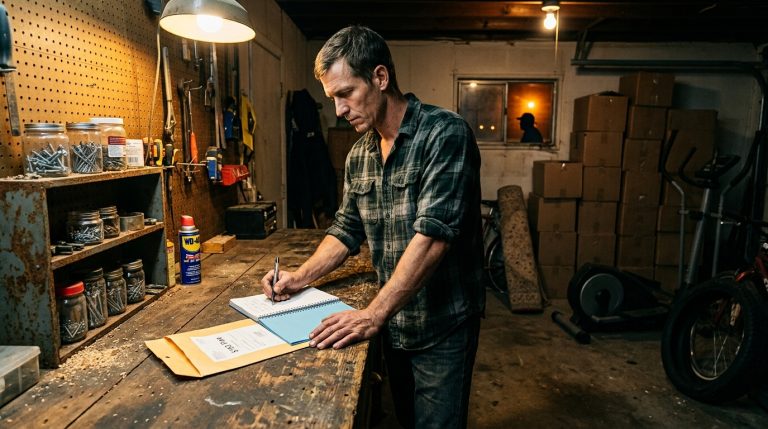
I went straight to the desk. My study was a cockpit of information. I pinned the photo of the meeting to the whiteboard, drawing a thick, red line from Brenda’s silhouette to the blurred, shadowy figure of the developer. Then, I began to draft the email.
It wasn’t for the authorities—not yet. It was for the board.
I composed a formal request for an emergency open meeting, citing ‘fiduciary concerns regarding recent infrastructure assessment contracts.’ I used the legal jargon I’d learned from my battle with the Fair Housing Act, framing it as a standard request for transparency. I sent it to the entire board, including Dale and Judy, cc’ing every homeowner in the Desert Winds directory.
I hit send.
The response was almost immediate. My phone buzzed, the screen lighting up with a barrage of notifications. Judy Whitmore, the gossip-monger, had replied within seconds. ‘This is a violation of the communication bylaws, Miles. You’re bordering on harassment.’
I didn’t blink. I started typing the next phase of the trap. I wasn’t just exposing the embezzlement; I was setting the stage for the revelation of the rezoning deal. If I could force a public board meeting before the annual gathering, I could control the environment. I would force her to defend the landscaping contracts while Tom Rodriguez and other neighbors stood ready to ask about the ‘infrastructure assessment.’
The house grew dark, the sun sinking behind the silhouette of the desert hills. I didn’t eat. I spent the hours mapping the layout of the clubhouse, visualizing the room where the meeting would be held. I needed to ensure that Judge Hernandez—the federal judge who had authorized my initial accommodations—would be notified of the upcoming proceedings. I had sent her office a courtesy update regarding my legal standing, and her clerk had acknowledged receipt. A federal eye on the HOA proceedings would be the ultimate deterrent against Brenda’s usual bullying tactics.
My phone rang. It was an unrecognized number. I let it go to voicemail. A few seconds later, the screen blinked: a new message.
‘You’re playing a dangerous game, Miles. Stay in your lane, or you won’t like what happens to your family.’
It wasn’t signed, but the digital signature was unmistakable. It was the same red, aggressive energy that had been in the note on my porch.
I sat in the dark, the glow of the monitor illuminating my face. My heart rate didn’t climb. Instead, it slowed, a cold, clinical precision taking hold of my nervous system. She was afraid. She wouldn’t be sending threats if she felt she had the upper hand. She was trying to force me to back down because she knew that once the meeting started, the illusion of her power would evaporate.
I picked up the recorder and held it for a moment, the smooth plastic warm against my palm. I had a clear path now. The emergency board meeting was the pressure point. I was going to turn the very system she used to oppress the neighborhood into the mechanism of her own public downfall. The trap was set; all that remained was to see if she would walk into it.
CHAPTER 7: THE DECOY: UNCOVERING THE LANDSCAPING EMBEZZLEMENT
I spent the next several hours in the quiet, pressurized focus of the study. My eyes burned, a dry, gritty sensation that made the light from the monitor feel abrasive, but I didn’t stop. I was peeling back the layers of the landscaping contracts, tracking the flow of money from the residents’ dues through the HOA’s operating account and finally into the shadow accounts of ‘Pristine Landscapes.’
The embezzlement was cleaner than I expected. That was its own kind of clue. A petty thief leaves a trail of erratic, panicked transfers; Brenda left a trail of precision. Each ‘service’ was invoiced for an amount just beneath the threshold that triggered an automatic board review. It was the work of someone who understood accounting—or had an accountant in her pocket. Dale Pinkerton.
I cross-referenced the service dates with the neighborhood’s actual irrigation logs, which I had covertly accessed via the public utility dashboard. The discrepancies were damning. There were invoices for three full-crew maintenance days in June, but the utility logs showed zero water usage variance during those periods. Landscaping in Arizona without water was an impossibility. It wasn’t just embezzlement; it was a fabrication of work that never occurred.
As I compiled the final PDF, a single line item caught my eye—a payment dated last year to a firm I hadn’t seen before: Apex Environmental Solutions. The amount was triple the standard monthly fee for landscaping. It wasn’t linked to the ‘Pristine’ account. It was linked to a tax-exempt entity that, upon a quick search, didn’t seem to exist at all.
I leaned back, the leather of my chair creaking in the silence. This was it. The ‘decoy’ secret. The landscaping fraud was a robust, provable crime—the kind that would satisfy a neighborhood committee, the police, or even a local news crew. It was a perfect, contained narrative of greed. Brenda likely expected that if she were ever caught, it would be for this. She had built it to be the headline, the distraction that kept everyone looking at the grass, the sprinklers, and the bank statements.
I took a sip of lukewarm coffee, the bitter taste grounding me. I had enough to trigger a formal audit. I had enough to strip her of her HOA presidency and potentially see her charged with fraud. Most people would have stopped here. They would have been satisfied with the takedown of the HOA dictator.
But I looked at the whiteboard, at the blurry photo of the man in the dark suit. That wasn’t an accountant. That was a corporate player. Brenda wasn’t just stealing the dues; she was stealing the future of the neighborhood. The landscaping fraud was the ‘smoke,’ but the rezoning deal was the ‘fire.’
I stood up, my leg protesting the sudden shift in weight, and walked to the window. The neighborhood was bathed in the harsh, flat light of early morning. I watched as a garbage truck moved slowly down the street, the workers jumping off and on with practiced, mechanical efficiency. Everything looked normal. Everything looked safe.
I felt a sudden, sharp pang of vulnerability. If I presented the landscaping evidence now, Brenda would be cornered. But a cornered animal bites. She wouldn’t just resign; she would activate whatever ‘fixers’ she had in the city. She would try to bury the rezoning deal even deeper, maybe even liquidating the remaining assets or disappearing before the feds could piece together the larger puzzle.
I had to play it precisely. I needed to present the embezzlement evidence in a way that forced her to stay in the room, to make her defend the landscaping fraud while I quietly laid the trap for the rezoning evidence. I was going to use her own decoy against her.
I sat back down, my fingers hovering over the mouse. I would hold the Apex Environmental file back for now. I would let her think she had successfully managed the scope of the investigation, letting her believe that if she just confessed to a bit of ‘accounting error’ on the landscaping, the whole thing would blow over. It was a gamble—a tactical deception—but it was the only way to ensure she didn’t realize that the real investigation, the one involving the federal authorities and the development firm, was already in motion.
I clicked save on the final report, the progress bar filling with a slow, rhythmic crawl. The trap was armed. Now, I just had to wait for the emergency meeting.
CHAPTER 8: THE LEVERAGE: AGENT WALSH AND THE FEDERAL CONNECTION
The sound of the knock wasn’t the tentative tap of a neighbor; it was authoritative, measured, and distinctly heavy. I didn’t reach for the mouse to close the open window on my screen. I didn’t hide the files. If it was Brenda, she needed to see that I was prepared. I stood up, my leg brace clicking against the hardwood, and walked to the door, my hand hovering near the digital recorder in my pocket.
I opened the door, expecting the sharp, manicured presence of Brenda Clearwater. Instead, I found a man in a rumpled, slate-grey suit, holding a leather portfolio that looked like it had been through a war. His hair was thinning, his eyes shadowed by the kind of fatigue that only comes from years of staring at bureaucratic corruption.
“Miles?” he asked. His voice was gravelly, low, and devoid of the performative edge Brenda used.
“Who’s asking?”
“Agent Walsh. FBI. Financial Crimes Division.” He didn’t offer a badge; he didn’t need to. He stood with the weight of someone who knew exactly who I was and why I was digging through the Desert Winds ledger. He stepped inside without waiting for an invitation, his gaze sweeping the room with a practiced, clinical detachment.
“I’ve been tracking the ‘Apex Environmental’ file for six months,” Walsh said, walking straight to my desk. He glanced at my monitor, his eyes narrowing as he saw the landscaping breakdown I had finalized. “You’ve done good work, Miles. But you’re playing with fire. If you hit ‘send’ on that email to the board, you’re going to burn down the evidence before we have the chance to secure it.”
I leaned against the desk, my posture relaxed, though my mind was racing. “I’m not looking to burn anything down, Agent. I’m looking to dismantle a system.”
“You’re looking for justice,” he corrected, turning to look at me. “Brenda Clearwater isn’t just an HOA president embezzling a few thousand dollars. She’s the local point of contact for a massive real estate aggregation scheme. If you spook her now, she will liquidate every digital asset she has, burn the paper records, and be on a private flight to a country without an extradition treaty before the local police can even file the paperwork.”
My jaw tightened. “She’s selling the neighborhood.”
“She’s selling the rezoning rights,” Walsh said, his voice dropping. “But there’s a catch. She’s using the residents as collateral. She’s been manipulating property appraisals to ensure that when the development firm moves in, the residents are legally incentivized to sell—or forced to walk away with nothing.”
The room felt suddenly colder. The landscaping fraud—the decoy I had so carefully built—wasn’t just a distraction for the neighborhood; it was a distraction for the authorities, too. Brenda had been using it to keep the small-time investigators occupied while the big-time deal solidified in the background.
“I have the photo,” I said, reaching into my pocket and pulling out my phone. I unlocked it and held it out, showing him the shot I’d taken of her meeting with the developer.
Walsh looked at the image, his face hardening. “Where was this taken?”
“Metro Development Group, downtown. This morning.”
He exhaled, a long, weary sound. “That confirms it. She’s accelerating the timeline. She knows something is coming, or the firm is putting the pressure on her.”
“I have an emergency board meeting scheduled for tomorrow night,” I said, my voice steady. “I was going to use the landscaping data to corner her.”
“Don’t,” Walsh said, his gaze fixed on me. “Use it as bait. Let her think that’s the only threat. If she thinks you’re only coming for the money, she’ll be careless enough to keep the infrastructure files on her personal server. We need those files, Miles. The landscaping stuff? That’s for the local press. The infrastructure stuff? That’s what puts her away for twenty years.”
I looked at the screen, at the spreadsheets I’d labored over. I had wanted to expose her, to drag her into the light of the board meeting and force a reckoning. Now, I was being asked to play the long game—to let the thief continue to steal, to let the threat to my family continue, all for a cleaner, bigger takedown.
“If I wait,” I said, my voice quiet, “she’s going to keep pressuring my family. She’s already sending threats.”
Walsh moved to the door, his hand on the frame. “Then we make sure she thinks you’re scared. Give her exactly what she wants to see: a man who’s terrified of his own shadow. Feed the decoy, Miles. We’ll handle the rest.”
He walked out, the heavy tread of his footsteps fading down the hallway. I stood in the silence of the study, the weight of the decision pressing into my chest. I had the leverage, I had the truth, and now I had a federal partner. But to win, I had to do the one thing I despised: I had to act like the victim. I had to let her believe she was still in control, right up until the moment the cage door slammed shut.
CHAPTER 9: PREPARATION: THE NIGHT BEFORE THE ANNUAL MEETING
The house felt like a staging ground. I spent the remainder of the night in the study, but not with the spreadsheets. I was reviewing the cadence of my own voice. I pulled up the transcripts of the previous three HOA meetings—dry, bureaucratic recordings—and practiced my delivery. I needed to sound not like a man with a vendetta, but like a concerned, slightly intimidated resident who had stumbled upon ‘accounting irregularities.’
I had to play the victim of Brenda’s intimidation. I had to look weary, frayed, and uncertain. If I came in sharp, calculating, and cold, I would trigger her defensive instincts before I ever got to the landscaping evidence. I practiced looking down at my notes, letting my voice waver just enough to sound like a man whose confidence had been eroded by months of fines and threats.
My leg was a throbbing, constant pulse, a physical anchor that helped keep the performance grounded. Every time the nerve pain flared, I used it to sharpen my focus, letting the discomfort fuel the agitation I needed to project.
At 2:00 a.m., I took a break. I walked to the kitchen, the moonlight filtering through the blinds in thin, horizontal stripes. The house was cold. I stood at the sink, running my hands under the tap, watching the water swirl into the drain. My daughter’s toys were lined up neatly in the corner of the living room, a stark, innocent contrast to the folder of corruption I had hidden beneath the floorboards of the study.
The weight of the situation hit me then, not as data, but as reality. If Walsh was right—if Brenda was planning to dump this neighborhood and run—then tomorrow wasn’t just a meeting. It was the last stand. If I failed to force her hand, if I failed to make her panic enough to access those infrastructure files, the entire community could be sold out by the time the sun set on Friday.
I looked at my reflection in the window. The man staring back was hollowed out, eyes hard, skin pale from days of artificial light. I didn’t recognize him, not really. This was the version of me that had been forged in the dust of Afghanistan—the scout who could sit in a foxhole for three days without moving, watching, waiting for the exact right moment to strike. I had hoped I left that man behind in the desert.
A floorboard creaked in the hallway. I froze, my hand dropping to the counter, my posture shifting into a defensive crouch.
Carmen stood in the doorway, her scrubs rumpled, her face etched with the exhaustion of a double shift. She looked at me, her eyes drifting from the dark, quiet house to my rigid, alert posture. She didn’t ask what I was doing. She didn’t ask why I wasn’t in bed.
“You’re going to break yourself, Miles,” she said softly, her voice barely a whisper in the dark.
“I’m going to fix it,” I replied, but the words felt hollow.
She walked over and placed a hand on my arm. Her touch was warm, human, a startling contrast to the sharp edges of my own internal state. “Not everything can be fixed with a battle plan. Sometimes you just have to survive the fallout.”
“I’m not surviving,” I said, pulling away, the necessity of the performance already reasserting itself. “I’m ending it.”
I went back to the study. I didn’t look back to see if she was watching. I sat back down at the desk and turned off the overhead light, leaving only the soft, blue glow of the screen. I started typing the final script of my opening statement for the meeting. Every word was calculated to incite the board, to make them feel like their authority was being threatened, forcing Brenda to step in and overplay her hand.
I was no longer the victim. I was the architect of her destruction. And tomorrow, I would execute the final phase of the design.
CHAPTER 10: THE ANNUAL MEETING: THE SYSTEMATIC EXPOSURE
The community clubhouse was packed, a sea of faces illuminated by the harsh, fluorescent overheads that turned every expression into a jagged, shadowed mask. I walked toward the back, my brace clicking against the polished linoleum, the sound sharp and rhythmic. I didn’t look for Brenda. I looked for the exits, the cameras, and the faces of my allies. Tom Rodriguez was there, sitting in the third row, his posture rigid. Near the front, Judge Hernandez sat with a quiet, observant grace that sent a visible ripple of unease through the board members.
Brenda stood at the podium, her white blazer immaculate, her presence commanding. She looked like she was presiding over a gala, not a forensic reckoning. When she saw me, her eyes hardened for a fraction of a second, but she didn’t waver. She knew I was here, and she thought she knew why.
“We have a lot of items on the agenda tonight,” she began, her voice smooth and polished, hitting the room like a well-oiled machine. “But first, we’re going to address the recent, unfounded concerns regarding our operational maintenance.”
She moved directly to the landscaping contracts. She hadn’t even waited for the public comment period. She was taking the initiative, framing the conversation before anyone else could speak. She began a monologue about rising costs and vendor loyalty, her delivery rehearsed, confident. She was giving the board exactly what they needed to justify the expenses: a narrative of ‘prudent fiscal management in a volatile market.’
I stood up. I didn’t wait for her to call on me. My heart was a steady, cold engine, my focus absolute. “With all due respect, Brenda, the fiscal management seems to be focused exclusively on your own accounts.”
The room went silent. I started walking toward the front, my limping gait amplified by the sudden hush. I reached into my pocket, pulled out a small flash drive, and walked toward the technical station at the front of the room. I felt the heat of a hundred pairs of eyes on my back, but I didn’t care. I plugged the drive into the main projector.
Brenda’s composure didn’t break, but I saw her hand tighten on the podium, her knuckles turning white. “Miles, this is an official meeting. You have no right to—”
“I have the right of every homeowner here who’s been paying for maintenance that never happened,” I said, my voice projecting, stripped of the waver I’d practiced. I tapped the keyboard, and the first slide hit the screen: a side-by-side comparison of the irrigation logs and the ‘Pristine Landscapes’ invoices.
The board erupted. Dale Pinkerton stood up, his face flushed, stammering about ‘confidential vendor data,’ but it was too late. The evidence was on the screen, an undeniable, geometric proof of theft. The residents, who had been cowed by Brenda for years, suddenly found their voices. Questions shouted from the back, accusations ricocheting off the walls.
Brenda tried to shout over them, her face shifting from cold command to frantic damage control, but the momentum was gone. She looked toward the side door, perhaps searching for an escape, but the path was blocked by Agent Walsh, who had just stepped into the doorway, his presence a silent, immovable anchor in the back of the room.
Then, the final, unexpected element hit. The side door opened, and a representative from the development firm—the man I’d seen meeting Brenda that morning—walked in. He wasn’t here for the embezzlement. He was here to collect. He started walking toward the podium, clearly oblivious to the chaos, and Brenda’s face collapsed. She realized, in that moment, that she was being squeezed from both sides: the residents for the money, and the firm for the land.
She was trapped, and for the first time, she looked small, her power leaking out of her in real-time. I walked to the edge of the podium, my voice low enough that only she could hear it as the room dissolved into absolute disorder. “The landscaping was the appetizer, Brenda. You want to tell them about the infrastructure assessment, or shall I?”
The look she gave me was one of pure, venomous shock, but before she could speak, Agent Walsh began to move toward the podium, his hand resting on his waist. The room went silent again, the atmosphere shifting from angry to terrifyingly still. The final layer of the decoy had been stripped away, and the abyss was finally open.
CHAPTER 11: THE FALL: THE FBI INTERVENTION
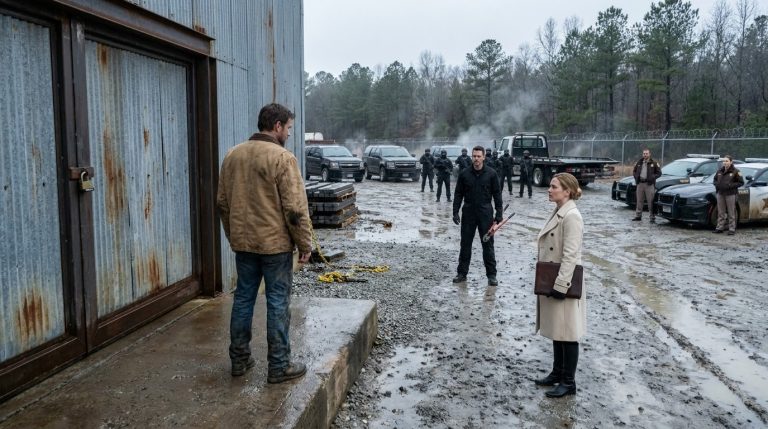
The sound of the clubhouse doors crashing open wasn’t the metallic snap of a box cutter; it was the heavy, synchronized impact of tactical boots. Agent Walsh didn’t just walk in; he arrived, followed by two agents who moved with the kind of geometric precision I hadn’t seen since my time in the service. The room, which had been a cacophony of shouting residents and panicked board members, fell into a suffocating, unnatural silence.
Brenda stood behind the podium, her hands gripped so tightly to the mahogany that her fingers had turned a translucent, bloodless white. She didn’t look at the agents. She looked at me. In her eyes, I saw the slow, agonizing realization that I wasn’t just a disgruntled veteran—I was the one who had choreographed this entire ending.
“Brenda Clearwater,” Walsh said, his voice cutting through the quiet like a wire. “You are under arrest for federal embezzlement, wire fraud, and conspiracy to commit civil rights violations.”
One of the agents stepped forward, the metallic snick of handcuffs echoing in the cavernous room. Brenda didn’t fight. She didn’t scream. She simply went limp, her expensive blazer sagging on her shoulders as the reality of her collapse took hold. As they led her past the projector screen—still displaying the damning invoices I had pulled—she didn’t turn her head. She kept her gaze fixed straight ahead, staring at a future that no longer contained her kingdom.
The development firm representative, who had walked in expecting a quiet signing, found himself cornered by the sudden shift in atmosphere. He turned to leave, his face ashen, but two more agents intercepted him at the door. I watched as they began to question him, the leather folder still clutched in his hand—the very document I had been tracking since the moment I saw him in the industrial district.
I stood at the edge of the dais, the adrenaline finally beginning to taper off, leaving a hollow, sharp fatigue in its place. I looked out into the crowd. The neighbors, once defined by their fear of Brenda’s fines and notices, were now shifting, talking in hushed, incredulous tones. Tom Rodriguez stood in the aisle, his eyes meeting mine; he gave a small, almost imperceptible nod.
It was over. The decoy—the landscaping embezzlement—had worked exactly as I had intended. It had forced Brenda to stay in the room, to defend the indefensible, keeping her eyes off the larger, more existential threat of the rezoning files until the feds were already inside the perimeter.
I walked toward the back of the room, my leg brace clicking against the floor, each step a deliberate release of the tension I had been carrying for months. I reached the exit, the cool night air outside the clubhouse a refreshing, sharp shock against my skin. The moon was high, the desert landscape beyond the community gates looking vast and indifferent to the wreckage inside.
I reached into my pocket and touched the digital recorder. It was a small, plastic piece of hardware, but in that moment, it felt like the most powerful object I had ever held. I hadn’t just protected my home. I had exposed the rot.
A car pulled up near the curb—a black sedan. Walsh stepped out, his expression unreadable. He walked over, the light from the clubhouse spillover catching the weary lines on his face.
“We found the infrastructure files,” he said, holding up a transparent evidence bag. Inside was the leather-bound folder I had seen in the parking lot. “You were right. The rezoning deal was already in the final stages. You saved this place, Miles.”
I didn’t answer. I just looked at the clubhouse, the light now dimmed as the agents processed the scene. The struggle was over, but the weight of it—the months of surveillance, the threats, the constant, calculated maneuvering—felt like a physical layer of dust I had yet to shake off. I had won, but as I stood there in the quiet of the desert night, I realized the victory wasn’t just about the arrest. It was about the fact that I was still standing, that my family was safe, and that for the first time in eighteen months, the silence of Desert Winds was actually, finally, peaceful.
CHAPTER 12: AFTERMATH: THE SILENCE OF THE DESERT WINDS
The clubhouse felt different under the harsh light of the police floodlights now stationed outside. It was no longer a symbol of Brenda’s rigid, orchestrated control; it was a crime scene, a shell that had been emptied of its corrupt occupant. I stood by the projector, the screen still flickering with the last of my data, watching as the final remnants of the paperwork were collected into evidence bags.
Agent Walsh walked over, his face showing the first true sign of fatigue I had seen since he arrived. He held a small tablet, reviewing the final tallies from the federal team. “We’ve got enough, Miles. The infrastructure files confirm it—the entire neighborhood was slated for dissolution in six months. The development firm had already paid the initial deposit into an offshore account in Brenda’s name.”
I nodded, the information landing with a weight that felt strangely lighter than the constant, grinding pressure of the investigation. The final truth—the real reason she had fought so hard against my accessibility markers—wasn’t just ego. It was the fear that any scrutiny, any federal inspection, any official document trail regarding the property’s accessibility, would reveal the cracks in her fraudulent zoning filings. My battle for my rights had been the friction that started the fire.
I walked out of the clubhouse and into the cool, still air of the desert night. The community was quiet—no sprinklers, no traffic, just the vast, dark expanse of the Arizona sky. A few porch lights were on, their soft, yellow glow offering a sense of normalcy that felt more profound than it ever had before.
I started the walk back to my house. My leg was aching, a deep, bone-weary pain that reminded me of the distance I had traveled to get here. I reached the walkway, the spot where Brenda had stood only days ago with her box cutter. The remnants of the orange markers were still there, scattered in the dirt. I knelt, my brace locking with a sharp click, and began to pick them up, one by one.
I didn’t throw them away. I carried them to the porch and set them down, deciding that tomorrow I would repair them—better, stronger, and exactly where they belonged.
Carmen was waiting on the porch, her arms crossed, her eyes tracking my movement. She didn’t say anything as I climbed the steps. She just leaned into me, a solid, grounding presence in the cooling night. We sat there for a long time, watching the shadows of the palms stretch across the driveway. The fear—the constant, nagging sense of being hunted—had finally dissolved.
In the morning, the lawyers would start their work, the neighborhood would begin the long, slow process of reclaiming its governance, and the story of Desert Winds would be written in court documents rather than violation notices. But for tonight, there was only the silence, the smell of dry earth and sage, and the overwhelming, quiet relief of knowing the truth was no longer a secret.
I looked at the house, the structure that I had fought so hard to defend. It was just a building, wood and stone and wire, but for the first time, it felt like a home. I had repaired the foundation, not just of the house, but of the community, and in doing so, I had finally closed the chapter on the man who had been defined by the blast in Kandahar. I was Miles, a resident, a husband, a father. And tomorrow, I would walk down my path, clear and unencumbered.