The Geometry of Silence: How One Sniper’s Precision Architecture Saved a Battalion from Certain Death
CHAPTER 1: The Watchers Perspective
The air in the Helmand compound did not just sit; it pressed. It was thick with the scent of unwashed gear, diesel exhaust, and the underlying, metallic tang of impending failure. Inside the command center, the environment was sterile, dominated by the rhythmic hum of cooling fans and the erratic, desperate screech of radio chatter.
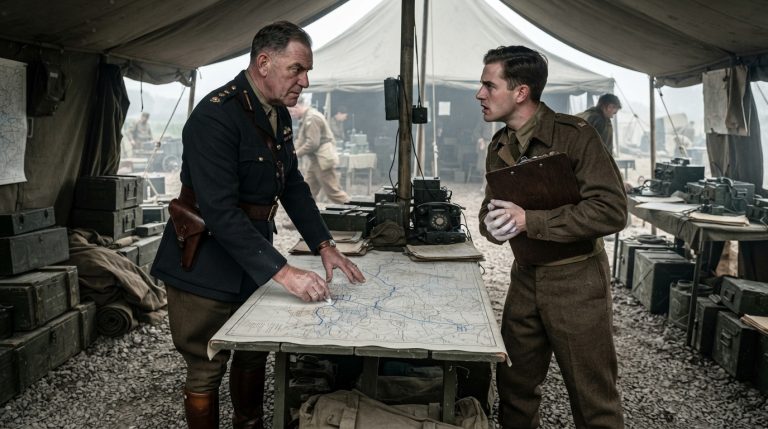
Rachel Vega sat in the final row, the plastic chair digging into her thighs. Her M40A5 was not a tool today; it was a weight, a heavy, cold reminder of her isolation. She kept her gaze fixed on the main projection map. While the officers argued over casualty estimates and the sanctity of the 200-meter rule, Rachel watched the contour lines.
To the room, the map was a grid of operational objectives. To Rachel, it was a physical manifestation of a trap, a biological cage designed to close. She noticed a discrepancy that no one else in the room bothered to acknowledge. The drone feed showed a slight, rhythmic distortion in the brush along the eastern spur—a pattern of movement that didn’t match the surrounding environment. It was a mechanical, deliberate pulse. A heartbeat of a machine gun team, masked by the natural shifting of the shadows.
She pulled her small, spiral-bound notebook from her thigh pocket. The cover was worn, the edges soft from constant friction. She didn’t look at the screen as she scribbled. Her hand moved with a fluid, internal rhythm, capturing the coordinates and the wind offset she had calculated three hours ago.
“The wind is shifting toward the basin,” she said. Her voice was thin, almost lost in the ambient noise of the room.
The major standing by the monitor didn’t even turn his head. He was too busy smoothing a line on the paper map with his thumb, his face set in a grimace of professional frustration. “We are not interested in the weather, Sergeant. Focus on the comms logs. We’re losing Bravo’s link.”
Rachel’s fingers tightened on the pencil. She didn’t press the issue. She didn’t raise her voice. She simply leaned back into the shadow of the rear wall, her heart rate sitting at a steady, rhythmic fifty-two beats per minute. She watched the major’s hand—it was trembling, just slightly, enough to make the grease pencil mark wobble on the map. He was trying to draw a line through a wall of fire, and he was failing because he was projecting his own fear onto the terrain.
She looked down at her forearm, hidden beneath the tan fabric of her blouse. The tattoo of the sniper emblem pulsed in her mind, a phantom sensation. She was the only one in this room who knew that the valley was already lost.
The radio exploded with a burst of static, followed by a voice that cracked under the weight of incoming mortars. “Contact! Direct fire from the ridges! We’re—”
The signal cut. The silence that followed was louder than the explosion. Colonel Hayes stepped forward, his eyes darting across the monitors, hunting for a procedure, a line in a manual, anything to absolve him of the necessity of a choice. Rachel stood up, her movement so quiet that no one noticed she had left the room until the door clicked shut behind her, leaving the command center to its own frantic, self-imposed blindness.
CHAPTER 2: The Anatomy of the Valley
The door clicked shut behind Rachel with a finality that sounded like a chambering round. Outside, the Helmand air hit her like a physical blow, heavy with the scent of baked dust, diesel, and the faint, bitter tang of burning trash. The transition from the artificial, buzzing light of the command center to the harsh, white glare of the afternoon sun was jarring, but it did nothing to unsettle her focus. If anything, the harshness of the environment clarified her thoughts, stripping away the static of the briefing room.
She walked with a measured, rhythmic stride, each boot strike on the hard-packed earth a testament to the discipline that the men behind those walls dismissed as mere habit. She wasn’t angry. Anger was a variable that disrupted the equation, a jagged edge that could snag on a trigger or a calculation. She was simply, perfectly resolved.
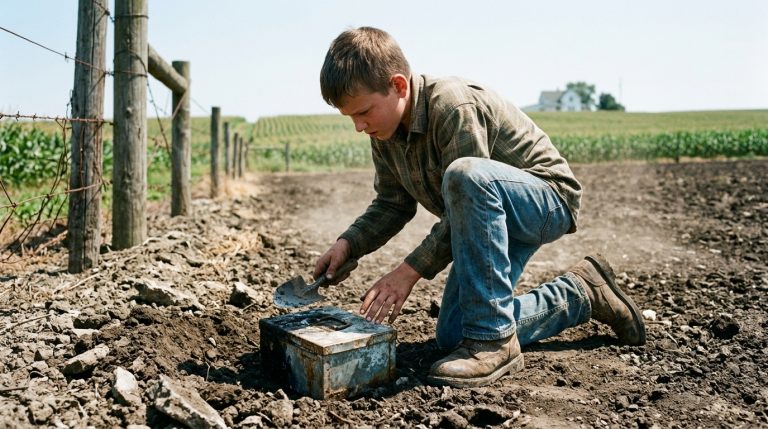
As she moved past a row of idling Humvees, the dust kicking up around her ankles brought a sudden, vivid memory of Redford, Arizona. She could almost smell the dry heat of the mosquite, feel the rough, splintered wood of the fence posts her father had insisted she repair before dawn. In her mind, she saw him standing there, his silhouette stark against the purple dusk, handing her the battered hunting rifle. Steady breath, Rachel. Ease the trigger. Let the shot surprise you.
The phantom pressure of that rifle stock against her cheek felt real, even here, halfway across the world. She reached up and touched the dog tag beneath her shirt. The metal was warm, a steadying anchor. She wasn’t doing this for the men in the command center, nor for the tactical prestige that Colonel Hayes guarded so zealously. She was doing it because the math of the valley was broken, and she was the only one in the entire theater who knew how to balance the equation.
She reached the armory, a corrugated steel structure that acted as a kiln. Inside, the heat was even more concentrated, smelling of gun oil and cold metal. She pulled her M40A5 from its case. The weight of it in her hands was a grounding force. She moved to her assigned bunk, her motions economical, stripping the rifle down and inspecting every component with the scrutiny of a surgeon. She logged the humidity, the temperature, and the barometric pressure in her spiral notebook, not because she needed the data to shoot, but because the ritual of recording it kept her mind tethered to the reality she had to enforce.
While she worked, two Lance corporals passed by the open door of the armory. Their voices drifted in, casual and sharp, cutting through the silence.
“Still tinkering with that paper-puncher, Vega?” one called out, his tone dripping with practiced condescension. “Better save your energy. You’re going to be hauling radio batteries all day tomorrow.”
“Let her play,” the other replied, his laughter echoing off the steel walls. “Some people need their little toys to feel like they belong.”
Rachel didn’t look up. She didn’t offer a rebuttal, a smirk, or even a flicker of acknowledgment. She was currently adjusting the elevation turret on her scope, her eyes fixed on the precise alignment of the internal glass. To respond would have been to accept them as peers whose opinions mattered. She was beyond that. She had already finished the internal map of the valley in her head, and in that mental simulation, she was already three kilometers away, prone on a ridge she had identified months ago, waiting for the first sign of the trap closing.
The discrepancy that had caught her eye in the command center—that rhythmic, mechanical pulse in the eastern spurs—was still burning in her mind. It was a detail so small that the drone operators had treated it as a ghost in the feed, a simple sensor glitch. But she knew that terrain. The way the light hit those rock faces, the way the shadows gathered in the draws—it was the perfect geometry for a killbox. If they moved in with the current operational plan, they wouldn’t just be pinned; they would be dismantled.
She finished reassembling the M40A5, the bolt sliding into place with a satisfying, metallic snick. She slotted a magazine into the pouch, her movements fluid and devoid of wasted energy. She knew exactly what she had to do. The command structure would hold their position, tied to their rules like a dog to a lead, until the battalion was effectively erased. She wouldn’t ask for permission again. Permission was a luxury that the 480 Marines in the field could no longer afford.
She slid the rifle into its soft case, slung it over her shoulder, and stood up. She took a deep breath, filling her lungs with the hot, stale air of the compound. She checked her watch. They were still two hours away from the valley’s mouth. That was the window. That was the margin.
As she stepped out of the armory, the late afternoon sun was beginning to lose its intensity, casting long, distorted shadows across the compound. She didn’t head toward the comms tent where she was supposed to be. Instead, she turned toward the motor pool perimeter, toward the gate that led to the scrubland beyond the wire.
Her path was set. She wasn’t running toward a battle; she was walking into a geometry problem that only she could solve, and for the first time since arriving in Helmand, she felt the quiet, cold thrill of knowing that the outcome was entirely within her grasp. The silence around her was no longer a weight—it was a weapon. And she was ready to use it.
CHAPTER 3: The Architecture of the Ridge
The transition from the compound’s structured grid to the chaotic, unmapped expanse of the Helmand outskirts was a lesson in friction. Rachel stepped over the wire, her boots biting into the fine, talcum-like dust that coated the desert floor. She kept her head down, hood pulled low, moving not like a soldier on patrol, but like a shadow detaching itself from a wall. Her internal compass was locked onto the eastern spur, the jagged silhouette that looked, from this distance, like a broken jaw set against the sky.
She was barely a kilometer out when the wind changed. It wasn’t the steady, predictable breeze she had logged earlier. It was a sudden, violent shift—a atmospheric pressure drop that heralded a localized dust storm. The sky, which had been a harsh, blinding white, began to bruise with shades of ochre and deep, rust-red grit. The horizon vanished, swallowed by a wall of swirling, suffocating sand.
Most would have sought cover. The protocols she had studied in the command center mandated a return to base, a wait for clear conditions, a reassessment of risk. Rachel did none of these things. She simply stopped, adjusted the plastic sleeve protecting her notebook, and watched the way the dust moved.
She stood still, a statue in the gale, observing the swirl. The storm was a V-3 detour—an environmental variable she hadn’t accounted for in her original, narrow calculation. It forced her to improvise. If she followed her planned path, she would be blinded, her visibility reduced to less than five meters. She would be an easy target for any patrol or, worse, she would stumble into the very killbox she meant to dismantle.
She crouched, clearing a small space in the sand with her gloved hand. She used the tip of a discarded casing to trace the topography she had committed to memory. Therefore: If the wind is funneling through the western draw, the eastern spur will be shielded, creating a temporary low-pressure corridor. But: That corridor would be exposed to the enemy’s own flank-guard security patrols.
The risk was a calculated gamble. She could wait out the storm, but every minute she spent sitting still was a minute the battalion moved closer to the jaws of the valley. She chose movement. She would use the storm as cover, not as a deterrent.
She moved with agonizing slowness, her movements stripped of all unnecessary energy. She didn’t march; she flowed. When the gusts hit, she pressed herself into the lee side of rock formations, becoming part of the landscape. The grit hissed against her uniform, a constant, abrasive reminder of the environment’s hostility. Every nerve ending was attuned to the shifting terrain. She could feel the vibration of the ground, a low-frequency hum that hinted at the distance of the approaching battalion’s transports.
As she traversed a treacherous slope, a shift in the rock beneath her foot sent a cascade of shale tumbling into the draw below. She froze, her breath held in a perfectly metered cadence. For a heartbeat, the world stopped. A bird—a scavenger, lean and black—took flight from a nearby crevice, its wings cutting through the dust. That was all. There was no shout, no warning shot, no sudden eruption of fire. The enemy was still waiting for the main force, their discipline perhaps as rigid as the command center’s, their eyes fixed on the expected entry point.
She reached the base of the eastern spur. The ascent was a vertical nightmare, a scramble of loose stone and sheer, unforgiving faces. Her fingers, calloused and strong, found purchase in cracks she had identified through the drone footage weeks ago. She didn’t climb; she occupied the rock, finding the center of gravity in each hold, her body shifting with the rhythm of the wind.
When she finally crested the ridge, the storm was beginning to break, the sky above clearing into a bruised, twilight purple. She lay flat, her body instantly camouflaged against the darkened slate. Below her, the valley opened up—a vast, hollowed-out theater of death. She saw them. The battalion’s lead vehicles, small, insignificant dots of olive drab, were creeping toward the center of the trap.
The silence here was absolute, save for the rhythmic, mechanical pulse she had tracked for days. She crawled forward, the M40A5’s weight feeling like an extension of her own spine. She didn’t look at the vehicles. She looked at the gunpit on the spur, a shadow within a shadow, where the enemy was waiting for the perfect moment to initiate the slaughter.
She opened her notebook, the paper crisp and clean in the plastic sleeve. She didn’t need to write; she just needed the sight of the numbers to reinforce the reality. She began to dial in her dope, her fingers moving with the precision of a clockmaker. She wasn’t just observing anymore. She was adjusting the lens, narrowing the aperture of the world until only the geometry of the target remained. The battalion was a few minutes from the kill zone. The enemy was waiting for a signal that she was about to delete.
She took a slow, deep breath, letting the oxygen saturate her muscles, clearing the fog of the climb. Her heartbeat, which had spiked during the ascent, slowed until she was back at her baseline of fifty-two. The world shifted. The wind didn’t matter. The dust didn’t matter. There was only the steel, the scope, and the empty space between her and the target. She pressed her cheek to the cold stock, the surface biting into her skin, and began the countdown.
CHAPTER 4: The Descent into the Killbox
The scope reticle was a crosshair of absolute certainty suspended over a world of fluid chaos. Rachel watched the lead vehicles of the battalion descend into the valley floor. To the commanders in the rear, these were dots on a screen, represented by blue icons moving toward a green ‘clear’ zone. To Rachel, looking through the high-powered optics, they were metal boxes holding lives, fragile and unaware.
She adjusted her parallax. The air was cooling as the sun dipped toward the jagged spine of the mountains, creating long, distorted shadows that stretched like grasping fingers across the valley floor. Her pulse was a metronome, slow and rhythmic. She was not waiting for the battalion to act; she was waiting for the enemy to reveal the full architecture of their trap.
Then, she noticed it—a subtle, discordant note in the environment. A radio handset, discarded near the enemy gunpit, emitted a burst of static. But it wasn’t the jagged, harsh interference of typical regional transmission. It was a rhythmic, modulated sequence, almost melodic. It was a frequency shift that shouldn’t exist in this sector. It was a signature.
She pulled her hand from the stock, her fingers hovering over the dial of her own comms gear. She hadn’t been monitoring the tactical net—she had been listening to the background radiation of the valley itself. The enemy wasn’t just waiting for the battalion to enter the killbox; they were coordinating the closure of the box through a secondary, hidden network.
Her mind, honed by years of her father’s lessons in discipline and pattern recognition, immediately began to parse the signal. The “Dead Weight” status she carried—the dismissal she endured from the company commander and the enlisted men—suddenly appeared in a new, sharper light. By keeping her sidelined, by ignoring her input, they had essentially created a vacuum in the battalion’s tactical awareness. The enemy had counted on that. They had counted on the command structure being too rigid, too blinded by their own protocols, to notice the shift in frequency.
She wasn’t just a sniper on an overwatch ridge; she was a witness to an orchestration.
Below, the lead Humvee hit the pivot point—the exact spot she had marked in her notebook days ago. She held her breath. The enemy gunner on the spur adjusted his aim, his movements sluggish and overly confident. He was waiting for the battalion to cross the invisible line of the killbox.
Rachel’s finger moved to the trigger, but she didn’t squeeze. Not yet. If she fired now, she would break the illusion, but she wouldn’t save them. The battalion would just be forced to stop, pinned in the middle of the open ground, still surrounded by the hidden machine gun teams. She needed to wait for the secondary signal. She needed to know where the RPG teams were hidden in the draw.
The silence on the valley floor was deceptive. A light wind gusted through, carrying the smell of dry earth and old oil. She watched a sparrow dart from a crevice near her position, and for a fleeting moment, her vision flickered with the memory of an Arizona dusk—the soda cans on the fence post, the way the world seemed to hold its breath before the surprise of the shot. Her father’s voice, a ghost of memory, whispered in her mind: Patience is not the absence of action, Rachel. It is the tactical application of silence.
She moved her gaze, scanning the draw with the clinical detachment of a mapmaker. There—a slight, unnatural movement of camouflage netting against the red clay of the ravine. A second RPG team. They were perfectly positioned to seal the rear.
She tracked them, her heart rate not changing by a single beat. She was mapping the killbox, piece by piece, building a counter-geometry in her mind. The battalion was a few meters from the center. The officers back at the compound were still looking at their screens, confident in their routine, unaware that the floor was about to give way.
She felt a strange, cold clarity. She had been labeled ‘dead weight’ because she didn’t perform the swagger of a warrior. She performed the mathematics of one. And as the enemy gunner’s finger began to tighten on his trigger, Rachel began her own final calculation. She adjusted her windage, accounted for the drop at nine hundred meters, and shifted her aim from the gunner to the command node she had identified earlier—the one coordinating the frequency shift.
If she could cut the command node, she could disrupt the synchronization of the trap. It wouldn’t be a win, but it would be a break in the rhythm. It would buy the battalion the five seconds they needed to realize they were walking into a grave.
She didn’t move. She became one with the stone, a part of the ridge itself. The world was narrowing down to the crosshair, the pressure on the trigger, and the exact, precise moment when the first sound of death would echo through the valley. She knew the cost of the next few minutes. She knew that once she fired, she would never be the ‘mascot’ again. She would be an anomaly in their system. She would be the one who had seen what they refused to look at. And she was perfectly fine with that.
The battalion crossed the line. The enemy gunner’s weapon began to traverse. Rachel exhaled, the air leaving her lungs in a slow, controlled stream, and she began the final squeeze.
CHAPTER 5: The Ridge Line
The first round left the barrel not with a roar, but with a sharp, disciplined crack that felt like a needle stitching through the fabric of the valley’s silence. The recoil traveled through the stock, biting into Rachel’s shoulder—a familiar, grounding sensation. Through the scope, she watched the command node on the eastern spur lose its integrity. The man coordinating the frequency shift didn’t even have time to register the impact; he simply folded, his hands dropping from the radio handset, his body sinking into the shadows of the gunpit.
The valley remained silent for a heartbeat, a suspended moment where the laws of cause and effect paused to catch their breath. Then, the reaction began.
It wasn’t a retreat; it was a disruption. The enemy, confused by the sudden loss of their coordinator, hesitated. Their rhythmic, metronomic traverse faltered. In that sliver of time, the battalion’s lead Humvee, which had been seconds from total exposure, lurched to a halt as the driver sensed the shift in the ambient pressure.
Rachel didn’t pause to admire the result. She cycled the bolt—a mechanical, rhythmic action that cleared the casing and fed the next round. Her fingers were steady, but the physical toll of the overwatch was starting to manifest. A fine, tremors-like vibration ran through her extremities—the biological cost of sustained, absolute focus. She pressed her cheek harder into the stock, using the cold friction of the weapon to suppress the tremors.
Steady breath, Rachel. The ghost of her father’s voice was sharper now, a directive woven into her own internal monologue. Let the shot surprise you.
She swung the reticle toward the second target, the RPG team in the draw. They were scrambling, their movements frantic and uncoordinated now that their primary command was silent. They were looking for the source of the fire, their eyes scanning the ridges with a desperate, sweeping motion. Rachel knew their game. They would default to their fallback position—a cluster of boulders near the western slope.
She led the target, anticipating the movement, accounting for the wind drift she had calculated earlier. She didn’t track the man; she tracked the space he was about to occupy. The trigger pull was a seamless extension of her intent. The second crack echoed, sharper than the first. The RPG team’s movement ceased, the rocket launcher clattering into the shale.
But the success brought a complication. A machine gun team on the far, northern ridge, which she hadn’t yet engaged, locked onto her muzzle flash. A hail of rounds began to stitch across the rock face near her position, sending shards of slate flying into the air. One of them grazed her sleeve, the hot, searing sting of it a jarring reminder that she was not a ghost; she was a target.
She rolled, the movement sharp and deliberate, sliding into a narrow fissure in the rock. The dust cloud kicked up by the incoming fire tasted of sulfur and iron. Her breathing had become rapid—not from fear, but from the physical exertion of the shift. She checked her pulse. Fifty-eight. She was pushing the edge of her own biological limits.
The radio net began to erupt.
“Command, this is Bravo! We’re taking fire from the north, but the eastern spur is down! I repeat, the eastern spur is down!”
“What’s our status, Bravo? Did we hit a trigger?”
“Negative, Command! It’s precision fire! Someone’s overwatching from the ridge!”
Rachel lay in the fissure, listening to the chaos. The Colonel’s voice cut through the net—a clipped, brittle sound. “Stay in your lanes, Bravo! Hold position! We are not authorizing—”
“They’re pinning us, Colonel!” The voice was raw, the desperate sound of a man who knew exactly how close he had come to being erased. “We need suppression on the north ridge!”
Rachel closed her eyes for a fleeting second, the image of the command room—the stagnant map, the trembling hands, the rigid adherence to the 200-meter rule—flashing in her mind. They were still trying to hold the line, still trying to negotiate with a reality that had already moved past their procedures.
She pushed herself back up, the slate scraping against her gear. She didn’t wait for permission. She couldn’t. The north ridge was a high-angle shot, a brutal, distance-heavy engagement that would test the absolute limits of her dope charts.
She propped the M40A5 on the ledge, her eyes scanning the ridge for the machine gunner. The adrenaline had sharpened her perception to a razor’s edge. Everything had taken on a hyper-real, textured quality: the veins in the rock, the way the light pooled in the valley like liquid, the very friction of the air against her skin. She was no longer a sergeant in the Marine Corps; she was a component of the terrain.
She saw the gunner’s shadow—a fleeting, dark movement against the grey granite. She dialled the scope, her fingers moving by muscle memory, the numbers blurring and coalescing into a single, perfect solution. She wasn’t just firing a rifle; she was solving the valley. She was writing the only doctrine that mattered.
The wind shifted, a sudden gust from the west, threatening to push the round off its path. She didn’t fight it. She adjusted for the drift, her mind already calculating the intercept point.
Let the shot surprise you.
She exhaled, the sound lost in the growing cacophony of the valley. She squeezed the trigger.
CHAPTER 6: The Geometry of Survival
The shot hammered home, a definitive strike that silenced the northern ridge. But in the violent aftermath of the recoil, the silence that followed was not one of victory; it was the heavy, pregnant quiet of a target being acquired.
Rachel didn’t waste time checking for confirmation. She knew the mechanics of a counter-battery engagement as intimately as she knew her own pulse. She rolled out of the fissure just as a concentrated burst of automatic fire shredded the spot where she had been lying, rock dust and splinters blooming like a grey flower in the evening air.
She moved low, her body a fluid motion of tactical economy. Every muscle burned with the residual tension of the long overwatch, but her mind was a cold, perfectly ordered workspace. She had broken the enemy’s coordination, but in doing so, she had become the only visible variable in their equation. They were no longer looking for the battalion; they were hunting for the source of the interruption.
She slung the M40A5 across her back, the weight shifting with her as she navigated the treacherous descent. She couldn’t stay on the ridge—that would be an exercise in attrition, and she was already short on ammunition. She needed to transition to a secondary overwatch, a position that would allow her to keep the corridor open for the extraction birds while keeping her silhouette masked by the natural folds of the valley.
As she scrambled over the jagged lip of the ridge, her boot found a pocket of soft, loose silt. She slid, the ground giving way beneath her, and for a terrifying second, she felt the sickening sensation of gravity taking control. She threw her weight backward, digging her gloved hands into the grit, her heart hammering a frantic rhythm against her ribs. She stopped inches from a sheer drop-off into a ravine that would have ended her mission—and her life—in a single, silent plunge.
She pressed her chest against the rock, her breath coming in ragged, shallow gasps. She forced herself to slow it down. Steady. Regulate. She closed her eyes, and for a brief, fleeting moment, the smell of the dust and the taste of the sulfur faded, replaced by the cool, dry air of an Arizona evening. She felt the phantom weight of her father’s hand on her shoulder, steadying her. The ground is just another surface, Rachel. You don’t fight it; you use it.
She opened her eyes. The tactical reality rushed back in with the force of a tidal wave. Below, the battalion was moving. They were no longer trapped in the center of the killbox; they were bounding, moving with a renewed, desperate speed toward the landing zones. The radio traffic was a blur of tactical updates, but beneath the procedural noise, she heard it—Commander Ror’s voice, commanding and resonant, cutting through the confusion.
“Trident Actual to all units: Ghost 206 is engaging. Maintain movement. Keep the corridor clear. We are moving to the extraction point.”
Ghost 206. The call sign felt alien to her, a label that held no weight against the visceral, lived reality of the ridge. She wasn’t a legend; she was a variable in a firefight.
She reached the base of the spur, the ravine offering a temporary shield from the enemy’s line of sight. She stopped, scanning the perimeter. She was out of position, and the enemy’s sweep was tightening. She could hear the distinct, rhythmic thud of mortar fire being prepped—they weren’t just shooting; they were going to bracket the ridge.
She checked her remaining magazine. Three rounds. Three shots to maintain the geometry of survival.
She turned and saw a cave opening, small and partially obscured by scrub, nestled into the western face of the valley. It was a perfect tactical pocket—if she could reach it, she could hold the corridor for the final helicopter chalks. She moved, her boots finding purchase on the slick, dust-covered stone.
As she neared the entrance, a shadow detached itself from the rocks above. A lone scout, his face wrapped in a rough, mud-stained scarf, was moving toward her position. He was hunting her. He didn’t see her yet, his attention fixed on the ridge she had just vacated.
Rachel didn’t hesitate. She didn’t think about the protocol or the morality of the engagement. She calculated the distance—forty meters, uphill, moderate wind. She unslung the M40A5 with a fluid, practiced motion, the rifle coming to her shoulder in one unbroken, kinetic line.
The scout stopped, sensing the movement. He began to raise his weapon, his gaze shifting, searching for the anomaly in his environment.
Rachel didn’t look at his eyes. She looked at the center of his chest. She saw the way his weight was balanced on his heels—a sign of hesitation, of a lack of tactical conditioning. He was a variable in an equation that she had already solved.
She didn’t feel the shot. She didn’t feel the recoil. She only felt the final, definitive resolution of the interaction. The scout dropped, his weapon falling into the shale with a dull, clattering sound.
The valley fell into a temporary, eerie silence. The distant thrum of the approaching helicopters began to bleed into the acoustic landscape, a rhythmic, powerful vibration that signaled the final phase of the extraction. Rachel stepped over the scout, her boots silent on the stone, and entered the darkness of the cave. She had enough ammunition for two more shots. She had one corridor to protect. She was ready.
CHAPTER 7: The Extraction
The cave was a small, hollowed-out lung in the mountain’s side, tasting of stale air and ancient dust. Rachel lay in the furthest corner, her body curled into a compact, defensive shell. The thrum of the helicopters was no longer distant; it was a physical force, a deep, percussive vibration that rattled the loose shale beneath her boots.
She checked her M40A5 one last time. Two rounds remained. Two threads of geometry she had yet to pull.
Outside, the valley was a theater of chaotic motion. The helicopters, hulking shapes against the twilight, were beginning their final approach, their searchlights cutting through the settling dust like long, desperate fingers. The Marines of the battalion were sprinting toward the LZ, their silhouettes frantic and exposed.
Then, she saw it. A group of enemy fighters, emboldened by the battalion’s focus on the extraction, was attempting a flanking maneuver through a narrow, hidden defile to the north of the LZ. They were moving in a disciplined, silent line—a final, concerted effort to turn the exit into a slaughter. They were outside the view of the pilots, shielded by the very ridge she had just vacated.
Rachel felt a cold, sharp spike of urgency. The helicopters were committed. The battalion was committed. If those fighters reached the defile, the LZ would be under direct fire in less than thirty seconds.
She moved to the mouth of the cave. The memory of her father’s face—the weary, lined pride he wore when he returned from his deployments—flashed into her mind, unbidden and sharp. He had been a man who understood that safety was an illusion, that duty was a burden one carried until the very end. The thrum of the rotors mirrored that memory, a visceral, sensory link between the past and the present. She pushed the thought away, centering her focus on the defile.
She stepped out into the twilight. The air was cool, biting against the grit on her skin. She found a stable ledge, the stone cold and unforgiving beneath her palms. She scanned the defile. The lead fighter was already half-way through the pinch-point.
She didn’t track the target. She tracked the vulnerability. The defile was a funnel; if she could neutralize the lead fighter at the narrowest point, the entire momentum of their maneuver would collapse. She dialed her scope, the clicks sounding like faint, metallic whispers in the roar of the rotors.
Steady.
The target moved, his weapon raised, his eyes fixed on the LZ. Rachel’s finger rested on the trigger, the weight of the rifle an extension of her own resolve. She knew the range—four hundred and fifty meters. She knew the wind—a light, eddying breeze from the south. She knew the geometry.
She fired.
The round struck true, a clean, mechanical disruption of the fighter’s path. The lead man slumped, his body blocking the narrowest point of the defile. The line behind him hesitated, bunching up as they collided with the obstruction. Their discipline broke, the rhythm shifting from a coordinated advance to a chaotic scramble.
She immediately cycled the bolt, the casing pinging against the rock with a tiny, sharp sound. She had one round left.
A mortar crew, positioned further up the slope, was frantically setting up their tube, their movements illuminated by the searchlights of the approaching birds. They were aiming for the LZ, their trajectory plotted and ready. Rachel swung her rifle, the reticle locking onto the mortar tube’s baseplate. It was a smaller target, a harder strike, but it was the only shot that mattered.
She took a long, measured breath, the rhythm of the helicopter blades aligning with the beating of her own heart. She felt a strange, quiet calm, the kind that comes when the equation is nearly solved. She wasn’t fighting for her own survival; she was fighting for the accuracy of the battalion’s exit. She was ensuring that the geometry remained whole.
She squeezed the final trigger.
The strike was clean. The mortar tube disintegrated, the resulting secondary ignition sending a plume of fire into the air that lit up the entire ridge. The enemy fighters, realizing their positions were compromised, scattered into the darkness.
The roar of the helicopters reached a crescendo as they descended, their skids biting into the dust of the LZ. Rachel didn’t move. She stayed prone on the ledge, her rifle empty, her mission silent and complete. She watched as the last of the battalion clambered into the birds, their movements hurried but purposeful.
Commander Ror was the last to board, pausing at the threshold of the helicopter to sweep the valley one final time. He looked toward the ridge, toward the silent, dark outline of the cave. He didn’t see her—he couldn’t—but he stood there for a heartbeat, his salute a small, sharp gesture against the backdrop of the departing blades.
The helicopters banked, their navigation lights blinking like faint, distant stars as they turned toward the base. Rachel remained on the ledge, the silence of the valley returning, deeper and more profound than before. She felt the heavy, lingering exhaustion settle into her bones, but beneath it, there was a quiet, steady peace. She had solved the valley. She had done her duty. And as the sound of the extraction faded into the vast, empty expanse of the desert, she knew that for the first time in her life, the truth was not in what she had said, but in what she had done.
She stood up, the movement slow and stiff. She slung the empty rifle over her shoulder and began the long, quiet walk back toward the compound. She was alone, but the path was clear.
CHAPTER 8: The Cost of Clarity
The walk back to the compound was not a journey; it was a process of decompression. Every step on the hard-packed, sun-baked earth was rhythmic, a steady cadence that slowly drained the residual hum of adrenaline from her muscles. The desert night had descended, cold and absolute, the stars overhead pinpoints of sharp, indifferent light. Rachel kept her head down, her movements measured, the empty M40A5 slung across her back—a tool that had performed its function with the cold, unyielding precision of a physical law.
When the glow of the compound’s perimeter lights finally bloomed against the horizon, she didn’t quicken her pace. She approached the gate with the same deliberate, unhurried gait that had defined her presence in the valley. The sentry at the entrance, a young Marine she recognized from the morning rotation, stood a little straighter as she drew near. He didn’t offer a smirk. He didn’t look away. He held his position, his eyes tracking her with a sudden, quiet focus, his hand hovering near his vest in a gesture that wasn’t quite a salute but was miles away from indifference.
She passed through the gate, the crunch of gravel under her boots sounding unnervingly loud in the stillness of the night. The compound was in a state of suspended animation. The chaos of the afternoon had settled into a heavy, shell-shocked quiet. She walked past the motor pool, where vehicles were parked at chaotic angles, the remnants of a rushed departure still clinging to their mud-caked frames.
The armory was unlocked, the door standing slightly ajar, a sliver of yellow light cutting through the gloom. She entered, the familiar scent of gun oil and cold steel grounding her. She laid the M40A5 on the workbench—the center of her workspace, the locus of her reality.
She began the teardown. It was a ritual of restoration. She stripped the bolt, inspected the firing pin, and wiped the carbon from the bore. As she worked, Colonel Hayes entered. She didn’t look up; she didn’t have to. The sound of his boots—heavy, deliberate, the gait of a man who had spent hours wrestling with the friction between his command and the reality that had just dismantled it—told her everything.
He stopped at the edge of the workbench. For a long time, the only sound was the faint, rhythmic ticking of the cooling rifle barrel.
“The battalion is accounted for,” Hayes said, his voice stripped of the clipped, bureaucratic edge that had dominated the briefing room. It was tired, a sound hollowed out by the weight of what had occurred. “Four hundred and eighty souls. All of them.”
“Duty, sir,” Rachel replied, her voice steady, focused on the small, intricate spring she was wiping down with a clean patch.
“Duty,” Hayes repeated, the word sounding strange, almost fragile, in the cramped, metallic air of the armory. He looked down at the rifle, then up at her. He didn’t look for the name tape, or the rank, or the file he had relegated to the back of his desk. He looked at her hands—steady, calloused, the hands of someone who had done what the manual had deemed impossible. “They told me you were a paper shooter. A mascot.”
Rachel finished the cleaning, the bolt reassembling with a soft, satisfying click. She placed the rifle back into its case and locked the latches. The sound echoed, a final, definitive period at the end of a long, brutal sentence.
“I am a Marine, sir,” she said, looking him in the eye. “And I am a sniper. My tools are my own, but the doctrine I follow is older than the manual.”
Hayes nodded, a slow, weary motion. He reached out, his hand hesitating for a second before resting briefly on the edge of the workbench. It was an acknowledgment—not of her rank, but of the truth that had shattered his own. “You were right about the folds in the valley. You were right about the geometry. We were looking at a map, Sergeant. You were looking at the earth.”
He turned and walked away, his departure marked by the fading rhythm of his boots. Rachel stood alone in the dim light. She walked over to the corner of the armory where she kept her gear and found her father’s dog tag, which she had pinned to the wall. She touched the metal, the surface cool and reassuring against her thumb. The history etched into the metal—the deployments, the injuries, the life that had been defined by the same unwavering precision—felt complete now. She had carried the discipline he had passed down to her, and she had tested it against the fire of the valley. It had held.
She walked out into the compound one final time, heading toward the barracks. The air was crisp, the wind having died down, leaving the desert in a state of atmospheric peace. As she walked, she spotted a small, discarded aluminum casing near the edge of the walkway—the remnant of a flare that had been fired during the chaos. She stopped, picked it up, and felt the weight of it in her hand. It was a trivial piece of debris, but it felt solid, real, a marker of the friction she had lived through. She walked over to the edge of the perimeter fence and tucked it into a secure corner, a tiny, physical repair to the space that had been torn open by the day’s violence.
The barracks were quiet, save for the rhythmic, steady breathing of the Marines inside. Rachel climbed into her bunk, the mattress thin and hard, the fabric coarse. She lay back, the ceiling a dark, familiar expanse. The internal storm, the constant, grinding pressure of having to justify her presence, had vanished. In its place was a profound, crystalline clarity. She was the sum of her actions, the product of her own discipline, and the geometry of her life was finally, perfectly, balanced. She closed her eyes, the rhythm of the desert night folding around her like a blanket, and fell into a sleep that was as deep and still as the earth itself.