The Silent Siege: A Masterclass in Calculated Retribution Against the Weaponized Facade of Community Order
CHAPTER 1: THE SIX OCLOCK INTRUSION
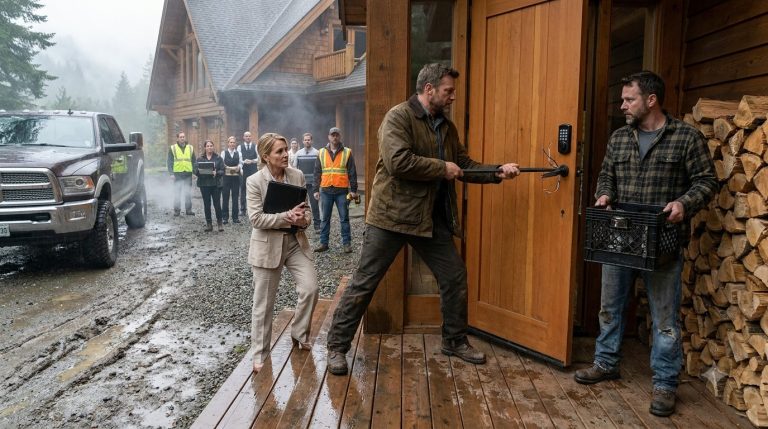
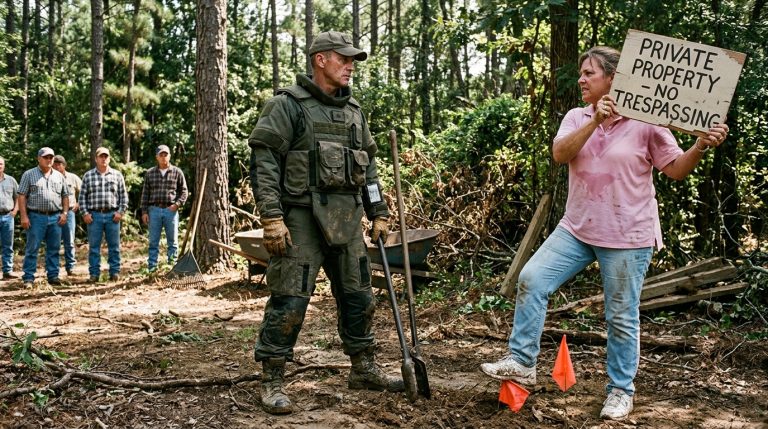
The front door trembled under the knuckles of the man in the reflective vest. At 6:01 AM, the house should have been a fortress of silence, a sanctuary of reclaimed time. Instead, the porch was occupied by three figures who looked as if they had been manufactured in a board room—neat, sharp-edged, and entirely devoid of genuine human warmth.
I stood in the threshold, the flannel of my pants feeling heavy and abrasive against skin that still craved the dark. The man with the bright, surgical smile stepped forward, his clipboard acting as a barrier between us. He didn’t look at me; he looked at the space around me, assessing the geometry of my life with a predatory efficiency.
“Good morning, sir,” he said. The words were clipped, professional, and entirely hollow. “Safety inspection. We have reports of structural hazards.”
I looked at his companion—the woman with the hair pulled so tight it seemed to stretch her eyes into a permanent state of agitation. She was scanning my front yard, her eyes tracking the paint chips on my porch railing as if they were indictments. Behind them, the sun was just beginning to bleed over the horizon, casting long, cruel shadows that turned the lawn furniture into jagged silhouettes.
“It’s six in the morning,” I said. My voice was a low, grounded thing, stripped of the fatigue I felt in my bones. I wasn’t pleading; I was stating a fact about the world, and they were the only things breaking the logic of it.
“Best time to catch issues before the day starts,” the third man offered, his shrug casual, rehearsed.
I leaned against the doorframe, feeling the cold wood against my shoulder. I didn’t reach for my phone. I didn’t argue about bylaws. My eyes caught a detail on the leader’s clipboard—a series of printed checklists, and underneath, a handwritten note on a yellow sticky pad that didn’t belong with a structural report. It was a list of names, followed by dollar signs.
The air turned thick. I realized then that they weren’t looking for fire hazards. They were looking for points of failure.
“I’m not in your HOA,” I said, my gaze locking onto the woman’s sharp, glassy eyes. I felt a cold, metallic click in my chest—the switch of a hunter who has realized the prey is actually a wolf in the sheep’s pasture.
She smiled, a tight, thin line of malice. “We have our instructions, sir. And we have the authority to proceed.”
I turned, leaving them on the porch. The silence I walked back into felt different now—fragile, like glass waiting for the right frequency to shatter. I walked past the kitchen, past the coffee maker that hadn’t yet begun to hum, and straight to the entry closet. My hand closed around the cool, reassuring steel of the bolt.
When I turned back to the door, I wasn’t just a homeowner anymore. I was a structural integrity of a different kind. I moved to the threshold, the rifle held at a low, controlled angle, pointing toward the earth—not at them, but at the ground they had decided to claim.
The woman’s expression shifted, the composure fracturing for a fraction of a second before the mask of outrage snapped back into place. “He’s threatening us!” she shrieked toward her phone, the screen already lit up and recording.
I didn’t blink. I realized then that the threat wasn’t the weapon in my hand. The threat was the fact that I had finally, irrevocably, stopped playing by their rules. I stepped out, the floorboards groaning under my boots, and looked at the camera lens with a calm that bordered on the absolute.
“You’re on the wrong porch,” I said, and the way the morning light hit the steel in my hands made the world go quiet, waiting for the crack of the next move.
CHAPTER 2: THE ANATOMY OF A LINE
The sound of their tires spitting gravel across my driveway didn’t just fade; it evaporated, replaced by the ringing silence of a house holding its breath. I didn’t move. I remained on the porch, the rifle still cradled in a low, disciplined hold. My knuckles were white, not from rage, but from the sheer, grinding focus of a man who has just realized the perimeter of his life has been breached.
The sun was higher now, carving sharp, clinical lines of light across the driveway. I watched the dust settle, a fine, grey mist suspended in the morning air. Behind me, the house—the ceiling fan, the coffee maker, the quiet rhythm of my wife’s morning—felt like it belonged to a different life. That world had been disrupted. The boundary of my porch, once a simple wood-and-nail construct, was now a geopolitical line in the dirt.
I checked the camera on my belt. The small digital display was dark, save for the blinking red light that confirmed it was still recording. I had captured the moment. The woman’s screech, the clipboard dropping, the panicked scramble of the “safety inspectors” as they realized their performance piece had just met a hard, physical reality. I pulled the device, popped the SD card, and tucked it into the hidden pocket of my jacket. I didn’t trust the cloud. I trusted the weight of the plastic in my palm.
The front door opened behind me. My wife stood in the frame, her hand resting on the latch. Her face was a landscape of controlled terror. “What was that?” she whispered.
“Nothing,” I said, keeping my eyes on the road. “Just some people who got lost. Go back inside. Keep the doors locked. Don’t answer for anyone, even if they have a badge.”
“They were filming,” she said, her voice trembling just enough to be noticeable. “I saw them. They were filming you, like… like they wanted you to do something.”
I didn’t answer. She was right. That was the most chilling part of the entire encounter. They hadn’t come for the wiring or the porch; they had come for a clip. A soundbite. A visual. They wanted the “unstable homeowner” to fit into a narrative they were already writing.
I leaned the rifle against the doorframe, keeping it within reach, and walked to the edge of the steps. The wood was cold under my boots. I looked at the patch of dirt where the lead guy had stood. There, half-buried in the gravel, was a small, plastic pin—the kind you’d see on a cheap lanyard—marked with a stylized, corporate logo I didn’t recognize. It wasn’t the HOA crest. It was something else. A shell company.
I picked it up. The edges were sharp, biting into my thumb.
The morning was no longer mine. The pancakes I had planned, the porch project, the quiet Sunday rhythm—it had all been incinerated by three people in matching vests. I didn’t feel the adrenaline crash. Instead, I felt a singular, freezing clarity. My pulse was a metronome, ticking off the seconds.
I didn’t go back inside for coffee. I walked to the garage, the space where I kept my tools and the old pickup, and clicked the overhead light on. The shadows in the corners retreated, revealing the familiar, brutal geometry of my workshop. Everything had a place: the wrenches on the pegboard, the levels, the square, the heavy-duty jack.
I cleared a space on the workbench and pulled out the old legal file I kept for the property. I didn’t need to look at it to know what it said, but I needed to see it now with new eyes. I traced the boundaries of the lot, my finger sliding over the ink. There were discrepancies. I had suspected them for years—small, administrative anomalies in the county filings that never quite added up. I had always assumed it was incompetence.
Now, I looked at the pin in my hand, then back to the map. The lines didn’t just overlap; they were designed to obscure.
I grabbed my phone and dialed a number I hadn’t used in two years. It rang twice before a familiar, measured voice answered. “Marcus? It’s me. We’ve got a problem. No, not a fire. A trespass. And I think they’re trying to build a cage.”
I listened to him talk, the sound of his voice anchoring me to the concrete floor. I wasn’t the hunter yet, but I was no longer the prey. I was the architect, and I had just started designing the blueprints for my own defense. The house, the porch, the life behind me—it wasn’t just a home anymore. It was a position to be held.
I hung up, staring at the pegboard. The silence of the garage was heavy, suffocating, but it was my silence. I would hold it. And if they came back, they wouldn’t find a target. They’d find a mirror.
CHAPTER 3: THE SMEAR CAMPAIGN
The screen of the wall-mounted monitor in the garage flickered to life, the blue light washing over the concrete floor and turning the shadows into stark, high-contrast shapes. I didn’t turn around immediately. I stood before the workbench, gripping the handle of a framing hammer with enough pressure to whiten my knuckles. The house was quiet, but it was a brittle, strained quiet—the kind that snapped if you walked too hard on the floorboards.
My wife walked into the garage, her presence subtle but heavy. She wasn’t holding a coffee mug this time; her hands were tucked into the pockets of her cardigan, her shoulders hiked up toward her ears. She looked at the monitor, then at the rifle still resting against the workbench, then at me.
“They’re on the local feed,” she said, her voice thin. “The neighborhood forum. People are already talking. They’re calling it a ‘domestic disturbance’ with a weapon.”
I didn’t answer. I reached for the keyboard, my fingers moving with a practiced, mechanical rhythm. I began scrolling through the forum threads. There it was: a shaky, vertical-shot video of me standing on the porch. The framing was malicious. They had cropped the angle to make it look like I was aiming the barrel directly at them, rather than at the ground. Below the video, the comments were already cascading—a waterfall of digital outrage. Unstable. Dangerous. Threat to the community.
“They’re painting a target,” I muttered, my voice devoid of emotion.
I looked at my wife. She was staring at the screen, her eyes tracking the text, but there was a flicker of something else in her gaze—not just fear, but a peculiar, jagged hesitation. She bit her lip, then looked away, toward the shadows in the corner of the garage where the bicycles and boxes were stored. It was a micro-expression, a flash of internal tension I hadn’t seen before. I wondered if she had heard something I hadn’t, or if the fear had finally started to bleed into doubt.
“What is it?” I asked, my voice dropping to a low, tactical register.
She shook her head, pulling her hands deeper into her pockets. “Nothing. Just… the noise. It’s too loud, isn’t it? Even for them.”
I didn’t press. In this new reality, forced trust was a vulnerability I couldn’t afford. I turned back to the screen. The HOA was working faster than I’d anticipated. They weren’t just reacting; they were proactive. The smear campaign was a precision strike. If they could define the narrative before the authorities arrived, the truth wouldn’t matter—only the optics would.
I navigated to a secondary tab, one that showed the traffic logs for my property cameras. A red dot blinked rhythmically on the edge of the driveway. Someone had been sitting in an idling car at the corner of my block for the last twenty minutes. Not an HOA car. Something generic, dark, and still.
“They’re watching,” I said.
The realization didn’t send a surge of panic through me; it tightened my focus. Every movement they made was a data point. I pulled up the digitized layout of the property again, overlaying the camera angles. The neighborhood wasn’t just a place to live anymore; it was a contested zone. I needed to know why they were pushing so hard, so fast. The extortion scheme I’d glimpsed on that lanyard pin was the motive, but the speed—the sheer, frantic pace of the smear—suggested they were hiding something bigger. Something that required them to neutralize me before I could start digging into the municipal records.
I stood up, the chair scraping sharply against the concrete. The sound echoed, a jarring, industrial note in the stale air.
“I need to make a call,” I said, moving toward the side door of the garage.
“Where are you going?” my wife asked, her voice hitching.
“I’m not going anywhere,” I said, stepping out into the side yard. The morning air hit me like a splash of ice water, sharp and biting. I walked toward the edge of the property, where the trees thickened, creating a natural screen against the street. I kept my movements slow, deliberate, staying in the shadow of the overhang. I didn’t want the car at the corner to see me move.
I pulled out my phone and dialed Marcus. When he answered, I didn’t offer a greeting. “They’re ramping up the optics. Digital smear, active surveillance. They’re trying to force a reaction.”
“They’re baiting you,” Marcus said, his voice as calm as a steady heartbeat. “Don’t take the bait. If you react, you lose the high ground. If you stay still, they have to come closer.”
“They’re already close,” I replied, watching the dark car through the gap in the trees. It hadn’t moved. “I found a pin. Corporate logo. Doesn’t match the HOA. Dig into it.”
“I’m already on it,” he said. “Listen, you’re not fighting an association. You’re fighting a shadow. Keep your head down. Don’t look at the forum. Let them dig their own hole.”
I ended the call and stood there for a moment, listening to the wind move through the pines. The world felt smaller, tighter, the boundaries of my life shrinking down to this patch of dirt and the cold, unyielding reality of the fight. I looked back at the house, seeing the lights on in the kitchen, the warmth trapped behind the glass. I realized then that the smear wasn’t just designed to isolate me; it was designed to break the internal logic of my home.
I looked at the car again. It wasn’t just watching; it was waiting. Waiting for me to break.
I walked back inside, my boots crunching on the gravel, the sound loud and defiant in the morning stillness. I didn’t look at the forum again. Instead, I sat at the kitchen table, pulled out a notebook, and started writing down everything I knew—not about the HOA, but about the land. The anomalies. The original deeds. I was going to find the foundation, and once I did, I was going to tear down everything they had built on top of it.
CHAPTER 4: THE DEEP DIVE
I didn’t close the notebook. I kept the pages open, the ink still fresh, detailing the historical oddities of the county survey maps. My pen had carved deep indentations into the paper—a map of my own mounting frustration. The kitchen was still, save for the hum of the refrigerator, a sound that usually signified home, but tonight felt like the ticking of a countdown clock.
I stood and walked to the window. The car was still there, a silhouette parked at the exact angle where the streetlamps failed to reach. It wasn’t just observing. It was loitering with a specific, unnatural patience. They weren’t hiding anymore. They were waiting to see if I’d fold, if the isolation and the digital barrage would drive me to some performative, messy action.
My mind drifted—a flash of a memory I hadn’t summoned. Years ago, back when I was still with the fire department, there had been a call at a warehouse. I had pushed for a safety citation on a faulty electrical box, a minor thing, but it had led to a protracted, months-long war with a property management firm. I remembered the way they had leaned on the city council, the way they had made me feel like an obstructionist, a nuisance. I hadn’t broken then, but I had lost the fight, worn down by the sheer, grinding friction of bureaucratic indifference.
The ghost of that defeat sat heavy in the kitchen now. I could feel the phantom pressure of those old expectations—the need to be the “reasonable” one, the one who plays by the rules even when the rules are being bent against them. I pushed the thought away, the memory of that failure a sharpening stone for my current resolve.
I walked into the study, a small, cramped room stacked with old property filings and architectural diagrams. I turned on the desk lamp, the light casting a harsh, clinical glow over the clutter. I needed to see the discrepancies. I pulled the master survey, a yellowing document that smelled of dust and forgotten mandates, and spread it across the desk.
I looked at the boundaries of my lot. Then, I looked at the overlay maps the HOA had provided in their “initial welcome packet”—the one they had shoved into my mailbox the week I moved in. I began to compare the coordinates.
My heart rate didn’t spike, but my breathing became rhythmic, controlled. I found the first error—a sliver of land, barely three feet wide, that cut across the northern edge of my property. According to the master survey, it was public utility space. According to the HOA’s digital map, it was part of a “shared easement” they controlled.
Three feet. It was a drop of ink, a minor clerical ghost, but it was enough to serve as a legal hook. If they could claim the easement, they could claim the access rights. And if they had the access rights, they could manufacture the “structural hazard” claims on my porch, my garage, even the fence line. It was brilliant, in a cold, bureaucratic sort of way. It was a lie built on the assumption that no one would ever care enough to check the math.
I heard the floorboards creak in the hallway. I didn’t reach for the weapon this time. I reached for a red pencil. I marked the discrepancy, circling it until the paper tore slightly.
My wife appeared in the doorway, the light from the hallway casting her face in half-shadow. She looked at the desk, the mess of documents, the red-circled lines. “You’ve been in here for hours,” she said. Her voice wasn’t accusing, but it carried that same, sharp undercurrent of worry—a vibration that made my teeth ache.
“I found it,” I said, not looking up. “The motive. It’s not just the extortion fee on the lanyard. It’s the land.”
She took a hesitant step into the room, her hand resting on the back of the chair. “What does it mean? What does it change?”
“It changes the battlefield,” I replied. I stood up and tapped the circle on the map. “They don’t own the HOA. They don’t even own the authority they’re throwing around. They’re squatters in a legal sense, using a fraudulent map to keep us from seeing that the entire neighborhood sits on land that was never properly annexed. If we prove this, the whole structure—the board, the rules, the ‘inspections’—it all evaporates.”
She looked at the map, then at me. For a moment, the hesitation in her eyes deepened, a look of profound, quiet grief. “And what happens to us, if we win? What happens to the people who just want to live here without a war?”
“The war started when they knocked on the door,” I said, my voice cold, certain. “I’m just ending it.”
I went back to the maps. The air in the room felt thick, charged with the static of the coming confrontation. I had the target now. The decoy secret—the extortion scheme—was just the smoke. The invalid land title was the fire. I felt a strange, grim sense of peace. I wasn’t fighting a shadow anymore. I was fighting a structure, and structures, no matter how imposing, were designed to be dismantled, brick by brick.
I pulled out my phone and sent a photograph of the marked map to Marcus. Underneath, I typed a single line: Found the fault line. Let’s bring it down.
CHAPTER 5: THE DECOY REVEAL
The lights didn’t flicker; they just died, vanishing into a sudden, absolute absence of illumination that turned the study into a tomb. My first instinct was to reach for the lamp, but the silence that followed—the absence of the low-frequency hum of the computer fans—was what stopped me. I sat in the dark, my breath hitching in my throat, the only movement the faint glow of my phone screen against the desk surface.
I didn’t panic. I went still. The air in the room felt ionized, charged with the sudden transition from digital control to manual vulnerability. I kept my hand on the desk, feeling for the cold, metallic edge of the drawer where I kept the emergency keys.
Outside, the darkness was absolute. The streetlamps were out, and for a heartbeat, I worried the neighborhood grid had been dropped to force me out of the house. I pushed myself up, my movements slow, fluid. I didn’t need light to navigate this house; I knew every creak of the floorboards, every angle of the furniture. I reached the hallway and felt the wall, moving toward the garage.
Then, the ping. My phone chirped—a notification from Marcus.
I unlocked the screen, the brightness blinding in the dark. Attachment: Extortion_Payouts_Internal.pdf.
I didn’t open it immediately. I moved to the window, peering through the blinds. The street was a void, but the car at the corner—the silhouette I had been watching all day—was gone. In its place, a single, flickering light moved across my driveway. A flashlight.
They weren’t just watching anymore. They were performing an “inspection” of the perimeter.
I slipped into the garage, the space cold and smelling of oil and dry earth. I didn’t turn on a flashlight; I used the dim screen of my phone, keeping it shielded. I opened the file. It wasn’t just a list; it was a ledger. Page after page of “Safety Compliance Fees” charged to residents across the neighborhood, all funneled through a shell company—the same logo from the pin I’d found earlier. It was an extortion operation, plain and simple, dressed up in the language of community safety and fire codes.
They had been shaking down the entire street, and when I refused to play, they had tried to turn the neighborhood against me to protect their revenue stream. It was dirty, it was petty, and it was entirely, devastatingly human.
But as I scrolled, I realized something else. A line of entries in red—the homeowners who had refused to pay. They weren’t just being harassed. They were being targeted for “eminent domain” re-categorizations, a process that would allow the HOA to seize their property for “public utility” use.
My heart hammered against my ribs, a dull, heavy rhythm. I wasn’t just a target. I was the test case. If they broke me, they’d have the precedent they needed to pick off every other house on the block.
A sound reached me through the garage door—a soft, deliberate scrape of a boot on the gravel outside. Someone was at the door. Not the front door, not the back. The side door to the garage. The lock clicked, a sound like a pistol hammer being pulled back.
I moved to the workbench, my hand closing around the handle of the framing hammer. I didn’t reach for the rifle. Not yet. I needed to see who was standing in the dark.
I didn’t move until the door creaked inward. A sliver of light from a flashlight cut through the garage, dancing over the pegboards, the tools, the boxes. It stopped on the workbench, catching the metallic glint of the maps I’d left spread out earlier.
“I know you’re in here,” a voice said. It wasn’t Karen. It was a man, his tone bored, clinical. “The power outage was a courtesy. We don’t want a scene. We just want the papers you’ve been digging up.”
I stayed in the shadow, my weight balanced on the balls of my feet. The logic of the situation crystallized. They weren’t here to inspect. They were here to purge the evidence. They were terrified that someone had finally looked at the maps, looked at the titles, and realized the extortion was only the first layer of their fraud.
“You’re in the wrong house,” I said, my voice quiet, cutting through the garage air.
The man didn’t flinch. He swung the flashlight toward my voice, the beam blinding. “I’m in exactly the right house. And you’re currently in a very small, very dark room with no exit.”
I didn’t hesitate. I threw the heavy metal ruler I’d grabbed from the bench at the light, the clang of metal against glass sharp and sudden. The flashlight shattered, plunging us into total darkness.
The man lunged, but he was moving on instinct, guessing. I moved on memory. I struck out with the hammer, not aiming to kill, but aiming to end the movement. It connected with the side of his shoulder, a sickening, dull thud. He grunted, stumbling back, his boot catching on a stray tool box.
I didn’t follow up. I backed toward the wall, reaching for the garage door override. “Leave,” I said, my voice flat, empty of mercy. “Or I call the deputies. And this time, I won’t be the one on the losing end of the report.”
He scrambled for the door, his breathing ragged, frantic. “You don’t know what you’re messing with,” he hissed.
“I know exactly what I’m messing with,” I replied. “And you’re going to tell them that the next time they want to look at my property, they’d better bring a court order.”
He slammed the door behind him. I stood in the dark, the silence rushing back in, heavy and suffocating. My hands were shaking, but not from fear. I looked at the maps on the desk, the red circles glowing faintly in the screen light of my phone. I had the decoy secret now—the extortion. And I had the man who had come to steal it.
The game had shifted. I wasn’t just holding the porch anymore. I was holding the evidence that could dismantle their entire existence. I sat down on the concrete floor, my back against the wall, and waited for the sunrise. The fight was just beginning, and for the first time, I felt the sharp, cold edge of the truth pressing against the armor they had tried to break.
CHAPTER 6: THE CHARITY PICNIC TRAP
The sun rose with a cold, relentless clarity, casting long, stark shadows across my garage workbench. I hadn’t moved from the concrete floor, my back pressed against the wall, listening to the neighborhood begin to stir. Somewhere in the distance, a lawnmower started its drone—the sound of normal, oblivious life continuing while I sat amidst the wreckage of a peace I could no longer claim.
I stood up, my muscles stiff, the hammer still gripped in my hand. I placed it back on the bench, a deliberate, controlled movement. The intruder was gone, but the threat remained. He hadn’t been here to rob me; he had been here to neutralize a variable. The realization that I was now a target to be managed, rather than a citizen to be coerced, shifted everything.
I heard the sound of my wife moving in the house—the muffled clatter of plates, the soft tread of feet. I walked out of the garage, the morning light stinging my eyes. I felt a momentary disorientation—a flicker in my mind—as I tried to piece together the sequence of the night’s events. Had I been standing here or in the kitchen when the power cut? The lapse was brief, a jagged gap in my recall, but it unsettled me. The strain of the last forty-eight hours was beginning to erode the edges of my focus.
I found her in the kitchen. She looked exhausted, her hair pulled back in a loose, fraying knot. She didn’t look up when I entered. “There’s a picnic today,” she said, her voice hollow. “The charity event at the park. Everyone’s going.”
“We’re not going,” I said.
She finally looked at me, and there was no fear in her eyes anymore—only a tired, resigned hardness. “If we don’t go, it confirms everything they’re saying. They’ll use it as ‘evidence’ of your withdrawal from the community. It’s what they want, isn’t it? For you to isolate yourself?”
I stared at her. She was right. The tactical logic of their smear campaign relied on me becoming the reclusive, armed hermit they had already described in the forum. The picnic was a stage, and if I stayed away, I was voluntarily accepting the part they had written for me.
“Fine,” I said. “We go.”
The park was crowded, a sea of bright clothes and laughter that felt like a mockery of the tension tightening my chest. I scanned the perimeter as we walked toward the grass, my eyes moving with the precision of a guard. And there she was.
Karen.
She was a spectacle of calculated tragedy. She leaned heavily on a cane, her arm encased in a pristine white brace, dark glasses hiding the arrogance I knew was still there behind the facade. She was holding court near the refreshment table, surrounded by a cluster of sympathetic neighbors. One of her board members, a man I recognized from the original inspection crew, was filming with a smartphone tucked discreetly against his chest.
I felt a cold, sharp spike of adrenaline. They weren’t just here to socialise; they were here to harvest.
I took my wife’s hand, feeling the tremor in her fingers, and walked straight toward the refreshment line. As we drew closer, the conversation around Karen died away, replaced by a wall of deliberate, performative silence. She turned, her head tilted at a practiced, fragile angle, and looked at me.
“You’re brave to show your face,” she said, her voice loud enough for the circle of neighbors to hear. It was a performance, delivered with the cadence of a daytime drama. “After what you did to those poor, defenseless volunteers. We’re just trying to heal as a community, but it’s hard when someone is so… unpredictable.”
I didn’t answer. I looked at the man filming. I looked at the brace. I looked at the way she held her weight, the subtle, unconscious shift of her balance that betrayed the injury she was so carefully acting out.
“The limp,” I said, my voice low, cutting through the murmurs of the crowd. “Is that part of the HOA insurance claim, or just for the sympathy vote?”
Her smile didn’t falter, but her eyes hardened—the look of a predator realizing the prey has stopped running. “You are an angry man, and everyone here sees it.”
“I’m a man who knows the difference between a hazard and a fabrication,” I replied, stepping closer, until I was well within her personal space. The silence grew heavier. “I know about the shell company. I know about the ‘easement’ fraud. The charity here is a nice touch, Karen. But it doesn’t hide the ledger.”
The color drained from her face—a sudden, sharp contrast to her polished expression. She opened her mouth to speak, but for a heartbeat, there was nothing. The facade didn’t just crack; it teetered.
“You don’t know what you’re talking about,” she hissed, the performance momentarily abandoned for pure, raw malice.
“I have the files,” I said, a cold, dark satisfaction settling in my gut. “And as of this morning, so does the county. You’re not being watched by a community anymore, Karen. You’re being audited.”
I turned, leaving her standing there, the cane clattering slightly as her composure failed to maintain the rhythm of her lie. I walked away, the weight of the moment pulling at my shoulders, but the path forward was suddenly clear. They had tried to trap me in their narrative, but I had just burned the stage down. The picnic continued, but the air felt different now—the shift in the wind that precedes the storm.
CHAPTER 7: THE TRIAL OF SHADOWS
The courtroom was a study in beige and fluorescent white—a sterile, suffocating environment that felt entirely removed from the jagged reality of the last few weeks. I sat at the wooden table, my hands flat against the polished grain, feeling the hum of the air conditioning against my skin. Across the aisle, Karen sat. Without the brace, without the cane, without the dark glasses, she looked smaller, diminished. She was wearing a beige blazer, her hair pulled back into a severe, utilitarian bun. She didn’t look at me; she stared at the judge’s bench with a focus that bordered on trance-like.
The room felt pressurized, the air dense with the weight of hundreds of hours of litigation, discovery, and quiet, systematic dismantling. My lawyer, Marcus, sat beside me, his briefcase open, his expression a mask of professional stillness. He wasn’t performing. He was gathering his strength.
The judge—a woman with sharp, observant eyes—tapped her gavel, a sound that cracked like a whip in the quiet space. “We are here for the final disposition of the civil complaint against the defendant, and the counter-suit regarding harassment and fraud,” she announced. Her voice was steady, unimpressed.
Karen’s lawyer stood up, a man whose suit seemed to be holding him together more than his confidence. He launched into his final argument, a strained, desperate appeal for “community stabilization.” He spoke of the HOA as a bulwark against decay, a necessary, if occasionally flawed, mechanism for order. He tried to frame my actions as the catalyst for the instability, citing my “unprovoked” use of force on the porch.
I listened to him, the words washing over me like tepid water. He was talking about a world that didn’t exist anymore. He was talking about order, but he was defending chaos.
When he finished, Marcus stood. He didn’t rush. He walked to the center of the floor, his posture calm, his movements deliberate. He didn’t start with the accusations of harassment or the physical altercations. He started with the maps.
He projected the original land surveys onto the large screen at the front of the court—the same maps I had spent those long, dark hours marking in my study. He pointed to the north edge, the sliver of land that had been the foundation of their fraudulent authority. “The association’s power,” he said, his voice resonant and clear, “was never based on the law. It was based on a deliberate distortion of physical reality. They created a phantom easement to justify their presence on private property, and they leveraged that presence to build an extortion pipeline that preyed on the very people they claimed to protect.”
He didn’t just tell the story; he mapped it. He showed the court the financial ledgers, the shell company payouts, the emails discussing the staging of the “safety inspection.” He showed them the transcript of the video from the picnic, where Karen had lost her composure and revealed the true intent—not stabilization, but control.
Karen’s gaze shifted then. She looked at me for the first time, and there was no malice in her eyes anymore—only a profound, hollow exhaustion. She looked like someone who had been running for a long time and had finally, inevitably, run out of road.
“The evidence is categorical,” Marcus concluded, gesturing to the projection. “This was not a mistake. It was a strategy. A systematic, predatory effort to seize control through the manipulation of local records and the intimidation of the residents.”
The courtroom was silent, the kind of silence that precedes the collapse of a structure. The judge stared at the maps, then at the ledger, then at Karen.
“Counsel,” the judge said, addressing Karen’s attorney, “can you offer any evidence that contradicts these filings?”
The attorney looked at Karen. She didn’t look at him. She looked down at the table, her fingers tracing the seam of her blazer.
“No, Your Honor,” he replied, his voice barely a whisper.
The weight of the trial—the months of threats, the smear campaigns, the digital noise, the physical intimidation—suddenly felt like an antique. I leaned back in my chair, the tension in my shoulders beginning to release, bit by bit. I looked at the courtroom ceiling, the geometry of the panels perfectly symmetrical, the way the world was supposed to be.
The judge began to speak, her ruling systematic, dismantling the HOA’s legal standing, ordering the immediate dissolution of the current board, and appointing an external auditor to oversee the restitution process. She spoke of defamation, abuse of process, and malicious prosecution. Each word was a brick being removed from the fortress Karen had built.
I didn’t feel a rush of triumph. I didn’t feel like celebrating. I just felt a deep, profound sense of closure. The truth hadn’t set me free—I had fought for it, bled for it, and invested the better part of my life in finding it. But it had finally, irrevocably, locked the door on the nightmare.
I watched as the bailiff approached Karen. She stood up, her movements slow, the beige blazer hanging on her frame as if she had lost a phantom weight. She didn’t protest. She didn’t scream. She simply walked out of the courtroom, a ghost moving through the bright, sterile light, toward whatever was left of her life.
I stood and walked out behind her, the cool, evening air waiting for me outside. The park, the picnic, the garage—it all felt like a lifetime ago. I walked to the parking lot, the pavement solid and real beneath my feet. I opened the door to my truck, the smell of dust and old leather a welcome, familiar grounding.
The battle was over. The structure was gone. And for the first time in months, the road ahead was quiet.
CHAPTER 8: THE QUIET AFTERMATH
The drive home felt less like a commute and more like a return from a long, arduous deployment. The streets were the same, the trees lining the neighborhood stood in the same familiar patterns, but the perspective through the windshield had fundamentally shifted. I wasn’t looking for threats anymore. I was looking at the reality of the geography—the land as it existed, free of the overlay of false jurisdiction and forced compliance.
When I pulled into the driveway, the house sat waiting in the late afternoon light. It was quiet. No HOA patrol cars, no hovering clipboards, no artificial tension. I turned off the engine and sat for a long moment, the silence of the truck cabin wrapping around me. The court transcript was in my bag—a thick, stapled document that represented the death of an empire, or at least, the end of the one that had held this street in a chokehold.
I climbed out and walked to the front door. The porch, the scene of that first, impossible confrontation, seemed smaller now, less of a stage for a grand battle and more of what it had always been: a place to sit. I took the key from my pocket and unlocked the door.
Inside, the house was cool, filled with the soft, lingering scent of coffee and the faint, dusty smell of books. My wife was in the kitchen, a glass of water in her hand, staring out the window at the backyard. She turned when she heard me, her expression unreadable, then softened—a genuine, tired relief.
“It’s done?” she asked.
“It’s done,” I said. I set my bag on the counter, the weight of the files sounding like a heavy gavel drop.
I walked to the back deck, the boards under my feet solid and reclaimed. The yard was a mess—the porch I had been trying to fix months ago still had the same loose railing, the same unfinished paint job. It was a testament to the time I had lost, the energy I had been forced to siphon into the fight against a ghost.
I sat down on the edge of the deck, the wood grain rough against my palms. I took a deep breath, the air filling my lungs with a sudden, sharp clarity. The struggle hadn’t made me whole, but it had made me honest. I had seen the mechanics of control, the way a little bit of power, applied with enough conviction, could masquerade as law. And I had seen that the only way to beat it was to be more patient, more observant, and more stubborn than the people trying to build the cage.
The neighbor’s fence—the one Karen had tried to find fault with—was overgrown with honeysuckle, the scent drifting in the breeze. I stood up and walked over to the section of the porch railing that had been wobbling for weeks. I reached into the utility shed, found my old set of tools, and began to work.
The physical act of repairing the wood was a grounding relief. The screw turned, the wood bit into the frame, the railing stabilized. It was a small, inconsequential victory, but it was mine.
My son came out a few minutes later, holding a basketball. He didn’t ask about the trial or the HOA. He just stood there for a moment, watching me tighten the last screw. “You fixing it?” he asked.
“Yeah,” I said, wiping my forehead with my sleeve. “Finally.”
He nodded, a quiet, simple acknowledgment of the return to normal. The sun began to dip below the trees, casting long, golden fingers of light across the grass. The neighborhood felt like it was exhaling, the tension that had gripped us for months dissipating into the evening air.
I went inside and pulled the court transcript out of my bag. I didn’t read it again. I walked to the kitchen and placed it in the drawer—not as a weapon, but as a reminder. A seal on a chapter that was finally, fully, closed.
Later that evening, my wife and I sat on the porch, two mugs of coffee between us. There were no bangs at the door, no looming shadows, no artificial emergencies. Just the sound of the wind, the occasional hum of a passing car, and the quiet, steady rhythm of a house that belonged to no one but us. I looked at the street, seeing the other houses—the widow’s hedges, the young mother’s home, the families that had been under the same pressure. They were free now, too. The silence wasn’t just the absence of noise; it was the presence of a peace that had been earned through the grind of truth.
I watched the first star appear in the darkening sky, feeling the weight of the last few months finally drift away. I had defended my porch. I had saved my home. And I had learned that the most important thing you can own isn’t the land, but the space you create for yourself, free from the illusions of others.
Everything was quiet. And for the first time, I was ready to live in it.