The Iron Boundary: How One Former EOD Specialist Methodically Dismantled a Tyrannical HOA President Without Firing a Single Shot
CHAPTER 1: The First Line
The post hole digger bit into the damp earth with a dull, heavy thud that rattled straight up through my forearms. My palms were blistered beneath the thick leather work gloves, aching from the sheer friction of sinking four-inch posts along the hundred-yard boundary. Behind me, the rugged ten acres of dense woods and wild meadow offered a deep, earthy silence.
Then the voice cut through the quiet like a rusted saw blade.
“These signs are a violation of aesthetic harmony, Mr. Garrison.”
I stopped twisting the handles, letting the metal jaws rest in the dirt. I wiped a streak of sweat from my forehead with the back of a mud-caked wrist and turned slowly around.
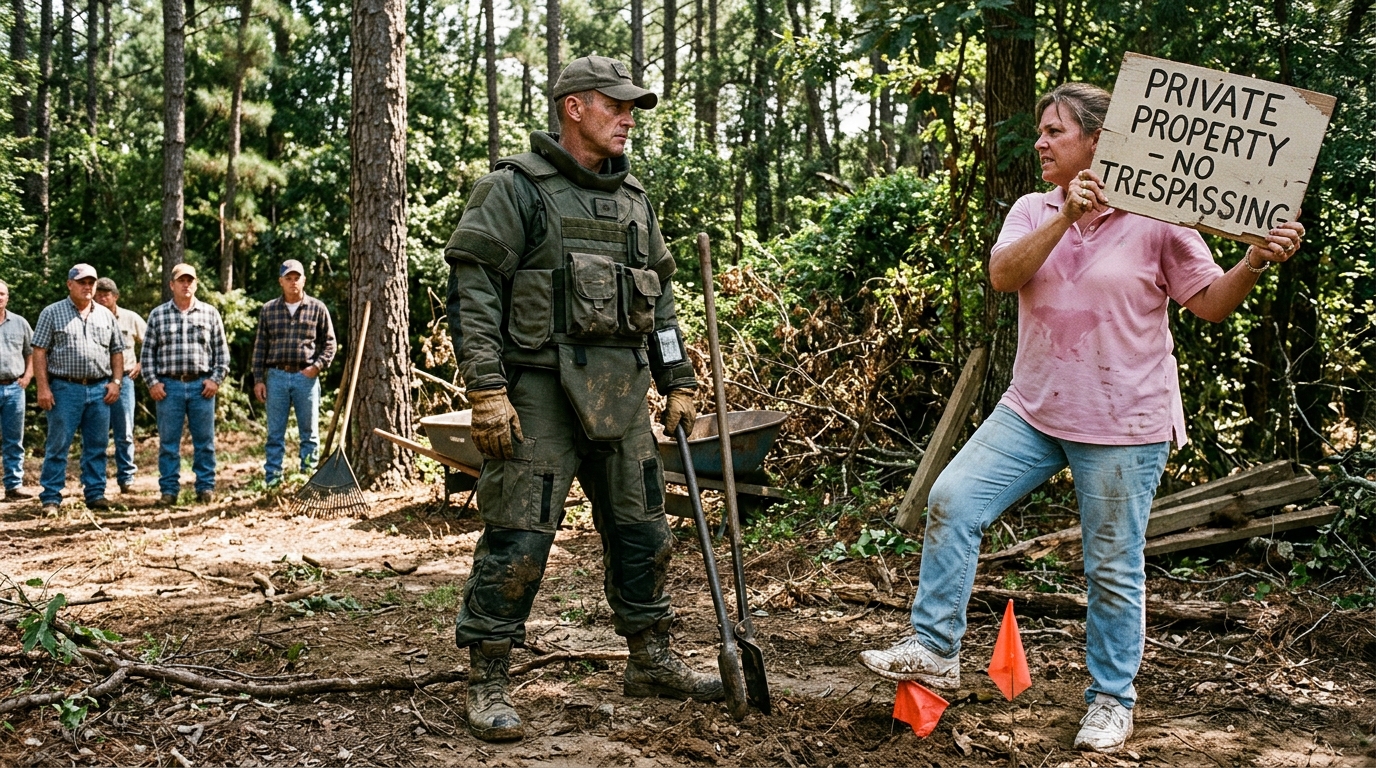
Karen White stood right on the edge of the property line, her pastel pink polo shirt straining at the seams under the midday sun. She clutched a gold-embossed clipboard against her chest like a shield, her face set in a tight, righteous smirk.
“I’m confiscating them as per HOA bylaws section C, paragraph four,” she announced, stepping forward until her white sneaker brushed the orange survey flag. “Unapproved signage.”
I didn’t blink. Twenty years of handling explosive ordnance taught me that the moment you let a volatile situation dictate your breathing, you’ve already lost the perimeter. I kept my voice low, steady, and measured.
“Karen,” I said, my tone flat. “Those posts are on my land. Move your foot.”
She laughed, a short, dismissive bark that rattled her gold earrings. “The survey stakes mean nothing when the entire Garrison parcel interfaces with Oak Creek Estates. You can’t just put up tacky, aggressive signs. It lowers property values.”
Before I could answer, her gaudy rings reached out and gripped the edge of the bright yellow sign bolted to the timber. The wood groaned under the torque.
A hot spike of pure frustration flared up my spine, but I clamped down on it instantly, locking my jaw and tightening my grip on the wooden handles of the digger. She planted her weight, gave a sharp yank, and the screws tore out of the grain with a splintering pop.
She held the yellow placard up like a conquered banner. “This is coming with me, and you’ll be receiving a fine in the mail.”
She turned on her heel and marched back toward the manicured lawns of the subdivision, leaving a wake of cheap floral perfume hanging heavy in the breeze. I stood alone by the torn post, my fingers slowly uncurling from the tool handles. The line had been crossed, and the perimeter was breached.
CHAPTER 2: Paper Bullets
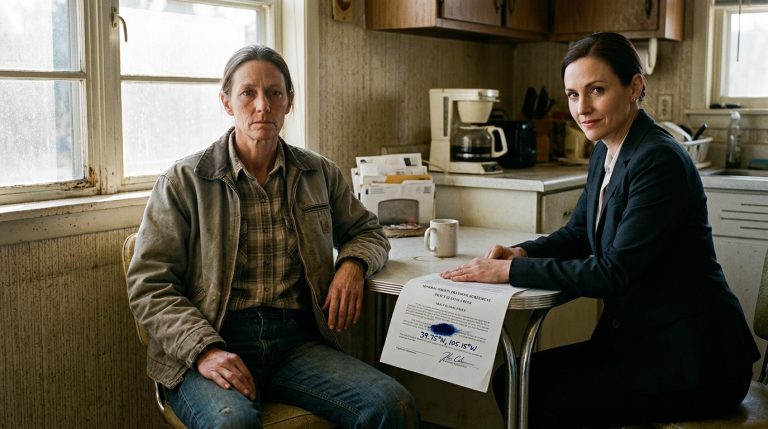
Sarah stood just behind my shoulder, her fingers tracing the thick red line that separated our ten acres of quiet woodland from the manicured lawns of Oak Creek Estates.
“Mark, this is completely absurd,” she said, her voice tight with weary disbelief as she looked down at the cream-colored envelope resting beside the coffee mug. “Can she actually penalize us for property lines that have stood for thirty years?”
“She can try,” I replied, my voice dropping into the steady rhythm I used when inspecting an uncertain fuse.
I reached out and picked up the heavy cardstock letter, letting the texture remind me of the concrete reality of the situation. Karen White had checked the little box at the bottom assessing a one-hundred-dollar fine, threatening fifty dollars more for every day the boundary posts remained standing.
I opened the file cabinet drawer, the cold steel handle sliding smoothly on its tracks before latching shut. Inside sat the certified blue-print copies of the deed, stamped by the county clerk and backed by the physical iron stakes buried deep in the limestone bedrock outside.
“Paper doesn’t care about aesthetic harmony,” I murmured, pulling a fresh sheet of plain white printer paper from the ream.
I sat down at the table, refusing to let the irritation dictate my handwriting, and drafted a clinical, point-by-point rebuttal citing the exact coordinate markers from the county survey. I didn’t raise my voice, and I didn’t issue threats; I simply locked the facts into place with the precision of a trained technician.
When the letter was sealed and stamped, I walked it down to the mailbox, sliding it in with a clean, definitive click of the metal door. The paper trail had begun.
CHAPTER 3: Chemical Whispers
The pungent smell of solvent and acid hung low in the morning dew, completely out of place among the scent of pine and rich soil.
I pulled my fingers back, wiping the residue onto a scrap of rag while my mind processed the deliberate, methodical nature of the damage. Someone hadn’t just knocked over a sign; they had intentionally poisoned the structural timber to rot it from the inside out.
“Looking for something, Mark?”
Tom Henderson’s weathered face appeared over the low rise of the meadow, leaning heavily on a wooden walking stick. He looked down at the darkened wood with narrowed, suspicious eyes.
“Just checking the perimeter,” I said, standing up and brushing the dirt from my knees. “Somebody spent a lot of time soaking these posts with something synthetic.”
Tom stepped across the boundary line, taking a careful sniff of the air before shaking his white head. “That ain’t regular weed killer, son. That’s a heavy-duty solvent. I’ve seen folks try all sorts of dirty tricks over property lines, but chemical rot is a whole new brand of spite.”
My jaw tightened as I pocketed the stained rag, realizing the conflict had slipped past administrative paperwork into direct physical assault.
“I need to get a sample of this soil and wood down to a private lab in the city,” I said, looking past Tom toward the manicured roofs of Oak Creek Estates. “Quietly.”
“Do it,” Tom warned, his voice dropping to a gravelly low register. “Because whoever is doing this isn’t stopping at notes on cream-colored stationery.”
CHAPTER 4: The Legal Bastion
David adjusted his cuffs, his eyes scanning the technical breakdown of the chemical solvent with sharp, professional focus.
“This isn’t a petty neighborhood squabble anymore,” David said, his voice dropping as he tapped a finger against the paper. “She’s crossed the line from civil harassment straight into malicious property damage.”
“I don’t need a lecture on the statutes,” I said, leaning back against the leather chair and keeping my hands steady. “I need a paper wall she can’t punch through.”
“We’ll build a litigation hold,” David replied, pulling a fresh legal pad toward him and uncapping a heavy fountain pen. “We put the entire HOA board on notice. They share corporate liability the moment their president uses administrative authority to cover up criminal acts.”
He looked up, a sharp, calculating glint in his eye. “We don’t warn her directly. We choke her leverage until she overcorrects.”
I nodded, feeling the solid weight of the strategy lock into place. Karen White wanted a bureaucratic war of attrition, but we were about to turn her own rulebook into a cage.
CHAPTER 5: The Caught Hand
The screen sharpened into a grainy black-and-white feed showing the edge of the property line where the expensive cedar posts stood.
A bulky figure stepped out from the treeline, moving with a deliberate, arrogant stride that belonged to someone entirely unused to resistance.
Karen White knelt beside the primary timber, her gloved hands pulling a small container from her jacket pocket to douse the wood once again.
“Think your fancy paperwork saves you,” her voice hissed through the tiny wireless audio receiver patched directly into my headphones.
Before I could blink, she reached into a second baggie, pulling out a handful of wriggling, pale insects and patting them into the damp soil at the base of the post.
“A little biological assistance,” she muttered into the dark, her tone dripping with venomous self-assurance.
The audio captured every sharp click of the bottle nozzle and every gloved scrape against the bark, locking her voice and her actions into an airtight digital record. She stood up, brushed off her knees, and retreated back toward the subdivision, entirely unaware that her final trap had just become her own executioner.
CHAPTER 6: The Final Ledger
The cruiser doors slammed shut with a sharp, heavy echo that cut straight through the morning quiet of the subdivision.
Karen White stood handcuffed in her driveway, her pastel polo shirt stretched tight as her mouth worked in furious, silent protests against the deputies. She didn’t bow, and she didn’t apologize; she simply glared through the glass partition of the cruiser, doubling down on her entitlement even as the weight of felony property destruction settled onto her shoulders.
“The court lien takes effect immediately,” David said, stepping up beside me on the porch with a fresh cup of coffee. “And the civil settlement forces the HOA to strip every single abusive clause from their rulebook.”
I watched the cruiser pull away down the asphalt, carrying the remnants of a manufactured empire built on paper bullying.
Months later, the quiet returned with a permanence that reached deep into the soil.
I stood on the back porch as the sun dipped low behind the trees, painting the ten acres in shades of gold and deep amber. Sarah wrapped her arm around my waist, leaning her weight against me as we listened to the distant laughter of children playing on a new swing set across the property line.
Tom Henderson walked across the common grass carrying two cold bottles, his boots crunching softly on the gravel before he handed one over without a word. We didn’t talk about the fines, the chemical rot, or the court battles that had tested every ounce of our patience.
The heavy cedar posts stood straight and tall against the tree line, marking an immovable boundary that no amount of paperwork could ever erase.
The work was done, the perimeter was secure, and the silence was our victory.