How a Veteran’s Winding Country Driveway Became a Fortress Against an Entitled HOA Queen
CHAPTER 1: THE IMPERIAL KNOCK
The floral print stretched tight across fabric seams that had no business holding under that kind of suburban pressure.
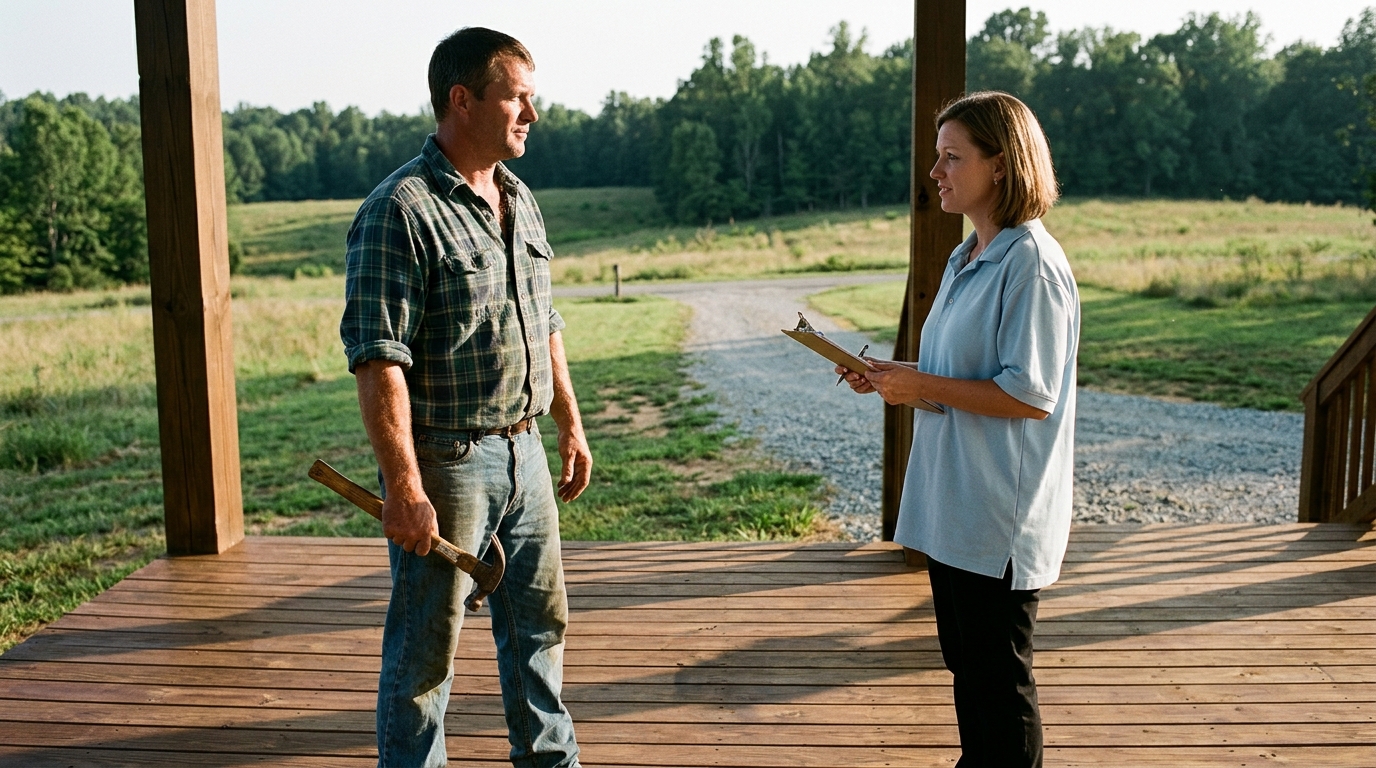
She stood at the corner of my freshly stained deck, clutching a laminated clipboard like a breastplate while her nervous shadow in the oversized golf shirt stared intently at a dandelion between his sneakers.
“This isn’t a request, Mr. Miller,” she announced, her voice carrying the practiced resonance of someone used to terrorizing PTA bake sales. “Your gravel path is being designated as the primary access road for the new Willow Creek Estates phase four expansion.”
I didn’t drop the hammer.
Instead, I let my thumb trace the scarred hickory handle while the humid afternoon air hung dead and heavy over the ten acres of timber and grass I had spent seven years carving out of the scrubland.
“You’re standing on private property,” I said, keeping my tone flat, low, and devoid of the sudden spike of cold adrenaline pulling at the back of my neck.
Her smile remained thin and brittle, a painted line stretched across powdered skin.
“We’re all neighbors here, and the board has already approved the route,” she replied, waving a manicured finger toward the three-quarter-mile stretch of packed stone leading out to the county road. “You’ll be compensated, of course. We’re waiving your first year’s maintenance fee.”
The sheer absurdity of charging a man for maintaining his own road settled into my bones like winter damp.
I looked past her synthetic perfume cloud toward the quiet tree line where my son was supposed to be chasing grasshoppers in peace, realizing right then that the gate had already been breached.
CHAPTER 2: THE PAPER WAR ROOM
The table surfaces in the dark basement were buried beneath fifty years of farm divisions and plat maps.
My fingers traced the stiff rag paper of the 1998 master plan, feeling the raised ink of the proposed highway entrance that the developer had drawn up and abandoned a decade ago.
The silence down here was absolute, save for the low hum of the chest freezer in the corner and the slow, heavy ticking of the utility room clock.
I smoothed out the crease in the 2008 zoning variance with the side of my palm.
A small, brown ink smear caught my eye near the margin of the secondary parcel lines—a faint, handwritten correction note squeezed between two survey markers that looked like it had been jotted down in a hurry by an inspector long since retired.
It pointed directly to the southeastern fence line where the red clay met my property boundary.
According to these coordinates, the heavy machinery for the Willow Creek expansion hadn’t just grazed my acreage by accident.
They had deliberately bypassed a designated wetland buffer to save on grading costs, chewing through forty feet of old-growth timber without a permit.
I picked up a red colored pencil, applying just enough pressure to mark the discrepancy without tearing the brittle paper.
The evidence was stacking up, layer by heavy layer, but a map on a basement table wouldn’t stop a corporate lawyer armed with a county judge’s ear.
I needed someone who spoke their courtroom language fluently enough to turn their own administrative weapons back against them.
CHAPTER 3: THE SECRET ALLY
The retired corporate lawyer did not blink as he stared down at the brittle parchment of the 1958 property transfer.
“They missed it entirely,” Arthur murmured, his voice dropping into the quiet cadence of a man who had spent forty years picking apart corporate negligence line by line. “The developer’s title search back in ninety-eight didn’t go back far enough to catch the original road exception.”
I kept my hand resting flat against the edge of the wood, feeling the cold grain beneath my palm.
“They’re leaning on an easement of necessity because they can’t reach the rear phases without crossing my timber,” I said, keeping my tone steady against the sudden surge of validation.
Arthur tapped a fingernail right over the bolded text of the save-and-excepting clause.
“An easement requires true landlocked necessity, but if their own master plan shows a dedicated highway connection they simply failed to build, their legal ground vanishes under their feet,” he said, looking up with a sharp, humorless grin. “This isn’t just a defense, Jack. It’s a landmine buried directly under their administrative board.”
CHAPTER 4: THE BOARDROOM AMBUSH
Karen sat behind the long laminate table at the front of the room, her red power suit gleaming under the harsh lights while she clutched a wireless microphone like a scepter.
“This man is attempting to hold our community hostage and extort our families for hundreds of thousands of dollars,” she announced, her voice rising into a sharp, practiced shriek designed to trigger immediate panic in the rows of chairs.
I didn’t flinch.
I stepped past Arthur Abernathy and walked straight up to the projector stand we had positioned near the front wall, my thumb sliding the power switch forward to cast the original 1998 master plan onto the screen behind her.
“The road was never part of your development,” I said, my voice cutting cleanly through the escalating murmurs without a single raised decibel. “Your president told you this was my aggression, but the county courthouse records prove your board has been trespassing on private property for twelve years.”
Karen slammed her fist onto the laminate surface, her face flushing a violent, mottled crimson.
“He’s twisting the legal language—ignore him and approve the special assessment right now!”
The room erupted into absolute chaos as homeowners turned on their leaders, leaving the board scrambling in a sudden, beautiful collapse of their manufactured narrative.
CHAPTER 5: THE DESPERATE TOW
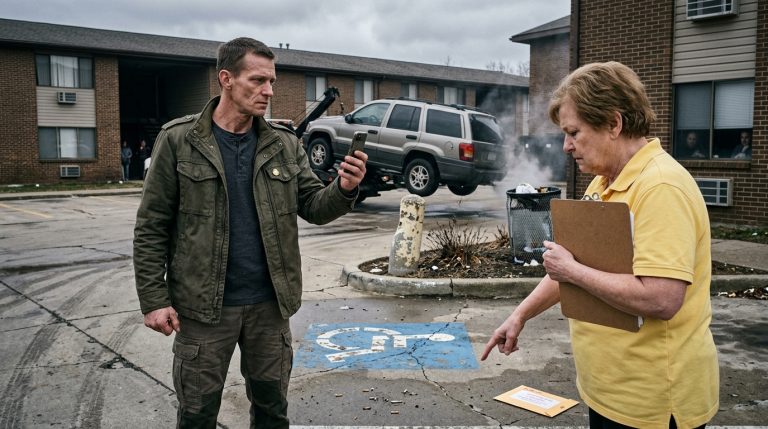
“This is a final notice of violation for an inoperable vehicle in public view, and it is going to impound right now,” she shrieked, waving a fresh paper notice like a banner of absolute authority.
The burly driver in the greasy jumpsuit shifted uncomfortably against the side of his winch console, glancing from her reddening face to my porch steps.
“Ma’am, I need a signed county order before I hook up a rig on private acreage,” the driver muttered, stepping back from the rear bumper.
I didn’t yell or raise my voice above the low, rumbling idle of the diesel engine.
“Touch that truck and you’ll be looking at grand theft charges before sundown,” I said, my hand resting calmly on the wooden porch pillar.
Karen spun around, her face twisting into an ugly mask of desperation as she realized her final piece of leverage was slipping away into the dust.
“I am the president of this association, and you will move that truck or I’ll have you arrested for obstruction right this second!”
She doubled down with a frantic, unhinged fury, screaming orders at the driver to ignore me and winch the bed anyway while her control completely shattered into pieces.
CHAPTER 6: THE RUSTED PEACE
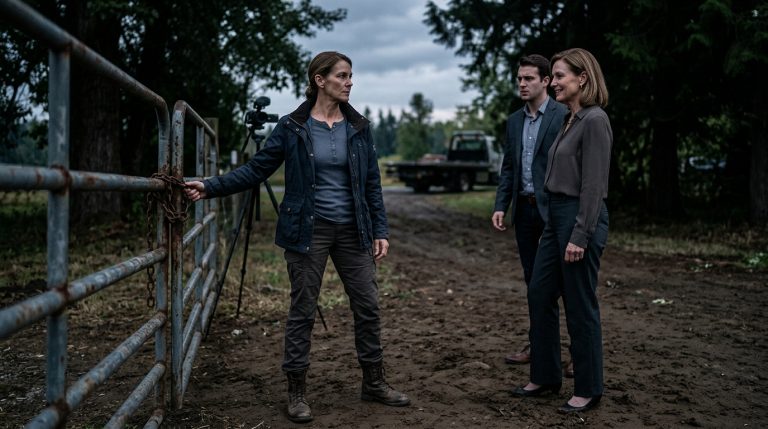
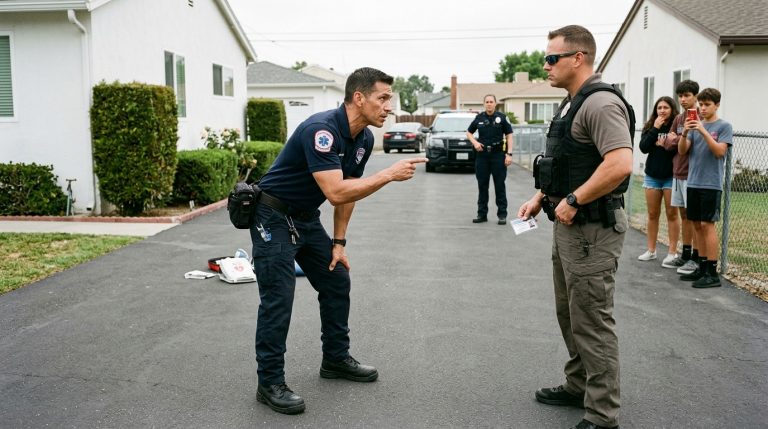
Deputy Miller stepped out of his cruiser with an unhurried stride, his boots crunching methodically over the packed stones before stopping right between Karen’s red power suit and my front porch steps.
“This address isn’t part of the subdivision, ma’am,” the deputy said, his voice entirely flat and devoid of professional warmth.
Karen thrust her laminated violation notice toward his chest with a desperate twitch of her wrist.
“I am the president of the board, and this property is subject to our access covenants—make him move that truck right now!”
I reached inside my pocket, pulled out the certified copy of the original 1958 deed with its highlighted boundary exception, and handed it directly across the gap.
The deputy scanned the legal text, his eyes tracking the old survey markings before he looked back up with a cold, knowing smirk.
“According to county records, not only is this land outside your association, but the entire road you drove in on belongs exclusively to Mr. Miller,” he stated firmly, turning his gaze back to the frantic woman. “You are trespassing, and if you don’t clear these premises this instant, I will place you under arrest.”
The final thread snapped, leaving Karen staring in absolute horror as the tow truck driver threw his rig into reverse and kicked up a cloud of dust on his way out.
Within days, the neighborhood recalled the entire board, Arthur Abernathy took over leadership, and a fair, permanent maintenance trust was signed right at my kitchen table without a single drop of unearned power left standing.
Sometimes, peace isn’t given—it’s forged in the quiet silence of a common-sense boundary and a seventy-year-old piece of paper.