A Concrete Defense: The Quiet War Against the Aesthetic Tyrants of the Ridge Line
CHAPTER 1: The First Shadow
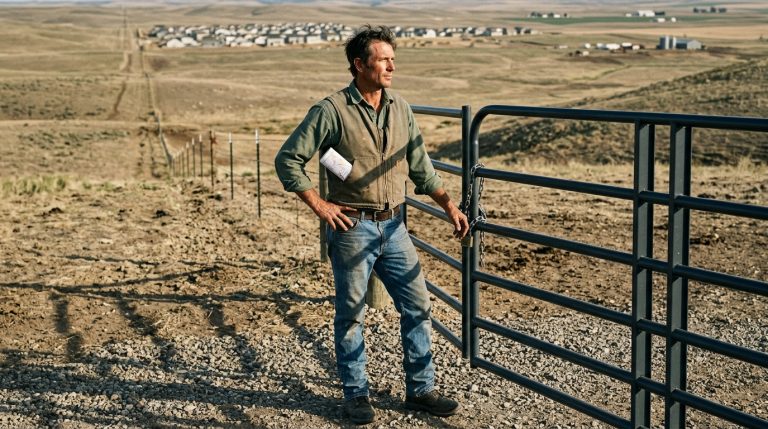
The morning air on the ridge held the metallic tang of dry earth and impending heat. I stood on the unfinished plywood of the subfloor, the framing skeleton of the house casting long, skeletal shadows across the dust. In the valley below, the subdivision looked like a scale model—pristine, calculated, and aggressively manicured.
I didn’t care for the view, not in the way they did. To me, the valley was just a geometry of infrastructure. But to the woman who had just hit “send” on an email from a few hundred yards downhill, my house was a smudge on her investment portfolio.
I pulled my phone from my tool belt. The screen glowed with the HOA’s letterhead, a crisp, professional font that whispered threats under the guise of community standards. They wanted my roofline lowered. They wanted recessive finishes. They wanted me to erase the footprint of my own property because it interrupted their sunset.
I didn’t reach for a pen to write a reply. I didn’t reach for a phone to argue. I looked at the attached image—a photo taken from the HOA’s overlook lot, showing my foundation, the rebar shining like silver teeth in the sunlight.
My thumb hovered over the file properties. I tapped the metadata.
The photo was date-stamped three days before the foundation inspection had even been scheduled.
A cold, familiar rhythm settled in my chest. They hadn’t just been watching; they had been hunting for an angle since the first load of gravel hit the driveway. I zoomed in on the image. In the corner, a glint of movement caught my eye—a reflection in the window of a parked SUV down by the overlook.
It was a small, out-of-place detail. A camera lens, or perhaps a pair of binoculars, catching the morning sun. I looked back at the framing stakes I had set just hours ago. They were untouched, but the air felt heavier. They weren’t asking for a compromise. They were mapping out the perimeter of a siege.
I saved the image to a folder I’d already named ‘Contract’ and took a slow, deliberate breath. The house was structurally sound, anchored in concrete and law. But as I looked down at the valley, I realized the real foundation would be the documentation of their own overreach.
I set the phone down on a stack of lumber and picked up my pencil. I had a framing plan to finish, and now, a much longer list of questions to answer. The sun began to crest the western ridge, hitting the metal tools scattered on the deck, turning them into cold, glinting iron.
I turned away from the valley. The HOA thought they were protecting their view. They didn’t realize that by watching me so closely, they had stepped directly into the path of their own undoing.
CHAPTER 2: The Paper Trail
The wind picked up, rattling the loose rebar against the wooden frame of the house. I didn’t move. My eyes stayed locked on the screen, on that single line of metadata that proved Karen had been playing a long game. Three days before the inspection—that was the gap. In the world of construction, three days is an eternity. It’s enough time to call an inspector, bribe a neighbor, or draft a complaint that looks like a concerned citizen’s civic duty.
I closed the email app. The temptation to fire off a response was a physical itch in my palms, a hot, reactive surge. I imagined the reply: I know. I see you. But that was the amateur’s play. That was how you lost the initiative. I walked to the edge of the subfloor, looking out over the expansive, sun-drenched valley. Down there, the roofs of Golden Summit Estates were uniform, gleaming under the morning light. They were organized, well-funded, and currently convinced they were the only ones holding the map.
I climbed down the ladder, the rough timber biting into my hands. My truck sat on the gravel, a layer of fine, red dust coating the windshield. I didn’t head for the foreman’s trailer or the local coffee shop. I headed for the county office.
The drive was slow. I navigated the switchbacks with a deliberate, low-gear caution, my mind replaying every interaction with the HOA. The polite emails, the “concerns” about the western panorama, the way Karen had looked at me when we first met at the property line—a gaze that wasn’t about the view, but about ownership.
Inside the county planning office, the air was stale, smelling of ozone from the copiers and old paper. I approached the clerk, a woman whose desk was a fortress of organized manila folders. I didn’t ask for a favor. I asked for the public file on the ridge development, specifically the original surveying requests.
“You’re looking for the historical easement logs?” she asked, her voice flat, practiced.
“I’m looking for anything that contradicts an active scenic buffer,” I replied, keeping my tone neutral, professional.
She spent twenty minutes clicking through her terminal. The rhythm of her typing felt like a countdown. When she finally printed the pages, she handed them over with a look of mild curiosity. “You know, there’s been a lot of interest in this parcel lately. You’re the third person this week asking about the scenic line documentation.”
Third person. That wasn’t just neighbors being nosy. That was a coordinated effort to find a crack in the foundation of my project.
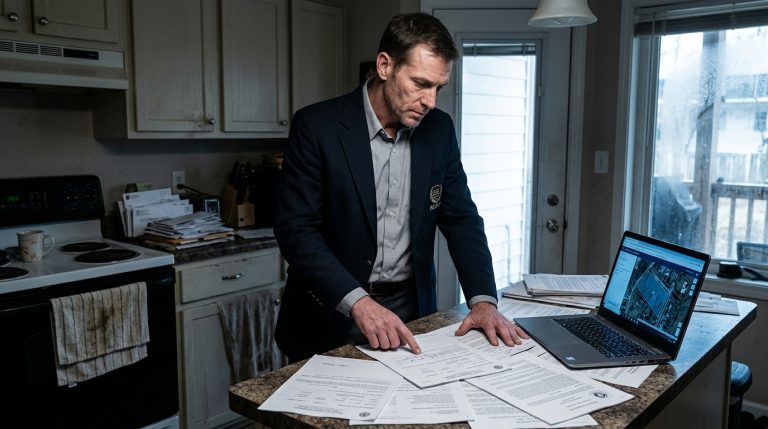
I took the documents to a small table near the back. I laid them out, aligning the edges with the precision of a master carpenter. I began to cross-reference the dates. The HOA’s legal threat was based on a ‘scenic trail easement’ that supposedly bisected my northern boundary. I pulled the master survey map I’d kept in my truck.
I traced the line of the easement with the tip of my pencil. It was a clear, bold line on the map. Then, I looked at the surveyor’s notes attached to the county documents. A single red-ink notation caught my eye: Inactive/Non-binding per 2012 ordinance.
The buffer they were threatening me with didn’t exist. It was a phantom line, a ghost of an old development plan that had been scrapped over a decade ago.
I sat back, the weight of the discovery settling in my gut. This wasn’t about a view. This wasn’t about neighborhood aesthetics. If they were willing to cite an inactive ordinance to stop a build, they weren’t just protecting a sunset. They were trying to create a legal precedence of control. They needed my land to comply because if they could force me to bow to their ‘scenic’ demands, they could effectively bring my parcel under the HOA’s umbrella. And once I was in, they could dictate the entire development density of the ridge.
My reflection in the glass partition of the office looked back at me—hard, tired, and unyielding. I realized then that I wasn’t just fighting a neighbor. I was fighting a corporation of opinions that thought they had the authority to legislate reality.
I took out my phone and began to scan every page of the documents, the soft, rhythmic hum of the scanner matching the thrumming in my temples. Every page was a nail in their coffin, provided I kept my mouth shut and my evidence folder growing. I didn’t feel relief. I felt a cold, sharp resolve. I had the truth now. All I needed was to make sure they committed to their lie long enough to reach the point of no return.
As I walked out of the office, the afternoon heat hit me like a physical wall. I looked up at the ridge, my house standing solitary against the horizon. They thought I was a temporary obstruction. They didn’t know I was the anchor that was about to drag their entire scheme to the bottom. I reached for my truck keys, the metal biting into my skin, and felt the first true, quiet stir of a coming storm. I had enough now to force a move, but I needed to wait for them to blink first.
CHAPTER 3: The Hypocrisy Folders
The air in the parking lot was thick with the scent of hot asphalt and exhaust, a stark contrast to the sterile, paper-choked silence of the planning office I had just vacated. I stood by the driver’s side door of my truck for a long moment, the manila folder tucked firmly under my arm. It felt heavier than the mere dozen sheets of paper it contained. In the world of property disputes, documents are the only currency that matters; opinions are just noise, but a certified copy of an inactive ordinance is a blunt instrument.
I unlocked the truck and slid the folder into the center console, beneath a heap of blueprints. I didn’t drive away immediately. I watched the flow of traffic exiting the municipal complex, wondering how many of these people knew exactly what was buried in the archives. My mind was already parsing the next move. If the ‘scenic trail easement’ was a ghost, then the stone pavilions and oversized pergolas I had seen down in Golden Summit were not just architectural choices—they were evidence of a double standard that could be weaponized.
I started the engine, the low rumble of the truck vibrating through the chassis, and headed toward the subdivision entrance. I didn’t need to speak to Karen today; I needed to speak to the landscape itself.
The transition from the rugged, dusty access road to the manicured perfection of Golden Summit Estates was jarring. The grass was a shade of green that looked manufactured, and the asphalt felt like it had been laid down yesterday. I drove slowly, my eyes scanning the layout. I wasn’t looking for beauty; I was looking for structural inconsistencies.
I found the overlook lot Karen had been so protective of. It sat at the highest point of the subdivision, a prime piece of real estate that offered a panoramic view of the entire valley—the same view she claimed my house was ‘contaminating.’ I pulled over to the shoulder, keeping the engine idling. I didn’t step out immediately. I watched the perimeter.
There it was. The stone pavilion. It was massive, a sprawling structure of quarried granite that cut a jagged, unyielding silhouette against the horizon. It sat directly on the sightline that Karen had insisted was a ‘protected western panorama.’ I grabbed my camera from the passenger seat and stepped out. The heat shimmered off the road, distorting the edges of the pavilion, but the physical reality was undeniable.
I walked toward the structure, my boots crunching on the pristine gravel. I didn’t look like a trespasser; I looked like a surveyor. I took a dozen high-resolution photos, focusing on the way the stone roofline encroached into the very air space she had claimed was sacred. I measured the distance with my eyes, comparing it to the rough sketches I’d made of my own framing. The hypocrisy wasn’t just aesthetic; it was structural.
As I circled the pavilion, I heard the faint, rhythmic sound of a landscaping crew working further down the hill. I kept my movements clinical and efficient. I wasn’t here to confront anyone; I was here to map the theater of war. I noticed a small, recessed panel near the base of the pavilion—a utility box for the estate’s private lighting. I snapped a photo of it, noticing the weathered metal casing. It was a small detail, but in a game where control is the primary objective, details are the first thing to be overlooked by the arrogant.
My phone vibrated in my pocket. A notification from my builder. County inspector called. They want a ‘follow-up site meeting’ regarding the scenic trail easement.
A humorless smile touched my lips. Karen was accelerating the timeline. She had pushed the panic button, hoping to use the county’s own bureaucracy to crush me before I could present the truth. She thought she was keeping me on the defensive. She didn’t realize that by triggering an inspection, she was forcing the county to officially review the very records I had just spent the morning verifying. She had walked right into the trap.
I stood there for a moment longer, looking back toward the ridge where my house stood. It looked small from here, a mere skeleton of wood and ambition against the vastness of the valley. But it was built to code, and more importantly, it was built on facts.
I turned back to my truck, the weight of the day’s work settling into my shoulders. The path forward was becoming clear, defined by the friction of their resistance. I had the evidence of the inactive easement, and I had the photos of their own violations. The next step wasn’t a counter-argument; it was a counter-filing.
I pulled out onto the subdivision road, the tires crunching on the gravel. As I passed the entrance, I saw a familiar sedan parked near the gatehouse. It was a nondescript, silver model—the kind people choose when they want to be noticed, but only on their own terms. I kept my eyes on the road, my expression impassive. I knew who was behind that wheel, or at the very least, I knew the hand that had directed it to be there. The war had moved beyond emails and into the real world, and for the first time, I felt the sharp, cold satisfaction of someone who knows exactly how the game is played.
CHAPTER 4: The Roadblock
The drive back to the ridge was an exercise in discipline. I kept my speed exactly at the limit, my hands firm on the wheel, letting the engine’s drone fill the cabin rather than the rising tide of speculation in my head. That silver sedan hadn’t been a coincidence. In a neighborhood where every mailbox matched, a car like that—plain, nondescript, lacking even the personality of the local HOA-approved vehicles—was a deliberate choice. It was a watcher.
When I crested the final incline, the site of my house came into view. It was a silhouette of progress, a clean geometry of pine studs and sheathing. But sitting squarely in the middle of the gravel drive, effectively blocking access to the framing work, was a state-issued vehicle. Its white paint looked unnaturally bright against the backdrop of the dusty, iron-rich soil.
I pulled my truck to a stop a few feet behind the inspector’s car. I didn’t kill the engine immediately. I took a moment to observe. The inspector was out, clipboard in hand, walking the perimeter of the foundation. He wasn’t looking at the drainage or the setbacks; he was looking at the northern fence line—the exact point where the ghost easement was supposed to exist.
I stepped out, my boots hitting the ground with a dull thud. The inspector looked up, his expression one of practiced, administrative neutrality. He was a man of checklists and sub-clauses, the kind of bureaucrat who viewed the world through the lens of liability.
“Mr. Thorne,” he said, tapping his clipboard. “We’ve had a formal request for an emergency review. Scenic trail encroachment issue.”
“There is no trail encroachment,” I said, my voice even. I didn’t reach for the folder in my truck yet. I wanted to see if he was acting in good faith or if he was simply a tool in their kit. “The easement was vacated in 2012. I have the county records right here.”
He frowned, shifting his weight. “I’m not here to debate ordinance history. I’m here to enforce a stop-work order issued an hour ago by the planning commission.”
An hour ago. The timing was too perfect. Karen hadn’t just filed a complaint; she had navigated the commission to bypass the usual notice period. I walked toward him, not in aggression, but with the measured gait of a man who knows the ground he stands on.
“Show me the order,” I said.
He turned the clipboard around. The document was an official-looking form, but as I glanced at the header, I saw the discrepancy. The reference number at the top didn’t match the standard county permit sequence—it was three digits too short, a minor, sloppy detail that would only matter to someone who had spent weeks buried in the same files.
“This form,” I said, pointing to the reference number, “doesn’t have a county digital seal. It was generated on the municipal internal network, not the planning commission’s server.”
The inspector blinked, his professional veneer cracking just enough to reveal a flicker of genuine confusion. “That’s what was uploaded to the portal.”
“It was uploaded by a shared subdivision credential,” I noted, my voice dropping an octave, turning cold. “I have the logs, and I have the records showing that the easement in question hasn’t existed for over a decade. If you enforce this order, you’re not enforcing law. You’re facilitating a private entity’s unauthorized interference with a registered property build. That’s a liability, not a violation.”
I saw him hesitate. The threat of a lawsuit—specifically, a personal liability lawsuit against a public official who acted on falsified, internally generated documents—was a language he understood better than ordinances. He took a step back, looking down at his clipboard, then back at me.
“I’m just the onsite guy,” he muttered, the tone of a man who suddenly realized he was being used as a human shield for a private war.
“Then go back to the office,” I replied, “and tell them the site is compliant. If they want to challenge my property lines, they can do it in court with a judge, not via an improperly generated stop-work order on a Wednesday afternoon.”
I watched him. The seconds ticked by, the silence on the ridge broken only by the distant call of a hawk. He looked at the foundation, then at the forest of pines bordering the property, and finally at me. He closed the clipboard with a sharp, decisive snap.
“I’ll report it as an administrative discrepancy,” he said, turning back to his car. “But you need to get your legal counsel to formally challenge this with the commission. They’re coming after this project, Thorne. You know that.”
“I know exactly who is coming,” I said.
As he drove away, kicking up a plume of dust that coated the fresh timber of my house, I felt the adrenaline begin to ebb, leaving behind a sharp, focused hunger. He hadn’t stopped the project, but the fact that they were willing to forge documentation—sloppily, arrogantly—meant they were getting desperate. They were trying to force a mistake.
I leaned against the hood of my truck, watching the dust settle. The house was quiet, the site abandoned for the day. I looked toward the valley, toward that silver sedan, and wondered if they were watching me right now, waiting for me to lose my temper, waiting for me to do something they could capture on film and present to the police as a ‘nuisance.’
I walked to the driver’s side door, opened it, and retrieved the folder from the console. I had the truth, and now, I had proof that they were willing to break the law to bury it. I didn’t need to shout, and I didn’t need to fight them in the mud. I just needed to continue building, and let their own greed trigger the collapse. I sat in the truck and started the engine. The ridge was quiet, but the air felt charged, a static tension that promised the next move wouldn’t just be defensive. It would be decisive.
CHAPTER 5: The Confrontation
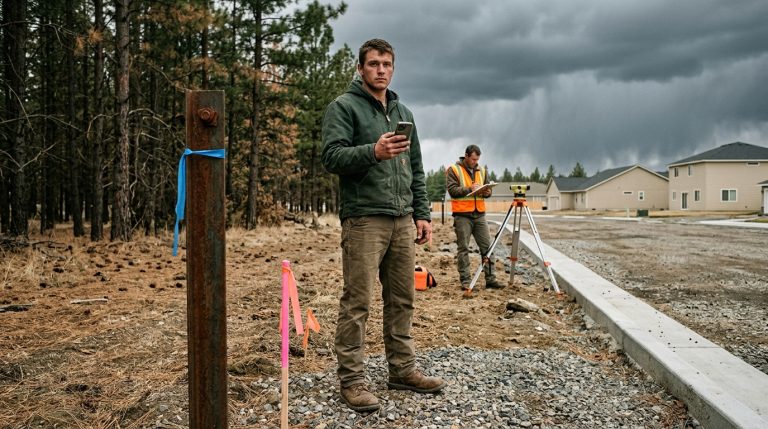
The morning sun had barely crested the eastern range when the sound began—a rhythmic, percussive thudding that echoed up the slope. I didn’t need to look through the binoculars to know what it was. Metal driving into dry, stubborn earth. I stood on the porch of the unfinished frame, the morning mist still clinging to the valley below, and watched as a pair of fluorescent orange stakes appeared near the property’s edge. Then another. And another.
They weren’t just marking land; they were drawing a border.
I didn’t wait for them to finish. I grabbed my boots, the leather worn and stiff, and laced them up with a slow, deliberate intensity. I walked down the slope, my pace measured. The two men were huddled over a transit level, their vests a garish, neon contrast to the muted, rusted tones of the hillside. A few yards away, parked squarely on the access track, was a white truck with a company logo I didn’t recognize. And leaning against the tailgate, silhouetted against the bright, pale sky, was Karen.
She looked different today—not the polished, professional HOA board member who sent carefully curated emails, but someone who looked like she was finally holding the reins of a runaway horse. She was directing them, her hand pointing toward the crest of my driveway with a sharp, commanding gesture.
I didn’t call out. I didn’t announce my presence. I walked until the gravel crunched under my feet, the sound finally drawing their attention. The lead surveyor stopped, his measuring rod hovering in mid-air. Karen didn’t flinch. She turned, her sunglasses reflecting the landscape, masking whatever lay behind them.
“You’re on private property,” I said. My voice wasn’t loud, but it carried in the thin mountain air.
Karen adjusted her sunglasses, a slow, calculated movement. “We’re conducting a survey for the HOA’s scenic corridor. You were notified, Mr. Thorne.”
“You notified me of a fabrication,” I said, stepping past the line of stakes they had already driven into the dirt. I walked right up to the transit level, the iron of the tripod looking flimsy compared to the solid, unyielding reality of the ridge. I looked at the lead surveyor, a young man who looked increasingly uncomfortable with the heat radiating off the confrontation. “You’re working off an inactive easement sheet. Check the county records. If you break ground based on that map, you’re not surveying; you’re trespassing, and you’re doing it on behalf of a client who is actively defrauding the county.”
“We were hired to survey the corridor,” the young man said, his voice hesitant. He looked at Karen.
Karen stepped forward, her heels sinking slightly into the soft earth. “The survey is authorized, Mr. Thorne. I suggest you stay out of the way unless you want to be cited for obstructing the work.”
“I’m not obstructing anything,” I replied. I pulled out my phone and held it up, the recording light a tiny, blinking red eye. “I’m documenting. And just so we’re all clear, the sheriff’s office has an open log of this ongoing dispute. Any damage to my property, any unauthorized staking—it’s all being logged. Are you sure you want to put your company’s name on a lawsuit for willful encroachment?”
The surveyor hesitated. The tension between the three of us was palpable, a physical weight that pressed down on the hillside. I saw the phantom image of the previous surveyor, the one who had refused to answer me before looking at Karen for permission. These men were being used as cover, a human barrier between Karen’s ambition and the law.
Karen’s expression remained frozen, but I saw her grip the edge of the truck’s tailgate. The mask was slipping. She wasn’t just annoyed; she was desperate.
“Finish the line,” she commanded, her voice sharpening.
The surveyor looked at me, then at the stakes. He reached for his hammer, but his movements were sluggish, hesitant. I didn’t move. I stood my ground, a fixed point in their artificial, aggressive architecture. I knew that every second this went on, the more they committed to the lie. If they drove one more stake into my land, they weren’t just harassing me—they were creating an evidence trail that would make the previous bureaucratic games look like child’s play.
I turned my focus back to Karen. “You’re making a mistake, Karen. This isn’t a board meeting. You can’t vote away the law.”
She didn’t answer. She just stood there, the sun catching the sharp edges of her face, and for a fleeting moment, I saw it—the fear. It wasn’t the fear of losing a view. It was the fear of what happened when the noise finally stopped and the facts were the only thing left.
I didn’t wait for the hammer to strike. I turned and walked back toward the house, my pace steady. I had the video. I had the witnesses. And now, I had the confirmation that they were no longer playing by the rules of the neighborhood. They were playing for the survival of their own delusion. I reached the porch and sat down on the edge of the framing, looking out over the ridge. Below, the sound of the metal stakes hitting the ground resumed, but it sounded different now—hollow, desperate, and utterly doomed.
CHAPTER 6: The Breach
The darkness wasn’t just an absence of light; it was a physical weight. One moment, the work site was illuminated by the steady, hum-filled glow of the industrial floodlights I’d set up to finish the sheathing; the next, a deep, synthetic silence swallowed the ridge. The power didn’t flicker—it died, as if the grid itself had been surgically severed.
I stood on the porch, my eyes straining against the sudden void. I reached for my phone, but the screen remained black. No signal. Not even the faint, mocking glow of a bar or two.
I didn’t move. I leaned back against the rough-sawn cedar of the frame, my senses suddenly hyper-attuned to the environment. The wind, which had been whipping through the rafters all afternoon, seemed to hold its breath. This wasn’t a random equipment failure. The timing, coming immediately on the heels of the surveyor’s intrusion, was too precise. They were probing for a reaction.
I moved through the structure with practiced familiarity. I knew the location of every joist, every loose board, and every tool in the vicinity. I didn’t reach for the heavy, iron-headed hammer I used for framing. Instead, I reached for the heavy-duty LED lantern I kept in the tool box near the rear entrance, its rubberized grip cool and solid in my hand. I didn’t switch it on.
Instead, I crouched low, letting my eyes adjust to the star-dusted shadows. From this vantage point, I could see the narrow access road leading up to the ridge. In the distance, below the tree line, a pair of headlights moved—slowly, without the rhythmic swaying of a vehicle navigating the rough terrain. They were moving with a calculated, low-gear deliberation.
They were coming up.
My mind began to race, calculating the distance, the terrain, and the time. It would take them four minutes to reach the upper gate. I didn’t panic. Panic was a luxury I couldn’t afford; it was a waste of caloric energy and focus. I moved to the main workstation, the wood beneath my boots silent, and systematically began to collect the documents I had been organizing—the county records, the photos of the pavilion, the logs of the credential abuse. I secured them in a waterproof canister, then shoved it into the deep, dark crawlspace beneath the subfloor, a spot I’d prepared weeks ago for exactly this kind of contingency.
The headlights grew brighter, reflecting off the rising dust cloud they were kicking up. They weren’t hiding anymore. They were performing an act of dominance.
I returned to the porch and stood in the shadows, my weight centered, my pulse steady. I heard the crunch of tires on gravel, then the heavy slam of doors. Two voices, low and monotone, drifted up the slope. They weren’t speaking like neighbors. They were speaking with the cold, clipped efficiency of hired professionals.
I stayed in the dark, watching. A flashlight beam, narrow and piercing, cut through the night, dancing across the foundation. It hit the survey stakes, lingered, and then swung toward the house.
“Empty,” one voice said.
“Search the perimeter. Make sure the records aren’t on site.”
So, that was it. They weren’t looking for a view. They were looking for the ‘hypocrisy folders.’ The decoy secret—the scenic buffer—had served its purpose. They needed to recover the physical evidence of their digital trespass. They were terrified of what I had documented because they knew it didn’t just expose their fraud—it exposed the entire chain of command behind the hidden development project they were trying to protect.
I watched as they stepped onto the property, their boots scuffing the dirt. They were meticulous, sweeping the area with the light, their movements mirroring the survey team from earlier. They were looking for a trail, not realizing I had already laid a different one.
I reached into my pocket and touched the small, cold metal of the flash drive I had created from the backup logs. It was the only copy. Everything else was either in the crawlspace or already uploaded to a secure, off-site cloud storage I had configured before the first email from Karen ever arrived.
I didn’t confront them. Not yet. I watched them tear through the tool crates, their frustration mounting as they found nothing but hammers and drills. They were pawns, reacting to a master they likely didn’t even understand. My fight wasn’t with them. My fight was with the architecture of the lie.
I backed away into the shadows of the forest line, my movements ghost-like and silent. Every snap of a twig, every rustle of dry leaves, was a risk, but I knew this ridge better than anyone. I had spent months measuring it, surveying it, and living it. By the time they reached the porch, I was already moving toward the lower access point. I wasn’t running; I was repositioning. I had the truth, and now I had the evidence of their desperation. The game had turned, and they were the ones who had inadvertently handed me the final, crushing blow. I just had to make sure it was delivered in a court of law, not the dirt of a construction site.
CHAPTER 7: The Courtroom
The morning air outside the county courthouse was sharp, smelling of wet concrete and cold, urban exhaust. I stood by the stone steps, my jacket buttoned against the biting breeze, feeling the weight of the flash drive in my inner pocket. It wasn’t just data; it was the final architectural piece of a trap I had been building since the day Karen sent her first, polite email. My attorney, Sarah, stood beside me, her expression a mask of professional calm. She didn’t know the full extent of what I had gathered—she only knew I had enough to end the injunction.
“They’re going to try to argue the scenic impact as a matter of community principle, not law,” Sarah said, her voice steady. “They’ve brought in an urban planning expert to testify about the ‘visual character’ of the subdivision.”
“Let them,” I replied. “Principles don’t hold up against a forged permit log.”
We walked inside. The courtroom was a cavern of oak and shadow, smelling of lemon wax and stale coffee. Karen was already there, sitting at the plaintiff’s table with her attorney. She looked impeccable, her posture perfect, her face a carefully constructed portrait of a victim. She didn’t look at me, but I saw her hand tighten on the legal pad when I took my seat. The air in the room felt heavy, pressurized, as if a storm were brewing behind the high, arched windows.
The proceedings began with a rhythm I had memorized from my months of document review. Their lawyer was smooth, weaving a narrative of tradition, entitlement, and the preservation of ‘cherished views.’ He painted a picture of a neighborhood under siege by a developer who didn’t care about anything but concrete. It was a well-crafted performance, but it was hollow.
Then, the moment shifted.
Sarah rose to cross-examine their star witness, the urban planner. She didn’t attack his expertise; she simply handed him a document—the certified copy of the inactive easement, signed and sealed by the county office. The planner looked at it, his face flushing. When she introduced the IT log logs, the courtroom went quiet. The scratching of the court reporter’s pen seemed to amplify in the silence.
Karen’s lawyer tried to object, but the judge—the same man who had laughed at the patio furniture argument—waived it aside. He wanted to see the logic, and the logic was falling apart.
I watched Karen. She was staring at her own attorney, her face draining of color. She realized then that the decoy—the ‘scenic buffer’—had been the very thing that led us to the core of her operation. By trying to force a non-existent easement, she had forced me to pull the county’s entire master file, revealing not just the lack of a buffer, but the pattern of fraudulent credential use she’d employed to monitor my project.
“Your Honor,” Sarah said, her voice cutting through the tension, “the plaintiff’s own evidence suggests a systematic misuse of municipal portals to sabotage a private project. This was never a nuisance suit. This was a targeted, fraudulent effort to force a parcel under HOA control for purposes of future, unapproved development.”
The reveal wasn’t an explosion; it was an unspooling. The decoy secret—the scenic buffer—was physically and legally destroyed. But as the truth of the hidden development began to surface in the questions, I saw the shift in the room. The spectators, the judge, even the opposing counsel—they all recognized it. This wasn’t about a view. This was about a land grab disguised as neighborhood purity.
Karen stood up abruptly, her chair scraping harshly against the wood. “This is irrelevant! The community value—”
“Sit down, Ms. Sterling,” the judge said, his voice quiet but absolute. He looked at her, his eyes cold and unimpressed. He had seen enough. The laughter from the earlier sessions had been replaced by the heavy, iron-clad reality of evidence.
I sat back, my hands resting on my knees, feeling the steady, rhythmic beat of my heart. The room was spinning, the textures of the wood and the faces of the people merging into a blur of grey, but the core of it—the truth—was finally exposed. They had tried to build a monument to their own authority, and they had succeeded only in building the gallows for their own defeat.
I looked at the clock on the courtroom wall. The seconds felt as heavy as lead. We weren’t done yet, but the momentum had shifted. The defense had no more moves, and for the first time in months, I wasn’t waiting for the next attack. I was waiting for the final word. Karen’s lawyer was whispering to her, his face grim, and I knew that whatever happened next, the game they had been playing on the ridge was over. The foundation had been tested, and it had held.
CHAPTER 8: The Sunset
The final inspection had passed without a single comment. The county official, the same man who had been sent to slap a stop-work order on my framing only weeks prior, stood on the deck, his pen clicking rhythmically against his clipboard. He looked at the wide, west-facing glass, then out at the valley, his expression unreadable.
“Everything’s to code,” he said, handing me the signed permit. “Surprisingly, considering the, uh, attention this project received.”
“Code is the only thing that doesn’t change,” I replied, taking the document. My hand felt steady.
He left without another word, his vehicle’s tires crunching on the gravel as he descended the ridge. I watched him go, then turned to look at the house. It was finished—raw cedar, solid concrete, and the clean, precise lines I had sketched out months ago. It hadn’t been changed by the noise. The roofline was exactly where I’d planned it; the deck stood firm, unyielding.
I walked to the railing. Below, in the valley, the subdivision looked quiet. I knew the fallout was still settling. The injunction had been permanently dissolved, and Karen had been ousted from the HOA board in a landslide of community frustration once the truth about the hidden development—the planned high-density luxury project her clique had tried to facilitate by strong-arming the surrounding parcels—came to light. The HOA had been forced to issue a formal apology, and a significant portion of my legal fees had been paid out of their reserve fund, a poetic justice that I found more satisfying than any apology.
My builder stepped onto the deck, two cold beers in his hands. He held one out, his face creased with a tired, genuine grin. “Never thought we’d get here, considering the siege.”
I took the beer, the glass sweating in the humid mountain air. “They thought they could trade the truth for a better view,” I said, leaning against the railing. “They didn’t understand that the law isn’t a suggestion.”
We stood there in silence, watching the sun begin its slow, orange descent into the valley. It was the same view Karen had fought so hard to ‘protect,’ yet here it was, untouched by her interference, framed perfectly by the glass I had fought to install.
The Payoff had come in stages. I had watched them scramble—the frantic phone calls, the forged permits, the desperate, midnight attempts to salvage a reputation that had never been built on substance. They were defeated not by my anger, but by the very system they tried to weaponize against me. Their own method of control—the meticulously documented bureaucratic process—had been the mechanism that eventually exposed their hypocrisy.
I set my beer down and walked to the edge of the deck. A loose bolt on the railing, something I’d noted during the final framing, caught my eye. I pulled a wrench from my pocket and tightened it, the metal biting into the wood with a firm, satisfying click. It was a small, symbolic repair—the act of finishing the work properly, ensuring everything was exactly as it should be.
The cool down was slow, the atmosphere settling into a quiet, heavy peace. The ridge felt different now. It didn’t feel like a battlefield anymore; it felt like a home.
“You think they’ll try it again?” my builder asked, nodding toward the subdivision.
“No,” I said, watching the shadows lengthen across the valley. “They’re too busy cleaning up their own mess to worry about mine.”
I looked at the house again. It was a structure, yes, but it was also a testament to the fact that persistence, when paired with precision, is an immovable force. I felt a deep, grounded connection to the land—not just the dirt, but the boundaries, the legal rights, and the quiet, solid truth of owning what is yours.
The sun touched the horizon, casting a long, golden glow over the deck. I leaned back against the railing, the wood warm under my touch. The noise, the threats, the fake easements—they were all gone, replaced by the simple, enduring reality of the sunset. I took a slow, deep breath, the air clean and crisp, and realized I finally had the quiet I’d been searching for since the day I first bought the plot. It was over. The house was mine, the truth was out, and the only thing left to do was to watch the day come to a close.