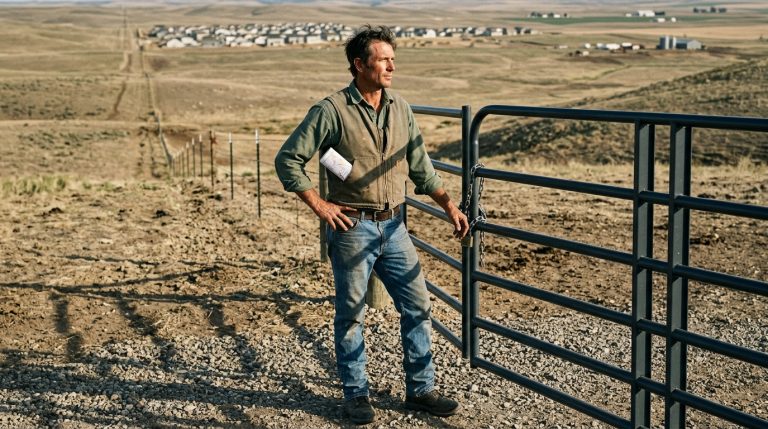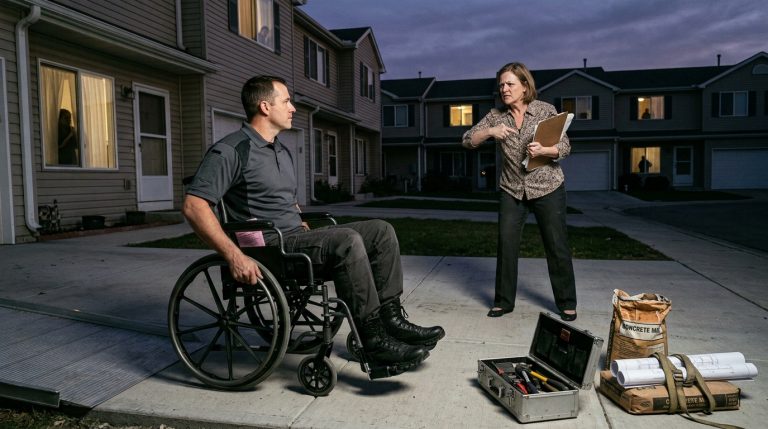
The Swamp Commander’s Trap: How an Army Engineer Turned the HOA’s Audacity into Their Own Undoing
CHAPTER 1: THE LINE IN THE MUD
The paper fluttered in the late afternoon draft, the heavy iron staple holding it flush against the cedar grain. Five hundred dollars a day.
“I suggest you read the bold print, Mr. Henderson,” Karen said, her voice like gravel grinding through a garbage disposal. She smoothed the front of her pastel pink tracksuit, her knuckles white where she crossed her thick arms over her chest. “Thirty days to drain that breeding ground, or we start filing liens against this parcel.”
I didn’t reach for the paper. Instead, I took a slow breath of the damp pine air and let my thumb roll over the cold, knurled edge of the brass engineer’s scale in my right pocket. Six inches of heavy, solid metal. It kept my hands still.
“This pond was dug in 1974, ma’am,” I said, keeping my tone flat, the same voice I used when explaining supply lines to stressed lieutenants in Fort Carson. “It’s fed by an underground spring. It isn’t a swamp.”
“It’s a health hazard,” she snapped, stepping half an inch closer to the freshly painted wooden property stakes. “It breeds mosquitoes, it lowers our property values, and Summit Creek Estates will not have its aesthetic integrity ruined by your unkempt ditch.”
Behind her, fifty identical beige vinyl houses sat crammed together like plastic filing cabinets on clear-cut earth. Their lawns were a chemically scorched green. On my side, two acres of dark water reflected the descending sun, cattails rustling along the banks where a blue heron stood frozen in the shallows.
“My land isn’t part of your subdivision,” I said.
Karen’s lips thinned into a pale line. She reached into her vinyl tote bag and pulled out a heavy yellow highlighter, using it to point directly at my chest like a stubby weapon. “The county grants aesthetic oversight to established developments when adjacent unplatted parcels impact neighborhood marketability. We’ve already consulted our board.”
She turned on her heel before I could answer, her squeaky sneakers crunching rhythmically against the gravel margin of the access road.
I stood there until the pink tracksuit vanished behind a row of beige garages. Then I pulled the fence staple free with my pocketknife and smoothed the paper out on the hood of my truck.
No ordinance number. No county seal. Just bold, arrogant text typed on heavy bond paper, signed with a thick black marker: Karen Johnson, Board President.
I walked down to the edge of the pond, the mud yielding soft beneath my work boots. Near the southern bank, where my woodlot met the HOA’s pristine manicured perimeter, something caught the low sunlight—a thin strip of bright white PVC pipe driven clean into the loam, buried beneath a handful of freshly kicked leaf litter.
I crouched down, the brass scale sliding into my palm as I scraped away the pine needles. It wasn’t my stake. And it hadn’t been there three days ago.
CHAPTER 2: PAPERWORK WARFARE
A second stake—this one heavy galvanized steel, tagged with faded orange surveyor’s tape—sat three inches lower in the soil. I dug around the base with my thumb until the metal cap showed.
County Water Resources Division. 2018.
I stood up, wiping my hands on my jeans, the brass scale cold against my thigh. Summit Creek Estates had been built in 2021. They hadn’t surveyed this line for their own development; they were using an old county drainage easement marker that had never been cleared for private land.
I walked back up to the house, my boots leaving dark, heavy impressions in the grass.
My wife Sarah was sitting at the oak dining table, two yellow legal pads open beside her laptop. She didn’t look up when the screen door banged shut, her pen already moving in brisk, sharp strokes.
“She put a notice on the fence,” I said, setting the brass scale down on the table beside her coffee mug.
“I saw her walk down the drive,” Sarah said, her voice dry as tinder. “She was holding that pink clip-folder like a battalion ledger. What’s the fine?”
“Five hundred a day. Backdated if I don’t comply in thirty.”
Sarah stopped writing. She looked at the brass scale, then up at me, her brown eyes narrowing slightly. “She hasn’t got the authority to issue daily civil fines without a court injunction, Mark. Not on unplatted county land.”
“She thinks she does. And she’s got fifty homeowners behind her who think that pond is ruining their backyards.” I pulled out a heavy oak chair and sat down, the wood groaning under my weight. “I found a county survey stake buried in the leaf litter. Driven three inches on our side of the fence line.”
Sarah leaned back, resting her chin on her hand. “They’re trying to establish continuous use.”
“Or they already used it,” I said. “Without asking.”
I didn’t call a law firm. High-priced legal letters just gave people like Karen something to show off at board meetings. Instead, I drove straight down to the Anvil County Administration Building downtown, the morning sun baking the asphalt of the parking lot until it smelled of hot tar.
The basement archives smelled of old paper, damp concrete, and floor wax. A middle-aged clerk with wire-rimmed glasses looked up from a stack of deed registries as I approached the counter.
“Need the original development plat for Summit Creek Estates,” I said, leaning my forearms against the high laminate counter. “Along with the approved stormwater management plan from 2020.”
It took her twenty minutes to pull the heavy blue binder from the back stacks. She thumped it down onto the counter, kicking up a small cloud of paper dust. “Copies are fifty cents a page. Cash only.”
I flipped past the glossed sales brochures and the color-coded parcel maps, going straight to the back calculations—the engineering appendixes that nobody ever reads unless something breaks. Page 37 was titled Offsite Stormwater Allocation & Regional Overflow Mitigation.
My thumb pressed hard into the margin.
There it was, printed in black ink over an official engineer’s stamp: Adjacent two-acre retention feature (Parcel 7B) designated as primary overflow basin for 100-year rain event.
Parcel 7B was my land. They had built fifty homes with an undersized drainage ditch, signed off on the county permits, and secretly written my private pond into their public infrastructure plan as their free flood insurance.
And now Karen was threatening to sue me if I didn’t destroy the very thing keeping her living room dry.
I paid eight dollars for sixteen pages of certified copies, watched the clerk apply the heavy red embossed county stamp to each page, and walked out into the bright afternoon glare.
By six o’clock that evening, I had typed up my response on my old desk printer. It didn’t contain a single angry word or legal threat. It was a masterpiece of polite, bureaucratic compliance.
Dear Mrs. Johnson, I wrote. In order to fully comply with your request to abate the aesthetic nuisance on Parcel 7B, I am prepared to begin draining the water feature immediately. However, as this feature is listed in County Register Vol. 412 as a primary drainage mechanism, I require the Summit Creek Estates HOA to execute the enclosed Hold-Harmless and Absolute Indemnity Agreement.
The agreement was simple: the HOA would accept total, perpetual financial and civil liability for any water damage, soil erosion, or infrastructure failure resulting from the removal of the pond.
I drove to the edge of her driveway just as the streetlights flickered on. Karen was on her front lawn, holding a small garden trowel, scowling at a stray dandelion near her mailbox.
I stepped out of the truck, the manila envelope flat against my side.
“Mr. Henderson,” she said, standing up straight and wiping her gloved hands together with a dry snick-snick sound. “I hope you’re here to give me a timeline. The board meets on Thursday.”
“I have the agreement right here, Karen,” I said, holding out the envelope. “I’m ready to drain it. Just sign section three so we have it on record for the county.”
She snatched the envelope from my hand, her eyes scanning the top page with quick, aggressive jerks of her head. A smug, tight little smile broke across her face.
“I knew you’d see reason,” she said, her voice dropping the sharp edge for a moment, replaced by the deep satisfaction of a petty official receiving a surrender. “People always think they can fight the board until they see the daily numbers.”
“Read the terms carefully,” I said softly, stepping back toward my truck.
“I know how to read a settlement, Mark,” she said, pulling a red ballpoint pen directly from her visor pocket. She slapped the paper against her clipboard and signed her name with a flourish before I could even reach my driver’s side door. “There. Consider your thirty-day clock stopped.”
She thrust the signed copy back at me through the open truck window. She hadn’t even looked at page two.
CHAPTER 3: THE DELUGE
The diesel pumps rattled the trailer beds at dawn, their intake hoses vibrating against the mud.
Hank, the excavation foreman, leaned against the cab of his service truck, spitting a dark stream of tobacco juice onto the gravel. “It’s your land, Mr. Henderson. But pulling three million gallons out of a natural spring basin right before a southern pressure system rolls through—that’s asking for a mess.”
“The HOA signed the indemnity order, Hank,” I said, my thumb rolling the knurled edge of the brass scale in my pocket. “Drain it to the mud line.”
By noon, the blue heron was gone. By four in the afternoon, two acres of shimmering water had collapsed into a vast, dark crater of stinking silt, exposed tree roots, and decaying weeds.
The clouds came in heavy from the south, turning the sky the color of a bruised plum.
I stood on the back deck with a hot cup of black coffee as the sky opened up. It wasn’t a steady spring rain; it was a wall of water, heavy and relentless, beating against the metal roof of the workshop like a drum line.
Within two hours, my property did exactly what it was designed to do. The high pasture shed the water cleanly, sending sheet runoff straight down toward the empty basin. The mud pit took the first hundred thousand gallons without a murmur, holding it thick and heavy in the clay floor.
Across the property line, Summit Creek Estates wasn’t built on clay. It was built on asphalt, concrete, and compacted subsoil.
Through my birdwatching binoculars, I watched their steep-sided retention ditch fill like a bathtub. The water reached the brim, lapped over the concrete lip, and met a dead wall.
With my pond empty and its spillway closed off by the natural sediment shift of the drawdown, the overflow had nowhere to sink. It hit the flat margin of their lower road, pooled against the curb, and began to climb.
“Mark,” Sarah called from the living room, her eyes fixed on her phone screen. “The neighborhood forum just went live. Someone posted a video from the lower cul-de-sac.”
I didn’t need the video. Through the glass, I could see two luxury sedans in the HOA’s visitor lot submerged up to their door handles.
A sudden flash of headlights cut through the torrential downpour. A golf cart, fitted with clear plastic weather flaps, came bouncing over the mud margin of my driveway, sloshing violently through four inches of standing surface water.
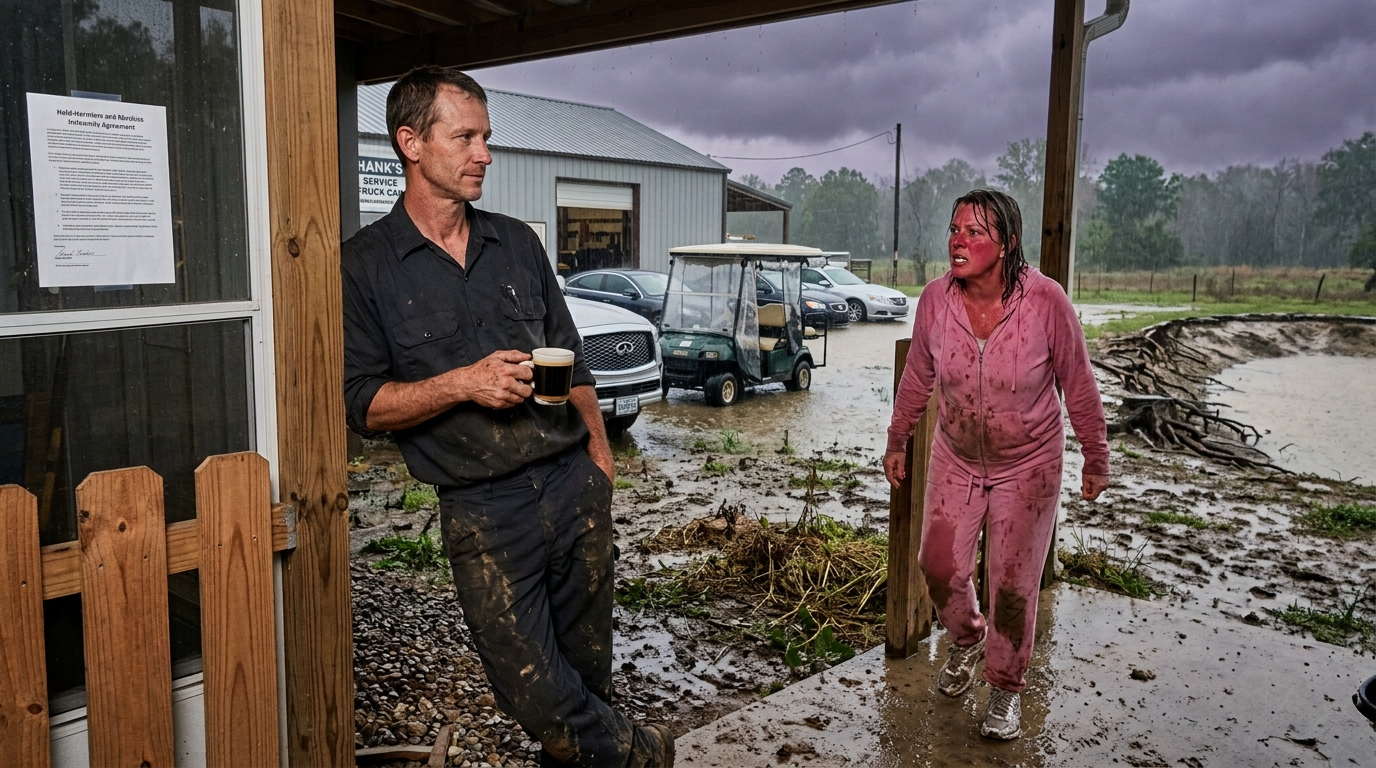
The plastic flap unzipped with a sharp tear, and Karen scrambled out. Her pink tracksuit was soaked through at the hem, dark brown mud spattered clear up to her knees. Her hair was plastered to her forehead, her face flushed a furious, blotchy red.
“You turned it off!” she screamed over the roar of the rain, stomping onto the porch, her sneakers squelching with every step. “You turned off the drainage!”
I took a slow sip of coffee, leaning my elbow against the doorframe. “I did exactly what your notice demanded, Karen. The swamp is drained.”
“The clubhouse is taking on water! The basement units on Willow Court have three inches of sludge in their foyers!” She shoved a trembling, mud-stained finger toward my chest, her breath coming in ragged, shallow gasps. “You did this on purpose! You sabotaged the line!”
“Page thirty-seven of your developer’s plat,” I said softly, stepping back just far enough to retrieve the heavy paper file from the porch table. “Your drainage system relied on my private pond to absorb forty percent of your surface runoff. You called it an unsightly nuisance and ordered it destroyed.”
I pulled out the signed indemnity agreement—the red ink of her signature bold and clear beneath the laminate sleeve—and held it flat against the glass screen door.
“You accepted total financial and civil liability for any infrastructure failure resulting from the drawdown,” I said. “You signed it on your front lawn.”
Her mouth opened, closed, and opened again, like a fish pulled onto a dry bank. The rain hammered against the plastic roof of her golf cart, a torrent of brown water now rushing around its tires, carving a deep trench into her own manicured turf.
“That’s not—that isn’t valid!” she shrieked, her voice cracking under the strain. “I didn’t read that section! You tricked me! The board will sue you into the dirt for this!”
“You’re the president, Karen,” I said, holding the paper steady in the rain-chilled air. “And right now, your neighbors are taking pictures of their Totaled cars.”
CHAPTER 4: THE RECKONING NEW WATERS
Karen’s jaw worked silently, her eyes fixed on the bold red ink running slightly beneath the laminate sleeve. The water from her visor dripped onto her mud-splattered sneakers in steady, pathetic drops.
“This won’t stand,” she rasped, grabbing the frame of the storm door to balance herself against the wind. “I’ll tell the county you tampered with the drainage grade. I’ll tell them you deliberately flooded our street!”
“Page thirty-seven is already stamped by the clerk, Karen,” I said, my voice cutting flat across the storm’s roar. “The county engineer signed off on your developer’s overflow plan six years ago. You’re the one who ordered the basin emptied without reading your own filing.”
She spun around, her wet pink tracksuit clinging heavy to her shoulders, and gunned the golf cart’s accelerator. The rear tires spun wildly in my gravel driveway, spewing a thick arc of mud across her own pristine white fender before the cart lurched back toward Summit Creek Estates.
The rain stopped at sunrise, leaving a silence so heavy it felt loud.
By nine in the morning, two county Sheriff cruisers and a white state Department of Environmental Protection truck were parked bumper-to-bumper in the flooded visitor lot. Four homeowners were standing in hip-waders near the clubhouse entrance, shouting over each other at a weary deputy who was holding a clipboard.
I walked down to the fence line with a thermos of coffee, the brass scale resting comfortably in my palm.
George was already leaning over his fence post, watching a tow truck drag a luxury sedan out of three feet of standing brown water. He looked over at me, a slow, wide grin spreading across his weathered face.
“Emergency board meeting was called at seven this morning,” George said, tapping his coffee mug against the wooden rail. “The basement units are ruined, Mark. Main floor carpet in the clubhouse is floated straight off the subfloor.”
“Did Karen show up?”
“She tried,” George chuckled softly. “The homeowners practically pushed her out the double doors. They voted her out nine to zero before the treasurer even finished reading the emergency repair estimates. Over eighty thousand in immediate damages, and the insurance carrier just denied the claim because of the signed release.”
I took a slow sip of coffee. “They’ll need an easement.”
“They’re talking about it right now,” George said, leaning closer. “The new interim board president—Tom, the accountant from lot fourteen—is looking for you. He knows if you don’t let them route back through your basin, the county’s going to shut down the whole lower section of the neighborhood for code violations.”
Twenty minutes later, Tom walked down my driveway. He didn’t carry a pink clip-folder, and he didn’t bring a fine notice. He held a manila folder with both hands, his knuckles raw from the cold morning air.
“Mr. Henderson,” Tom said, stopping three feet short of the boundary stake and holding out his hand. “I’m the interim board president. We… we have a severe crisis, and I think you already know the numbers.”
“I do, Tom,” I replied, shaking his hand firmly. “Your subdivision used my private land as free flood control for four years while your predecessor threatened to lien my house.”
Tom winced, looking down at his muddy dress shoes. “We’re prepared to fix it. All of it. We’ll pay full contractor rates to Hank’s crew to re-excavate and reinforce your pond basin. We’ll install a regulated spillway, pay for a perpetual conservation easement, and cover all county permit fees.”
“And the outstanding fines?”
“Rescinded,” Tom said instantly. “Filed directly into the board minutes as an administrative error. We’ll also issue a written public apology in the monthly newsletter.”
“Add fifty thousand in property damage restitution for the ecological disruption,” I said, my tone completely unyielding. “Payable to an escrow account before Hank drops a single excavator bucket back into the clay.”
Tom took a deep, shaky breath, looked over at the murky, mud-filled lake still burying his neighborhood’s main road, and nodded once. “I’ll have the board sign the draft by noon.”
Two weeks later, the diesel engines were humming again, but this time they were building, not destroying. Hank’s heavy machinery cut clean, deep banks into the clay, shaping a massive, reinforced retention bed anchored with fieldstone and native willow saplings.
The spring-fed water rose slowly, turning clear and cool under the late summer sun.
I sat on the back deck late Tuesday afternoon, the heavy oak table clean except for a fresh cup of coffee and the ironclad, court-recorded conservation easement folder.
Across the pond, the cattails were already growing back along the new stone banks. A dragon fly skimmed the glassy surface, where the water sat calm and undisturbed, perfectly holding its ground.
I pulled the brass engineer’s scale from my pocket, laid it flat on the wooden table beside my mug, and watched the water reflect the sky.