The Rusty Chain of Ownership: How One Backyard Boundary Shattered a Neighborhood Tyrant’s Grip
CHAPTER 1: THE FIRST TRESPASS
I walked out to grab the heavy steel rake leaning against the back wall of the shed.
The morning air smelled of wet oak leaves and exhaust.
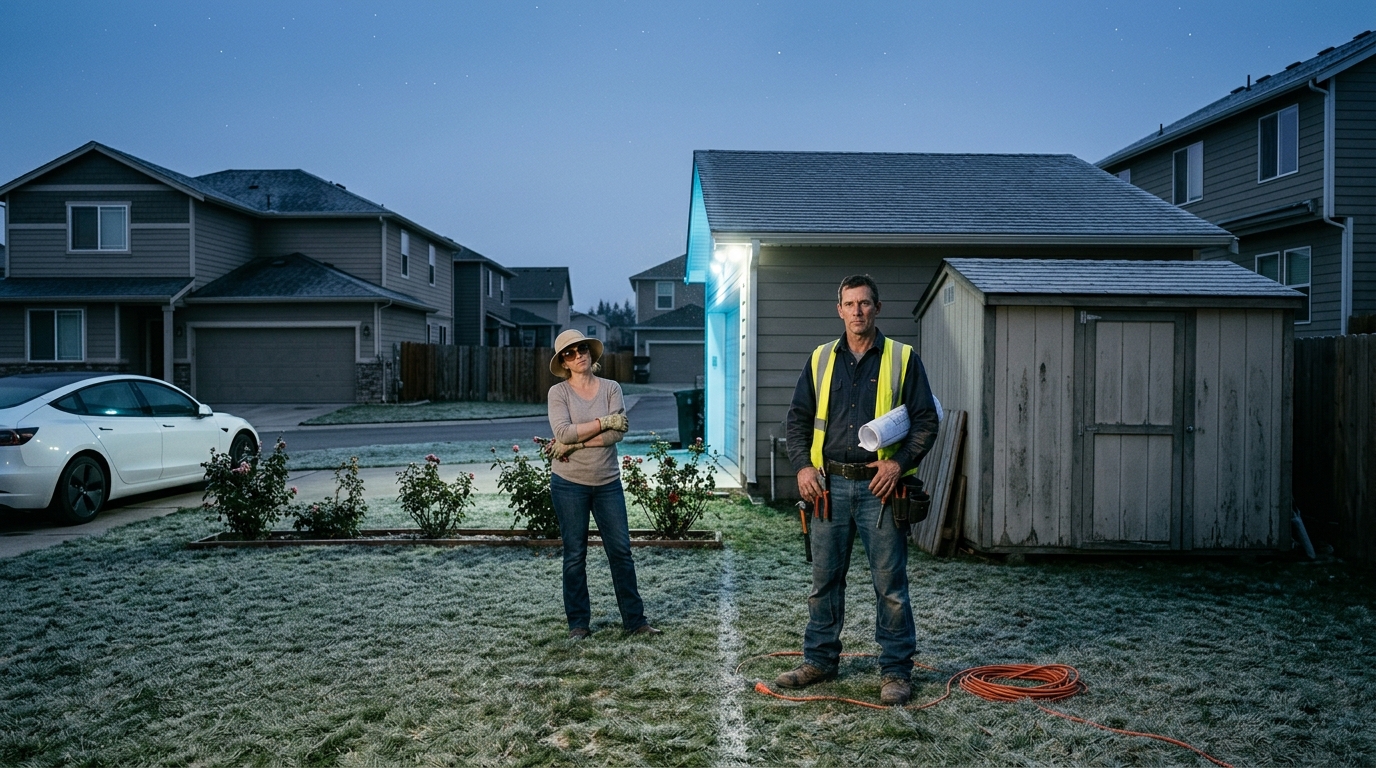
Then I saw the white electric car parked halfway through my open gateway, its nose pressed against my door like an uninvited guest trying to nose its way into a barn.
An orange extension cord cut across the property line, buried slightly in the turf.
It tracked straight from her gravel drive, over the flower bed, and disappeared into my shed’s side outlet.
I didn’t yell.
My fingers tightened around the wooden handle of the rake until the dry grain bit into my palm.
I pulled the plug right out of the wall and tossed the live end onto her side of the grass.
Karen was already standing by her prized rosebushes, wearing oversized sunglasses that hid whatever expression she thought would keep her safe.
She didn’t drop her clippers.
She just clipped another stem, let it fall, and turned her chin toward me.
You weren’t using the outlet, she said, her voice smooth as roadside gravel.
My electrician checked. Your circuit handles the draw better than mine.
I stepped across the boundary line, holding the end of the orange cord in my bare hand.
You’re pulling power off my meter, Karen, I said, keeping my voice flat.
Don’t be so dramatic, she said, waving a gloved hand as if brushing away a gnat. It’s pennies. We have to share resources for the green initiative.
She turned her back to snip another branch, assuming the conversation was over because she had decided it was.
I dropped the cord into the dirt, walked back to my porch, and let the screen door latch behind me with a dry snap.
CHAPTER 2: THE DARK COUNTER
I turned the kitchen lamp down low so the glare wouldn’t bounce off the windowpanes.
Outside, the neighborhood was dark except for the security light over Karen’s garage, which cast a pale blue wash across the grass.
The orange cord from her white car was gone, tossed back onto her side hours ago, but the memory of its hum stayed right behind my ribs.
I opened the service manual for the subpanel I had installed in the shed back when I thought people respected property lines.
People like Karen didn’t view a boundary as a wall; they viewed it as a temporary inconvenience waiting to be negotiated away.
I picked up the wrench, tapped its flat edge against the wood once, and thought about her electrician friend.
If her side could pull from my circuit without tripping the main breaker in her house, it meant her load distribution was balanced on a razor’s edge.
I didn’t need to destroy anything or start a fire.
I just needed the meter to register reality when an unauthorized draw tried to lean on a line that wasn’t built for a vehicle.
The phone rang twice before a raspy voice cut through the line without a greeting.
You still awake, old man? Walt asked, his background noise sounding like a garage full of idling compressors.
My panel is humming, Walt, I said, keeping my voice low. That line we talked about. Can we balance the resistance so it acts right under a sudden load?
Walt let out a dry, rattling cough that sounded like gravel sliding down a chute.
Oh, it’ll act right, all right, Walt muttered. If someone tries to pull juice through a secondary drop that isn’t stepped down, the breaker won’t pop. It’ll just quietly choke the supply until whatever is plugged into it starves for current. Clean and untraceable.
I set the wrench down.
Do it.
I hung up before he could launch into another story about his knee replacements.
By midnight, the air had turned crisp, carrying that sharp metallic scent of frost settling on dry grass.
I sat by the front window with a cold can of soda, watching the shadows stretch across the lawn.
Sure enough, right around nine-thirty, the rhythmic crunch of gravel announced the arrival of the orange cord.
Karen moved with the quick, darting steps of someone who believed she was starring in a movie where she always won.
She dragged the thick rubber line across the boundary line, shoved it into the shed’s side socket, and patted the side of her car like she was tucking a prize horse into a stall.
She turned around, brushed her hands together, and walked back to her house without a glance toward my window.
I didn’t move.
I just watched the orange coil catch the moonlight, resting dead and heavy against the frost-covered turf.
CHAPTER 3: PAPER TRAILS
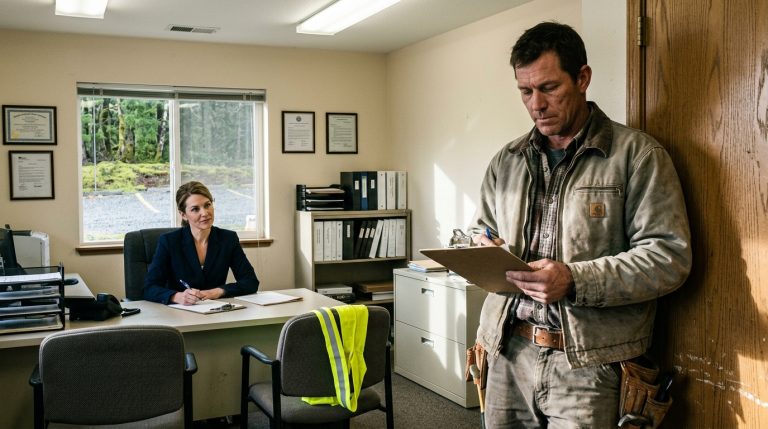
The metal cabinet in Dave’s garage gave off a dry, protesting groan when he heaved the bottom drawer open.
Dust motes danced in the beam of a drop light dangling from a frayed cord above his workbench.
He didn’t look up from the stack of yellowed files he was thumbing through with thick, grease-stained thumbs.
You’re fighting a ghost if you think the current board cares about local custom, Dave muttered, sliding a heavy paper folder across the concrete surface.
She’s got three board members playing pickleball with her every Tuesday, and they write rules on the back of a napkin if it keeps her quiet.
I set the soda can down, the metal clinking sharp against a spare spark plug.
I’m not fighting the board, Dave. I’m looking at the original plat map from when this tract was cleared back in nineteen-eighty-four.
Dave stopped flipping pages, his eyes narrowing behind bifocals held together with gray tape.
That map hasn’t seen daylight since the county courthouse flooded back in ninety-six.
He pulled out a heavy parchment sheet, its edges curling inward like dry leaves.
His finger traced a red ink boundary line stamped by a surveyor who had been retired for thirty years.
There, right on the corner of lot twelve, Dave tapped the paper with a fingernail.
Your shed isn’t an outbuilding under the new bylaws. It’s classified as a permanent utility easement support structure.
He looked up, a slow, grim grin cracking the corners of his mouth.
Translation? The HOA can fine you for weeds, but they can’t touch a single nail on that shed without a circuit court order. Karen tries to force a removal, she’s tearing down a county-recorded utility anchor.
I picked up the parchment, feeling the thick, fibrous weight of paper that predated half the houses on the street.
That gives me a perimeter, I said.
It gives you a loaded gun, Dave corrected, dropping another dusty binder onto the pile.
Just make sure you aim it before she figures out how to change the rules again.
I rolled up the plat map, tucked it under my arm, and walked back out into the evening chill with a clearer path forward.
CHAPTER 4: THE PUBLIC STAGE
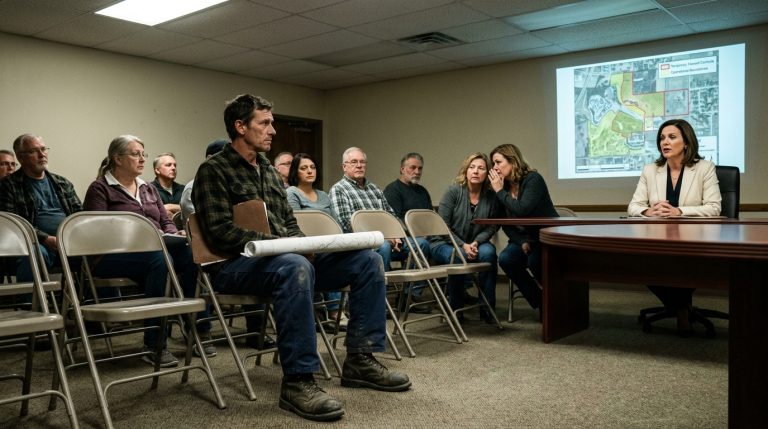
Banners fluttered in the afternoon breeze, stretched tight between folding tables laden with organic cookies and solar panel brochures.
Karen stood near the center of the asphalt circle, wearing a wide-brim hat and gesturing toward her white electric car as though she had personally invented the wheel.
A cluster of neighbors nodded politely, sipping lemonade from paper cups while she launched into a polished speech about civic responsibility and sustainable futures.
I stood near the edge of the portable screen I had set up earlier under a corner booth permit, my thumb resting on the remote control in my coat pocket.
She didn’t notice me until she turned her shoulders toward the refreshment table and caught my eye across the empty stretch of lawn.
Her smile hitched, tightening at the corners for a fraction of a second before she smoothly pivoted back to the crowd.
We all have a duty to protect our shared spaces from negligence, Karen said, her voice carrying clear and bright over the chatter.
I raised my hand high, cutting through the polite applause like a flat stone skipping across pond water.
If we’re talking about protecting our space, maybe we should talk about who’s pulling free power from a shed that isn’t theirs.
The crowd shifted, murmurs rolling through the folding chairs like dry wind through tall grass.
Karen blinked, her face flushing beneath her wide-brim hat.
That is an absurd accusation—she snapped, taking a sharp step forward.
I clicked the remote.
The projector hummed to life, throwing a sharp, high-contrast loop onto the white screen behind her booth.
There she was, clear as daylight in the grainy night footage, creeping across the dew-soaked grass with an orange cord dragging behind her like a tail.
The video looped once, showing her slipping into my shed and plugging her vehicle straight into my subpanel.
Nobody in the audience needed to squint or guess whose initials were faded in black ink near the plug.
A sharp gasp went up from the front row, followed by a heavy, stunned silence that settled over the entire lawn.
CHAPTER 5: THE SABOTAGE
The kitchen was pitch black except for the amber digital numbers on the microwave blinking zero.
I reached out in the dark, my fingers scraping against the cool drywall until they found the basement door latch.
The air down the steps smelled of hot plastic and scorched insulation, a heavy, chemical choking hazard that meant something had drawn far more current than copper was meant to carry.
I clicked my pocket flashlight on, sweeping the narrow beam across the gray metal box of the main electrical panel.
The door hung open on a single warped hinge, exposing a knot of spliced feeder wires that looked like someone had hacked them apart with wire cutters.
A fresh scorch mark blackened the upper rim of the box where a jumper line had been tied directly into my load-bearing feed.
This wasn’t a random power glitch or a blown fuse from an old appliance.
Someone had stood down here in the dark with tools, deliberately crossing the lines to create a dangerous, localized overload while I slept upstairs.
If that surge had arched properly into the wooden framing of the back utility wall instead of blowing out safely at the ground stake, the whole kitchen would have gone up in flames before midnight.
My jaw clamped tight until my back teeth ached.
Games were over.
Karen hadn’t just moved past social tantrums and petty neighborhood politics; she had crossed the line into active property destruction.
I pulled out my phone, dialed the local precinct’s non-emergency line, and let the ringing tone cut through the quiet hum of the cooling house.
We’re past letters, I said when the desk sergeant picked up. I need an officer out at lot twelve right now. Someone just tried to burn my house down from the inside.
CHAPTER 6: FINAL JUDGMENT
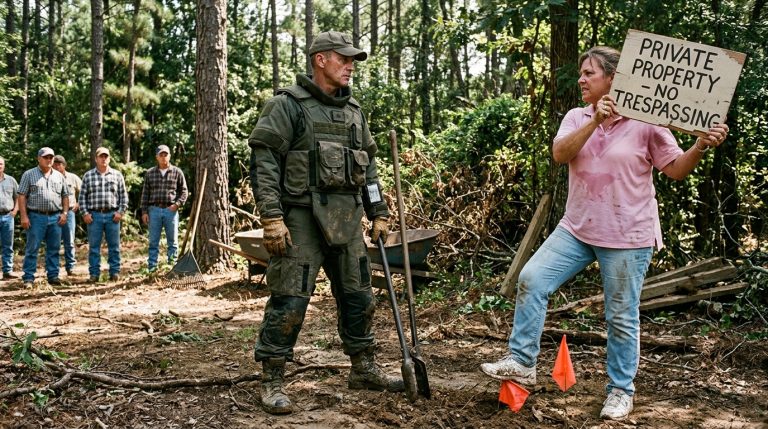
Two patrol officers moved up the porch with the practiced, heavy tread of men who had seen every flavor of neighborhood madness and had zero patience left for amateur hour.
Karen was already halfway off her front porch, her face twisted into an ugly, blotchy mask of panic as she pointed a trembling finger straight at my chest.
He’s harassing me, she shrieked, her voice cracking against the morning air with the desperate pitch of a cornered animal realizing the trap had finally locked.
He planted those wires himself, she cried, backing up against her own front door while the lead officer held up a hand to shut her down.
The officer didn’t look at her.
He looked down at the physical file of county records, utility logs, and signed statements I handed over without a word.
He flipped the cover back, scanned the official county seal on the plat map, and turned his gaze back to Karen.
Ma’am, step away from the door, the officer said, his voice flat and absolute.
She doubled down instantly, her chin flying up in a furious, spitting defiance.
You can’t do this! I am the treasurer of the association! I demand you arrest him right now!
She didn’t surrender, and she certainly didn’t apologize; she just kept screaming about her rights until the steel cuffs clicked shut around her wrists with a sharp, final snap.
I stood by my front window three days later, holding a fresh cup of coffee while the moving truck idled in her empty driveway.
The white electric car was gone, towed off to whatever new street had the misfortune of hosting her brand of entitlement.
The block was dead silent—no frantic door pounding, no orange cords trailing through the wet grass, no whispered complaints about trash cans or property lines.
I walked out to the shed, ran my thumb over the sturdy padlock I had installed on the repaired hinges, and let out a long, slow breath.
The air smelled like damp earth and pine, completely clear of noise, completely clear of schemes.
For the first time in months, the silence didn’t feel like a threat waiting to drop.
It just felt like home.