The Iron Price of Free Air: How an Upper East Side Mogul Ruined Himself
CHAPTER 1: THE LOCK ON THE GATE
The brass lock on my storage unit didn’t care that I had an MBA from Columbia. It only cared about the heavy bolt cutters in the private security guard’s hands.
Rain ran down the collar of my secondhand denim jacket, soaking into the silk trim of my modified wedding dress. Two hours ago, my father had raised a glass of Dom Pérignon in a crowded Brooklyn bistro, stripped me of my last name, and walked out. Now, his corporate henchmen were standing under the flickering fluorescent bulb of the Gowanus storage facility, holding a clipboard with Ashford Properties letterhead.
“Notice of immediate repossession, Mrs. Carter,” the lead guard said. His coat was dry. His boots were polished black leather. “All assets stored under authorized user accounts have been frozen pending asset verification.”
Beside me, James didn’t yell. He didn’t puff his chest out or threaten to call the police. He stood with his hands shoved deep into the pockets of his canvas work jacket, his shoulders braced against the cold damp air. Rain dripped off the brim of his faded cap onto his cheekbone.
“The unit’s in her name,” James said. His voice was rough, low, and perfectly level. “Not the corporation’s.”
“Primary billing went through an Ashford Properties corporate account,” the guard replied, not even looking up from his paper. “That makes it corporate inventory. Step back, please.”
I felt my thumb find the worn brass casing of my grandfather’s mechanical pocket watch in my pocket. Click. Clack. The spring inside was long dead, but the steady physical rhythm kept my breath from collapsing.
“My grandmother’s journals are in box four,” I said, my voice cutting through the steady patter of rain on the corrugated metal roof. “Those aren’t corporate assets. They’re personal hand-me-downs.”
“Take it up with corporate legal on Monday, ma’am.”
The steel jaw of the bolt cutters clamped down on the shackle. A sharp, metallic crack echoed off the concrete walls. The heavy padlock hit the wet floor with a dull thud.
James reached out, his calloused fingers wrapping around my wrist—not pulling me back, just grounding me against the chill. He didn’t offer a dramatic speech. He didn’t promise to buy me a new life. He just looked at the guard, then down at the ruined lock.
“We’ll be back on Monday,” James said quietly. “With a copy of the original lease.”
The guard didn’t answer. He snapped a yellow security seal across the door latch and turned his back.
We walked out to James’s twenty-year-old pickup truck parked under the streetlamp. The engine turned over with a deep, mechanical growl, shaking the cab as the heater blew cold, damp air against our boots.
I stared out the passenger window at the black waters of the canal. My father thought he had stripped the board clean. He thought cutting off my credit, locking out my storage, and turning my friends against me would bring me to my knees on his UES penthouse rug by Tuesday morning.
I clicked the dead pocket watch inside my pocket. One. Two. Three times.
“He took the car too, didn’t he?” James asked, shifting the truck into drive.
“The lease was under the firm,” I said, staring straight ahead at the red tail lights of the city. “It’s probably being towed off the restaurant lot right now.”
“Good,” James said, his thumb brushing the grease-stained steering wheel. “One less thing we have to pay insurance on.”
CHAPTER 2: PAPER WEAPONS
The mahogany desk between us was cold, polished so smooth I could see the reflection of my wet jacket sleeve in the grain.
Margaret didn’t offer tea. She didn’t offer a rehearsed expression of sympathy about the scene my father had staged at the bistro. She simply pulled a thick, brass-bound folder from the center drawer and laid it between us with a quiet, solid thud.
“Your mother called my personal line twice this morning,” Margaret said, her spectacles resting on a gold chain against her silk blouse. “She demanded I hand over all records regarding your grandmother’s private accounts.”
“Did you?” I asked.
Margaret didn’t answer with words. She slid the brass-bound folder three inches closer to my side of the desk.
My thumb moved automatically inside my jacket pocket, clicking the dead spring of my grandfather’s mechanical watch. Click. Clack.
“Margaret Thornton knew her son-in-law better than anyone in Manhattan,” the old lawyer said, resting her thin hands on the desk. “When Richard Ashford bought out the corporate entity that owns the Upper East Side headquarters twenty years ago, he assumed he owned the dirt beneath it.”
I frowned, looking up from the folder. “Ashford Properties owns the entire lot on 68th and Madison. He boasts about it in every corporate prospectus.”
“Ashford Properties owns the steel,” Margaret corrected softly. Her fingernail tapped the yellowed edge of a document sticking out of the top pocket. “The actual dirt—the four thousand square feet of prime Manhattan bedrock it stands on—is subject to a ninety-nine-year ground lease executed in 1968.”
I pulled the document free. The paper was dry, smelling faintly of ozone and old dust.
My eyes scanned the dense, legalistic prose, skipping the boiler-plate covenants until I hit the assignment clause at the bottom of page fourteen.
“Grandma Maggie held the ground lease,” I whispered.
“She held it through an unlisted private trust,” Margaret said. “Independent of the Ashford estate. Independent of your father’s corporate board. And under Section 4, Paragraph B, the administrative authority of that trust transfers automatically upon her death to her eldest granddaughter—provided that granddaughter is married.”
I looked down at the paper, then back at Margaret. “My father disowned me to protect the corporate reputation. He stripped my credit lines so I couldn’t hire a lawyer.”
“He doesn’t know this trust exists,” Margaret said, sliding a small, heavy object across the mahogany surface. It clinked against the wood. “Your grandmother left a brass-sheathed ledger key in her study humidor. It unlocks the private vault at Bank of America on 5th Avenue.”
I picked up the key. It was heavy, cold, and tarnished dark green around the teeth.
“What is the ground rent?” I asked, my voice dropping into the quiet rhythm of calculation.
“Five thousand dollars a month,” Margaret said. “Fixed in 1968. It hasn’t been adjusted for inflation because your grandmother never requested an appraisal.” She leaned back, her eyes sharp behind her lenses. “Your father pays that rent through a subsidiary called East River Holdings. But the lease carries a mandatory thirty-day solvency audit clause triggered whenever the underlying tenant undergoes a major structural leadership change.”
“He just removed me from the corporate board,” I said, the realization settling into my chest like iron. “He logged the change with the SEC yesterday afternoon.”
“Which means,” Margaret said, “you now have the legal right to demand a complete audit of the tenant’s liquidity before renewing the land occupancy.”
I closed the folder with a sharp snap.
James was waiting downstairs in the truck, the engine idling in the rain, the heater core whistling its tired, low whistle. I didn’t need a four-billion-dollar tech empire to fight Richard Ashford.
I just needed the piece of ground he was standing on.
CHAPTER 3: THE COLD AUDIT
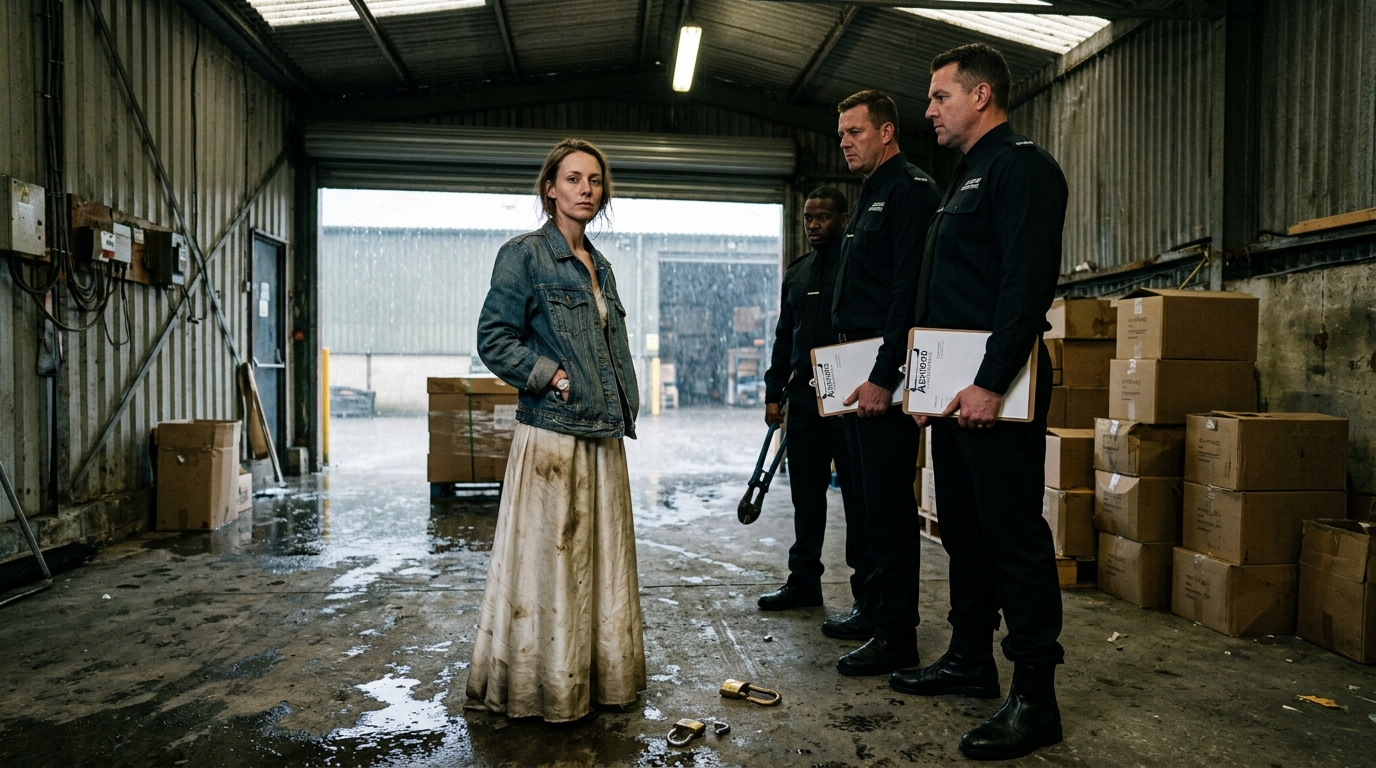
The inspector held a clip of yellow forms, his thumb resting on a pre-printed stop-work order.
“Carter’s Custom Garage?” the man asked, not looking at James, who was wiping hydraulic fluid off his knuckles with a red shop rag. “Complaints logged with the Department of Buildings. Hazardous waste disposal violations, unpermitted structural additions, and commercial zoning non-compliance.”
James didn’t drop his rag. “We passed city environmental four months ago. Clear inspection, no notes.”
“The complaint came directly from Ashford Properties’ risk management division,” the inspector said, stepping over a puddle of rainwater at the bay door. “Under Section 28-201, a formal corporate nuisance claim requires an immediate sixty-day administrative shutdown pending a full environmental audit.”
I stepped out of the back office, the brass ledger key cold against the palm of my hand inside my sweater pocket.
“The complaint was filed by Richard Ashford,” I said, my boots clicking on the oil-stained concrete. “Check the signatory on the city filing.”
The inspector flicked his gaze toward me, his brow furrowing as he flipped back the top sheet. “It’s signed by corporate counsel for East River Holdings. That’s an Ashford subsidiary.”
“East River Holdings is a corporate entity registered in Delaware,” I said, stepping between him and James’s hydraulic lift. “Under New York Municipal Administrative Code Section 11-804, a foreign commercial tenant cannot file a residential or light-industrial nuisance order unless they hold a primary physical lease within five hundred feet of the property line.”
The inspector hesitated. He adjusted his glasses, looking back down at the yellow paper. “They claimed adjacent commercial impact.”
“Their closest commercial holding is on Madison Avenue,” I said, pulling my phone from my pocket and opening the public city tax portal. “Which is four miles west. But more importantly, East River Holdings’ own corporate filing was amended yesterday to remove its authorized primary board members—including me.”
“Fiona,” James murmured softly, stepping up beside me, his shoulder brushing mine. “He’s trying to drain our daily cash flow before the week ends.”
“I know,” I said. I looked the inspector straight in the eye. “If you issue a stop-work order based on a filing from a entity whose board structure is currently non-compliant, you personally sign off on the liability for lost commercial revenue. That’s ten thousand dollars a day in shop overhead.”
The inspector’s fingers twitched against the silver clip of his board. Sweat broke out along his hairline despite the damp chill coming off the street. He didn’t want to be a hammer for a billionaire; he just wanted to clear his daily queue without getting sued by a corporate firm or dragged into a family feud.
“The complaint wasn’t vetted by city legal,” the inspector muttered, pulling his pen back from the top line.
“It was rushed through to force an immediate closure,” I said. “Call your district supervisor. Ask them if East River Holdings filed a bond for potential damages along with the injunction.”
He didn’t make the call. He knew the answer. Corporate bully tactics relied on people cowering before the letterhead before checking the stamp.
“I’m marking this complaint as pending legal verification,” the inspector said, snapping his folder shut with a dry, papery slap. “You’ll get a formal notice if city legal overrides it.”
He turned on his heel, climbed back into his knock-kneed city sedan, and pulled out onto the avenue, leaving a plume of gray exhaust in the rain.
James let out a slow, heavy breath, laying his grease-stained rag over the workbench. He looked at me, his brown eyes deep and unreadable under the harsh fluorescent shop lights.
“He’s going after the shop’s license next,” James said quiet. “He knows I don’t have fifty grand sitting in a legal retainer to fight city hall.”
“He doesn’t have fifty grand to waste either,” I replied, pulling the brass key from my pocket and laying it on the metal workbench between a socket wrench and an oil pressure gauge. “Layer one just broke, James. My father’s subsidiary is transferring funds out of state because his commercial bridge loans are defaulting.”
James picked up the heavy key, turning it over in his calloused palm. “What is this?”
“The key to the dirt beneath his feet,” I said.
CHAPTER 4: THE PRESSURE TRAP
The receptionist didn’t look up from her screen until I dropped the manila envelope squarely across her brass nameplate.
“Fiona Ashford,” she began, her corporate smile freezing halfway up her cheeks as she recognized my face. “You aren’t cleared for—”
“I’m not here as an employee,” I said, my voice cutting through the quiet hum of the lobby air conditioning. “I’m here as the managing trustee of the underlying ground lease for this building.”
The elevator chime pinged down the hall. The polished brass doors slid open, and my father stepped out, flanked by a junior vice president carrying a stack of municipal bond prospectuses. Richard stopped dead, his Tom Ford cuffs catching the overhead light as his eyes locked onto mine.
“Fiona,” he said, his voice dropping into that smooth, practiced public register that masked absolute fury. “I told your husband to keep you out of commercial districts. Security must be slipping.”
“Security is fine, Dad,” I said, not moving an inch from the marble counter. “They just don’t check ground lease titles at the service entrance.”
Richard walked forward, his stride measured and heavy, stopping three feet away. He smelled of expensive cedarwood and dry-cleaned wool.
“You’re playing a very small game with very large people,” Richard said, his jaw tightening so hard a muscle twitched beneath his ear. “East River Holdings holds a clean thirty-year commercial occupancy contract on this parcel. Whatever little paper trick your grandmother’s lawyer dug up won’t survive forty-eight hours in a federal bankruptcy court.”
“It doesn’t need to survive bankruptcy court,” I replied, pulling a duplicate copy of the audit notice from my bag and laying it flat on the marble. “It just needs to trigger Section 12 of the original 1968 covenant. Any change in primary corporate control without prior trustee notification voids the tenant’s right of quiet enjoyment.”
Richard’s hand twitched toward the envelope, his fingers curling into a fist before he caught himself. “You’re bluffing. You don’t have the capital to fight a corporate injunction.”
“I don’t need capital,” I said, my thumb clicking the dead spring of my grandfather’s pocket watch inside my pocket. Click. Clack. “I need thirty days of unpaid ground rent. Which your subsidiary missed on Friday because your commercial bridge loans were frozen by the state banking commission.”
The color drained from my father’s face—not all at once, but in a slow, gray bleed that made him look every bit of his fifty-eight years.
The junior VP behind him shifted uncomfortably, dropping a file folder against his thigh. “Mr. Ashford… the bridge loan syndicate from Boston just called the office line. They’re pulling the liquidity review.”
Richard didn’t look back at his employee. His eyes stayed locked on mine, dark and venomous, empty of any paternal warmth he had ever pretended to possess.
“You think you’ve won something,” my father whispered, stepping close enough that I could see the fine lines around his eyes. “When the lenders foreclose on this steel, your precious little ground lease will be buried under five million dollars of demolition liens.”
“Try demolishing a building you don’t own the dirt under,” I said.
CHAPTER 5: THE COLLAPSE OF LEVERAGE
Richard Ashford did not wait for an invitation to step inside.
He walked through the puddle of old motor oil near the alignment rack, his handmade leather shoes crunching over stray metal washers like he was walking through a Manhattan gutter he owned.
“Name your price,” Richard said, slamming a heavy leather checkbook down onto the grease-stained workbench next to James’s pneumatic wrench. “Whatever fee your grandmother’s estate cooked up to stall the title transfer—double it. Triple it. Just sign the lease reassignment waiver before the Boston syndicate files the default notice.”
I stood by the office door, my thumb locked hard against the brass casing of my grandfather’s pocket watch inside my pocket. Click. Clack.
“You’re late, Dad,” I said, my voice echoing off the corrugated metal roof. “The thirty-day cure period for the ground lease expired at noon.”
“Don’t play corporate games with me, Fiona!” Richard snapped, his face flushing a dark, congested red as he slapped his palm flat against the workbench. “I built this empire while you were still playing dress-up in the penthouse! You don’t have the legal standing to break a forty-million-dollar holding structure over a missed rent check!”
“The ground rent wasn’t missed,” James said, stepping out from beneath the raised chassis of an old pickup.
He didn’t wipe his hands. He let the black engine grease stain the fingers he rested against the steel frame of the hoist, his dark eyes entirely calm as he faced the developer.
“It was rejected,” James continued, his voice low and steady. “Because East River Holdings tried to clear the balance using an unauthorized corporate account that has already been flagged by the state banking examiner.”
Richard whipped around, pointing a shaking finger directly at James’s chest. “This is between me and my daughter! You keep your grease-stained hands out of my business, or I will personally ensure every zoning permit in this borough is pulled by morning!”
“You don’t have the authority to pull a permit anymore, Mr. Ashford,” James said, stepping forward until the height difference forced my father to tilt his chin upward. “Your commercial lenders called five minutes ago. They aren’t restructuring. They’re foreclosing.”
Richard froze. His hand dropped slowly to his side, his fingers twitching against the seam of his trousers.
“That’s a lie,” my father whispered, his voice cracking on the edge of hysteria. “The board… the board voted to extend the bridge loan through Friday.”
“The board didn’t vote on anything,” I said, stepping up beside James and laying the certified audit notice right over my father’s blank checkbook. “Because the moment you disowned me at my wedding, you triggered the transparency clause in the primary trust. The bank audited the holding company’s ledger. They found the liquidity deficit you tried to hide behind my name.”
Richard looked down at the paper, his lips moving soundlessly as his eyes scanned the official default seal from the state banking commissioner.
He didn’t yell anymore. He didn’t threaten to buy the block or call a corporate lawyer. He just stood there under the fluorescent lights of a Queens garage, looking smaller than he ever had in the 42nd-floor corner office.
“You’ll ruin the family name,” Richard muttered, his voice hollow and broken.
“The name was already bankrupt,” I said, letting go of the watch in my pocket. “We just balanced the books.”
CHAPTER 6: THE QUIET TITLE
Steam curled lazily from the coffee, smelling of roasted chicory and heavy cream.
Inside the apartment, the muffled clang of a socket wrench hitting a metal tray echoed through the open window from the back alley where James was tuning the suspension on an old Ford pickup. He hadn’t changed his flannel shirts, and he still carried the faint, honest scent of motor oil under his fingernails.
The front door clicked open behind me.
Margaret Smith stepped onto the wooden planks, holding a slim manila envelope tied with a cotton string. She didn’t look like a corporate attorney taking a victory lap; she looked like an old friend delivering grocery receipts.
“The title registration went through at nine o’clock,” Margaret said, leaning her hip against the railing next to me. “East River Holdings formally relinquished their claim on the Madison Avenue ground lease thirty minutes ago.”
“And my father?” I asked, keeping my eyes on a stray cat pacing along the brick garden wall below.
“He’s liquidating his private art collection to cover the bank restructuring,” Margaret said quietly, pulling a small silver key from her coat pocket and setting it on the railing. “He’s still CEO of Ashford Properties, but the board stripped his voting shares. He’s an employee in his own building now.”
I picked up the key—not the brass-sheathed ledger key that had broken his empire, but a simple duplicate for the storage locker downtown where my grandmother’s old painting of the Hudson River was resting.
“Did he ask about me?”
“No,” Margaret said, her voice steady and kind. “He asked if the ground lease could be negotiated under a 99-year renewal.”
“What did you tell him?”
“I told him to talk to the managing trustee.” Margaret smiled faintly, patting my hand against the ceramic mug. “And I told him the rent went up.”
She turned and walked back inside, the door latch clicking shut with a soft, solid thud that left me alone with the morning air.
There were no flashbulbs. There were no rooftop parties with champagne pyramids or breaking news banners on financial networks. My father’s 42nd-floor corner office was still standing, but the ground beneath it belonged to the quiet, stubborn memory of a grandmother who knew that true wealth isn’t measured in debt leverage or corporate titles.
James stepped out onto the porch a moment later, wiping his hands on a blue shop towel. He didn’t say anything about the legal filings or the New York headlines. He just reached around my waist, pulled me close against his flannel-clad chest, and rested his chin on my shoulder.
“Coffee’s getting cold,” James murmured.
“Let it,” I said, leaning back into his warmth, the dead pocket watch resting quiet and still in my pocket. “We have nowhere else to be.”