A Cold Harvest: The Architect of Property, Retribution, and the Quiet Weight of a Broken Deed
CHAPTER 1: The First Violation
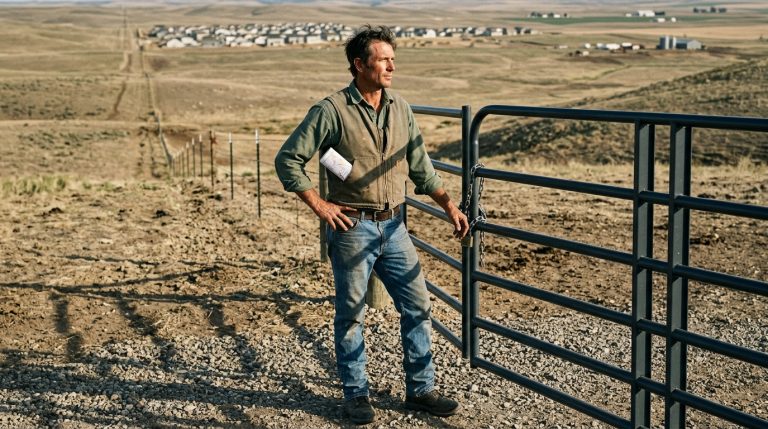
The mud was cold, pulling at the heels of my boots like it wanted to keep me anchored to the work. I was knee-deep in the irrigation trench, my fingers numb from the morning chill, when the white SUV pulled up to the property line. It didn’t roll; it hovered, a pristine, clinical white bubble of aggressive suburban stillness.
Ge Whitmore stepped out. She looked like she had been carved from marble and dressed in expensive, muted tones specifically designed to make everything else—my trees, my mud, my life—look like an unmitigated disaster. Behind her, the deputy’s boots crunched on the gravel with the reluctant rhythm of a man who already knew he was playing a bit part in a play he didn’t care for.
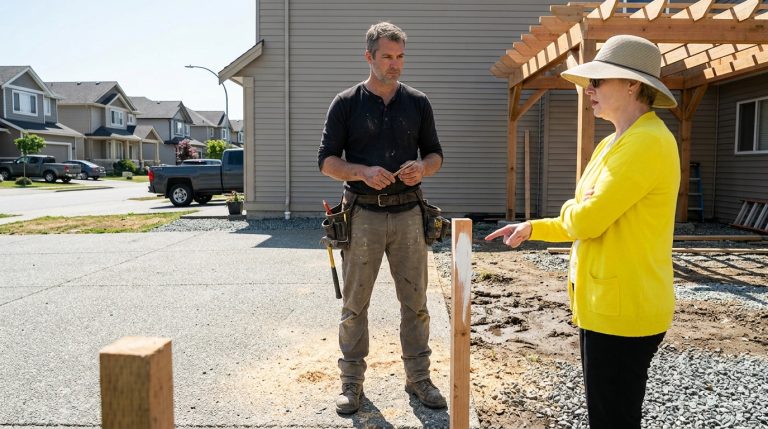
She pointed a gloved finger at the rows of trees. “Mr. Callaway, this is a formal notice. The smell, the noise, the visual blight—it’s over.”
I didn’t stand up. I held the pipe wrench in my hand, feeling the weight of the steel against my palm. I took a slow sip of the coffee I’d balanced on a fence post. It was bitter, lukewarm, and exactly what I needed to keep my temper buried beneath the surface. I watched her posture. Shoulders locked. Jaw tight. She wasn’t here to negotiate; she was here to exercise a muscle she’d been working out for months.
“Forty-three rows, Ge,” I said, my voice quiet enough that the deputy had to lean in to hear it. “You’ve spent a year filing complaints about my mailbox angle and the way my compost smells when the wind shifts. You’re auditioning for a role that doesn’t exist.”
She didn’t blink. “You are a nuisance. The Board has declared the orchard a violation of the Sycamore Bluff covenants. We have the machinery ready to start the demolition by noon tomorrow.”
I looked at the deputy. His gaze was fixed on his boots, his hands hovering near his belt buckle. He was waiting for the moment he could leave. I turned back to Ge. I didn’t hate her, which was the most dangerous part. Hate is messy. This was just a tactical error on her part, and I was looking at the board, seeing a move she hadn’t even realized was open.
“Before you bring a bulldozer onto my land,” I said, standing up slowly, my jeans caked in dark, wet earth, “you might want to ask your lawyer why the clubhouse parking lot sits on a deed that was never fully released from a 1958 agricultural easement.”
Her eyes flickered. Just a micro-second of hesitation. She shifted her weight, the confidence in her stance wavering like a candle in a draft.
“That’s irrelevant,” she snapped, though her voice had lost its crisp edge.
“Is it?” I took a step closer, leaving a print of wet mud on the dry gravel. “Because I don’t think you’ve ever actually read the chain of title. You’ve been looking at my life through a microscope, Ge. You should have spent more time looking at the dirt under your own feet.”
She turned to the deputy, her face a mask of controlled rage, but the tremor in her hands gave her away. I didn’t say another word. I just went back to the irrigation pipe. I had a leak to fix, and now, I had a ghost to bury.
CHAPTER 2: The Archive of Shadows
The white SUV didn’t peel away; it backed out with a slow, deliberate arrogance, the tires crunching against the gravel as if marking the exact spot where I’d challenged their authority. Ge’s face remained visible in the side mirror, a pale, unmoving mask until the vehicle turned the corner. The deputy lingered for a heartbeat longer than necessary, his eyes scanning my orchard—not with the practiced judgment of an officer of the law, but with the curiosity of a man who suddenly realized he’d been looking at a riddle instead of a nuisance.
Then he was gone, and I was left with the silence. It wasn’t the peaceful quiet of a working farm. It was heavy, weighted with the sharp edges of the conflict I had just initiated.
I didn’t move immediately. I let the pipe wrench hang from my hand, the metal cold against my calloused skin. The irrigation line sat open, a wet, dark mouth in the mud, weeping water into the dirt. My grandfather used to say that land is a ledger—everything that happens on it is recorded in the soil, the roots, and the slow, grinding movement of property lines over time. I had just pulled a thread from that ledger, and I could feel the structure of the neighborhood shaking under the weight of it.
I walked to the barn, the mud clinging to my boots. The structure was older than the subdivision, built of cedar and iron that had weathered decades of Virginia winters. Inside, the air smelled of dry hay, dormant machinery, and the crisp, clean scent of old paper. This was where the real work happened.
I cleared a space on the workbench, pushing aside a collection of rusted wrenches and discarded wire. I reached beneath the floorboard—a loose plank I’d marked years ago—and pulled out the heavy, fire-resistant folder. Inside were the originals: the 1958 deed, the handwritten plats with their spindly, precise ink, and the copies of the easement that had started this.
As I laid the documents out under the harsh, clinical glare of the workbench light, my mind drifted. It wasn’t just the facts in front of me; it was the phantom memory of my grandfather’s hands on this very wood, pressing down on the paper as he signed the easement. He had been a man of few words, but he possessed a terrifyingly precise mind. He knew exactly what he was doing. He hadn’t just secured access to a road; he had created a structural dependency. He had known, with the strange, intuitive foresight of a man who lived on his own terms, that one day someone like Ge Whitmore would arrive with a surveyor’s ego and a thirst for control.
He hadn’t built a farm; he had built a trap.
The realization sent a shiver through me that had nothing to do with the morning air. I wasn’t the first person to stand here, looking at these lines, feeling the weight of the history buried in the earth. I was just the current custodian of the mechanism.
I took a sip of the now-cold coffee, the bitterness sharp on my tongue. I needed to see the clubhouse parcel again. Not through the lens of a neighbor, but through the cold, surgical eyes of a land surveyor. If the developer had hidden the debt, there would be a trail. Debt of that magnitude doesn’t just evaporate; it migrates, shifting through the ledger of bank mergers and corporate shells, waiting for a catalyst to draw it back into the light.
I pulled out a notebook and began to map the connections. I traced the title chain, noting the gaps in the recording dates. Every discrepancy was a jagged edge, and I intended to sharpen them. I spent the next four hours in the silence of the barn, the outside world fading into nothingness as I hunted for the hidden seam in the HOA’s foundation.
My eyes ached, but I couldn’t stop. The rhythm of the work was a drug, a calculated motion that suppressed the doubt trying to claw at the back of my mind. Was this justice? Or was I just as clinical, as cold, as the woman I was trying to break? I looked at the 1958 document, at the signature of my grandfather, and realized the question didn’t matter. The machine had been set in motion decades ago. I was merely the one turning the key.
I found it just as the sun began to dip toward the horizon, casting long, skeletal shadows across the orchard: a secondary lien, registered under a holding company that had dissolved in the mid-nineties. It was tucked into the appendix of a tax filing that no one would ever look at unless they were specifically searching for a weakness in the clubhouse property’s ownership.
It was there. A debt, legally valid and waiting to be claimed.
I set the pen down, my hand trembling slightly. The air in the barn felt thinner now, charged with the static of an impending storm. I didn’t need to be a villain to destroy her; I just needed to be a better accountant. I stood up, the chair scraping against the concrete floor with a sound like a blade being drawn, and walked to the barn door.
Outside, the apple trees stood in the twilight, their branches stripped and dormant. They looked like silhouettes against the darkening sky, a sentry line guarding a truth that was only now beginning to surface. I reached for my phone. It was time to call Marcus. If I was going to pull this lever, I needed to make sure the floor didn’t collapse under me, too.
CHAPTER 3: The Paperwork Siege
I didn’t call Marcus from the barn. The air in there was too thick with the ghosts of 1958, and I needed the sharp, sterilized sterility of my kitchen to ground me. I walked across the yard, the gravel crunching under my boots—a sound that used to be the rhythm of a normal life, but now sounded like the steady, methodical cocking of a hammer.
Inside, the house was dark, the only light coming from the streetlamp that bled through the window and pooled on the linoleum. I sat at the table, the legal documents spread out before me like a map of a battlefield. My phone vibrated—a sharp, insistent buzz that made the floorboards seem to hum.
“Marcus,” I said, skipping the pleasantries.
“Ruben. You sounded like you were calling from a tomb.” Marcus’s voice was the sound of a well-oiled machine, pragmatic and devoid of the performative outrage that had characterized Ge’s visit.
“I found the debt,” I said. My voice was steady, but I could feel the adrenaline cooling into something harder, more jagged. “It’s a secondary lien, buried in a defunct holding company’s tax appendix from the early nineties. It’s still on the books for the clubhouse parcel.”
There was a long silence on the other end, the kind of silence that happens when an attorney realizes he’s no longer playing defense. “A lien? On the HOA common area? That shouldn’t exist if the developer did his due diligence during the turnover.”
“That’s the point, Marcus. They didn’t. Or maybe they did, and they left it there like a landmine.”
“If you move on this, Ruben, it isn’t just a legal disagreement anymore. You’re talking about foreclosure proceedings on a shared community asset. The optics alone will make you the villain of every HOA meeting in the county.”
“I don’t care about the optics,” I said, leaning forward. The edge of the table pressed into my ribs, sharp and unforgiving. “Ge Whitmore has been trying to take my grandfather’s land for a year. She’s used the county, she’s used the health department, and she’s used the local courts. She didn’t want to settle; she wanted to erase. If she wants to play the game of process, she’s going to learn that I’ve been reading the rulebook a lot longer than she has.”
“I need you to verify the holder of that debt,” Marcus said, his tone shifting into the analytical. “If the company is defunct, the assets usually revert to the state or a secondary creditor. If you buy the debt, you become the primary lienholder. You hold the foreclosure trigger.”
“I have the name of the last registered agent,” I replied, staring at the handwritten note in my notebook. “I can track it.”
“Be careful, Ruben. You’re looking for a crack in the foundation. Make sure you don’t bring the whole house down on yourself.”
“The house was built on a lie, Marcus. It’s already falling. I’m just providing the gravity.”
I ended the call and placed the phone on the table. It looked small, innocent, but it felt like a detonator. I spent the next two hours in a fugue state of research. I cross-referenced the deed numbers with the state’s digital archive. My eyes burned, and my perception of the world felt narrowed to the flickering light of my monitor. Was I actually seeing this correctly? I felt a sudden, sickening jolt of paranoia. Maybe the debt was a phantom, a misreading of a blurred ink-spot on an old document. Maybe I was the one projecting my own resentment onto these pages.
I forced myself to stand up and walk to the sink. The cold water against my face felt like a slap. I looked at my reflection in the window—a man, fifty-one years old, a retired surveyor who knew the exact degree of every slope on his property, now staring at a reflection that looked dangerously like a stranger.
I wasn’t a land baron. I wasn’t an activist. I was a man who wanted to wake up, drink his coffee, and work his trees without a woman from a subdivision deciding the smell of his life was an eyesore. But as I watched the moonlight catch the sharp lines of my own face, I realized that the “orchard” was the only identity I had left. If I let her take it, there would be nothing of my grandfather, nothing of my father, and nothing of the boy who learned the secrets of property lines before he knew how to drive.
The phone buzzed again. An email from the Secretary of State’s office. I clicked it.
The debt was active. It had been transferred to a private equity firm that specialized in distressed assets—a firm that had been purchased, liquidated, and sold in pieces a dozen times over the last decade. It was currently sitting in a digital vault, virtually worthless to them, but absolute gold to me.
I pulled out my credit card. The amount required to purchase the interest was high, a significant chunk of my retirement savings, but as I typed in the numbers, I didn’t feel the sting of the expense. I felt the release of tension. I clicked Authorize.
The transaction processed.
The screen flickered, a small “Success” notification appearing in the center of the dark display. I felt the weight of the house around me, the silence of the night, and for the first time in two years, I didn’t feel like a target. I felt like the architect of the situation.
I looked out the window toward the orchard, toward the rows of trees standing in the dark. They were safe, for now. But the war wasn’t over. I had the trigger, but I still had to walk into the boardroom and aim the gun.
I sat back in the chair, the darkness of the room pressing in, and started preparing the next phase of the assault. I needed a timeline. Every complaint, every false filing, every dollar spent on legal fees—I was going to build a cage out of it.
CHAPTER 4: The Settlement Trap
The drive to Charlottesville the next morning was a study in sensory deprivation. I kept the radio off. The road was a gray ribbon winding through the Blue Ridge foothills, the morning mist clinging to the trees like a shroud. Every mile I put between myself and the orchard felt like a calculated gamble. I was leaving my grandfather’s land, my only sanctuary, to enter the sterile, glass-and-steel domain of an attorney’s office—a place where the rules of the earth were rewritten by people who hadn’t stepped in mud in twenty years.
Marcus Delgado’s office was on the fourth floor of a building that looked like it had been designed to intimidate anyone who couldn’t afford the hourly rate. The air inside smelled of ozone and expensive coffee. When I walked into the reception area, the silence was absolute, save for the hum of the climate control—a cold, artificial draft that felt like a deliberate choice.
Marcus was waiting for me in his office, surrounded by stacks of paper that looked like a cartographer’s nightmare. He looked up, his glasses catching the overhead light, masking his eyes. He didn’t offer a smile.
“You bought it,” he said, not as a question, but as a summary. He gestured to the leather chair opposite his desk.
“I did.” I sat, feeling the smooth, cold surface of the chair against my back. “And I want to move.”
Marcus leaned back, his fingers steepled. “We have the lien. But moving on it effectively requires us to initiate a formal notice of foreclosure on the common parcel. It’s an act of war, Ruben. Once we drop that letter, the Sycamore Bluff HOA is going to go into full defensive lock-down. Ge isn’t going to just sit there and let us take their clubhouse.”
“That’s the point,” I said. My voice was low, controlled. I watched his face for any sign of hesitation. “I want her to react. I want her to overreach. She’s been pushing me for two years, relying on the fact that I’m just a farmer who doesn’t understand the ‘process.’ Let’s show her the process.”
Marcus stood up and walked to a filing cabinet in the corner. He pulled out a thick file, the edges frayed, and dropped it on the desk. It wasn’t the file we’d been working on. This one was different—thinner, marked with a red tab. He slid it toward me.
“While you were tracking the debt, I looked into the original developer’s filings for that clubhouse parcel,” Marcus said, his voice dropping an octave. “I found something that didn’t make it into the public record until three years ago.”
I opened the file. It was a site survey, an old, hand-drawn map of the subdivision. My eyes drifted to the corner where the clubhouse sat. My thumb traced a line, a faint, graphite mark that looked like an afterthought. It was an easement, but it wasn’t agricultural. It was a utilities override, granted to a shell company that no longer existed, designed to bypass the county’s standard zoning oversight.
“It’s a ghost line,” Marcus whispered, his finger pointing to the discrepancy. “The developer didn’t just forget the lien. They intentionally clouded the title to ensure no one could ever claim the land without getting tangled in the zoning violations they left behind. If you foreclose on this property, you aren’t just taking a clubhouse. You are inheriting a liability that the county would love to tear down.”
I looked at the map, then at Marcus. The realization hit me with the force of a physical blow. This wasn’t just a mistake or a simple debt. My grandfather hadn’t just secured an easement; he had anticipated that someone would eventually try to weaponize the property. He had known the developer was a fraud, and he had woven a web of legal tripwires that would only reveal themselves if someone were stubborn enough to pull the thread.
“He knew,” I said, my voice barely a whisper.
“Who?”
“My grandfather. He didn’t just want to protect the orchard. He wanted to ensure that if anyone ever tried to consolidate power here, they’d be trapped by their own greed.”
I closed the file, the sound of the paper folding loud in the quiet room. The atmosphere felt sharp, dangerous. I wasn’t just fighting a neighbor; I was participating in a strategy that had been waiting for the right moment to trigger for decades.
“We move,” I said, my decision hardening into certainty. “We serve the notice. We don’t hide the lien. We make it part of the public record for their next board meeting. If they want to fight, let them fight a foreclosure they can’t explain to their own homeowners.”
Marcus looked at me for a long time, then nodded once. “I’ll have the notice ready by end of day. But remember, Ruben—you are now the one holding the torch. Make sure you don’t burn your own house down in the process.”
I left his office, walking back through the cold, artificial hallway. The world outside felt different now. The street noise, the pedestrians, the sun—it all felt like a backdrop for the calculation I was making. I reached my truck and sat behind the wheel, staring at the dash. I had the trigger. Now I just had to decide when to pull it.
I looked at the orchard in my mind’s eye—the trees, the soil, the quiet history of my family. I had always thought the land was a place of peace. I was wrong. The land was a witness. And it was finally time for it to testify.
CHAPTER 5: The Collapse
The thick stack of papers felt heavy in my hands as I walked out of the office building. The midday sun was high, but it offered no warmth; it just made the shadows in the parking lot look sharper, more defined. I opened the door to my truck and tossed the documents onto the passenger seat. The sound of them hitting the vinyl was dull, final. This was the moment I had been planning for, yet standing there in the middle of a mundane parking lot, I felt a sudden, sharp spike of isolation.
I started the engine. The sound was rough, a familiar vibration that usually centered me, but today it just felt like the ticking of a clock. As I backed out of the space, my phone lit up on the console. A text from Wendel Oaks: She’s calling an emergency session tonight. Everyone is talking. They say you’re trying to take the pool. The mood is shifting, Ruben. Get here.
I didn’t answer. I put the truck in gear and pulled onto the main road. The drive back to Harrow County was slower this time. I watched the landscape change from the polished, manicured outskirts of Charlottesville back into the rolling, rugged terrain of the foothills. Every mile seemed to bring the tension into sharper relief. I was the architect of this chaos, and I could feel the structure of it beginning to buckle.
As I passed the local diner, I saw a familiar face—Sarah, the lead reporter for the county gazette, climbing into her car with a camera over her shoulder. She spotted my truck and paused, her eyes narrowing. She knew. Someone in the planning office had already leaked the filing. The “process” was already moving faster than I had anticipated.
I didn’t stop. I couldn’t. I kept driving, the tension in my chest tightening with every rotation of the wheels. The “consequence loop” I had envisioned was already feeding back on itself. By taking the legal high ground, I had opened the door for every opportunistic voice in the community to interpret my actions in the worst possible light.
When I pulled onto my property, the orchard was quiet, but it didn’t feel like a refuge anymore. It felt like a stage. I walked to the porch and sat down, the wood beneath me hard and weathered. I looked out over the rows of trees—my grandfather’s work, my father’s life, my own daily struggle—and realized that the “truth” I was holding onto was becoming increasingly difficult to distinguish from the “revenge” Ge would accuse me of.
The wind shifted, carrying the scent of damp earth and the sharp, metallic tang of the irrigation line I hadn’t finished repairing. I was exhausted, a deep, bone-weary fatigue that no amount of coffee could bridge. I had the foreclosure notice, I had the legal leverage, and I had the moral authority of the grandfathered land, but I was suddenly, vividly aware of the cost. I wasn’t just defending my land anymore; I was actively dismantling a community’s peace.
The silence of the afternoon was interrupted by the crunch of gravel. A car—not a neighbor’s, not a friend’s—was pulling up the driveway. A black sedan, heavy and serious. A man in a suit climbed out, his movements calculated, professional. He didn’t look like an HOA board member. He looked like an enforcer for the private equity firm that had held the debt before I bought it.
He walked toward the porch, stopping ten feet away. He didn’t smile. He didn’t offer a greeting. He just stood there, looking at the house as if he were evaluating the salvage value of the building materials.
“Mr. Callaway,” he said. His voice was a flat, deadpan monotone. “We’re here about the transfer of interest.”
“I bought the debt,” I said, my hands gripped tightly around my knees. “The transaction is finalized.”
“The transaction was valid,” the man agreed, his gaze shifting to me. “But there’s a clause in the original corporate charter—the one that defined the debt’s priority—that was never disclosed in the initial filing. It grants the primary creditor the right to ‘first refusal’ on any foreclosure action initiated by a secondary interest.”
I felt the bottom drop out of my stomach. “That’s impossible. That charter was dissolved in ninety-four.”
“The charter was dissolved,” the man said, taking a step closer, “but the contractual obligation persists as long as the asset remains under the original jurisdiction. We haven’t been looking for the money, Mr. Callaway. We’ve been waiting for someone to claim the title. Because when you claimed it, you also claimed the liability for the site’s environmental remediation.”
The wind gusted, rattling the dry leaves in the trees. The “Layer 1” decoy secret—the lien—hadn’t just been a trap for Ge. It had been a trap for me. I looked at the man, at his cold, empty eyes, and felt the sickening weight of the truth. I hadn’t won. I had been lured into a position where I was now the one legally responsible for a property I never wanted, one that carried a debt to the state that I couldn’t possibly pay.
“I’m here to serve you the formal notice of administrative seizure,” he said, reaching into his jacket. “The property is now under review by the state environmental commission. And since you’re the registered owner of the debt, you’re the one who has to answer the citation.”
He handed me a thick envelope. It was heavy, like the one I had just printed, but this one smelled like stale ink and legal doom.
I didn’t take it. I just looked at it. The “High-Start” structure I had relied on had just crashed against the reality of a game that had been rigged by people who were far more ruthless—and far more patient—than either me or Ge Whitmore. The “Butterfly Detour” wasn’t just a complication; it was the end of the board as I knew it.
CHAPTER 6: The Architects Reckoning
The man in the suit didn’t leave. He stood at the edge of the porch, his posture so perfectly rigid it felt like an insult. He watched me with a sterile, hollow detachment, waiting for me to break. The envelope sat in my hand, the paper biting into my skin where my knuckles had gone white.
“You’re mistaken,” I said, my voice sounding raspy, unfamiliar. “This land has been in my family since 1958. There is no remediation liability. My grandfather was a land surveyor. He handled the filings personally.”
“He was a surveyor,” the man agreed, his voice never rising above a flat drone. “Which is exactly why he knew the risks. The easement he negotiated—the one you weaponized to gain leverage—was also the primary mechanism for the utility override. By asserting your right to that easement, you effectively triggered the secondary liability clause attached to the clubhouse parcel. You didn’t just buy a debt, Mr. Callaway. You accepted the responsibility for the land’s state.”
He turned and began walking back toward his black sedan. The sound of his dress shoes on the gravel was like small, sharp gunshots in the quiet of the orchard. I stood on the porch, frozen, feeling the ground beneath me for the first time as something alien, something that could be turned against me.
I tore the envelope open. The pages inside were thick, filled with dense, legalese-heavy jargon that made my head swim. I walked into the house, my legs feeling like lead, and sat at the kitchen table. The silence of the house—the silence that had been my comfort—now felt like a pressure chamber. I spread the papers out. The survey maps, the environmental impact reports, the citations. It was all there: the hidden contamination from an old irrigation runoff site, a problem that had been buried for years, waiting for a registered owner to hold responsible for the cleanup.
My mind raced. I thought of my grandfather, the way he would spend hours with his transit and his compass, mapping the lines of this property with a precision that bordered on religious. I had always admired his dedication to the “truth” of the land. Now, the memory of him felt twisted, distorted by the light of this revelation. Had he known? Had he left this trap for me to find, or had he left it for anyone who dared to claim the power he had once possessed?
A flash of memory struck me—a summer afternoon, decades ago. I was barely ten, holding the end of a measuring tape while he checked a boundary pin at the north corner of the property. He had looked at the clubhouse site, then a sprawling, muddy construction zone, and said, “The weight of the earth always finds its way back to the surface, Ruben. You just have to know where to stand to watch it come up.”
I dropped the paper. The realization wasn’t just about the debt or the liability. It was about the cycle. I had used the law to fight Ge, and the law had found a way to use me back. I was the one now on the hook, and if I didn’t find a way to neutralize the liability, the state would seize the property—orchard and all—for the cleanup costs.
I reached for the phone, my fingers fumbling. I didn’t call Marcus. I called the only person who knew the history of this land better than any attorney: Wendel Oaks.
“Wendel,” I said, as soon as he picked up. “The clubhouse parcel. The original construction site. What do you know about the foundation runoff reports?”
There was a pause, a ragged breath on the other end. “Why are you asking that now, Ruben? You’ve already stirred up the hornet’s nest.”
“Because I’m inside the nest,” I said, looking out the window at the orchard, which suddenly looked less like a farm and more like a target. “They’re using the environmental liability to seize the land. They’re coming for the orchard, Wendel.”
“They can’t,” he whispered. “The original easement… the one from fifty-eight. It’s protected by a state-level agricultural mandate. It can’t be seized for industrial remediation unless it’s proven that the owner initiated the contamination.”
I froze. “What?”
“The mandate. Look at the appendix, Ruben. The one you didn’t read because you were too busy looking at the deed. It’s a legacy protection. If you can prove the contamination was the result of the developer’s actions, and that you’ve been actively managing the property as a farm, you’re shielded.”
I looked down at the stack of papers. I had been so focused on the lien, on the power of the debt, that I had missed the shield buried beneath the threat. I had been looking at the weapon, but I hadn’t seen the armor.
I stood up, the chair clattering to the floor. The fear didn’t leave, but it shifted. It became cold, focused. If I could prove the timeline—if I could show that the runoff occurred during the clubhouse construction, long before I took title—I didn’t just have a defense. I had a counter-strike.
I walked to the closet and pulled out a box I hadn’t touched since the funeral—my father’s journals. He had kept records of everything, every rainfall, every harvest, every repair to the irrigation line. If he had noted the runoff, the date, the visual evidence… I had the proof.
The game wasn’t over. It was just changing, shifting from a battle of paper to a battle of history. I grabbed the box and headed for the barn. I had a night of reading ahead of me, and for the first time since the morning the SUV pulled up, I felt like I was back in control. The weight of the earth was surfacing, and this time, I knew exactly where to stand.
CHAPTER 7: The Ledger of Retribution
I didn’t leave the barn for the rest of the night. The space was a capsule, insulated from the outside world, illuminated only by the focused, harsh beam of a lantern. My father’s journals were not just diaries; they were clinical, technical records of a man who viewed his life as a series of land-management tasks. Every entry was dated, every event recorded with a surveyor’s obsession for accuracy.
I flipped through them, my fingers finding the pages from the year the Sycamore Bluff development broke ground. July 1996. The heat had been record-breaking. My father had written: Construction began on clubhouse parcel today. They’ve begun deep-trenching for the pool. Runoff from the site is already bleeding into our drainage basin. Reported to the county. They told me to keep my nose out of it.
There it was. The confirmation I needed. The runoff wasn’t a product of the orchard; it was the direct result of the clubhouse foundation excavation. My father hadn’t just noted the occurrence; he had documented the exact date, the time of the county inspector’s visit, and the dismissive response he received. He had even taken photographs—Polaroids tucked into the back of the journal, the edges curled and yellowed, showing the brown, stagnant water pooling along the boundary line.
I sat back, the lantern light casting long, dancing shadows across the workshop walls. I had the proof. But proving the contamination was only half the battle. If I brought this to the county now, it would be treated as ancient history. I needed a bridge—a way to connect that historic negligence to the current liability they were trying to pin on me.
I looked back at the journals. There, tucked inside a later entry from 2005, was a copy of an correspondence between my father and the HOA’s first president—the “reasonable man” who had moved to Florida. It was a formal warning about the basin’s integrity. It hadn’t been a request; it was a demand for remediation that the HOA had ignored for nearly two decades.
The “Kill Switch” my grandfather had built wasn’t just the easement. It was the entire history of the development’s failure to manage its own mess. By trying to seize my land, Ge had forced the issue into the light. She had brought the environmental agency to my doorstep, and in doing so, she had effectively opened the door for them to investigate the clubhouse parcel as well.
I looked at my watch. 5:00 AM. The emergency board meeting was scheduled for seven.
I didn’t feel the fatigue anymore. The clarity was absolute. I packed the journals and the Polaroids into a fresh, clean folder. I didn’t need to be aggressive. I didn’t need to threaten. I just needed to be the man who brought the history to the meeting.
I walked out of the barn into the pre-dawn chill. The orchard was quiet, the trees standing like sentinels in the gray light. They looked stronger today. I realized that for all the harassment, for all the legal paperwork and the threats of bulldozers, the trees had remained. They were rooted in a truth that no amount of HOA bylaws could rewrite.
I drove toward the clubhouse, the roads empty and silent. When I arrived, the parking lot was already filling up. Wendel Oaks was there, standing by the entrance, looking anxious. He saw me and walked over, his expression one of guarded concern.
“You’re not going to like what they’ve planned,” he said, his voice low. “Ge has invited an outside consultant from the county, someone to formally present the findings on your ‘nuisance’ activity. She’s trying to finish this today.”
“Let her,” I said, my voice steady.
“Ruben, this is the end of the road. If she gets that motion passed, they can enforce an immediate stop-work order on the orchard, and the county will take it from there.”
“She thinks she’s at the end of the road,” I replied, gesturing to the folder in my hand. “But she hasn’t read the map.”
I walked past him into the clubhouse. The room was already buzzing, the air thick with the smell of cheap coffee and hostility. Ge was at the front, her face a carefully maintained mask of authority. She saw me walk in, and for a split second, the mask slipped—a flicker of surprise, followed by a hardening of her resolve.
She tapped the microphone, the feedback whine cutting through the murmurs. “Let’s begin,” she said.
I took a seat in the back, the folder heavy on my lap. I didn’t need to speak yet. I just needed to wait for the moment she overreached. I looked around the room, seeing the faces of the homeowners—people who just wanted to live their lives, who had been fed a narrative of “property values” and “nuisance” to keep them from asking where their money had gone.
Tonight, they were going to learn exactly how expensive her leadership had been.
CHAPTER 8: The Verdict of the Soil
Ge Whitmore was standing at the podium, her face flushed, finishing a practiced argument about “community standards.” She was midway through a sentence about the necessity of protecting the neighborhood’s aesthetic “sanctity” when I stood up. The movement was slow, deliberate. Every head in the room turned. The hum of the air conditioner seemed to drop an octave, leaving a vacuum of sound where only the scuff of my boots against the carpet remained.
“You speak of standards, Ge,” I said, my voice cutting through the space without needing to be loud. “But you’ve spent two years ignoring the foundation this community is built upon.”
She stiffened, her hand tightening on the edge of the microphone. “Mr. Callaway, you are not recognized to speak. Security, please—”
“I don’t need your recognition,” I said, walking toward the front. The room parted. I felt the collective tension, the way the neighbors shifted, their curiosity overriding their loyalty to the dais. I reached the front table and laid the folder open. “I’m here to present the record.”
I pulled out the Polaroids—the images of the brown, toxic sludge bleeding from the clubhouse excavation site in 1996—and laid them on the table. Then, the copy of the correspondence between my father and the first HOA president, clearly detailing the ignored warning.
“This is not a nuisance complaint,” I said, looking directly at the homeowners. “This is a record of twenty years of willful negligence. The clubhouse sits on a contaminated basin that was never remediated. It was ignored to save money, and it was hidden to protect the property values you’re all so worried about.”
Ge’s face had gone the color of ash. She turned to the county consultant, but the man was already leaning forward, squinting at the Polaroids. His professional detachment was gone; he was a scientist looking at an anomaly he hadn’t been warned about.
“That’s a lie,” Ge snapped, but her voice cracked, the veneer of the “governor of a very stupid country” finally shattering. “He’s trying to intimidate the board.”
“I’m not the one trying to foreclose on a pool,” I said, my voice calm, clinical. “I’m the one who bought the debt on the parcel to stop the harassment. And in doing so, I uncovered the liability that the developer left behind—a liability that, by law, now falls to the association because you chose to ignore the maintenance of the basin for two decades.”
The room erupted. It wasn’t the kind of shouting that leads to violence; it was the sharp, panicked cacophony of people realizing they had been swindled. The retired firefighter stood up. “Where did the reserve fund go, Ge? If the maintenance was ignored, where was the money?”
The questions started coming from everywhere—a barrage of voices, demands, and accusations. Ge stood behind the podium, her mouth moving, but the sound was drowned out by the noise of her own community. She looked at me, and for the first time, I didn’t see the predator. I saw a person who had spent so long building a wall of rules that she hadn’t noticed the floor was rotting away beneath her.
The consultant approached the table. He picked up the photos. He looked at the date stamps. He looked at me, his expression grim. “If this is verified, the clubhouse will be condemned. The remediation cost will be millions.”
“It’s all verified,” I said. “Every date, every file. It’s all in the record.”
Ge realized the game was over. She didn’t offer a final speech. She simply walked away from the podium, her movements jerky and small, and disappeared through the side exit.
The rest of the night passed in a blur of motions, votes, and legal directives. The special meeting turned into an impromptu tribunal. By midnight, the board had resigned. Wendel Oaks was appointed interim chair. The foreclosure action was suspended, not because of me, but because the HOA was now legally obligated to report the contamination to the state. The power Ge had used to bully me had been the very thing that destroyed her.
When I finally walked out of the clubhouse, the night air was biting and clear. I drove home in silence. The orchard was waiting, silent and dark. I walked to the north edge of the property, where the old irrigation line had broken that first morning. I knelt in the dirt, the cold earth pressing against my knees. I had won, yes, but the victory felt less like a triumph and more like a restoration of order.
I took a small shovel from my truck and finished fixing the line, the metal cold and firm in my hands. The land was quiet. The history was recorded. I thought of my grandfather, of his hands in the soil, of his belief that stubbornness was a virtue.
I stood up, brushing the dirt from my jeans. The orchard was safe. The trees would bloom again in the spring. I walked back toward the house, the light of the stars reflecting off the dew-covered leaves. I had defended my home, but more importantly, I had proven that the truth—buried, ignored, or hidden—always finds its way back to the surface. It was a heavy lesson, but it was a good one to live by.