Building Boundaries in the Dust: How a Working Carpenter Dismantled a Neighborhood Tyrant’s Fake Empire
CHAPTER 1: THE PINK ENVELOPE
The cedar grain was rough under my thumb. I scraped away the sticky residue left behind by the sunflower sticker, letting the pink paper curl between calloused fingers.
Inside the envelope, block letters printed on neon cardstock cited code seven point three. A five-hundred-dollar penalty for unauthorized property modifications.
I set the paper down on the edge of my truck bed, right next to a heavy framing hammer and a box of galvanized three-inch nails. The morning air was cold, smelling of fresh sawdust and damp dirt.
My house on Maple Ridge sat on a wide, level lot with a wraparound porch I had framed and finished myself board by board. There was no shared driveway, no common fence, and no association agreement signed when I bought the title three months ago.
Footsteps crunched across the gravel drive.
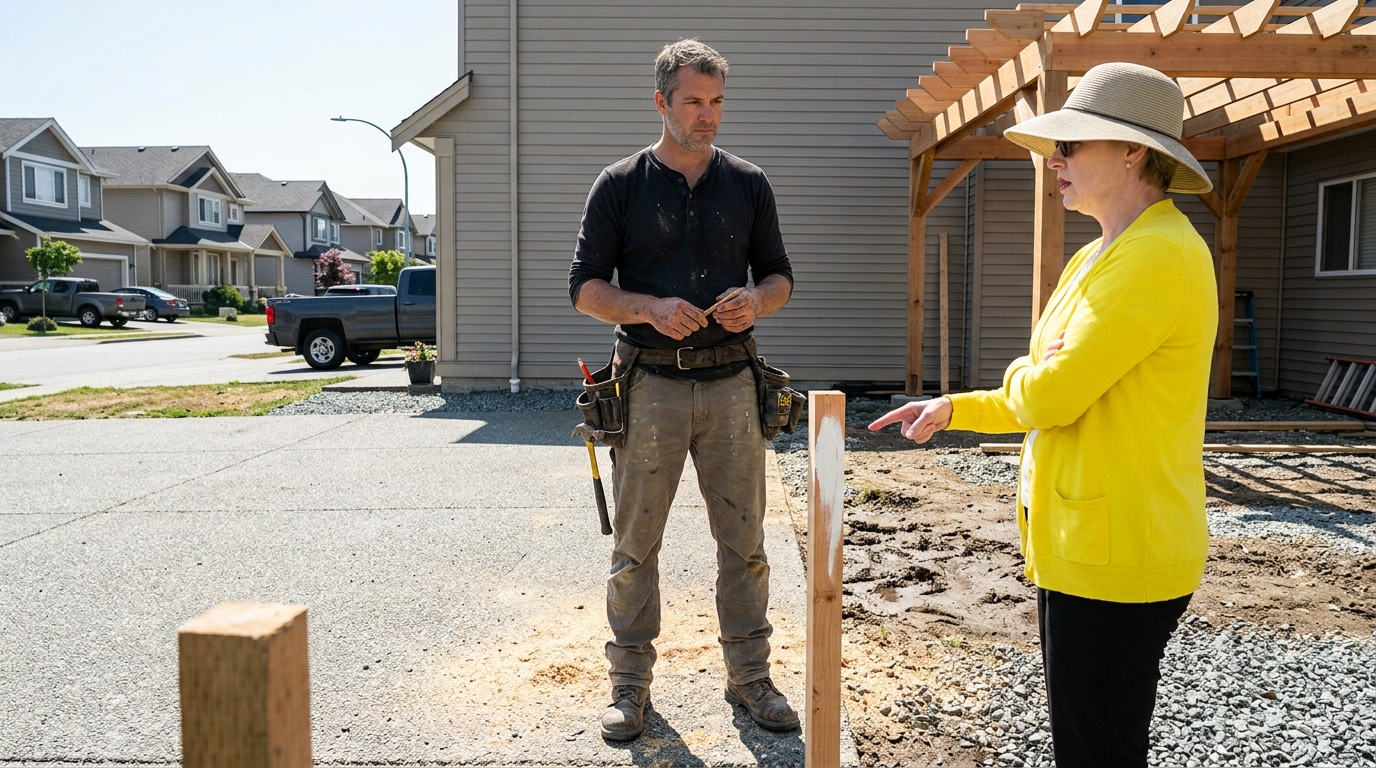
I looked up from the lumber stack. Judith Newell stood near the edge of the property line, wearing a sun hat that cast a shadow sharp across her eyes. She crossed her arms over a bright yellow cardigan, her gaze locked onto the exposed timber of my new pergola.
“You’re dragging down property values before you even finish,” she said, her voice tight and clipped. “That wood doesn’t match our community standards.”
I didn’t answer right away. I picked up a scarred wooden carpenter’s pencil from my tool belt, rolling it slowly between my thumb and forefinger to keep my jaw steady against the mounting friction.
“You’re not my HOA president, Judith,” I said, my voice flat. “I’m not in your district.”
She pointed a manicured finger toward the asphalt street behind my truck. “You drive on our pavement. That makes you ours.”
CHAPTER 2: PORCH CONFRONTATION
The yellow cardigan caught the glare of the midday sun, bright and jarring against the neutral tones of my siding.
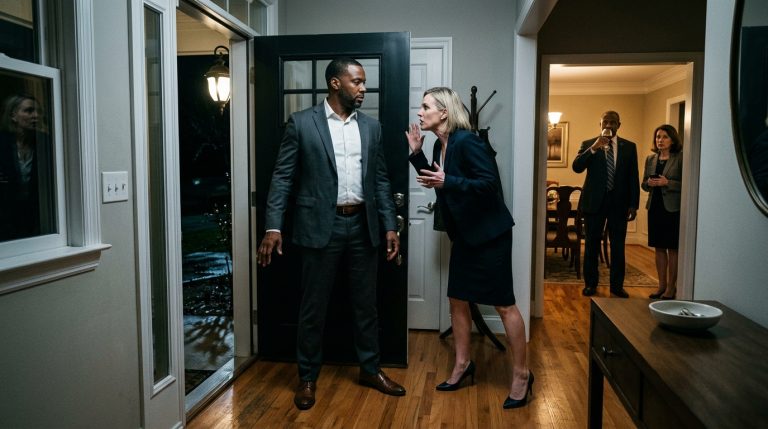
Judith didn’t blink as she stepped closer to the gravel border, her heels clicking against the packed stone with sharp, deliberate rhythm.
“You’re ignoring community standards, Mr. Kesler,” she said, her voice dropping into a harsh, rehearsed cadence. “Our association has spent years maintaining a clean, uniform aesthetic along this corridor.”
I kept the carpenter’s pencil rolling between my thumb and forefinger, feeling the deep, worn grooves of the wood against my skin.
“There’s no association written on my deed,” I said, my voice low and steady. “You’re three blocks over.”
“The buffer zone includes your parcel,” she snapped, lifting her chin. “We’ve enforced it on every property owner from here to the highway.”
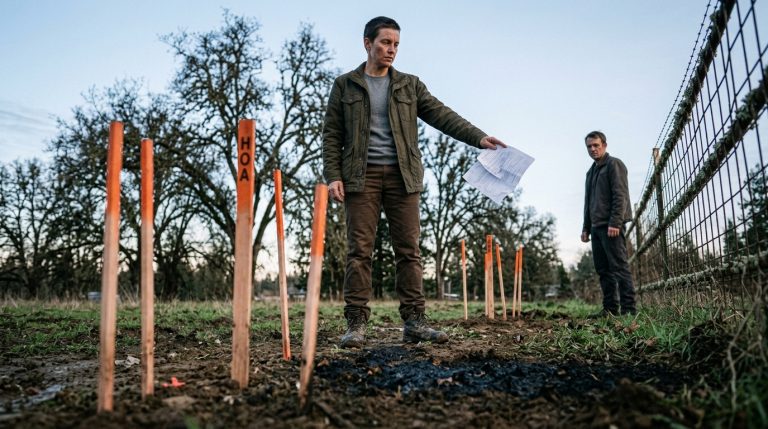
A faint, chemical smell drifted across the yard on the light breeze—the sharp, unmistakable reek of fresh white spray paint.
I glanced past her shoulder toward the wooden survey stake at the edge of my driveway, where a fresh smear of white paint marked a line that didn’t belong to the county records.
“You’re painting lines where they don’t exist,” I said, taking a slow step forward.
Judith stiffened, her jaw tightening until the skin around her mouth went pale. “You’ll take down that pergola by Friday, or our attorney will file the injunction.”
CHAPTER 3: THE MUNICIPAL BASEMENT
The county archives smelled like damp paper and decades of floor wax.
I set the scarred pencil down on the scarred laminate table, spreading out the original blue-inked survey plat maps that dated back thirty years.
Without electronic security footage to rely on, every single foot of legal boundary had to be proven the hard way—inch by ink-stained inch on physical paper.
My attorney, Cody, dropped a heavy cardboard box of tax assessment rolls onto the corner of the table with a dull thud.
“If she’s claiming extended authority over your parcel, there has to be an amendment filed in these ledgers,” he said, wiping dust from his glasses. “And if there isn’t, her entire buffer zone theory is just paper theater.”
I traced a finger along the heavy black border defining my property parcel, noting the complete absence of any secondary association stamps.
The silence in the basement was heavy, broken only by the steady hum of an overhead fluorescent tube flickering above our heads.
My thoughts drifted back to the fresh white paint smear on my survey stake, a silent reminder of how far an entitled bureaucracy would stretch its arms to swallow what didn’t belong to them.
“She didn’t file an amendment,” I said, tapping the official county seal on the corner of the plat. “She just drew a new line with a can of paint and hoped nobody would check the archives.”
Cody pulled a yellow highlighter from his breast pocket and popped the cap off with his thumb. “Then let’s dig deeper into who else she’s been billing along this imaginary line.”
CHAPTER 4: THE MUNICIPAL BENCH
The air inside the hearing room smelled of floor polish and stale paper.
Judith sat at the plaintiff’s table flanked by two board members, clutching a thick manila folder like it held state secrets while the judge motioned lazily for her complaint.
“The defendant has repeatedly refused to comply with community standards,” Judith said, her voice sharp and practiced as she stood before the bench.
I didn’t fidget or look away; I kept my hand resting flat on the heavy binder of official county survey records Cody had helped assemble.
“Is the defendant a member of the association?” the judge asked, squinting down over his reading glasses.
“Not formally,” Judith admitted without missing a beat, her jaw tightening. “But our charter extends conditional authority over adjacent properties to protect local aesthetics.”
I stood up, sliding the highlighted plat map across the wooden barrier.
“My property sits entirely outside their jurisdiction,” I said, my voice cutting cleanly through the quiet room. “The charter she’s referencing expired five years ago according to county records.”
Judith’s eyes narrowed into hard slits as her attorney stared blankly at his own paperwork.
“This isn’t a misunderstanding,” the judge said, his expression hardening as he closed the binder. “This is fraudulent enforcement of non-existent authority.”
CHAPTER 5: THE LEDGER UNVEILED
The bank records didn’t lie, even when the people holding them tried to blink away the numbers.
I leaned back against the cool plaster wall of the county office, my thumb absently flicking the edge of a scarred wooden carpenter’s pencil in my pocket.
An investigator named Miller flipped through a stack of canceled checks written by perimeter homeowners who had paid fines out of pure intimidation.
“They weren’t putting this into community maintenance funds,” Miller said, sliding a ledger page across the desk toward Cody. “Look at the memo lines on these withdrawals.”
I stepped closer, scanning the typed entries that matched the dates of Judith’s aggressive mailings.
The money collected from fake code violations had funded a brand-new stone patio extension and high-end landscaping right outside the board president’s back door.
“She built her patio on threats and ghost jurisdictions,” Cody muttered, tapping a deposit slip stamped with Judith’s personal signature.
Judith sat three desks away in the waiting area, her jaw locked tight and her face flushed bright red as she whispered frantically to her board vice president.
She refused to look at the paperwork, crossing her arms hard over her chest and denying every single allegation to the county auditor with loud, defensive snaps.
“It was a buffer zone,” she barked across the room, her voice trembling with furious entitlement. “Everyone knew the rules!”
CHAPTER 6: PORCH FULL OF CHAIRS
The morning air smelled of rich coffee and fresh asphalt, completely devoid of chemical spray paint or neon paper notices.
I sat on the edge of my wraparound porch, my boots resting on the clean cedar boards I had laid down myself three months ago.
Neighboring residents from down the road had started showing up just after sunrise, carrying lawn chairs, folding tables, and boxes of donuts to set up right along the boundary line.
Marisol walked up the steps holding a steaming paper cup, her expression relaxed and free of the tension that had gripped her since the fake fines began.
“The county auditor just posted the final dissolution notice on the community board,” she said, handing me a napkin. “The entire board has been cleared out.”
I took the cup, feeling the steady, unbroken warmth against my palm.
“They thought a fake buffer zone would let them write their own rules,” I said, looking out past the freshly painted red cedar pergola toward the empty street.
Wes from three houses down set up a small portable speaker near the driveway, letting classic rock drift quietly across the morning breeze as more families gathered to reclaim what was theirs.
There were no more pink envelopes, no more unearned citations, and no more fraudulent fees carved out of neighborly trust.
I picked up my framing hammer, tapping a loose nail firmly back into place before setting the tool down for good.
The property line was drawn in stone, backed by common sense, and sealed by the quiet, heavy truth of absolute accountability.