The Iron Gate of Whispering Pines: How One Stubborn Property Broke an HOA Tyrant’s Grip
CHAPTER 1: THE CLIPBOARD AT THE FENCE LINE
The grease from the burger patties sizzled against the cast-iron grate, sending a thin wisp of smoke into the evening air. I turned the patties with a scarred pair of stainless-steel tongs, the metal cold and familiar in my palm. Around the cedar picnic table, a few old friends laughed over a round of drinks, keeping the noise level well beneath the polite murmur of a Sunday afternoon.
Behind the back fence, the rhythmic scratching of a ballpoint pen against heavy cardstock cut straight through the chatter.
Brenda stood three paces into her manicured lawn, her shoulders locked into an immaculate posture that seemed entirely too rigid for a casual evening walk. Her floral blouse matched the precise shade of her petunias, and her eyes were fixed dead ahead on my deck. She didn’t blink. She just stood there, the yellow legal pad tilted upward, her thumb depressing the clicker of her pen with every deliberate stroke she made.
My cousin Mark leaned back in his folding chair, following my gaze. “Is she taking shorthand on us eating cheeseburgers?”
“She’s logging carbon emissions,” I muttered, setting the tongs down on the wooden side table.
Brenda didn’t look up when I stepped toward the property line. She simply raised her phone, the black casing catching the fading sunlight before the shutter clicked once, twice, three times. It wasn’t about the noise or the smoke; it was about the simple, intolerable fact that my grass didn’t conform to the neighborhood’s uniform shade of emerald.
CHAPTER 2: THE RED TAPE WALL
The acrylic sign on the desk read HOA Compliance & Arbitration: Director Miller.
Miller didn’t look up from his computer screen when I pulled out the folded $500 fine notice and laid it flat across his blotter. The office smelled intensely of cheap bleach and old paper, a stale institutional scent that immediately drained the warmth out of any room. A plastic cup of lukewarm coffee sat near his elbow, bearing a faded logo from a hardware store three towns over.
“I’m here about a jurisdiction error on parcel 41-B,” I said, keeping my tone level.
Miller finally lifted his chin, his expression shifting into a practiced, bureaucratic weariness. He adjusted wire-rimmed glasses that slid halfway down a slick nose. “If this is about a neighbor dispute over trash cans or exterior paint shades, you need to take it up with your local board president first. That’s Brenda’s district.”
“Brenda doesn’t have jurisdiction over my land,” I replied, tapping a finger once against the paper. “My grandfather opted out of the development covenants back in nineteen-forty-something. The county maps prove it.”
Miller let out a long, deliberate sigh that fluttered the corner of the citation notice. “Sir, Whispering Pines was incorporated under blanket neighborhood guidelines twenty years ago. Everyone falls under the umbrella now. We don’t have exemptions on file for individual legacy lots.”
“Check the physical archive vaults from nineteen-forty-eight,” I pressed, leaning forward until the edge of the desk bit into my forearms. “The historical exclusion was recorded under deed book twelve.”
Miller’s fingers hovered over his keyboard for a fraction of a second before he tapped a single key, pulling up a digital directory that clicked softly in the empty room. He didn’t look at the vaults; he just stared at a glowing database entry with a flat, indifferent stare. “The digital registry shows zero active exemptions for your street address. If you received a fine from the association president, your remedy is to pay it or appeal to the board.”
He reached out and slid the $500 notice back across the desk toward my chest.
“And if you refuse compliance,” Miller added, his voice dropping an octave into a rehearsed administrative warning, “the association holds the legal right to file a formal lien against the property title for non-payment.”
The threat hung in the air, crisp and cold, backed by the full weight of a system designed to wear down anyone who didn’t fit inside their beige mold.
CHAPTER 3: THE MISSING ARCHIVES
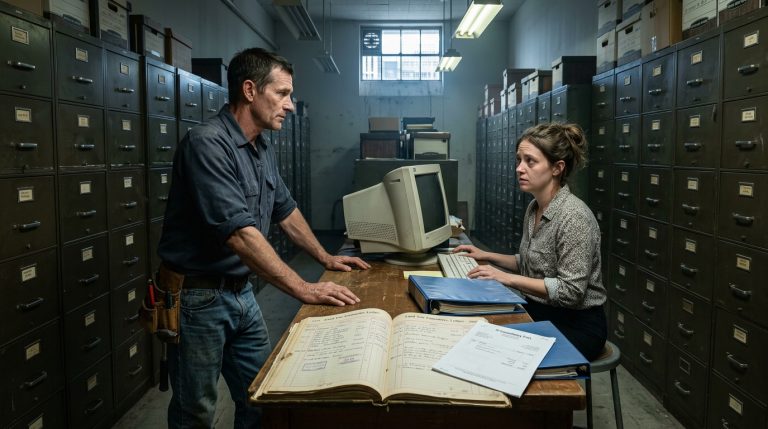
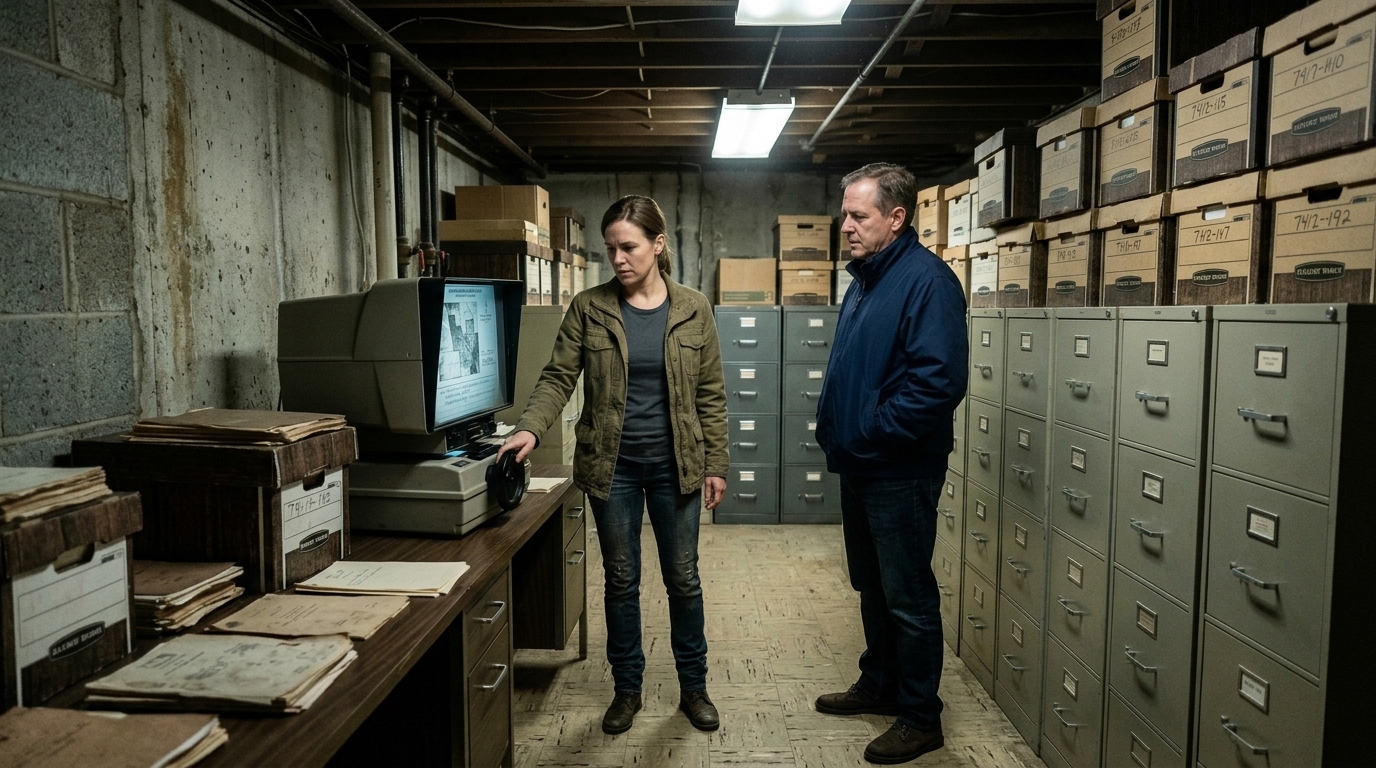
The microfilm reader cast a harsh, blue-white glare across the grease-stained counter of the basement records room. Dust motes danced lazily in the beam, smelling faintly of decaying pulp and half a century of damp concrete.
I cranked the steel handle forward, spinning past roll after roll of mid-century subdivision filings.
The digital terminal upstairs had closed every door, claiming my family’s parcel didn’t exist outside a modern spreadsheet. But physical ink on parchment told a different story, provided the town hadn’t scrubbed the paper itself. My thumb brushed against the cold metal knob as I scanned the 1948 boundary demarcations for Whispering Pines.
A sharp metallic click echoed through the empty archive aisle as a drawer snapped shut two rows over.
“Looking for something specific, neighbor?” Miller’s voice cut through the damp air, flat and entirely devoid of professional warmth.
I didn’t turn around immediately. I kept my hand on the crank, my eyes locked on the rolling strip of grey celluloid projecting the original farm layouts onto the glass plate. “I’m looking for the unedited agricultural exclusion map filed under my grandfather’s name.”
Miller stepped into my peripheral vision, his shoes squeaking lightly on the linoleum floor. He wasn’t wearing his office badge anymore, just a plain windbreaker zipped to his chin. “That register was pulled for routine digital migration last Tuesday. It’s no longer part of the active municipal archive.”
“Convenient timing,” I muttered, finally lifting my gaze to meet his cold, unblinking stare. “Considering the digital database claims my entire street was annexed into the association thirty years before the developers even broke ground.”
Miller didn’t blink. He simply shoved his hands deep into his pockets, his posture tightening into a defensive wall. “The system reflects what the board certifies, friend. If the records don’t show an exemption, then legally, it never happened.”
He turned on his heel before I could answer, his footsteps fading out toward the emergency exit stairwell, leaving me alone with the hum of the machine and a missing paper trail.
CHAPTER 4: THE STAKED GARDEN
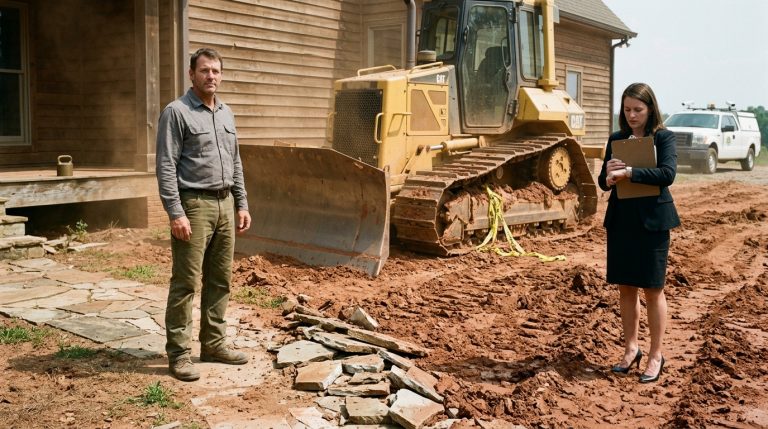
A bright orange plastic flag fluttered sharply in the late afternoon wind, planted firmly three feet inside the natural curve of my grandfather’s wildflower bed.
Next to it, a wooden survey peg had been driven deep into the dark earth, crushing several stalks of tall coneflowers under its square edge. Fresh boot prints scarred the soft soil around the perimeter where no municipal worker had any legal right to tread.
The physical reality of the encroachment hit harder than any paperwork or digital glitch.
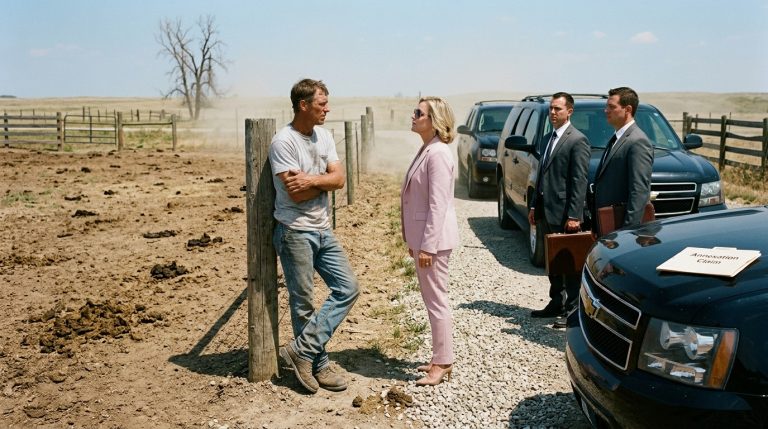
“Looking for a new property line?” Brenda’s voice sliced across the gap from her immaculate patio.
She stood leaning against her white vinyl fence, holding a pair of heavy pruning shears that she opened and closed with a rhythmic, metallic snip. Her gaze wasn’t masked by clipboard notes this time; it carried the hard, satisfied smirk of someone who thought she had already won the turf war.
“Those stakes are on private land,” I said, my voice dropping into a flat, level warning as I walked slowly toward the plastic flag.
Brenda snapped the shears shut with a sharp clack. “The association re-surveyed the north parcel this morning under standard zoning adjustments, and that flower bed is a clear infraction of the community buffer zone.”
“There is no community buffer zone on an independent deed,” I replied, pulling the orange flag straight out of the dirt with a single motion.
Brenda’s jaw tightened instantly, her knuckles turning white around the rubber grip of the shears. “You put that back right now, or I’ll call the county sheriff for destruction of property.”
She stepped forward, her posture rigid with unyielding entitlement, ready to defend a boundary she had manufactured out of thin air.
CHAPTER 5: THE BOARDROOM EXPOSURE
Dennis, the association treasurer, blinked behind his thick bifocals and reached down to pull the folder toward his chest.
The conference room smelled of industrial carpet cleaner and cold coffee left too long in a glass carafe. The other four board members sat in stiff silence around the oval table, their eyes darting nervously between the Manila packet and the empty chair at the head of the room where Brenda usually sat.
“What is this document set regarding, Thomas?” Dennis asked, his voice cautious.
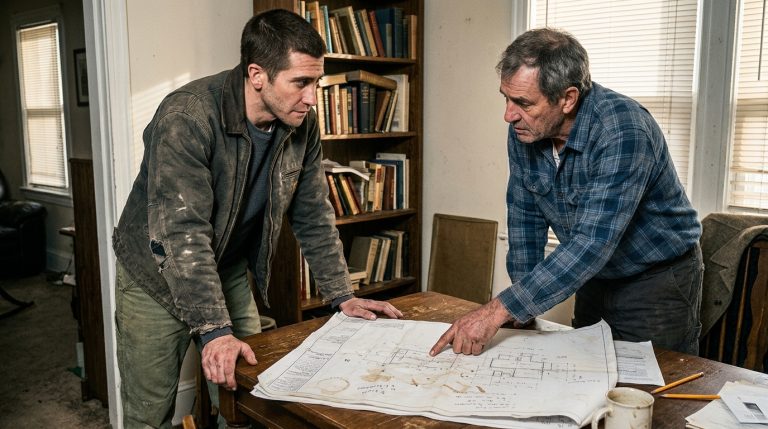
“It’s regarding unauthorized boundary manipulation and fraudulent fee assessments,” I said, leaning my palms flat against the edge of the dark wood. “Brenda didn’t just fabricate a noise fine. She moved survey stakes onto un-annexed private land to cover up a personal land grab.”
Dennis opened the flap, revealing the chain of custody letters and the physical photographs of the stakes driven deep into my grandfather’s wildflower bed.
“She told us the parcel was integrated into district four under standard expansion amendments,” board member Sarah murmured, adjusting her sweater with a tight, nervous twitch.
“She lied to you,” I replied, holding my ground in the center of the room. “She’s been using association resources and fake citations to settle personal vendettas against anyone whose property doesn’t fit her museum template.”
Dennis stared down at the evidence, his expression hardening as the full weight of the institutional liability settled over the room like a lead weight.
CHAPTER 6: THE QUIET DECK
The brass handle of the back screen door clicked shut behind me with a soft, familiar weight.
I set a tall glass of iced tea down on the wooden railing of the wrap-around porch, the condensation dripping slowly onto the weathered paint. Across the property line, Brenda’s driveway was entirely empty, her pristine lawn stripped of its intimidating aura now that the clipboard had been permanently locked away by the board.
A gentle afternoon breeze rustled through the tall, unmanaged stalks of the wildflower bed, carrying the earthy scent of damp soil and green leaves.
My cousin Mark stepped out onto the deck, tossing a set of cornhole beanbags into the storage bin with a heavy thud. “The board’s official notice just cleared their digital system,” he said, leaning his shoulder against the cedar post. “Her presidential keys are gone for good.”
“Let her keep her petunias,” I replied, taking a slow sip of the cold drink. “She just doesn’t get to run anyone else’s yard anymore.”
There were no grand speeches left to make, and no corporate memos needed to validate a boundary that had stood strong since the nineteen-forties.
I settled back into the wooden chair, watching the evening shadows stretch across the green grass, completely free of interference.