The Architect’s Retaliation: A Masterclass in Bureaucratic Warfare and the Systematic Dismantling of Golden Summit
CHAPTER 1: THE WEIGHT OF EVIDENCE
The courtroom floor was polished to a mirror finish, a cold, unyielding surface that reflected the fluorescent lights and the fraying nerves of everyone standing upon it. I kept my gaze fixed on the screen at the front of the room. My attorney, Sarah, didn’t move. She just let the document hover there, the revision history expanded like a confession in high resolution.
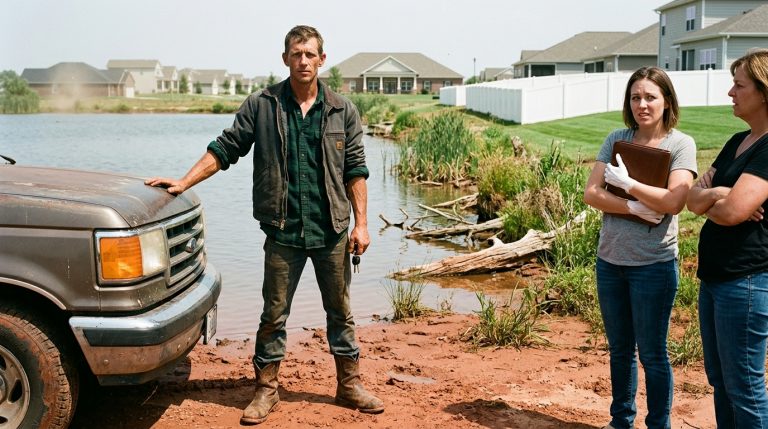
Karen was sitting six feet away from me at the opposing table, her posture rigid, her hands folded over a leather-bound notebook. She looked smaller than she had two weeks ago on the ridge, stripped of the sunlight and the wind that usually framed her. Without the authority of her neighborhood, she was just a woman in a cream jacket, clutching at a narrative that was rapidly turning into a trap.
The judge’s laugh had died, replaced by a silence so thick it felt physical.
“Counsel,” the judge said, his voice dropping an octave, “are you suggesting this document was produced before the alleged infringement occurred, despite the creation date embedded in the file?”
Karen’s lawyer cleared his throat, but the sound was thin, fragile. He started to stammer about administrative errors, about cloud syncing issues, but the judge wasn’t listening to the words anymore. He was watching the screen. I looked at Karen. She wasn’t looking at the judge. Her eyes were fixed on her own hands, and for a fleeting second, I saw a twitch in her jaw—a momentary lapse in the mask of the concerned neighbor.
I remembered the email chain I had saved three months ago. I remembered the feeling of the hard drive in my hand, the weight of the digital footprint I had spent weeks cultivating. It hadn’t been about building a house anymore; it had been about building a record. Every board, every permit, every inspection I had documented was a brick in a wall I had been building around her.
And now, the wall was closing in.
The judge shifted, the leather of his chair creaking. He looked toward the gallery, then back at the metadata on the screen. “I find it difficult to reconcile the timeline, Counselor. Especially given the permit portal logs we reviewed yesterday.”
Karen’s head snapped up. Her eyes met mine across the aisle. For an instant, the courtroom vanished. There was no judge, no lawyer, no case. There was only the realization in her eyes—the sudden, terrifying understanding that I hadn’t just been defending my property. I had been tracking her.
The air in the room seemed to sharpen, the smell of dust and old paper pressing in on us. Then, the judge spoke again, but the words were muffled by the sudden, rhythmic thrumming of blood in my ears. I reached into my bag and felt the cold, hard spine of the blue binder.
I turned a page. The document was clean, indexed, and perfectly cross-referenced. I was ready for the next move, but as I glanced at the opposing table, I noticed something that hadn’t been there before. Karen’s phone was buzzing on the table, and her lawyer was staring at a message, his face turning a sickly, washed-out shade of gray. It wasn’t just the metadata anymore. Something else had just shifted in the digital shadow of the case, something even deeper than the forged easement.
My heart hammered against my ribs. I had been looking for a wall, but I had accidentally found a cellar door.
CHAPTER 2: THE PAPER TRAIL
The courtroom hum was replaced by the low, insistent buzz of the hallway—a cacophony of heels clicking on tile and the distant, muffled voices of clerks shuffling files. I pushed through the heavy double doors, the weight of the blue binder in my hand serving as an anchor in the sudden, disorienting rush of the building’s architecture.
I stopped just outside the courtroom, leaning against the cold, marble-veined plaster of the wall. My pulse had slowed, but the rhythm of the courtroom—the way the judge had peered at the screen, the way the metadata had stripped the veneer off Karen’s argument—was still playing on a loop behind my eyes. I caught a flicker of motion at the end of the hall: Karen’s lawyer, moving fast, his phone pressed against his ear, his footsteps erratic and unmeasured. He wasn’t walking like a man who had just presented a solid case; he was walking like a man who had just realized the floor beneath him was dissolving.
I took a breath, the air smelling of industrial floor cleaner and the metallic tang of old security scanners. I knew this feeling. It was the same sensation I got when a structural flaw appeared in a blueprints—the sudden, visceral need to trace the load-bearing failure back to the foundation.
My memory flickered to the early days of the project. I remembered the first email, the carefully crafted, fake-civil tone of her “courtesy outreach.” At the time, I had seen it as an annoyance—a local busybody with too much time and a misplaced sense of aesthetic guardianship. But looking back now, through the lens of what I knew about the permit portal logs, it wasn’t just busybody work. It was a targeted, aggressive reconnaissance. She had been tracking the project, not because of the view, but because of what the project represented: a threat to her proximity to the subdivision’s management.
I opened the binder. The pages were crisp, organized into chronological clusters. I turned to the section labeled HOA Internal Communications.
There it was—the early, seemingly innocuous agenda notes. They were sparse, typed in a font that looked professional enough to be convincing, yet devoid of the formal signatures required by the HOA bylaws. I had collected them during those long nights when I was supposed to be sleeping, while the house was still just a skeletal framework of studs and subflooring against the evening sky. Back then, I had been driven by a simple, cold desire to protect what was mine. I didn’t want to fight; I wanted to build. But the more I looked at the documentation, the more I realized that the fight was, in itself, the construction.
The lawyer was gone, disappearing around the corner toward the parking garage. I checked my watch. I had enough time to make the stop at the planning office before they closed for the day.
I walked toward the elevators, my boots echoing with a steady, deliberate cadence. As I reached the button, a sudden, sharp memory intruded: the smell of sawdust, the sight of my father standing over a set of blueprints, his pencil hovering over a junction box. Never guess where the load goes, he had said. If you aren’t sure, strip it back until you see the wood.
I wasn’t looking for wood anymore. I was looking for the paper trail that linked the scenic easement to the money. The permit portal logs showed that Karen had accessed the files with a shared design credential—the kind used for large-scale landscaping bids. Why would she need access to a private residence’s permit dashboard to argue about a view? Unless the view wasn’t the goal. Unless the view was the diversion.
The elevator doors slid open with a metallic sigh. I stepped inside, the fluorescent light above flickering, casting long, sharp shadows across the brushed steel walls. I pressed the button for the records floor. My hand was steady, but I felt a new tension coiling in my chest.
If she was using the HOA’s scenic authority to stop my build, she was doing it because she needed to keep the board’s eyes off the ledger. She wasn’t just protecting a horizon; she was hiding a vacuum where the maintenance funds should have been. And if I was right, the “scenic impact memo” wasn’t just a forgery for my benefit—it was a frantic, last-ditch effort to keep the board from noticing that the money for the stone pavilion and the pergolas had vanished into thin air.
I pulled out my phone and dialed Sarah. The call went to voicemail. I didn’t leave a message. Instead, I pulled up the latest scan of the HOA’s landscape maintenance budget. The numbers were neat, balanced, and utterly devoid of the underlying invoices. It was a perfectly sanitized account of a reality that didn’t exist.
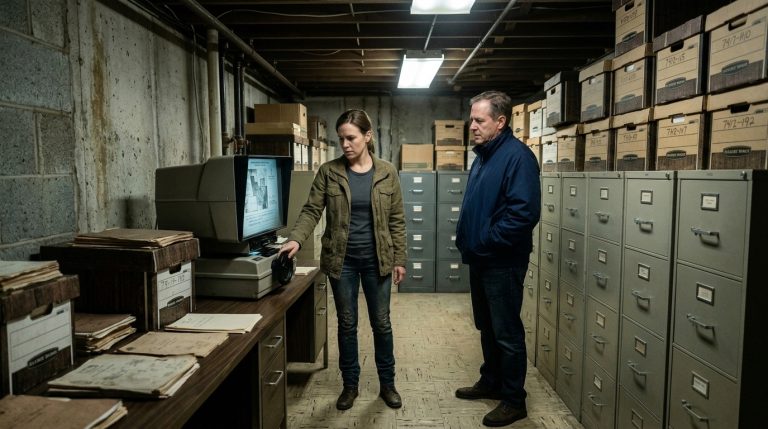
The elevator arrived with a soft chime. I stepped out into the quiet, dim expanse of the records archive. A clerk sat behind a high desk, her eyes fixed on a monitor. She didn’t look up as I approached. I placed the binder on the counter, the sound of the heavy plastic rings hitting the wood sharp and final in the silent room.
“I need the original filings for the Golden Summit landscape maintenance fund,” I said, my voice low and steady. “And I need every invoice associated with the stone pavilion project from the last two years.”
The clerk looked up then, her gaze flicking from my face to the blue binder. “That’s a lot of paper, sir. You have a request form?”
“I have a subpoena-ready file and an appointment with the county supervisor,” I lied, keeping my tone perfectly, maddeningly neutral. “The records are public. You have them in the archives. I’m prepared to wait.”
She hesitated, then sighed, turning toward the towering rows of cabinets. I leaned against the counter, my eyes scanning the room. I wasn’t waiting for records; I was waiting for the moment when the paper would stop being paper and start being the evidence that would finally bring the structure down. I could feel the edges of the truth sharpening in the back of my mind. It wasn’t about the view anymore. It was about the math, and the math never lied.
CHAPTER 3: THE ANATOMY OF A FEINT
The clerk’s eyes darted toward the security camera in the corner, then back to the thick, plastic-bound file I had slammed onto the counter. Her hands hovered over the keyboard. She wasn’t just checking my authorization; she was checking the hierarchy. Karen, despite her lack of official authority, had clearly made her influence felt here, too.
“I need the pavilion invoices,” I repeated, my voice dropping into that specific, flat register that signals I have no intention of leaving until the request is fulfilled. I kept my posture relaxed, leaning slightly forward, projecting a calm that felt like a sharp edge in the quiet room. “The Golden Summit landscape maintenance fund is a matter of public record. If it’s being held here, I’m entitled to see it.”
She bit her lip, then began to type. The rhythmic click-clack of the keys sounded like gunfire in the claustrophobic space. She wasn’t looking for the files—not yet. She was searching for a flag. I watched her screen reflected in the plexiglass. A series of folders appeared: Golden Summit – 2024 Audit, Landscape Committee – Correspondence, Pavilion – Construction Variance.
My eyes narrowed. The 2024 Audit folder was marked with a red tag. It was locked.
“The audit is restricted,” she said, her voice tight. “Pending review by the HOA board. I can give you the general invoices, but the fund summaries are sealed.”
“The fund summaries are the only thing that matters,” I countered. I kept my hand on the binder. I didn’t reach for my phone; I didn’t need to. I already had the permit portal logs, and I knew how to cross-reference them with the budget I’d pulled from the county site. The pavilion project had been approved for a set amount, but the invoices I’d seen in passing—the ones floating in the back of my mind—suggested the final cost was nearly double.
She paused. I sensed the shift in the room, the way the tension rippled outward from the clerk to the empty chairs and the dusty aisles of archives. I had the upper hand, and we both knew it. I wasn’t just a homeowner looking for a permit; I was a man who had already dismantled their legal defense in open court.
“I’ll take the construction invoices,” I said, conceding the smaller point to gain the larger one. “And I want the list of contractors who were signed on the pavilion project. All of them.”
She hesitated, then pulled up a file. A list of names scrolled across the screen. My eyes scanned them rapidly, looking for the name I had seen on the flatbed truck that day on the ridge. There. Summit View Landscaping. I noted the date of their last payment. It was three weeks after the pavilion was allegedly finished.
I pulled out my notebook and jotted it down. Three weeks. That was a long time for a final settlement in a project that was supposedly tight on budget. It was just enough time for a kickback to clear, or for a series of smaller, unauthorized payments to be laundered through a secondary account.
As she worked, I wandered toward a shelf of physical ledgers. My finger brushed the spine of a book marked Land Use Committee – 2023. I pulled it down. The paper was dry, brittle to the touch, and smelled of long-forgotten bureaucracy. I thumbed through it, looking for the initial sign-offs on the scenic corridor.
There it was, buried on page 42. A handwritten note in the margin, dated before my property was even cleared. It wasn’t about my house. It was a note about a ‘buffer zone’ that didn’t exist in the county records. The handwriting was identical to the signature on the forged scenic impact memo—Karen’s signature.
She hadn’t just forged the document for me. She had been building a library of forgeries, a paper architecture designed to make her claims seem like long-standing policy. She had been playing a long game, creating a history of ‘scenic protection’ that existed only in her imagination and her laptop.
I turned the page, and my heart skipped a beat. Tucked into the back of the ledger was a loose-leaf receipt for a landscaping consultant. The amount was astronomical, far more than what a simple consultation would cost. And the company? It wasn’t a landscaping firm. It was an IT consultancy firm, the same one that managed the subdivision’s secure servers.
The logic clicked into place with the cold, satisfying precision of a deadbolt sliding home. The ‘scenic impact’ hadn’t been manufactured by landscaping experts; it had been engineered by people who understood how to bypass, overwrite, and manipulate digital permit credentials.
I looked at the clerk. She had stopped typing and was watching me with a mixture of confusion and dawning fear. I didn’t say anything. I just closed the ledger and slid the pile of requested invoices toward me. I had enough. I didn’t need to break the red-tagged audit folder today. The invoices, the IT payment receipt, and the handwritten notes in the ledger were enough to start the fire.
I walked toward the exit, the weight of the information in my bag feeling heavier than it had ten minutes ago. I wasn’t just dealing with a neighbor. I was dealing with a systematic theft, and the house I was building—the one that had felt like a fortress—now seemed like the exact thing that had forced her to drop her mask.
I walked out of the records archive and into the fading afternoon sun. The parking garage was quiet. I found my truck, the metal cool to the touch. As I unlocked the door, I saw a black SUV pull into the space three spots over. A man stepped out, adjusted his tie, and looked toward the courthouse entrance. He was talking into an earpiece.
I didn’t recognize him, but I recognized the look—the calculated, clinical gaze of someone who wasn’t there for a court appearance. Karen wasn’t just waiting for the next hearing. She was securing the perimeter.
I climbed into the truck and started the engine. The engine’s rumble was the only sound in the garage. I didn’t look back. I just turned the wheel, my mind already working on the next set of moves. I had the invoices, I had the IT receipt, and I had the proof of the forged history. The landscape of this fight had just changed, and for the first time, I wasn’t just defending my property line. I was the one marking the territory.
CHAPTER 4: THE PERIMETER BREACH
I didn’t turn the key. I didn’t even shift into reverse. I sat perfectly still, my fingers tight on the leather of the steering wheel, watching the man in the side-view mirror. He wasn’t reaching for a weapon—at least, not one he intended to show. He was reaching for his jacket, pulling a slim, metallic case from the inner pocket with the fluid, practiced motion of someone who spends their life moving through restricted spaces.
He tapped on my window. The glass was cool, damp with the residual condensation of the underground garage. I rolled it down just enough to create a sliver of contact, keeping my eyes locked on his. He was older than he’d looked from a distance, with silvering at his temples and eyes that possessed the flat, unblinking quality of a shark.
“You’re making a mistake,” he said. His voice was melodic, lacking the jagged edge I’d become accustomed to in this fight. He sounded like a man who was genuinely trying to be helpful, which, in my experience, was the most dangerous kind of voice to listen to.
“I’m driving home,” I replied, my voice steady. “If you have a problem with that, call the county sheriff. They’re still processing the incident reports from the ridge.”
He didn’t flinch. He just leaned in, his gaze scanning the interior of my truck, catching the edge of the blue binder resting on the passenger seat. “The sheriff doesn’t understand the nuance of this situation. Neither does your attorney. You think you’re fighting a property dispute. You’re fighting an ecosystem.”
“I’m fighting an embezzlement scheme,” I said, leaning back into the shadows of the cab. I watched his reaction. The flicker of surprise was almost invisible—a mere tightening of the skin around his eyes. It was confirmation enough. The Layer 2 truth was a reality, not just a suspicion.
“That’s a heavy word,” he said softly. “And it’s a word that will get you more than just a legal headache. You’re trespassing on things you don’t understand. The scenic continuity of Golden Summit isn’t just about the view, and it certainly isn’t just about what your house looks like from the turnout. It’s about the stability of the entire neighborhood’s financial health.”
“So you admit it.”
“I admit nothing,” he said, stepping back, his hand retreating to his side. “I’m an advisor. I’m here to tell you that the county archives clerk is very tired of being harassed by people asking for audits that don’t exist. It would be a shame if your requests were suddenly flagged for ‘security irregularities.’ It’s a very small, very fragile system, Mr. Architect. It would be remarkably easy to lock you out of it entirely.”
He turned on his heel before I could respond. He didn’t look back, didn’t walk faster, just moved with the absolute, terrifying confidence of a man who owned the space he walked in.
I sat there until his SUV pulled out of the garage, the exhaust fumes lingering in the stagnant air. My hands were vibrating—a low-level hum of adrenaline that I forced myself to suppress. He hadn’t threatened me with violence; he had threatened me with erasure. He was the system’s cleaner, the man hired to make sure the irregularities stayed buried under layers of procedural red tape.
I shifted the truck into gear and drove out of the garage, the transition from the dark, synthetic subterranean world into the harsh, late-afternoon sun jarring. I didn’t head straight for the ridge. I needed to rethink the perimeter. If Karen had people like this on retainer, then the battle wasn’t just in the courtroom anymore. It was in the digital logs, the municipal servers, and the very structure of the county’s administrative oversight.
I took the long way back, navigating the winding mountain roads that skirted the base of the subdivision. I watched the houses, the manicured lawns, the stone pavilions that looked so pristine and perfect from a distance. I saw the light reflecting off the glass of the overlook lots, and for the first time, I didn’t see a landscape. I saw a series of nodes—a network of dependencies and accounts that had to be balanced, verified, and, ultimately, audited.
The path ahead was no longer about winning a verdict. It was about exposing the architecture of the fraud itself. Every invoice I had collected, every forged document I’d identified—they were all threads in a much larger tapestry. I needed a way to pull on one without the entire thing unraveling on top of me.
I pulled into the drive of my lot as the sun began to dip behind the peaks. The house stood stark against the sky, the framing rising like the ribs of some ancient, dormant creature. I stepped out of the truck, the silence of the ridge suddenly deafening after the noise of the courthouse and the garage.
I walked to the site of the survey stakes—the ones I had removed weeks ago. The earth was still scarred, a raw, jagged line in the dirt. I knelt, pushing my fingers into the cold, dry soil. I could feel the tension of the land, the pressure of the conflict that had been forced upon it. I wasn’t just building a house; I was reclaiming a point of origin.
My phone buzzed in my pocket—a text from Sarah. The sanctions briefing has been moved up. Friday. Karen’s team is trying to file a stay on the record discovery.
I typed a reply, my movements precise and cold. Let them file. The more they move to hide the records, the more they confirm what’s in them.
I stood up and walked toward the house. I had a clear path, and I had the weight of the evidence. I didn’t need to fear the advisors or the cleaners. I just needed to hold the line until the paper trail led me to the final, crushing truth. The system was fragile, just like the man had said. And I knew exactly which structural pin to pull to bring the whole thing down.
CHAPTER 5: THE VANISHING POINT
I walked back into the skeletal frame of the house, my boots crunching on loose gravel and bits of discarded lumber. The late afternoon light cast long, jagged shadows through the open studs, turning the living area into a maze of intersecting lines. I had expected to see progress—a few more boards placed, the progress of a structure reaching toward completion. Instead, I saw a silent, frozen landscape.
My builder wasn’t there. His truck, usually parked near the lower grade with its tailgate down and a radio humming, was gone. The tools were gone. The half-finished roof section, which should have been secured by now, sat precariously open to the sky, shivering slightly in the mountain breeze.
I stood in the center of what would eventually be the living room and listened. The silence of the ridge was absolute, save for the rhythmic clack-clack of a loose metal flashing strap hitting a beam. It was a sound of abandonment.
My heart rate spiked. I pulled out my phone and dialed the lead foreman. The call went straight to a generic mailbox. I tried the contractor, then the lumber yard supplier. Nothing. It wasn’t just a delay; it was a total, synchronized withdrawal. They hadn’t just packed up; they had been pulled.
I walked to the edge of the foundation, looking down toward the access road. The orange stakes were gone, replaced by a fresh, clean layer of gravel that smoothed over the ruts where the flatbed trucks had been parked. It was as if the site was being sanitized, erased in a coordinated effort to remove any evidence of the ongoing conflict.
A cold, sharp realization settled in my gut. This wasn’t just the ‘cleaner’ from the garage. This was the board. Karen had leveraged the board’s fear of the impending audit to force a complete cessation of all third-party involvement in my project. By isolating me, they were stripping away the infrastructure I needed to finish the house, turning my dream into a stalled, liability-ridden construction site.
I walked to the corner of the site where I kept my auxiliary permit box—the one containing the physical copies of all my approvals and the original site survey. I pulled the latch.
The box was empty.
My breath hitched. I dropped to my knees, searching the dust. Someone hadn’t just stopped the work; they had conducted a tactical sweep of the site. They had taken the paper. The hard evidence, the certified copies, the things I had used to win the first round in court—they were gone.
I sat there, the silence of the house pressing against my eardrums. My hands were shaking again, but this time it wasn’t adrenaline. It was a cold, hollow terror. I was being dismantled, brick by brick, document by document. I looked up at the rafters, the timber standing stark against the darkening sky, and for a moment, I saw the house not as a home, but as a trap.
I remembered the man in the garage. ‘It’s a very small, very fragile system.’ He hadn’t been talking about the HOA. He was talking about the reality I was living in. If they could make my contractors vanish and my files evaporate, what else could they remove?
I stood up and walked to my truck, my movements sluggish, heavy with the weight of the realization. I reached for the door handle, but paused. The reflection in the glass was distorted, the sharp lines of the house bending into unnatural, jagged shapes. My vision felt tight, as if I were looking through a narrowing aperture. Was this real, or was the paranoia finally overriding my ability to process the environment?
I shook my head, trying to clear the static. I couldn’t afford to be paranoid. Paranoia was what they wanted; it was the ultimate, effective byproduct of their erasure. I had to focus on what remained. They had the paper, but they couldn’t have the memory of what was written on it.
I pulled a small, battered notebook from my jacket pocket—my private log of every invoice number, every permit date, and every name I had cross-referenced in the archives. I kept it on me, a redundancy that I had foolishly hoped I’d never need to rely on.
I opened the notebook to the last page. The ink was starting to fade, but the numbers were still there.
I looked back at the house. It stood, vulnerable and unfinished, a monument to a battle I had thought I was winning. I hadn’t lost, I realized. I had just been forced to stop fighting in the open.
I climbed into the truck and started the engine. The sound was a low, guttural growl that felt like a challenge. If they wanted a ghost, I would give them a ghost. I didn’t need the contractors, and I didn’t need the site to be active. I had the numbers, and the numbers were the only thing that could survive the purge.
I drove down the ridge, the headlights cutting through the growing dark. I wasn’t heading home. I was heading to a place where the paper trail didn’t exist, to meet the one person who had been left out of the board’s sanitized narrative: the board member who had originally signaled the discord.
The road ahead was narrow, winding, and completely unlit. The shadows of the trees reached across the pavement like fingers, and for the first time in this entire ordeal, I didn’t check the rearview mirror. I just pressed the accelerator, the road disappearing under the tires, and let the cold, hard logic of the hunt take over. The game had shifted, and I was finally playing by the only rules that mattered: total, unyielding survival.
CHAPTER 6: THE ARCHITECTS CONFESSION
The drive to the board member’s house was a study in isolation. Miles of asphalt snaked through the valley, the high beams catching nothing but the reflection of road signs and the occasional, startled eyes of a deer frozen in the brush. My hands were gripped so tight on the wheel that the knuckles felt like stone, a sensation of calcified resolve that had replaced the terror of the empty site.
I pulled into the gravel drive of a house tucked deep into the woods—a modest, unassuming structure that stood in sharp contrast to the ostentatious stone pavilions of Golden Summit. This was where the board member lived, far from the curated views and the architectural committees.
I killed the engine. The silence that followed was heavy, punctuated only by the ticking of the cooling manifold. I sat for a long moment, watching the house. There were no lights in the main windows, only a faint, flickering glow from a study at the back. He was still awake.
I climbed out, the gravel crunching under my boots with a sound that felt like a gunshot in the still air. I approached the door, my posture rigid, every movement calculated to be non-threatening yet immovable. I knocked—three distinct, firm raps.
When the door opened, the man who stood there looked like he hadn’t slept in a week. His clothes were rumpled, his hair disheveled, and he held a glass of dark liquid that didn’t look like tea. He recognized me before I spoke. He didn’t seem surprised; he just looked tired, as if he’d been expecting the bill to come due.
“You’re the one building on the ridge,” he said. His voice was raspy, stripped of any professional polish.
“I’m the one you need to talk to,” I replied, stepping past him before he could invite me in. I walked into the study, the smell of stale smoke and old paper thick enough to taste. I placed my notebook on his desk, opened to the page with the maintenance fund cross-references.
He stared at the notebook, his eyes moving over the numbers. He didn’t look up.
“They emptied the site today,” I said, my voice low and hard. “They took the records. They’re running a clean sweep, and they’re doing it because the audit you’re holding onto is going to blow the whole neighborhood wide open.”
He let out a shaky, jagged laugh, the sound grating against the silence of the room. “The audit? You think the audit is the threat? The audit is a fairy tale they write to keep the owners happy. The reality is buried in the landscape maintenance contracts. You want to know where the money went? Look at the invoices for the ‘scenic preservation’ consulting. Karen didn’t just write those contracts; she owned the shell companies they were routed through.”
I felt the blood drain from my face. It was worse than I’d imagined. It wasn’t just a misallocation of funds; it was a long-term, systematic drain of the HOA’s capital, disguised as ‘landscape continuity.’
“I have the invoices,” I said, sliding the notebook toward him. “I have the names of the consultants. I have the IT company receipts. I need you to go on the record. I need you to tell the court what you told me that night—that there was no vote, no authority, and that Karen was just filling in the paperwork to keep the lid on.”
He looked at me then, his eyes searching, desperate. “If I talk, they’ll bury me. Not legally—socially. They have the power to make this neighborhood turn on me. They’ve done it before to others who asked questions about the pavilion.”
“They can’t turn anyone on you if they’re in the middle of a criminal investigation,” I countered. “I’m going to the district attorney on Monday morning with everything I have. But I need your statement to bridge the gap between the administrative fraud and the criminal intent.”
He took a long sip of his drink, his hand trembling slightly. The room felt cold, the sharp edges of the desk and the shelves closing in on us. I stood waiting, watching the tension in his shoulders rise and fall. He was on the precipice, deciding whether to stay in the shadow or step into the fire.
“They took your records today,” he said, his voice barely a whisper. “But they missed the backup. The main HOA server was mirrored on the cloud, and the password wasn’t managed by the IT consultants. It was managed by the management company—the one that hasn’t been paid in three months.”
I held my breath. This was it—the piece that would force the reveal. If I could access the mirrored server, I wouldn’t need the physical files they’d stolen from my lot.
“Where is the access?” I asked.
He pointed to a drawer in his desk, then leaned back, his face suddenly pale, as if the admission had drained the last of his strength. “It’s all there. The original ledgers, the shell company bank routing numbers, the emails where she instructed the IT firm to wipe the audit logs. Take it. I’m done. I don’t want the view anymore. I just want to be able to sleep.”
I opened the drawer and found a single, small thumb drive. It felt impossibly light, a piece of plastic and metal that held the entire architecture of their corruption. I looked at it, then at the man. He had surrendered, not to me, but to the weight of the secret he’d been carrying.
I stepped back out into the night, the drive safe in my pocket. The air felt different—sharper, clearer. The trap they had built for me had just become the trap they were caught in. I walked to the truck, the weight of the mission shifting from my shoulders to the objective reality of the data.
I didn’t start the engine immediately. I sat there in the dark, looking at the house one last time. It was a small, fragile, and broken place, much like the neighborhood it belonged to. I had the truth now. The final step wasn’t about building anymore; it was about the demolition.
CHAPTER 7: THE ARCHITECTS FINAL MOTION
I drove through the night, the road a ribbon of charcoal under the moon, my mind cataloging the final steps of the operation. The thumb drive pressed against my hip, a hard, sharp reminder of the leverage I now held. The board member had given me more than just ledger entries; he had given me the map of the entire network of shell companies Karen had used to drain the subdivision dry. It was a masterpiece of greed, hidden in the mundane details of ‘landscape maintenance.’
When I pulled up to my attorney’s office, the parking lot was empty, the building a dark silhouette against the pre-dawn sky. I hadn’t slept, and the edges of my vision were blurring with the jagged clarity of pure, unadulterated focus. I didn’t need to go inside; I just needed to deposit the evidence in the secure drop-box we had established for this exact moment.
I stepped out of the truck, the morning air crisp and tasting of iron. As I moved toward the building, a set of headlights swept across the pavement. A car—a sedan, nondescript and shadowed—slowed as it approached the entrance, then accelerated when the driver realized I was there. It wasn’t the man from the garage; this was someone else, someone sent to see if I was alone.
I didn’t stop. I walked to the heavy steel door, pulled the release, and shoved the thumb drive into the drop-slot. The sound of it hitting the bottom was the most satisfying thing I had ever heard. It was the sound of a structural failure.
I stood there for a moment, waiting. The sedan circled the block once, then vanished into the dark. They knew now. Or they would know as soon as the drive was opened. The game of cat and mouse was over.
I drove back to the ridge. I needed to be there. When the storm broke, I didn’t want to be in a courtroom or a lawyer’s office; I wanted to be at the center of the site where the whole thing had started. The house was still there, skeletal and silent, a testament to the fact that I had never stopped building.
As the sun began to bleed over the mountains, painting the horizon in shades of bruised purple and gold, I heard the faint sound of engines in the distance. They weren’t construction trucks. These were official—the distinct, low rumble of law enforcement vehicles climbing the access road.
I sat on the unfinished deck, my boots dangling over the edge, looking down at the valley. I watched the lights move up the hill, a slow-moving procession of intervention. I didn’t feel triumph. I felt an immense, overwhelming sense of completion. I hadn’t been fighting for the house. I had been fighting to reclaim the space, to clear away the rot that had been allowed to fester under the guise of ‘community standards.’
My phone vibrated in my pocket. Sarah.
“The D.A. has the drive,” she said, her voice shaking slightly. “The judge is signing the warrants now. They’re going to Golden Summit, not to your ridge. They’re going to the HOA offices.”
“Good,” I said, my voice hoarse. “Don’t let them stop at the offices. The shell company registrations are tied to the landscaping firm in the valley. Make sure they have the server access.”
“We have it,” she said. “It’s over, the project is clear. You can finish the house.”
“I know,” I said.
I hung up and let the phone drop to the floor. I watched the lead car pull to a stop at the gate of the subdivision below. Men in dark jackets stepped out, the sharp, authoritative movements of people who were there to dismantle a lie. I watched from the high ground, the architect of this downfall, observing the wreckage I had orchestrated.
The silence of the morning was shattered by the distant, jarring slam of car doors. It was the sound of the end of the line. I didn’t turn away. I watched as they moved toward the clubhouse, the center of the ‘scenic protection’ project, and began the work of prying open the files that had been kept closed for too long.
Karen was going to be there. I could see her, a small, dark figure standing on the clubhouse porch, watching the inevitable approach of the men in the jackets. She wasn’t moving. She was just standing there, the person who had tried to build a kingdom out of forged paper, finally seeing the real foundation crumble under her feet.
I closed my eyes and leaned back against a stud, the cold wood pressing into my spine. It was done. The lie had been filed, processed, and deleted. And for the first time in months, the air on the ridge felt entirely mine.
CHAPTER 8: THE SILENCE ON THE RIDGE
The walk down the access road was slow, deliberate. My muscles, locked in a state of high-alert tension for weeks, began to slacken with every step. The air was cool, smelling of crushed pine needles and the damp earth of the mountain. Behind me, the house—the site of my resistance, my fortress, and my archive—stood quiet, no longer a battlefield but a structure nearing its purpose.
As I reached the subdivision gate, the scene at the clubhouse had evolved into a controlled, clinical occupation. Agents in windbreakers were moving in and out of the offices, carrying stacks of folders, hard drives, and bundles of receipts that were the literal weight of Karen’s stolen kingdom. Karen herself was being led toward a car. She didn’t look at me as I passed, but the way she stumbled—a momentary, uncoordinated lurch—told me everything I needed to know about the state of her internal world. The mask had not just slipped; it had been shattered by the weight of the evidence.
The lead investigator, a man with a tired face and a badge that caught the morning light, signaled for me to stop as I walked past the edge of the property line.
“Mr. Architect?” he asked, not waiting for an answer. “We have the server mirrors. The thumb drive was the key. You’ve saved us about six months of forensic accounting.”
“I just wanted to finish my house,” I replied, my voice raspy.
He looked at the unfinished structure up on the ridge, then back at me. He nodded, once, a gesture of professional acknowledgement. “You’ll have no more trouble with permits or easements. The subdivision is going into receivership. Every board member, including the one who helped you, is being subpoenaed. This was a deep, systemic drain. You were just the pebble that started the avalanche.”
I nodded and kept walking. I didn’t want to hear the details. The ‘why’ no longer mattered; the ‘how’ had been accounted for, and the result was written in the folders being loaded into the trunks of the black sedans.
I returned to the construction site and sat on the foundation edge, pulling a small, heavy wrench from my back pocket. I had kept it with me throughout the long days, a tool I’d used to adjust the temporary bracing that had kept the framing stable. I began to tighten a loose bolt on the main support beam, a small, rhythmic action that grounded me in the physical reality of the work. The metal turned with a satisfying, clean friction, the bolt sinking into place and holding firm.
It was the first time in months I had touched the house with a clear mind. The constant, gnawing anxiety—the fear of the next email, the next inspection flag, the next lie—was gone.
Two hours later, the quiet was interrupted by the sound of a vehicle. A local delivery truck pulled up to the gate, carrying a load of glass panels I’d ordered months ago, back before the injunctions, back when I thought the biggest hurdle would be the wind. The driver honked, a cheerful, mundane sound that felt entirely out of place in the aftermath of the collapse.
I stood up and helped him unload. We worked in silence, the rhythm of lifting, placing, and securing the glass panels replacing the chaotic, adversarial rhythm of the legal war. It was work—simple, honest, structural work.
As the sun reached its zenith, I looked out over the valley. The stone pavilions, the pergolas, the ‘scenic buffers’—they all looked different now. They weren’t landmarks anymore; they were just monuments to a failure. The landscape, which Karen had tried to control through fear and fabrication, felt vast, indifferent, and beautiful in its own untethered way.
My phone rang. It was Sarah.
“The judge granted the permanent injunction against any further interference with your parcel,” she said. “The HOA has been ordered to pay all legal fees, and the board has been dissolved pending a full investigation. It’s over.”
“I know,” I said. “I’m putting in the glass.”
“You should take a break,” she said, her voice softening. “You won.”
“I am taking a break,” I replied, looking at the frame of the house, the light finally streaming through the glass panels, illuminating the space with a clean, unfiltered clarity. “I’m finally starting.”
I hung up and set the phone aside, forgetting it on a pile of lumber. I didn’t need it. I grabbed the level and checked the alignment of the frame. It was perfect. The house was solid, the foundation was deep, and the view—the one they had spent years trying to control—was finally, simply, a view. I walked to the edge of the deck, stood in the center of the silence, and watched the valley settle into the afternoon. For the first time, the silence didn’t feel like a threat. It felt like space. It felt like peace.