The Heavy Brass Key: How One Exhausted Buyer Turned an HOA’s Illegal Demolition Demand Into a Harbor-Wide Awakening
CHAPTER 1: THE PIER CONFRONTATION
The moving truck had barely turned the corner onto the gravel road before the three figures appeared at the edge of the property line.
I stood on the newly purchased pier, breathing in the cold salt air and letting the quiet of the creek settle into my bones after months of staring at server racks.
Then came the sound of synchronized steps on timber, crisp and practiced, entirely unsuited for the raw edges of the waterfront.
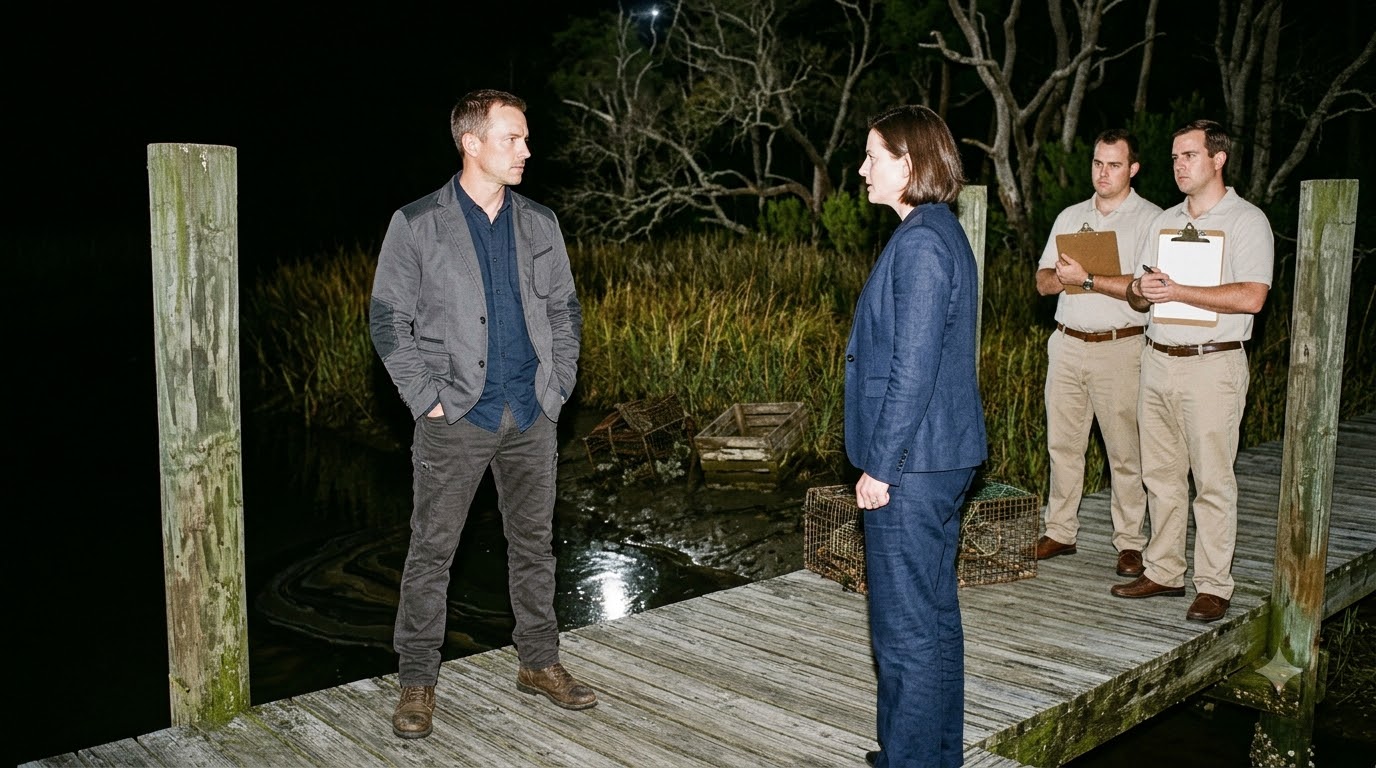
Saraphina Westmont led the group, dressed in pressed navy linen that looked ridiculous against the weathered pilings.
Behind her stood two board members clutching clipboards like shields, their faces set with the severe, humorless expressions of people who spent their lives managing garbage pickup schedules and lawn height regulations.
“You have seventy-two hours,” Saraphina said without bothering to introduce herself, her voice carrying that clipped, conference-room authority. “To dismantle this structure and clear out all fishing equipment.”
I didn’t move. I kept my hands shoved deep into the pockets of my canvas jacket, my fingers brushing against a heavy, jagged ring of old brass keys I’d found on the kitchen counter that morning.
“I closed on this property three weeks ago,” I said, my voice flat, holding back the rising exhaustion of a man who just wanted five minutes of peace. “And I checked the zoning. This pier is entirely on my deed.”
Saraphina didn’t blink. She stepped further onto the planks, testing their weight with a look of supreme condescension.
“Even recreational activities that disrupt community maritime standards violate our neighborhood bylaws,” she said, nodding to the board member on her right, who immediately raised a camera and flashed a bright glare across my face.
The air smelled of stagnant creek water and ozone, cold and heavy against my skin.
I looked past them toward the open channel where the tide was pulling hard against the pilings, realizing with a grim sort of certainty that this wasn’t about a pier at all.
It was about control, and they had picked the wrong person to push.
CHAPTER 2: THE RUSTED RING
The kitchen counter was bare except for a thick layer of fine coastal dust and the massive loop of iron wire holding forty tarnished keys.
I dropped the ring onto the laminate surface with a heavy, metallic clatter that echoed off the empty walls.
Without Victoria Sterling to answer my frantic calls—her office voicemail repeating a polite, immovable out-of-office message—there was no legal safety net to catch whatever mistakes I might make.
I picked up the smallest key on the ring, its teeth worn smooth by decades of friction, and stared at the handwritten tag attached by a brittle piece of twine.
Slip 12 – Fuel Locker.
The previous owner, Harold Peton, hadn’t just been a retiree fishing off the bulkhead; he had left behind a physical puzzle that didn’t match the clean, residential descriptions of the real estate listing.
I walked over to the wooden desk in the corner, where a battered green filing cabinet sat wedged against the baseboard like an afterthought.
The top drawer was locked tight, resisting my tugs until I matched one of the heavier brass keys to its rusted latch.
It turned with a dry, metallic snap that smelled of old iron and trapped moisture.
Inside lay a chaotic stack of handwritten logs, faded harbor maps, and maintenance receipts dating back thirty years.
Near the back of the drawer, pinned beneath a heavy ledger, a single piece of paper caught my eye—a water-stained invoice bearing a crisp corporate routing code that didn’t belong to any local fisherman.
It belonged to the Westmont Homeowners Association.
The realization sat heavy in my chest, cold and undeniable, as I pulled the invoice free and read the numbers scribbled across the bottom.
CHAPTER 3: THE MARITIME MAZE
Without legal counsel to parse the technical jargon, I had to rely on my own background in contract review, breaking down clauses line by tedious line.
The documents spread across the wooden surface formed a dense web of riparian rights, municipal easements, and commercial slip concessions that Harold Peton had maintained for decades.
Every page I turned revealed another layer of operational weight hidden beneath the sleepy residential veneer of the creek.
Slip rentals, fuel depot rights, and dredging maintenance agreements were all tangled together in a corporate structure that ran deeper than any simple backyard dock.
The small room felt increasingly airless as the midday sun shifted, heating up the metal frame of the green filing cabinet beside me.
My eyes ached from reading fine print by natural light, searching for the exact mechanism that gave the homeowners association any leverage over my shoreline.
Instead of finding a loophole favoring their demands, I found something far more startling buried in a township survey map from nineteen ninety-eight.
The entire marina footprint, including the access roads the residents used daily, was legally bound to the commercial slips I now owned.
The ground beneath their feet was part of the very enterprise Saraphina wanted to bulldoze.
CHAPTER 4: THE CLOSED LOOP
The document was a ninety-nine-year lease binding the residential development directly to the marine operations I had accidentally acquired.
Every month, the homeowners association collected mandatory maintenance fees from neighborhood residents, routing those funds straight into the infrastructure supporting the docks.
The very system Saraphina Westmont was threatening to tear down was the financial engine underwriting their own neighborhood access.
It was a neat, bitter irony that painted her aggressive demands in an entirely different light.
She wasn’t protecting community standards; she was actively attacking the financial lifeline keeping her own neighborhood waterfront functional.
I leaned back in the creaking wooden chair, letting the silence of the room press against my temples as the implications settled in.
Without a lawyer to guide my next move, the responsibility rested entirely on my shoulders to present this reality before she could inflict irreversible damage on the local captains and dock hands.
The air in the room felt thick with the weight of what had to be done next.
I folded the lease neatly, slid it into my jacket pocket beside the heavy brass keys, and stepped out toward the door.
CHAPTER 5: THE LEDGER SHOCK
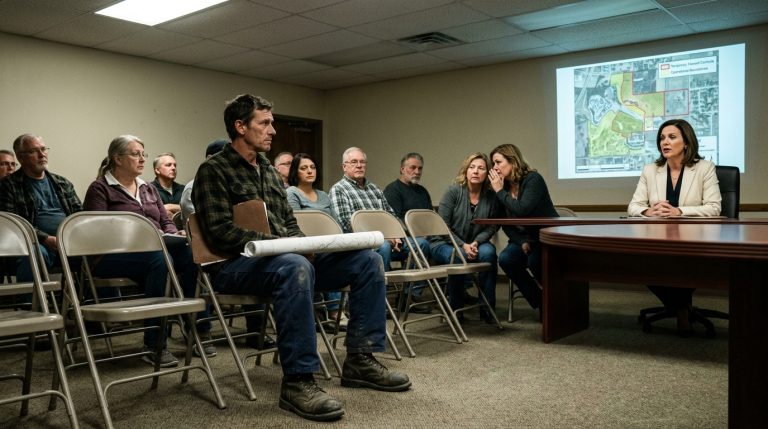
The emergency meeting was already packed with neighborhood residents murmuring anxiously under the fluorescent lights.
Saraphina Westmont stood at the front podium, her posture rigid, her fingers tapping a crisp rhythm against the microphone as she prepared to open the floor to complaints about my pier.
She caught sight of me coming down the center aisle and offered a tight, victorious smile, assuming I had come to surrender the property.
“Mr. Kensington,” she announced into the mic, her voice dripping with artificial sweetness. “I trust you brought your demolition timeline?”
I didn’t answer right away. I pulled the heavy binder of maritime ledgers and the ninety-nine-year lease out of my jacket and slammed them onto the front table with a dry thud that cut through the room’s chatter.
“I brought something better,” I said, my voice cutting across the hall without a hint of hesitation.
Saraphina’s smile faltered, her jaw tightening as she reached for the papers, her fingers twitching with sudden, uncontrolled fury.
“You have no authority to bring commercial documents into a residential assembly,” she snapped, her face flushing a deep, mottled crimson under the harsh lights.
“It’s not just commercial,” I replied, opening the lease directly to the funding clause and pointing my finger at the highlighted routing code. “This is the financial agreement under which every single homeowner in this room pays their monthly maintenance fees.”
The murmur in the hall instantly died, replaced by a heavy, suffocating silence as the neighboring residents leaned forward to look at the numbers.
Saraphina slammed her hand down on the podium, her voice cracking with desperate defiance.
“Lies! Total fabrications meant to harass this board!”
She looked frantically around the room, expecting the usual nods of agreement from the crowd, but found only cold, blank stares and sudden, hostile suspicion.
The trap was fully sprung, and her frantic attempts to double down only exposed the frantic panic of a cornered bureaucrat.
CHAPTER 6: THE QUIET DOCK
The community hall dissolved into a wave of urgent murmurs as the neighborhood residents grasped the full, devastating reality of what their board president had tried to dismantle.
Saraphina scrambled to snatch the papers back, her manicured fingers trembling violently as she dropped her clipboard against the floor with a sharp clatter.
“You’re misinterpreting the clauses—this doesn’t mean what you think it means!” she hissed, her voice cracking as the surrounding crowd stepped back in cold, unified silence.
Instead of shouting back, I simply held my ground, letting the crushing math of her overreach collapse her authority without a single raised voice.
The board members behind her slumped into their folding chairs, their hasty conspiracy evaporating into the harsh fluorescent light.
Within forty-eight hours, Saraphina officially stepped down from her post, leaving behind an association forced to restructure its entire approach to neighborhood governance.
A few months later, the afternoon sun beat down warm and steady against the weathered timber of my property line.
Families crowded the slips for the summer boat rides, laughter and the muffled thrum of engines echoing across the creek.
I stood alone on the edge of the private pier, letting the heavy brass keys sit quietly in my canvas pocket while the scent of salt air filled my lungs.
Harold’s legacy had survived, and the noisy, frantic hostility of bureaucratic control had finally faded into the deep, unbroken calm of the water.