A Fragile Currency: The Secret Exchange Between the Cookie Ghost and the Last Grumpy Veteran
CHAPTER 1: THE INVISIBLE ARCHITECT
The supply closet was not a room; it was a sensory deprivation tank. It smelled of industrial-strength ammonia and the stale, damp wool of discarded blankets. Emma sat on the upturned bucket, her spine pressed against the cold metal shelving that held the hospital’s spare linens.
Her watch, a cheap plastic thing that ticked too loudly in the silence, read 3:15 PM.
This was the transition hour. Outside the closet door, the rhythm of the hospital shifted. The day shift surgeons, with their clipped, hurried footsteps and voices that tasted like stale coffee, were being replaced by the evening staff. The air in the corridor thinned as the heavy doors at the end of the hall hissed shut.
Emma pulled the wax paper bag from her backpack. Inside lay an oatmeal raisin cookie, its edges slightly frayed, a small sacrifice from her own meager lunch. It was a mundane object, yet in the sterile, hostile geometry of St. Jude’s, it felt like a dangerous artifact.
Her mother, Mary, had been clear. Be invisible, Emma. We are lucky Mr. Henderson lets you stay. Do not touch anything. Do not bother the patients.
Emma leaned forward, her ear pressed against the door’s cool wood. She heard the familiar, sharp clack-drag of George, the orderly, as he pushed his mop bucket past her door. He paused. A heavy silence followed, then the soft thud of an apple hitting the floor right outside the crack.
“Floor’s dirty, Emma,” George muttered, his voice a low gravel, never looking at the door. “Better get that before I have to waste my time sweeping it.”
Emma didn’t move. She couldn’t. Her gaze was locked on a sliver of light filtering through a gap in the supply closet’s frame. Across the hall, room 214 remained a closed, mysterious eye. She had heard the growls from that room for weeks—the sounds of a man who was fighting a war against the very concept of care.
She stood up, her sneakers squeaking softly on the tile. The bag in her hand grew heavy. She wasn’t supposed to be here. She wasn’t supposed to be anything but a ghost in the machinery of the hospital. But the growls in 214 had stopped three days ago, replaced by a silence so heavy it felt physical.
She pushed the door open, not even an inch, just enough to see the pale green walls of the hallway. The light was fading, turning the sterile paint into a bruised, sickly color. She stepped out, her movements practiced, her posture minimized.
She took three steps toward room 214, then froze.
Nurse Jacobs was standing at the nursing station, her back to Emma, writing furiously on a chart. The nurse’s pen made a harsh, scratching sound that echoed in the long, hollow hall. Emma’s heart did a strange little flip, a sharp, metallic rhythm in her chest.
She didn’t run. She didn’t retreat. Instead, she took one more step, and the floor tile groaned under her weight—a sharp, high-pitched protest in the silence.
Nurse Jacobs stopped writing. The tip of her pen hovered over the paper. Slowly, impossibly slowly, she began to turn.
CHAPTER 2: THE ANATOMY OF A DRAGON
Nurse Jacobs turned. The movement was slow, deliberate, the starch of her light-blue uniform whispering against her skin like dry leaves. Her face was a mask of rigid lines—a collection of angles and frowns that seemed to have been etched into her expression by years of witnessing pain. Her eyes, magnified by heavy, thick-rimmed glasses, locked onto the small, blonde girl standing in the middle of the hallway.
Emma felt the air in her lungs go thin. She was holding the wax paper bag so tightly that the crinkling sound of the paper seemed to scream in the quiet corridor. Her sneakers, which had been so silent a moment ago, now felt like they were screaming against the linoleum.
“Miss Carter,” Nurse Jacobs said. The voice was not a shout; it was a blade, thin and surgical. “I believe your mother was very specific about the boundaries of your existence in this building.”
Emma didn’t move. She couldn’t. Her mind raced, searching for the mask her mother had taught her to wear—the mask of the quiet, obedient, nonexistent daughter. But her gaze drifted past the nurse, toward the door of room 214. It was still cracked open, a sliver of darkness that seemed to hold a world of its own.
“I—I was just looking for the cleaning supply closet,” Emma lied. The words felt clumsy and heavy in her mouth, hitting the floor like stones. “I think I took a wrong turn.”
Nurse Jacobs took a step forward. The heavy soles of her shoes clicked with a rhythmic, authoritarian precision. She was only ten feet away now. Emma could see the faint, grey stubble of fatigue under the woman’s eyes, the way the overhead fluorescent light caught the harsh, faded texture of her uniform. This was not just a nurse; she was the gatekeeper of the hospital’s misery.
“This is not a corridor for exploration, Emma,” Jacobs said, her voice dropping to a low, warning hiss. “This is a place of transit. People come here to endure, or they come here to leave. You are neither. You are a disruption.”
Emma’s heart hammered against her ribs, a frantic, trapped bird. She felt the weight of the cookie inside the bag. It felt like a confession. If Jacobs looked down, if she noticed the way the wax paper was molded to the shape of the treat, the secret would be pulled into the light, and her mother—her poor, tired mother—would pay the price.
Just as Nurse Jacobs reached out, her fingers tightening on the clipboard she carried, the world fractured.
A sharp, piercing siren erupted from the wall just above the nursing station. It wasn’t the rhythmic chime of a call button; it was a guttural, panicked wail—a Code Blue signal.
Nurse Jacobs’ entire demeanor shattered. The cold, focused intensity she had been directing at Emma evaporated, replaced by a raw, startled reflex. Her head snapped toward the alarm, her shoulders hunching as she lunged back toward the station. The spell was broken. Emma was no longer the primary threat in the corridor; she was just an object, a piece of furniture that had been bypassed by the rush of emergency.
“Nurse, room 210, he’s crashing!” an orderly shouted from somewhere down the hall, his voice cracking with urgency.
Jacobs didn’t look back at Emma. She sprinted past her, her sensible shoes skidding on the floor, the clipboard flapping in her hand. The sudden rush of wind from her movement stirred the air around Emma’s face, carrying the scent of antiseptic and panic.
Emma stood alone in the hallway, the siren’s wail creating a frantic, rhythmic backdrop to her pounding heart. The silence that followed the nurse’s departure was thick with the residue of her authority. Emma looked down at her hands. They were trembling.
She turned and looked back at room 214. The door was still open. The siren continued to blare, masking all other sounds, turning the hospital into a theater of sudden, desperate chaos. This was her chance. Her mother was busy in the laundry room on the lower level, and the hallways were suddenly emptied as staff scrambled to the emergency.
She walked toward room 214. Her steps were no longer those of a girl trying to disappear; they were the steps of a witness approaching a crime scene. She reached the door and pushed it open, just enough to slip inside.
The room was cool, a sharp contrast to the heated, frantic energy of the corridor. It smelled of old newspapers, faint medicinal dust, and a lingering, metallic scent of iron. The man was there, sitting in the high-backed chair facing the window. He didn’t turn. He didn’t move. The television was on, the volume muted, showing a silent, black-and-white western where men on horses chased each other across a dusty, infinite plain.
“You’re loud,” the man muttered without turning. His voice was like dry leaves being crushed underfoot. “You walk like you’re trying to announce your arrival to the entire floor.”
Emma stayed by the door, her hand still clutching the wax paper bag. She saw his reflection in the dark, windowpane glass—a sharp, hooked nose, a shock of white hair that defied the gravity of the room, and eyes that, even in the reflection, seemed to burn with a fierce, restless energy.
“I didn’t mean to be loud,” Emma whispered.
“Nobody ever does,” the man said. He turned his head slowly. The movement seemed painful, the tendons in his neck tightening. He looked at her, his blue eyes narrow and piercing. “You’re the girl. The one who cleans. Why are you here? The dragon is currently busy chasing ghosts in 210. You should be taking advantage of the vacuum.”
Emma stepped further into the room, the texture of the linoleum changing beneath her shoes as she moved from the hallway’s hard traffic to the dust-covered quiet of his space. “I thought you might be hungry,” she said, holding out the bag.
The man stared at the bag for a long moment. A flicker of something passed behind his eyes—not gratitude, but a strange, clinical curiosity. He looked at the cookie, then at the girl, then back to the window.
“Oatmeal,” he guessed. His voice was flat.
“Yes,” Emma said.
“It’s a poor choice,” he grunted, but he reached out. His hand was a map of blue veins and swollen, stiff knuckles. He didn’t take the bag. He waited for her to place the cookie on the napkin.
As Emma stepped closer, she noticed something she hadn’t seen before. On the bedside table, amidst the clutter of medicine cups and half-empty water pitchers, was a small, leather-bound notebook. It was tucked away, shielded from the light, as if it held the only real map of his life.
“You’re a long way from the supply closet, girl,” he said, not looking at her as she placed the cookie down. “Tell me, do you ever get tired of being a shadow?”
Emma hesitated. The question felt like an audit. It felt like he was measuring the weight of her soul.
“My mom says it’s safer,” Emma replied, her voice steadying. “But it gets lonely.”
The man stopped. He didn’t pick up the cookie. He turned back toward her, his gaze locking onto hers with an intensity that made her want to look away. “Loneliness is a choice, not a condition. Remember that. Now, if you’re going to stand there and watch me crumble this dry, pathetic thing, you might as well tell me one thing: what do you see when you look at this hospital?”
Emma looked around—the pale green walls, the flickering overhead light, the man trapped in the chair, the silent TV. “I see a place that’s waiting for something to happen,” she said.
The man’s mouth twitched—the closest thing to a smile she had ever seen on him. “Smart,” he whispered. “Dangerous, but smart.”
He picked up the cookie, his fingers trembling, and for the first time, he looked at her not as an annoyance, but as an equal.
CHAPTER 3: THE OATMEAL OATH
The silence in room 214 was no longer empty; it was heavy, filled with the scratching sound of Hank’s breathing—a jagged, irregular rhythm that seemed to struggle against the oppressive, over-conditioned air of the hospital. Emma stood perfectly still, her heart echoing the irregular beat of his lungs.
Hank’s fingers, gnarled and trembling, hovered over the cookie. He didn’t take it yet. His blue eyes, sharp and watery, were fixed on her with a predatory intensity that bordered on the uncomfortable. He was searching for something—a motive, a weakness, or perhaps the ghost of someone else entirely.
“You didn’t answer me, girl,” he rasped, his voice sounding like gravel being shifted by a slow tide. “Why are you here? People in this place don’t give things away for free. Not the nurses, not the doctors, and certainly not the cleaning staff. What do you want?”
Emma felt a prickle of sweat at her hairline. She thought of her mother’s hands, raw and red from the industrial chemicals, and the stack of bills that always seemed to grow taller whenever they were left on the kitchen counter. But that wasn’t why she was here. The money, the bills, the exhaustion—they were the background noise of her life. Here, in the dim light of 214, the only thing that mattered was the man in the chair.
“I don’t want anything,” Emma said, her voice small but clear. “My mom says I shouldn’t be here. She says you’re the crankiest patient in the hospital. But you weren’t eating. And it seemed… sad.”
Hank let out a sound that might have been a laugh, or perhaps a cough—it was a dry, hollow rattle in his chest. “Sad. You see sadness in a man who wants to be left alone? That’s the problem with children. You’re always looking for a tragedy to fix.”
He finally gripped the cookie. His thumb brushed against her fingertips, and for a fleeting second, Emma felt the heat radiating from his skin—a sudden, surprising warmth in the midst of the hospital’s sterile, refrigerated cold.
He took a bite. He chewed slowly, his eyes never leaving hers. It was an arduous, measured process. He was testing the texture, the flavor, the very effort of the gesture.
“Dry,” he finally pronounced, though there was no malice in his voice. “Just like everything else in this miserable, pale-green purgatory.”
He set the remainder of the cookie down on the napkin, his movements deliberate. His eyes drifted to the leather-bound notebook on his bedside table. The cover was worn smooth, the leather stained with a dark, oily patina of time and use. Emma’s eyes followed his. She noticed, just for a second, a series of dates scrawled in the margins of the cover, written in a cramped, archaic script. One date, October 14th, was circled in thick, aggressive ink—not the date of his admission, but something else entirely, a mark of an appointment he seemed to be tracking.
“You’re curious,” Hank said, following her gaze. It wasn’t a question. “Curiosity is a fatal trait in a place like this. It gets you noticed by people like Jacobs. It gets you fired if you’re not careful.”
“I’m not trying to be curious,” Emma said, though she knew it was a lie. “I just… I saw the book.”
“It’s not a book. It’s a ledger,” Hank countered. He turned his head back to the window, the movement stiff. The television continued to flicker, the silent, black-and-white figures of the old western repeating their desperate, wordless chase. “A ledger of debts. Some paid, some forgotten, and some that are so heavy they’ve kept me awake for forty years.”
Emma wanted to ask him what he meant, but the weight of the moment felt too fragile to push. She took a half-step back, toward the door, feeling the familiar urge to disappear, to retreat into the safe, cramped sanctuary of the supply closet.
“You can go,” Hank said, his tone softening just enough to be jarring. “But come back tomorrow. At 3:30. Not a minute before, not a minute after.”
“Why?” Emma asked, pausing at the threshold.
He didn’t look at her. “Because you’re the only person who hasn’t tried to sell me a pill or a prayer since I checked in. And because, against my better judgment, I’m starting to think you might be able to handle the truth if it ever decides to show up.”
Emma stepped out into the hallway. The siren from the earlier Code Blue had stopped, but the hospital felt different now—less like a prison and more like a stage where a performance was unfolding, one she was now a part of. She walked back toward the supply closet, her sneakers hitting the linoleum with a rhythmic, steady thud.
As she reached the closet door, she glanced back at room 214 one last time. The door was still cracked open, a sliver of darkness in the wall of pale, sickly green. She reached into her pocket and felt the remaining texture of the wax paper bag. Her mother was likely waiting, probably worried, probably tired.
She slipped into the supply closet and shut the door behind her. The small, cramped space smelled of bleach and paper towels, but for the first time, it didn’t feel like a cage. It felt like a cockpit, a place from which she could observe the storm. She sat on her bucket, opened her math book, and tried to concentrate on long division. But the numbers didn’t make sense. Instead, her mind kept returning to the date circled on Hank’s notebook—October 14th.
It was two days from now.
Whatever was coming, whatever Hank was waiting for, she realized with a sudden, sinking clarity, wasn’t just a visitor. It was an event. And for reasons she couldn’t yet articulate, she knew she was expected to be a part of it. The “Oatmeal Oath,” as she silently dubbed it, was only the beginning. The audit had started, and the only thing more dangerous than being invisible was being seen.
CHAPTER 4: THE BREACH
The door of the supply closet clicked shut with a sound of finality that echoed in the tiny, cramped space. Emma leaned her back against the cool, painted metal, her breath coming in shallow, ragged hitches. The scent of bleach was no longer a shield; it felt like a warning.
Outside, the hospital was beginning to return to its rhythmic, miserable hum. The chaos of the Code Blue had subsided, but the residual tension—the sharp, staccato clicks of heels, the frantic, muffled shouts—remained. Emma sat on her overturned bucket, the math book resting forgotten on her lap. Her hands were still slightly damp from the humidity of the hospital, and she wiped them absently against her skirt.
She could still feel the phantom warmth of Hank’s hand on her fingertips. The “Oatmeal Oath” hadn’t just been a pact; it was a shift in gravity. Everything she had known about St. Jude’s—the invisibility, the rules, the careful navigation of Nurse Jacobs’ orbit—was disintegrating.
Click. Static.
The overhead speaker in the hallway crackled to life, the sound vibrating through the thin metal door of her sanctuary.
“Staff update,” a voice drawled—the voice of an administrator, bored and detached. “Routine inventory audit scheduled for the second floor starting immediately. Please secure all supply closets and personal effects. Repeat, routine inventory audit.”
Emma’s heart skipped. Inventory audit.
She looked at her backpack. It contained the wax paper bag, a few schoolbooks, and the weight of a secret that was starting to feel far too large for a 10-year-old to hold. If they checked this closet, if they found the remnants of her “visits,” the narrative of her mother’s hard work would be shredded.
She stood up, her movements tight and controlled. She didn’t have much time. She needed to move the evidence. But where?
As she reached for her bag, she heard the unmistakable sound of footsteps stopping right outside the door. They were heavy, firm, and purposeful. Not the dragon-like click of Jacobs, but the rhythmic, confident stride of someone who didn’t fear the hospital’s rules.
“Emma?”
The voice was George, the orderly.
Emma held her breath. Be invisible. The rule echoed in her mind, but it felt hollow, an old, broken record. She couldn’t be invisible if she was already part of the machinery.
“Emma, I know you’re in there,” George’s voice came again, lower, hushed. “The audit team is coming down the east wing. They’re locking every closet. You need to get out now, and you need to leave the bag behind. It’s not safe.”
Emma opened the door an inch. George was standing there, his large, kind face etched with a rare, anxious concern. He was holding a large, industrial-sized trash bag, his mop bucket set to the side.
“Why are you telling me this?” Emma whispered, her eyes wide.
George looked down the hall, his posture tense. “Because I don’t like seeing good things get thrown in the incinerator, kid. And because Hank… he’s got a way of making people see things they’ve spent a lifetime trying to ignore. Just listen to me. Leave the bag. Go to the cafeteria, stay there until 5:00. Your mother is finishing up the admin wing; she won’t even know you left.”
Emma looked at the supply closet—her small, cramped, safe home—then at George. She realized then that the audit wasn’t just a routine check; it was a purge. And she was the anomaly that needed to be cleaned away.
“Why him?” she asked, gesturing toward the direction of room 214. “Why does he matter so much?”
George looked at her, and for a second, the light in the hallway seemed to dim, casting long, shifting shadows across his face. “He’s not a patient, Emma. He’s a reminder. And people in this place, they hate being reminded of what they’ve forgotten.”
He pressed the trash bag into her hand—not for her to use, but as a shield. “Go. Now.”
Emma didn’t wait for a second invitation. She left the wax paper bag—her only evidence, her only link to the man—tucked away behind the stack of towels on the middle shelf. She slipped out, following George’s path, her movements as quiet as the shadows themselves.
She made it to the cafeteria without being spotted, the smell of burnt coffee and synthetic cleaning agents following her like a ghost. She sat at a corner table, staring at the empty, sterile room. The walls here were the same pale, sickening green as the rest of the hospital, but they felt different now—they felt like they were watching her.
She pulled her notebook out, not the math book, but the one she used to jot down observations about the “cranky” patients. She thought about the date she had seen on Hank’s journal: October 14th.
She realized with a jolt that today was October 12th.
The audit was just the beginning. The hospital was reacting to something—a tremor, a shift in the status quo. Hank had triggered an alarm she hadn’t even recognized, and now, the entire system was turning on her, on him, on the very idea of a simple, oatmeal-raisin exchange.
She looked at her hands. They were trembling, but not with fear. It was an adrenaline-fueled clarity. She was no longer just the maid’s daughter. She was a participant. And as she sat there, watching the clock on the cafeteria wall tick toward 3:30, she realized she was waiting for the next move, for the next piece of the audit to reveal the truth beneath the pale, green paint.
CHAPTER 5: THE WEIGHT OF THE LEDGER
The cafeteria was a tomb of forgotten afternoons. Emma sat, her fingers tracing the worn edge of the formica table, watching the hands of the clock move with agonizing, glacial slowness. 3:20 PM. Ten minutes until the appointment. Ten minutes until she was supposed to be in room 214.
The air in the room tasted of institutional apathy—the faint, lingering smell of overcooked beans and the sharp, chemical bite of floor wax. She felt a phantom vibration in her pocket, the memory of the challenge coin she had hidden there, a weight that felt heavier than the simple metal it actually was. Every time the heavy swinging doors of the kitchen creaked, her heart surged, a frantic, rhythmic protest against the stillness.
She wasn’t just waiting for a time; she was waiting for a signal.
Static-laden hiss.
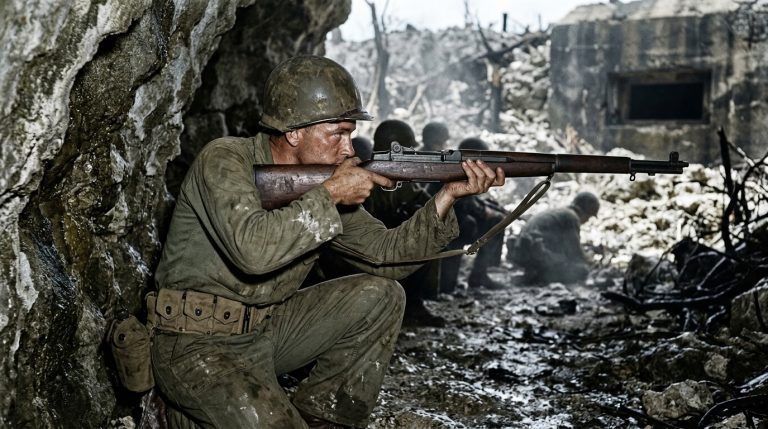
The intercom system groaned again, the sound distorted, echoing with the metallic, sharp clarity of a distant war. For a heartbeat, Emma could hear a voice beneath the static—not the administrator’s, but something deeper, a gravelly, pained rumble that sounded like Elias Carter, her great-grandfather, describing a rain-soaked trench in 1944. “Keep your head down, kid. The mud’s got eyes.”
She blinked, and the cafeteria returned to its dull, beige reality. Her breath hitched. The exhaustion of the last few days—the fear, the constant, low-level hum of survival—was beginning to blur the edges of her perception. She was starting to see the hospital as a battlefield, a sprawling, complex front where every nurse was a sentry and every open door a tactical advantage.
She stood up. The chair made a harsh, grating sound against the floor, a sound that seemed loud enough to wake the dead. She moved toward the exit, her eyes scanning the lobby. The audit team was moving in a phalanx—three men in grey suits, carrying clipboards, moving through the halls with the clinical detachment of a demolition crew. They were checking rooms, their faces masked by the same impenetrable, bureaucratic focus.
She avoided them, hugging the walls, keeping her silhouette broken by the large, bulky trash bins lining the corridor. She felt like a scout. The memory of the journal, the one she hadn’t yet been able to fully read, burned in her mind. October 14th. Two days from now.
When she arrived at room 214, the hallway was deserted. She didn’t pause. She didn’t check for Nurse Jacobs. She pushed the door open and slipped inside, the familiar smell of medicinal rot and old paper wrapping around her like a shroud.
Hank was there, but he wasn’t looking out the window this time. He was sitting at the edge of the bed, his back hunched, his hands resting on his knees. The leather notebook was open on his lap, and he was staring at the pages as if he were reading a script for a play that had already ended.
“You’re late,” he said, though his voice lacked its usual bite.
“I had to hide,” Emma whispered, closing the door and latching it. “The audit. They’re everywhere, Hank. They’re clearing the floors.”
Hank looked up. His face, usually a map of sharp, angry angles, seemed to have softened, the wrinkles around his eyes appearing like deep, ancient canyons. “It’s a purge. They know.”
“They know what?” Emma asked, stepping closer.
Hank held up the notebook. “That I’m not just waiting for the end. I’m waiting for the transition.” He gestured toward the room, the pale green walls, the sad, naked mattress. “They think they can audit a man’s life by looking at his balance sheet. They don’t understand that the currency here isn’t money. It’s memory.”
He reached into the folds of his hospital gown and pulled out a small, heavy, brass-colored object. He held it out to her. It was the challenge coin.
“You didn’t keep it,” he observed, his eyes tracing the movement of her hand as she reached for it.
“I didn’t know if I should,” Emma admitted.
“You should,” he said. “It’s a pass. When the audit gets too close, when the green walls feel like they’re closing in, you hold that. You remember that there was a time when men were more than just names on a chart.”
He leaned back, his eyes fixed on the ceiling. “My father was a coward, Emma. He died screaming for a nurse who didn’t care. I promised myself I’d never die like that. But then I survived. I survived the trenches, the shipping lanes, the boardrooms. I survived everything, only to find that survival is the most expensive thing you can buy.”
The room seemed to shrink. Emma felt the weight of his words pressing down on her, an emotional inheritance she wasn’t sure she could sustain. She looked at the notebook, at the circled date—October 14th—and realized, with a sudden, cold clarity, that the date wasn’t an appointment. It was a countdown.
The audit team was getting closer. She could hear the rhythmic clack-click of their shoes in the hallway, the sound of clipboards and questions.
“They’re at 212,” Hank said, his voice calm, almost detached. “They’ll be here in three minutes.”
“What do we do?” Emma asked, her heart racing.
Hank didn’t answer. He just looked at the door, his eyes clear and steady. “We wait. And we don’t blink. The audit only works if you agree that you’re a line item. Today, we break the ledger.”
The footsteps grew louder. Emma stood by the bed, the coin heavy in her palm, waiting for the breach.
CHAPTER 6: THE BREACH OF THE LEDGER
The knock was not a request; it was a rhythmic, authoritative strike against the wood—three deliberate blows that rattled the door frame. Emma stood frozen by the bed, the challenge coin still cold and sharp in her palm. Hank didn’t flinch. He remained seated, his eyes fixed on the door, his posture one of calm, deliberate defiance.
“Open it, girl,” Hank whispered, the instruction so soft it was barely audible above the hum of the air conditioner. “Let the ledger speak for itself.”
Emma moved to the door. Her hand felt clumsy as she gripped the handle. She twisted it, and the heavy door swung inward.
The hallway was filled with the grey-clad auditors. The leader, a man with a thin, sharp face and a clipboard that looked like a weapon, didn’t wait for an invitation. He stepped into the room, his eyes scanning the space with the detached, clinical efficiency of a scavenger. Behind him, the other two auditors crowded the doorway, their presence turning the room into a cramped, suffocating box.
“Mr. Porter,” the leader began, his voice devoid of any human inflection. “We are conducting a routine inventory audit of all patient assets and documentation. Please step away from the bedside table.”
“There is nothing here that belongs to you,” Hank said, his voice rising, carrying a strength that defied his frail appearance.
“Everything in this facility is subject to administrative review,” the man countered, moving toward the table. His hand hovered over the leather-bound notebook.
Emma felt a surge of protectiveness—a sudden, fierce clarity. She stepped forward, her body positioning itself between the auditor and the bed. “That’s his,” she said, her voice steady. “It’s not an asset. It’s a journal.”
The auditor looked at her, his eyes cold and curious. “And you are the visitor who has been defying hospital policy. We have a report, Miss Carter. Your presence here is deemed a liability to the patient’s psychological recovery.”
Before Emma could respond, a sudden, high-pitched alarm began to shriek in the next room—a frantic, rhythmic wail that signaled an urgent crisis. One of the auditors in the doorway flinched, his focus momentarily shifting toward the noise. The leader’s gaze flickered, the distraction pulling at his rigid, bureaucratic mask.
In that heartbeat of hesitation, Hank reached out. His hand, swift and surprisingly firm, grabbed the leader’s clipboard. He didn’t pull it away; he tapped the page—the one the man had been writing on—with a blunt, accusing finger.
“Read the fine print, son,” Hank growled, his eyes locking onto the man’s. “Article 4, Section 2 of the Veterans Hospital Charter. No patient document can be audited without an attorney present if the patient has declared a legal trust. I declared mine this morning.”
The auditor stopped. The room went still, save for the wailing alarm next door. His face clouded with confusion. “That’s… that’s not possible. Our system didn’t flag a trust.”
“Your system is a collection of faulty circuits and compromised data,” Hank retorted, his voice gaining momentum. “You’ve been auditing the wrong ledgers. You’ve been looking for numbers, for accounts, for things you can touch. But you haven’t been looking at the truth.”
Emma watched as the auditor’s confidence began to fray. The leader looked down at his clipboard, his brow furrowing as he scanned the paper. He was searching for a contradiction, a loophole to restore his sense of order, but he was struggling.
“You’re wasting your time,” Hank continued, his voice dropping to a low, intense register. “While you’re busy checking sheets and counting pillows, the story is being rewritten. You think you’re in control? Look at the girl. Look at the coin. You’re not auditing a patient. You’re auditing a history you’re not prepared to reconcile.”
The auditor looked at Emma, then at the coin in her hand, the brass glinting under the harsh overhead light. He stepped back, his presence shrinking, his authority leaking away into the stagnant air of the room.
“We… we will need to verify this,” the man muttered, his voice lacking its previous conviction. He turned toward the door, gesturing for his team to follow. “The audit is suspended, pending further administrative review.”
They retreated, their footsteps hurried, leaving the room in a heavy, echoing silence. Emma looked at the door as it swung shut, the latch catching with a soft, final click.
She turned to Hank. He was breathing hard, the exertion of the confrontation clearly taking its toll. He sank back against the pillows, his face pale, but his eyes were bright—almost triumphant.
“Did you… did you really declare a trust?” Emma asked.
Hank allowed himself a ghost of a smile—a slow, tired expression that reached his eyes. “I declared a reality, Emma. Sometimes, in this world, that’s just as good as a legal document.”
He reached for the notebook, opening it to the last page. He handed it to her. “Read it,” he said. “The entry for October 12th. Today.”
Emma took the book. Her fingers touched the pages, the paper feeling rough, almost like skin. She read the cramped, shaky cursive: The ghosts have arrived, but they have no idea what they’re looking for. The girl is the key. The audit is the trigger. Tomorrow, the truth begins to surface.
She looked up, the weight of the realization crashing down on her. The audit wasn’t the enemy; it was the catalyst. And she was the one who had to carry the ledger into the light.
CHAPTER 7: THE INHERITANCE OF ECHOES
The room felt like it had been vacuum-sealed. The sound of the retreating auditors faded into the general, antiseptic hum of the hospital, but the tension remained, vibrating in the floorboards like a low-frequency hum. Emma stood where she was, the notebook pressed against her chest. She looked at the door, half-expecting it to burst open again, but there was only the oppressive, stagnant quiet.
Hank moved, a slow, rattling transition from his seated position to a standing one. He leaned heavily on the metal railing of the bed, his knuckles white, his breath a labored, rhythmic wheeze. He looked toward the corner of the room, where a nondescript, dust-covered footlocker sat—the object that had been overlooked by the auditors in their haste.
“They didn’t see it,” Hank whispered, his voice tinged with a grim, exhausted humor. “They were so busy looking for digital trails and financial ghosts that they missed the only thing that actually matters.”
He gestured for Emma to bring the notebook over. As she approached, she felt a slight shift in the binding, a subtle, rhythmic thunk against the palm of her hand. She paused, her heart stuttering. She flipped the notebook over, pressing against the spine, and a small, jagged piece of brass slipped out, catching the light like a fallen star. It was a key—old, hand-wrought, and covered in a fine layer of aged oil.
“It was in the journal,” Emma said, her voice barely a breath.
Hank’s eyes widened, the fierce blue flickering with an sudden, sharp spark of recognition. “Elias’s key,” he breathed. He reached out, his hand trembling uncontrollably as he took the key from her. He looked at it as if he were seeing a dead man’s face. “He told me he’d hidden the truth, but I always thought he was talking about the medal. He was talking about the locker.”
He moved toward the footlocker, his gait uneven, the weight of his years suddenly pressing down on him. He knelt—a slow, painful descent—and inserted the key into the lock. It turned with a sound like a gunshot—a sharp, rusted crack that echoed through the room. The latch fell open.
Inside, there was no money. There were no deeds, no stocks, no evidence of the billionaire life the auditors had been hunting. Instead, the footlocker was filled with letters—hundreds of them, tied in bundles with frayed, military-grade twine. Beneath the letters lay a photograph, the edges curled and yellowed, showing two young men in uniform, standing in front of a ruined brick wall. One was the man from the picture frame in Emma’s apartment—Elias Carter. The other was a younger, unrecognizable version of the man currently kneeling on the floor.
“He didn’t just save my life,” Hank said, his voice thick with a raw, suffocating grief. “He gave me his existence. When we were in the field, we switched packs. He took the one with the orders, and I took the one with the personal effects. He died under my name, Emma. And I lived under his.”
Emma knelt beside him, the cold linoleum biting into her knees. The revelation didn’t hit her with a crash; it settled over her like a heavy, suffocating blanket. The man she had been bringing cookies to wasn’t just a veteran; he was a man who had been living a borrowed life for forty years, a man whose entire identity was built on the foundation of a friend’s final, selfless act.
“The money,” she whispered, her voice trembling. “The trust…”
“It’s not mine,” Hank said, his eyes welling with tears. “It belongs to the family of the man who died. It belongs to you.”
The room seemed to tilt. The logic of the audit, the legal threats, the greed of the Porter descendants—it all shriveled into insignificance. The truth wasn’t about inheritance; it was about restitution.
“They’ll never stop, you know,” Hank said, glancing toward the door. “The Porters. They want the lie. They want the billionaire name, the legacy, the surface-level power. If they find out the truth—if they find out that their father was a man who stole a life—they’ll burn this building down to keep it quiet.”
Emma looked at the letters, the bundles of twine, the photograph. She realized now why George had been so anxious, why the audit team had been so desperate. They weren’t just looking for money. They were looking for the proof that the empire was built on a vacuum.
“We have to get this out,” Emma said, her voice hardening. “We have to hide it.”
“I’m too tired to hide anymore, Quartermaster,” Hank said, his hand resting on the photograph. “But you… you have the heart of a Carter. And for the first time, you have the weight of the truth.”
He closed the footlocker and slid the key into her hand. “The audit team will be back. They’ll bring the lawyers, the Porters, the whole machinery. You have to take this. You have to find a way to make it count.”
The sound of footsteps—heavy, multiple, and purposeful—began to resonate in the hallway. They were closer this time, accompanied by the stern, measured voice of Mr. Graves, the hawk-faced attorney.
“We have an order, General,” Graves was saying. “Search and seizure. Total asset freeze.”
Emma grabbed the footlocker, the weight of it surprisingly light, as if it held nothing but air and echoes. She looked at Hank, who had collapsed back against the bed, his breathing shallow, his eyes closing. He had finished his part of the exchange.
“I’m not leaving you,” Emma whispered.
“You’re not leaving me,” he replied, his voice a fading rasp. “You’re taking the truth where it belongs.”
The door handle began to turn. Emma scrambled toward the window, the fire escape ladder visible through the pane, the only way out of the shrinking, closing trap of room 214. The audit was over; the reckoning had begun.
CHAPTER 8: THE BLUE DOOR
The metal of the fire escape was slick with a thin, evening dew. Emma stepped out, the footlocker clutched against her chest like a shield. Behind her, the door to room 214 was being battered by the weight of the men on the other side. She didn’t look back. She moved with a strange, sudden fluidity—the calculated motion of someone who had stopped trying to disappear and had started trying to survive.
She descended the ladder in the dark, her sneakers finding purchase on the rusted, vibrating rungs. The ground, when she reached it, felt solid and unyielding. She didn’t head for the front of the hospital, where the black sedans of the Porter estate were parked. She slipped through the shadows of the loading docks, past the hum of the industrial laundry machines where her mother had spent years of her life, and out into the cooling, autumn air of the city.
The resolution didn’t come in a courtroom or a boardroom. It came in a small, white house with a blue door, weeks later.
The transition was a slow, methodical peeling away of the old life. General Sinclair proved to be the pillar he promised to be; the legal storm that followed the night of the “breach” was, as he had predicted, a war of attrition that the Porter descendants were ill-equipped to fight. When the truth of Elias Carter’s sacrifice and Hank’s borrowed identity was presented in the cold, unyielding language of evidence, the empire didn’t shatter—it dissolved. The Porters weren’t defeated by fire or fury; they were defeated by the simple, devastating weight of the ledger.
Emma sat in the quiet of the new house. It was a simple place, filled with the warmth of sunlight and the scent of cinnamon. Her mother, Mary, had stopped checking the mailbox for late notices. The tension that had defined their existence, the constant, low-level hum of being “invisible,” had been replaced by a silence that felt like peace.
She opened the footlocker. It sat on the rug, the dark green metal stenciled with E. Carter. Inside, the letters were no longer just paper; they were a bridge. She spent her afternoons reading them, learning about a man who had existed in the mud and the rain, a man who had chosen to be a hero in a world that never knew his name.
She picked up the photograph. The face of the man who wasn’t Hank looked back at her—young, hopeful, and entirely unaware of the forty years of guilt that would follow his death.
1) The Payoff: The final deposition had been the end of the Porters. They hadn’t faced prison, but they had faced something worse: insignificance. Without the foundation of the Porter name, without the access to the trust, they were exposed for what they were—shallow, fragile, and entirely lost. They had walked out of the courtroom and into a silence that would consume them.
2) Poetic Justice: They were defeated by the very system they relied upon. The ledger, the precise, obsessive record-keeping that Hank had cultivated to spite them, became the instrument of their undoing. The man who had spent his life hoarding power was ultimately undone by the man who had spent his life hoarding memories.
3) The Cool Down (Denouement): The air in the house was still. A soft, evening breeze moved the curtains, revealing a small garden where Mary was tending to a row of sunflowers. The intensity of the hospital, the metallic scent of bleach, the sound of boots on linoleum—it all seemed like a dream, a fading echo of a life she was no longer living.
4) Symbolic Closure: Emma walked to the front porch. In her hand, she held a small, brass-colored repair kit. She had spent the last few days repairing the latch on the footlocker, smoothing out the rust, making the hinge move with a clean, silent grace. It wasn’t just about the box; it was about honoring the history inside. She finished the repair, the latch clicking into place—a sound of finality that felt like the closing of a long, arduous chapter.
5) Character Arc: Her mother appeared in the doorway, her hands dusted with soil, a tired but genuine smile lighting her face. She reached out and tucked a strand of blonde hair behind Emma’s ear.
“You’re not hiding anymore, are you?” Mary asked.
Emma looked at the blue door, then out at the neighborhood—the quiet, orderly street, the neighbors walking their dogs, the simple, beautiful reality of a life that didn’t require permission.
“No,” Emma said. “I think I’m finally ready to be seen.”
She felt the challenge coin in her pocket, the weight of it familiar and grounding. She was the quartermaster of her own history now. The ledger was closed, the truth was out, and for the first time in her life, the future didn’t look like a set of rules to be followed. It looked like a horizon to be explored. She walked toward her mother, the grass soft beneath her feet, and entered the house, leaving the shadow of St. Jude’s behind in the cooling, twilight air.