A Ghost in the Courtroom: The Silent Echo of a Soldier’s Unspoken Sacrifice and Redemption
CHAPTER 1: THE WEIGHT OF SILENCE
The courtroom was a sterile, wood-paneled box that smelled faintly of lemon polish and human anxiety. Judge Albbright sat behind the mahogany bench, his face a map of irritation that deepened with every tick of the clock.
“Mr. Stewart, let me ask you again,” the judge said, the words dripping like thick, slow honey. “Do you find these proceedings amusing, or are you simply too old to understand the gravity of your situation?”
James Stewart, eighty-three years old, sat perfectly still. His back was a straight line of iron, a posture that clashed with the frayed cuffs of his faded tweed jacket. His hands rested on the table—gnarled, sun-spotted, and completely unmoving. He wasn’t looking at the man in the robe. His gaze was fixed on the great seal of the state on the wall behind the bench, his pale blue eyes focused on something millions of miles—and decades—away.
Beside him, Ben Carter, the young public defender, shifted so violently his chair let out a sharp, protesting screech. “Your honor, my client understands completely,” Ben began, his voice thin, trying to bridge the gap between the judge’s booming, manufactured anger and James’s unsettling calm.
“Does he?” Albbright snapped, cutting him off with a flick of his wrist. “Because from where I’m sitting, I see a man who has shown nothing but contempt for this court. A simple traffic citation, Mr. Stewart. A failure to yield. And you have dragged this out, refusing the plea, forcing this to trial, wasting the taxpayer’s money.”
The citation was a lie, of course. A teenager in a sports car had nearly sent James’s old truck into a ditch, and the responding officer, a friend of the boy’s father, had pinned the blame on the man who had the least to lose. It was a petty, small-town injustice. But to James, it wasn’t about the ticket. It was about the truth. He had spent his life navigating a world of absolute, bone-deep integrity, and he could not let a lie stand, not even here.
Albbright’s face reddened. He leaned forward, sensing that the silence wasn’t a lack of comprehension, but a lack of fear. “Look at me when I’m speaking to you, sir,” the judge commanded.
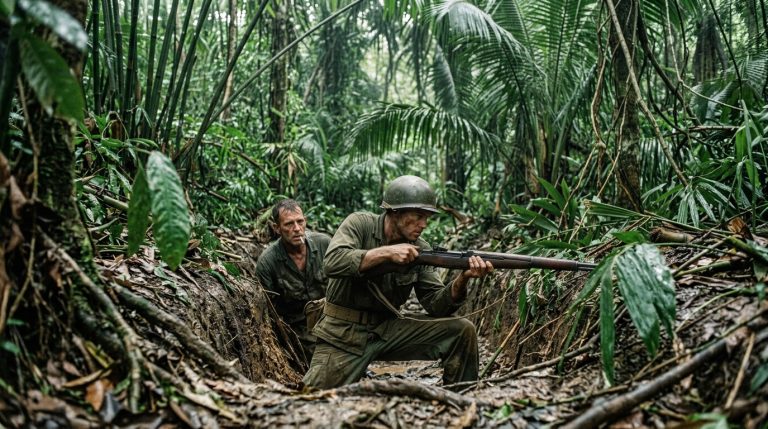
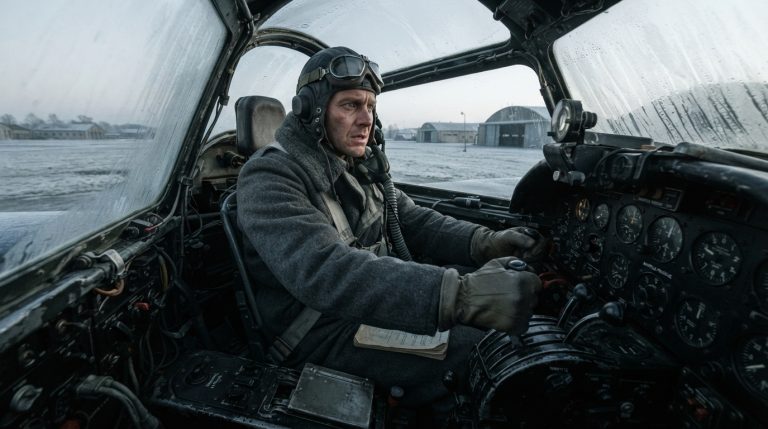
James didn’t move. He felt the familiar, phantom pull at his right wrist, right under the cuff of his shirt where the faded, blurred tattoo hid from the world. It was a stylized ghost—an ink-drawn memory of a promise made in a smoke-filled tent. The air in the room seemed to shimmer. For a fleeting second, the hum of the courtroom’s air conditioning morphed into the thrumming, rhythmic heartbeat of rotor wash over a canopy of dark, impenetrable trees.
He wasn’t sitting in a courtroom. He was listening to the ragged breathing of a man from Ohio who was never coming home.
Albbright’s voice cut through the memory, jagged and cruel. “I’ve seen your type before, Mr. Stewart. Men who talk a big game about service and sacrifice, but when it comes down to basic civic obedience, they crumble. It’s a kind of cowardice, if you ask me.”
The word hung in the air—cowardice—and for the first time, James felt the sharp, cold needle of reality pierce his mask. He looked down at his hand. His thumb twitched against his wrist. He was holding onto a secret that was killing him slowly, and the man on the bench had no idea he was playing with a live wire.
He didn’t have an answer, and he knew that silence would only push the judge further, but he couldn’t speak. Not yet. Not while the ghost of the boy from Ohio was still waiting for him to tell the truth.
CHAPTER 2: THE BREAKING POINT
The silence in the room had a texture, thick and abrasive like sandpaper rubbed against an open wound. James kept his gaze on the state seal, but the wood-paneled wall seemed to be dissolving, replaced by the flickering, humid shadows of an Echo Valley night. He could hear the low, wet gurgle of Miller’s breathing, a sound that had played on an endless loop in his mind for forty years, muffled now by the rhythmic, monotonous clacking of the judge’s pen against the mahogany bench.
Judge Albbright wasn’t finished. He seemed to feed on the silence, his ego expanding to fill the void James refused to provide. “I’ve seen your type before,” the judge repeated, his voice rising, shedding its professional veneer for something sharper, more predatory. “Men who think their past, whatever mundane administrative tasks they performed behind a desk, grants them immunity from the rules that govern the rest of us.”
James felt the vibration in his right wrist again—a dull, rhythmic ache right beneath the skin where the ghost tattoo hid under his sleeve. It was an involuntary reaction, a signal from a part of his brain that refused to stay buried. He focused on the wood grain of the defendant’s table. He traced a small, jagged scratch in the varnish with his thumbnail, trying to anchor himself to the present. If he let the ghost of the jungle gain any more ground, he knew he would lose the thread of the courtroom entirely. He had to be precise. He had to be careful.
“Mr. Stewart,” Ben Carter whispered, his voice frantic, laced with a fear he couldn’t quite mask. He leaned closer, his sleeve brushing James’s arm. “Please. Just nod. Just say you’re sorry and we can get out of here. He’s looking for a reason to escalate this, and you’re giving it to him.”
James didn’t turn his head. He couldn’t. His peripheral vision was filled with the swaying green of jungle canopy. “I won’t lie, Ben,” he murmured, the words so quiet they barely carried across the two feet between them. “Once you start lying, the truth becomes a foreign language you forget how to speak. I won’t lose it.”
“You’re going to lose your freedom!” Ben hissed back, his hands trembling as he shuffled his legal papers. “Look at him. He’s not a judge right now; he’s a man with a hammer looking for a nail.”
Up on the bench, Albbright leaned back, his eyes narrowing as he watched the two men whispering. He interpreted their hushed consultation as a sign of weakness—a frantic attempt to concoct a defense that didn’t exist. The judge’s lips curled into a thin, triumphant line. He stood up, his robe swishing with the sound of dry leaves, and descended the single step to the floor of the court. He paced, his gait measured, theatrical.
“Is there a problem, Counsel?” Albbright asked, his tone dripping with mock concern. “Or is your client still deciding if he’s above the necessity of answering a direct question?”
James finally turned. He looked at the judge, not with the defiance of a rebel, but with the weary, patient gaze of a man who had seen men like Albbright lose their way in the dark a thousand times before. James’s eyes were pale, washed-out blue, yet they held an unsettling clarity that seemed to catch the judge off guard.
“I am not above the law, Your Honor,” James said, his voice steady, devoid of tremor. “I am simply waiting for you to ask a question that pertains to the citation. My service, or lack thereof, is irrelevant to a failure to yield.”
The courtroom went deathly quiet. A spectator in the back row shifted, the movement sounding like a gunshot in the stagnant air. Albbright stopped pacing. The vein in his temple began to throb, a faint purple shadow against his pale skin. He looked insulted, not by the words, but by the calm, measured rhythm of the delivery. He had expected a blustering protest, a defensive stutter—anything other than this surgical rejection of his power.
“Irrelevant?” Albbright’s voice dropped to a silky, venomous whisper. He stopped directly in front of James, his face inches away. The smell of his cologne—sharp, citrusy, and clinical—clashed with the dusty, metallic scent of the aging courtroom. “I decide what is relevant in this room, Mr. Stewart. And right now, your lack of respect is the most relevant thing here. I’m beginning to think there is a profound cognitive disconnect between your reality and the one we all inhabit.”
James felt his hand tighten on the table. The ghost tattoo itched, a phantom fire under his skin. He felt the cold metal of a radio handset in his palm, heard the frantic call sign—Spectre, come in, we’re compromised—and for a split second, the courtroom lights flared with the strobe-flicker of a flares-out signal in the night.
“Counsel,” Albbright continued, not breaking eye contact with James, “if your client cannot provide a coherent justification for his continued defiance, I am going to have to consider a different approach. A sanity evaluation might be the only way to determine if he’s even fit to stand trial.”
Ben Carter’s jaw clenched, his knuckles whitening on his tablet. He looked at James, waiting for the break, the moment when the old man would finally snap and reveal the rage he knew must be boiling underneath that calm exterior. But James simply inhaled, a long, slow breath that seemed to pull all the oxygen out of the space between them.
“I am quite sane, Your Honor,” James said softly. “I simply don’t recognize the authority of a man who values his own ego more than the truth.”
The judge’s face didn’t just turn red; it darkened, the blood pooling under the skin with a terrifying suddenness. He didn’t scream. He didn’t shout. He turned, walked slowly back to his bench, and sat down. He didn’t look at James anymore. He looked at the court reporter, his hand hovering over the gavel as if it were the only anchor he had left in a world that had just dared to talk back to him.
“Very well,” Albbright said, his voice terrifyingly calm. “Bailiff, remove the jury. We are moving to a closed session. It appears we have a matter of competency to resolve.”
As the courtroom began to stir, the shuffle of feet and the murmur of confused spectators rising like a tide, Ben leaned in, his voice a panicked, jagged whisper. “James, what are you doing? You’re pushing him into a corner he won’t come back from. If he sends you to the hospital for an evaluation, they’ll bury you in red tape.”
James didn’t answer. He watched the bailiff move toward him, his own hand drifting toward his pocket, not for a weapon, but for the reassurance of his own heartbeat. The trap was springing, just as he had expected. He wasn’t afraid of the hospital; he was afraid of what he might see in the mirror once he was inside.
CHAPTER 3: THE CALL IN THE DARK
The bailiff’s palm settled onto the wool of James’s jacket, not with force, but with a tentative, almost apologetic weight. He was a man who had spent twenty years ushering people in and out of trouble, and he knew the feel of a defendant who was ready to fight. But James didn’t fight. He didn’t lean away or stand up. He remained as anchored as an old, sun-bleached pier piling.
In that silence, the courtroom’s ambient hum—the drone of the air conditioner, the faint scratch of the stenographer’s keys—became agonizingly sharp. Ben Carter stood up, his chair clattering loudly against the linoleum. The sound made him wince. He adjusted his tie, his fingers snagging on a loose thread, a small, fraying detail that mirrored his own unraveling state of mind.
“Your Honor,” Ben said, his voice straining to maintain a veneer of professional distance, “a psychiatric evaluation for a traffic infraction is a procedural escalation that warrants—”
“SIT. DOWN.” The judge’s voice didn’t boom; it sliced, thin and cold. Albbright remained behind his bench, his fingers drumming a frantic, irregular rhythm on the mahogany. He was watching James, his eyes narrowed, searching for a twitch, a blink, a sign of the ‘senility’ he had projected onto the old man to justify his own escalating fury.
James looked at Ben. For a flicker of a second, the older man’s expression softened, a brief, wordless plea for the younger lawyer to step back. Then, James turned his gaze back to the bailiff. “I am ready,” James said, his voice a low, steady hum that seemed to vibrate through the wood of the table.
As the bailiff began to lead him toward the side door, Ben felt a sudden, cold clarity settle in his gut. He thought of the small, blurred tattoo he had glimpsed during their first meeting—the one James had tried to cover with a stiff, heavy cuff. He thought of the way James hadn’t looked at the judge once, even when insulted; he had been looking past him.
Ben didn’t sit down. Instead, he reached for his legal pad, shielding his hand with the oversized screen of his phone. His fingers flew across the glass, every movement practiced, hidden, and desperate. He had one contact who might know. A man he’d served with in the JAG Corps, a Master Sergeant named Miller now stationed at Vandenberg.
He didn’t have time for pleasantries. He typed, his pulse drumming against his fingertips: I’m in 4B. Judge Albbright is railroading an elderly vet named James Stewart. He’s pushing for a psych eval just to break him. Something is fundamentally wrong here. Stewart isn’t just a man on a ticket. He has a Spectre emblem, faded, on his wrist. Run the name. For God’s sake, run the name.
He hit send. The screen flickered, the signal bar dropping for a heartbeat before snapping back. Delivered.
Ben watched James disappear through the heavy double doors. The bailiff, looking uneasy, glanced back at the judge, who was now busy reviewing papers with a manic, obsessive focus. Albbright was talking to the court reporter, his voice an agitated, disjointed murmur about “structural integrity” and “disrespect.” The judge was spiraling, and the more he spiraled, the more Ben realized that he was the only one in the room who understood the volatility of the situation.
Ben slipped the phone back into his pocket. His hands were damp. He stood in the middle of the quiet, empty courtroom, the air suddenly feeling thin. He thought of the way the bailiff had recoiled when James looked at him—a physical reaction, a reflexive pull-back from something the bailiff couldn’t name but clearly felt.
He moved toward the defense table to collect his files, his movements slow and deliberate. He needed to buy time. He needed the judge to stay occupied with his administrative delusions until that text reached someone who understood the weight of the name ‘Spectre.’
“Counsel!” Albbright barked, not looking up from his stack of folders. “I assume you have no further objections to the competency hearing?”
“No, Your Honor,” Ben said, his voice steadying, hardening. “I just need a moment to arrange for my own expert testimony, as is my client’s right.”
“Expert testimony,” the judge snorted, finally looking up. His eyes were bloodshot, his face a landscape of flushed, uneven color. “You’ll get an hour. After that, the order is filed. Do not waste my time, Mr. Carter. We are done here.”
Ben walked out of the courtroom, his footsteps echoing on the hard floor. He reached the hallway and found a quiet corner near the water fountain. He checked his phone. No reply. He waited, the silence of the building pressing in on him, the fluorescent lights humming overhead with a sound that felt like a warning. He felt like a man holding a match in a room full of gasoline, waiting for a spark that might never come—or one that might burn everything down.
CHAPTER 4: THE RESPONSE
Master Sergeant David Miller stood in the center of his office, the logistics reports he had been filing a moment ago now nothing more than scattered white wings across the linoleum floor. He stared at his phone, the screen still glowing with the urgent, fractured message from Ben Carter. The name—James Stewart—echoed in his mind with the force of a physical blow. He had served with Ben in Bagram, had shared the same tepid coffee and the same grim silences that followed a bad deployment. He knew Ben wasn’t prone to hyperbole.
Miller didn’t take the time to reorganize his desk. He turned, the heels of his boots clipping sharply against the hard flooring of the corridor as he sprinted toward the administrative wing. He bypassed the junior airmen and the civilian contractors, his focus narrowed to a singular point: the office of Colonel Matt.
He didn’t bother with the formality of a knock. He thrust the door open, his breathing heavy, his chest tight. “Sir,” Miller gasped, his voice cutting through the quiet order of the Colonel’s workspace. “We have a potential Code Ghost situation.”
Colonel Matt, a man whose placid, granite-featured demeanor was the stuff of legend at Vandenberg, didn’t flinch. He looked up from his secure terminal, his eyes instantly shifting from administrative boredom to tactical focus. “Explain, Sergeant. Now.”
Miller crossed the room in three long strides, thrusting his phone onto the desk. “A contact in the Santa Maria Superior Court. A traffic hearing involving an elderly man, James Stewart. He’s being held by a judge—Albbright—who is forcing a psychiatric evaluation. The contact mentioned a tattoo, sir. A Spectre emblem.”
The air in the room seemed to go stagnant. Colonel Matt’s hands, which had been resting steadily on the desk, curled into tight, white-knuckled fists. He leaned back, his chair creaking in the sudden, oppressive quiet. “Spectre,” he repeated, the word sounding less like a name and more like a warning. He stood up, his movements fluid and precise, and walked to a secondary, high-clearance terminal in the corner. “If that is who I think it is, Sergeant, that judge isn’t just making a mistake—he’s signing his own professional death warrant.”
Matt’s fingers moved across the keyboard, the clicks rapid, rhythmic, and aggressive. A login prompt flashed, demanding credentials that weren’t listed in any standard operational manual. He bypassed the standard directory, entering a series of codes that Miller, despite his years of service, had never even seen.
The screen flickered. A deep, resonant crimson pulse illuminated the room.
CLASSIFIED SISSY/TK – GHOST PROTOCOL ACTIVE
Miller watched the Colonel’s face. The color had drained from Matt’s skin, leaving him looking suddenly, profoundly old. “My God,” the Colonel whispered, his voice barely audible above the low, mechanical drone of the computer’s cooling fans. He didn’t turn around; he kept his eyes fixed on the screen, where lines of service history and redacted mission logs were beginning to scroll in a waterfall of classified text. “He’s in a traffic court. They’re treating him like an inconvenience. Like a piece of forgotten inventory.”
“What do we do, sir?” Miller asked, his own voice sounding thin and distant.
The Colonel turned back, his expression a mask of professional, ice-cold fury. He reached for the secure phone, the one that sat in a dedicated, soundproofed alcove of the office. “We notify the Pentagon,” Matt said, his tone leaving no room for question. “I want General Kraton on the line. And Miller?”
“Sir?”
“Get two dress-uniform details in a vehicle. Not for a fight. For an escort. If that judge thinks he’s going to continue this farce for one more hour, he’s about to find out exactly what happens when you disturb a ghost.”
The Colonel punched in the number from memory, his movements devoid of hesitation. As he began to speak—his voice clipped, authoritative, and terrifyingly calm—Miller backed toward the door. He felt a sudden, strange detachment from the reality of the airbase around him. He thought of Ben Carter, standing in a small-town courtroom, holding a thread that he had no idea was actually a steel cable.
Miller stepped out into the hallway, the base’s daily operations continuing around him in a blur of mundane activity. He passed an airman carrying a tray of coffee, the steam rising in the cool, filtered air. It felt like a different universe. He had spent his career maintaining the machinery of the Air Force, but for the first time, he realized that the machinery was protecting something—someone—who existed in a realm that the rest of the world had long ago ceased to believe in.
He reached the stairwell, his hand gripping the railing, his knuckles white. He had thrown the stone into the water, just as Ben had asked. Now, the ripples were beginning to spread, and he knew they were going to wash away everything in their path.
CHAPTER 5: THE ARRIVAL
Ben Carter stood by the water fountain, his heart hammering against his ribs like a trapped bird. Every second that ticked by felt like an hour, the fluorescent hum of the ceiling lights becoming a deafening drone. Just as he was about to check his phone for the tenth time, he heard it: a sound that didn’t belong in the dusty, neglected corridors of the Santa Maria Superior Court.
It was the rhythmic, measured click-thrum of polished leather soles on marble—a gait that spoke of absolute, unwavering discipline.
He moved back toward the courtroom doors, his legs feeling heavy, as if he were wading through deep water. Through the narrow glass pane of the door, he saw them. Two Air Force Security Forces airmen, tall and imposing in their immaculate, razor-sharp dress blue uniforms, stood like statues at the entrance. They didn’t look at the spectators. They didn’t look at the bailiff. They stood as if they were guarding the entrance to a sanctum, their posture so rigid it made the courtroom’s bailiff look like a crumpled piece of paper.
Ben pushed the door open. The air inside the room had changed. It no longer smelled of lemon polish and human apathy; it held the sharp, clean, ozone-charged scent of a hanger deck, a scent that triggered a visceral, primal alertness in everyone present.
Judge Albbright was standing at his bench, his face still flushed, a stack of papers clutched in his hand. He was mid-sentence, his voice raised in an agitated, disjointed rhythm. “—the court’s prerogative to determine the competency of those who—”
He stopped. The room fell into a silence so profound it felt as if the air had been vacuumed out of the space.
Behind the two airmen, a man strode down the center aisle. He was in his late fifties, his hair a distinguished, military-cut salt and pepper. His dress uniform was a constellation of ribbons and metals that caught the overhead light and turned it into sparks of cold fire. On his shoulders, the four silver stars of a full general shone with a weight that seemed to press down on the entire room.
He walked with a fluid, disciplined grace, ignoring the sea of faces—the bewildered spectators, the stone-faced bailiff, the judge who had gone deathly pale. He was looking for one thing, and one thing only.
Ben watched, breathless, as the general bypassed the defense table entirely. He didn’t offer a glance at the empty chair where James had been sitting. He moved toward the side holding cell, his focus laser-sharp.
Albbright leaned over the bench, his voice thin, cracking at the edges. “This is a court of law! Who are you to enter this room without an appointment? Bailiff! Remove these individuals!”
The general did not turn his head. He didn’t even acknowledge the judge’s existence. He reached the heavy, reinforced door of the holding cell and signaled to the airman. The door hissed open.
James Stewart emerged. He looked exactly as he had moments before—tweed jacket, ramrod straight back, eyes distant. But as he stepped into the courtroom light, he caught sight of the general. For a fraction of a second, the mask of the ‘stubborn old man’ fractured. His shoulders dropped, just a hair, and he took a sharp, shallow breath.
The general stepped forward, stopped, and then, in a movement that defied the casual chaos of the courtroom, he snapped to attention. He rendered a salute so sharp, so precise, it seemed to vibrate in the air like a pulled string.
“Colonel Stewart,” the general said, his voice booming with a sudden, reverent authority. “General Kraton, United States Air Force. It is an honor to see you again, sir.”
James stepped forward, his movements suddenly fluid, his eyes locking onto Kraton’s with a recognition that spanned a lifetime of shadows. “General,” James said, his voice quiet, steady, and stripped of all the artifice he had used to endure the judge’s interrogation.
Albbright was sputtering now, his papers fluttering from his nerveless fingers to the floor. “This is… this is insubordination! I am the presiding judge! I demand to know—”
General Kraton turned. He didn’t move fast, but when he turned, the air in the courtroom seemed to thicken. He fixed Albbright with a gaze of such concentrated, arctic ice that the judge physically recoiled, his hand gripping the edge of the bench so tightly his knuckles turned white.
“You,” the general said, his voice dropping to a low, dangerous register that made the spectators in the pews shiver, “will be silent. If you speak one more word, I will have my security detail remove you for obstructing a federal inquiry.”
The general turned back to James, his posture softening just enough to reveal the deep-seated respect beneath the protocol. Ben Carter felt his breath catch in his throat. He watched as the two airmen fell into step behind them, forming an impenetrable, silent buffer between the old man in the tweed jacket and the courtroom that had tried to tear him apart. The “decoy”—the confused, stubborn old man—was evaporating, replaced by something much older, much darker, and much more dangerous.
CHAPTER 6: THE UNMASKING
The silence in the courtroom was no longer just the absence of noise; it had become a physical weight, a dense, suffocating pressure that seemed to drag on the shoulders of everyone present. Judge Albbright stood behind his mahogany bench, his hands braced against the wood, his knuckles a stark, bloodless white. He was breathing in short, shallow bursts, his face a mottled mask of shock and wounded pride.
General Kraton did not look at him again. He remained standing directly in front of James Stewart, his posture a testament to the iron-clad hierarchy of the life they had both once shared. Behind them, the two airmen stood like gargoyles, their eyes scanning the room with a cold, terrifying efficiency that silenced even the most curious spectators.
“For the benefit of this court,” Kraton began, his voice a low, resonant boom that filled the rafters of the old room, “and for you, Judge Albbright, let me be clear about who you have been speaking to.”
James felt a flash of heat behind his eyes. The courtroom began to blur, the wood paneling replaced by the dark, claustrophobic expanse of a command tent in the Echo Valley. He could smell the coppery tang of blood and the acrid, biting scent of cordite. He could feel the young pararescuer, Miller, gripping his arm with a desperate, dying strength, the boy’s eyes wide and pleading in the flicker of a battery-powered lantern. Don’t let them forget us, Spectre.
The memory was so vivid that James’s hand twitched, his fingers curling as if they were still holding the cold handset of a secure radio. He forced himself to blink, the movement slow and deliberate, pulling him back to the courtroom. He wasn’t in the jungle. He was in Santa Maria. But the weight of the promise felt just as heavy.
“You are in the presence of Colonel James Stewart, United States Air Force, retired,” Kraton’s voice continued, a rhythmic, inexorable cadence that seemed to strip away the thin, pathetic reality of the traffic court. “The man you just publicly called a coward is the recipient of the Air Force Cross, the Silver Star with three oakleaf clusters, the Distinguished Flying Cross, and a Purple Heart. And for an action that remains classified to this day, he was awarded the Medal of Honor by President Lyndon B. Johnson.”
A gasp swept through the gallery, a collective intake of breath that sounded like a sudden, sharp breeze. Ben Carter, still standing near the defense table, felt tears sting his eyes. He looked at James, really looked at him, and saw not the frail, stubborn man he had tried to protect, but a figure of immense, quiet gravity.
Albbright’s mouth opened and closed, a series of frantic, soundless motions. He tried to reach for his gavel, but his hand hung suspended in mid-air, trembling. The authority he had wielded so ruthlessly only minutes ago had evaporated, leaving him exposed and small.
“Spectre 1,” Kraton said, the call sign cutting through the room like a blade. “That was the name he carried when he flew over Laos and North Vietnam. He pioneered the combat search and rescue protocols that are still taught in our academies today. On one mission, he was shot down deep in enemy territory. He spent three days evading capture while coordinating air strikes to save an entire company of Army Rangers. He did it with a shattered arm and a piece of shrapnel in his leg. He refused extraction—he refused to leave that valley—until the last of those eighty-four men was safely in the air.”
The General paused, his eyes sweeping across the stunned faces of the jury and the spectators, finally coming to rest on the broken, cowering figure of the judge. “He has done more for this country in a single afternoon than you could do in a hundred lifetimes of playing king in this courtroom. Your conduct today is a disgrace to your robe, to the law, and to the nation this man has defended his entire life.”
James felt the itch in his wrist become a burn. He didn’t want the praise. He didn’t want the spectacle. He wanted the silence. He wanted the anonymity of his garden and the quiet Tuesday mornings at the diner. But he saw the faces of the people in the gallery—the young woman in the back row with her hand over her mouth, the elderly man in the pews who had stood up without realizing it. They were looking at him not as a defendant, but as something else entirely.
He realized then that he couldn’t hide anymore. The ghost protocol had been breached, not by the judge, but by the weight of the truth he had tried so hard to keep buried.
He turned to Albbright, his voice quiet but carrying with a strength that made the judge flinch. “Respect isn’t something that comes with a robe or a title, Your Honor,” James said. “It’s earned. And the wars we fight—the ones that stay with us long after the guns stop firing—they don’t need monuments. They just need to be remembered for what they actually cost.”
Albbright sank back into his chair, the collapse of his stature complete. He looked like a child who had reached into a furnace and realized, too late, that the fire was real. James looked at General Kraton, his gaze steady, his heart finally quiet. The stone had been thrown. The wave was already breaking.
CHAPTER 7: THE ECHOES OF ECHO VALLEY
James felt the courtroom go quiet, but it was a different kind of silence than before. It wasn’t the fearful, stifled silence of people waiting for a gavel; it was the heavy, contemplative stillness of a room that had just realized it was witnessing something ancient. He stood there, his hands still resting on the table, feeling the cold, hard wood under his fingertips.
He didn’t look at the judge anymore. He looked at the gallery. He saw the faces of the people who had come here for a simple, mundane judgment and were leaving with the weight of a ghost story they couldn’t possibly understand.
“Your honor,” James said again, his voice steady, carrying a resonance that seemed to vibrate through the floorboards. “Respect isn’t something that comes with a robe or a title. It’s earned. It’s earned by your actions day in and day out. Courage isn’t about shouting or making speeches. Most of the time, it’s about being quiet. It’s about doing the right thing when no one is looking and when it’s the hardest thing to do.”
As he spoke, the courtroom began to dissolve—not into the haze he had used to protect himself, but into something sharper, clearer.
He was back in the tent. The smell was the first thing to hit him—a thick, suffocating mixture of ozone, damp jungle rot, and the metallic tang of blood. The air was heavy, humid, and vibrating with the relentless thwamp-thwamp-thwamp of a Huey rotor blade beating the jungle into submission. He was on his knees, his hands pressed hard against the bandages of a young soldier from Ohio named Miller.
The kid’s eyes were glassy, reflecting the erratic flicker of a dying lantern. “Don’t let them forget us, Spectre,” Miller rasped, a bloody froth catching in his throat. His fingers were locked around James’s forearm, the strength in that grip hauntingly, impossibly tight. “Don’t let them forget what we did here.”
James had felt the phantom ache in his wrist, the site of the Spectre tattoo he had etched in the dark, a brand to remind himself of the oath he had taken. He had looked at the boy, his own heart hammering against his ribs, and he had promised—a promise that had anchored his entire life. “Never, son. I promise.”
The memory was no longer a phantom; it was a physical sensation. He could feel the weight of the radio handset, the cold, unforgiving metal pressed against his ear as he coordinated the strikes that would clear the path for the survivors. He was the anchor. He was the one who wouldn’t leave, the one who stayed until the last man was in the air, the one who carried the ghosts of the eighty-four men he had fought to save.
He blinked, and the tent was gone.
He was back in the courtroom. Judge Albbright sat slumped in his chair, his face a pasty, sickly white. The arrogance had drained away, leaving only a small, broken man who looked, for the first time, like he understood the scale of what he had disrupted.
James looked at General Kraton, who stood a few feet away, his expression one of profound, wordless acknowledgment. The General didn’t need to speak. He understood the burden James had carried—the way the promise to a dying boy had shaped a man who refused to compromise on the small truths because he had already surrendered the big ones.
James felt a strange, cold lightness in his chest. For forty years, the weight of the promise had been a anchor, a physical reminder of the lives he had fought to keep in the light. Now, as he looked around the courtroom, he realized that by simply refusing to lie about a traffic ticket, by refusing to be intimidated by a man who didn’t know the cost of the ground he stood on, he had finally allowed those ghosts to rest.
He didn’t need the medals. He didn’t need the General’s salute. He just needed the truth to be held for one afternoon, in one room, by one man who had never forgotten the sound of Miller’s breathing.
“I’m ready to leave now, General,” James said, his voice quiet, measured, and final.
General Kraton gave a slow, respectful nod. He placed a steadying hand on James’s back, a gesture of silent solidarity, and began the long, rhythmic walk toward the exit. The courtroom doors opened wide, the sunlight from the hallway streaming in, a bright, golden path that felt like a release. People stood up, one by one, a spontaneous, silent tide of movement that followed them out into the hallway.
James didn’t look back. He kept his eyes on the light, the weight of the ghost finally starting to lift, the promise fulfilled, the silence no longer a cage, but a sanctuary.
CHAPTER 8: THE DENOUEMENT
The transition from the oppressive, mahogany-stained air of the courtroom to the open, sun-drenched parking lot was almost disorienting. James felt the weight of the air change, the stale, recycled atmosphere of the judge’s domain giving way to the crisp, late-morning breeze. He didn’t look back at the courthouse. He didn’t look at the crowd of onlookers, their faces still etched with the stunned remnants of the revelation they had just witnessed.
General Kraton walked beside him, his stride measured and respectful. The two airmen maintained a respectful distance, their presence a quiet, disciplined perimeter that kept the world at bay. When they reached the General’s black sedan, Kraton stopped and turned to face James.
“The proceedings are dismissed with prejudice, Jimmy,” Kraton said, his voice dropping the formal, military veneer for something softer, more personal. “Albbright is being processed as we speak. The state board is already acting. You don’t need to worry about the citation. Or anything else.”
James looked at the man he had once flown through the heart of a war with. He saw the years in the lines around Kraton’s eyes, the way his own posture mirrored the General’s—both of them carrying the invisible scars of a life lived on the razor’s edge. “Thank you, General,” James said, his voice quiet but steady.
“It was never a chore, Spectre,” Kraton replied. He reached out, his hand clasping James’s shoulder, a gesture that bridged the gap between a four-star commander and the man who had been a ghost story told in dark tents. “Go home. Tend your garden. You’ve earned the quiet.”
As the sedan pulled away, the silence returned to the parking lot—a clean, restorative silence that James embraced like a long-lost friend. He walked toward his own beat-up, thirty-year-old pickup truck. The paint was peeling, the door hinge groaned, but as he sat behind the wheel, the smell of old vinyl and dust was more comforting than any accolade.
Months passed. The viral storm of the courthouse incident eventually blew itself out, replaced by the relentless, churning news cycle of a world that thrived on distraction. James was a footnote, a fading digital ghost, which was exactly how he wanted it.
On a Tuesday morning, the air crisp with the smell of turning leaves, James sat at his usual corner table in the local diner. The light hit the surface of his coffee mug, reflecting in small, dancing ripples against the worn wood. He was pruning his roses later, he thought. The tea roses were struggling, their stems thin and dry, but he had a plan to nourish the soil. It was the kind of patient, methodical work that made sense to him now—repairing the small, broken things that could still be saved.
The bell above the diner door jingled, a sharp, cheerful sound that cut through the low, ambient hum of conversation. A man walked in, his gait uncertain, his clothes nondescript. He hovered near the entrance for a moment, shifting his weight, his face pale and worn.
It was Albbright.
The diner went quiet. James didn’t look up immediately. He took a slow, deliberate sip of his coffee, feeling the warmth of it settle in his chest. He watched the reflection in his mug, seeing the former judge approach with the tentative, hesitant steps of a man who had lost his center of gravity.
Albbright stopped at the table. He stood there for a long moment, his hands clasped tightly in front of him, his knuckles white. He looked small—utterly diminished—without the black robe to hide behind.
“Mr. Stewart,” Albbright said, his voice barely a whisper, a stark, hollow sound. “There’s… there’s nothing I can say. I’ve spent months thinking about what I did. About how I treated you. I wanted to apologize. Though I know it’s not enough.”
James finally looked up. He didn’t see the tyrant who had screamed at him in Courtroom 4B. He didn’t see the man who had tried to build a kingdom out of contempt. He saw a human being who was finally, painfully, awake to the reality of his own smallness.
James studied his face, the lines of regret, the genuine, hollowed-out exhaustion. He thought of Miller in the tent, the boy who had died for a promise. He thought of the forty years he had spent protecting the memory of that boy. He realized that the anger he had held—the cold, righteous resolve—had finally reached its destination.
He gave a single, slow nod of acceptance. It wasn’t forgiveness in the sense of erasing what had happened; it was the quiet, necessary release of a burden he no longer needed to carry.
“The ground you’re standing on now,” James said, his voice soft, “is a little more solid than the one you were standing on before. Just make sure you know how to build something worth keeping.”
Albbright stood frozen for a beat, his eyes filling with a sudden, sharp clarity. He nodded, once, and turned to walk out into the bright, uncompromising morning sunlight.
James watched him go. He turned back to his coffee, the steam rising in lazy, elegant curls. He reached into his pocket and pulled out his pruning shears, his fingers tracing the cold, familiar steel. They were worn, the blade slightly notched, but they were sharp, and they were his. He looked out the window at the morning light. It was time to get back to the roses. The garden was waiting, and for the first time in forty years, the only ghost in the room was the quiet, fading hum of a promise kept.