Clearing the Line: How an 80-Acre Timber Plot Tested the Weight of a Seventy-Year-Old Right of Way
CHAPTER 1: THE IRON BARRICADE
I dropped the truck into park and left the engine idling. The vibration rattled through the floorboards, matching the steady thrum of annoyance behind my ribs.
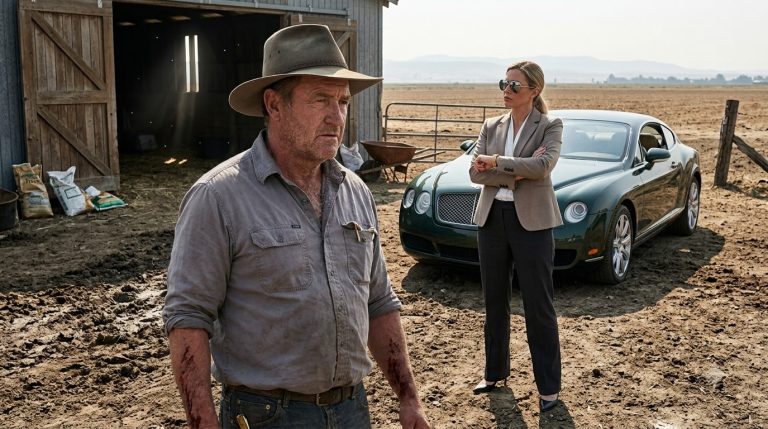
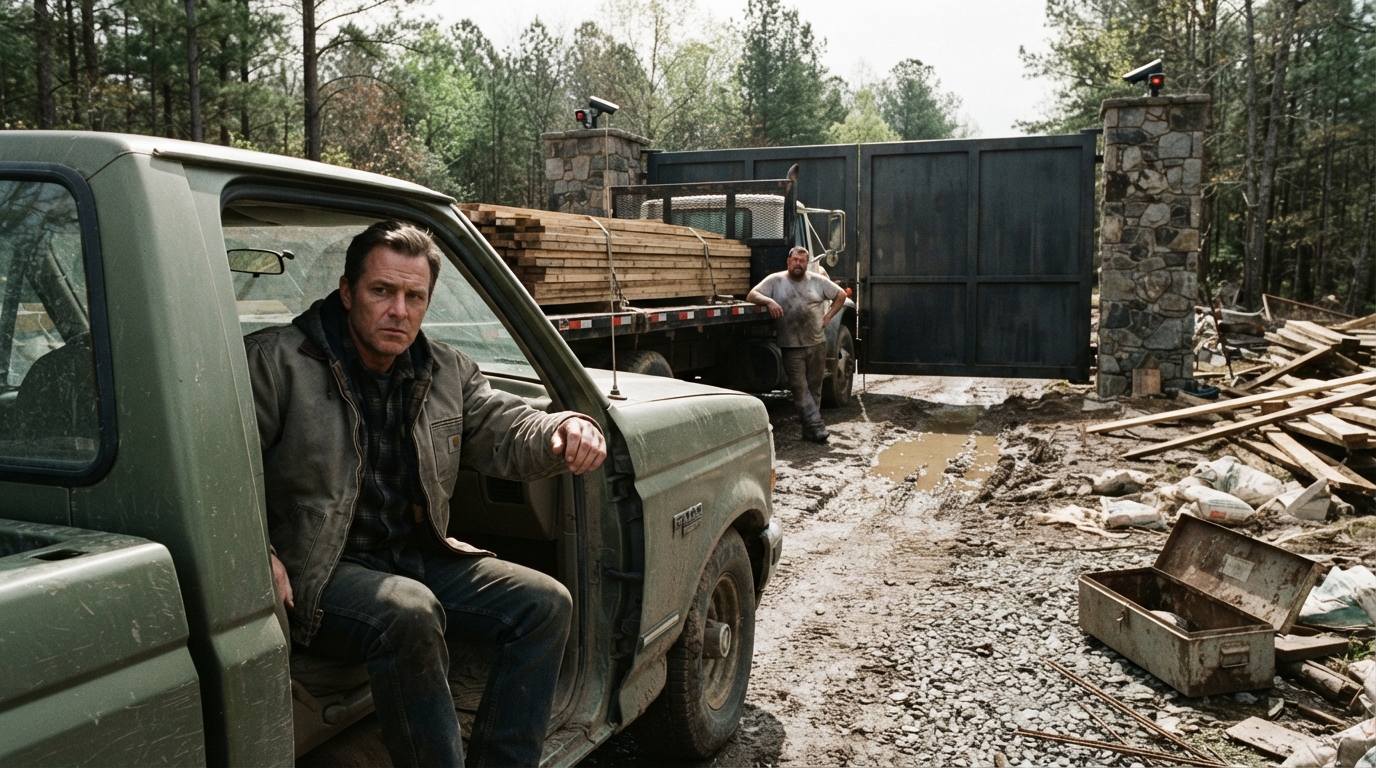
An eight-foot-tall structure of dark steel and cut stone stood dead across the only gravel track leading back to my timberland. A pair of high-definition cameras blinked red from the pillars, and a digital keypad gleamed under a freshly shingled overhang.
It looked like the entrance to a corporate headquarters. It was planted squarely across a road my family and I had used without interruption for seventy years.
I reached for the brass-trimmed thermos on the dash, unscrewed the cap, and took a dry swallow of lukewarm black coffee. My thumb rubbed the scarred metal rim, keeping my grip steady while I stared at the bright yellow sign bolted to the stone: Private Property. No Trespassing.
I pulled out my phone, located Caleb Whitaker’s number, and hit call before I could talk myself out of it.
He answered on the second ring, his voice crisp and bright with the hurried energy of a man who treated every conversation like a stock market trade. “Morning! You out on the trail early?”
“I’m sitting right in front of your new construction project,” I said, keeping my tone flat and level. “On the access road.”
“Ah, the gate,” Caleb said, entirely unbothered, as if we were discussing patio furniture or lawn seed. “Good thing you called. I can text you the master code right now. We had it put in for security. Marissa’s been a bit jittery about folks cutting through from the highway.”
“You put a permanent barrier across a deeded right of way,” I said. “You can’t do that, Caleb.”
“It’s not blocked, I’m giving you the code,” he replied, his voice rising just a fraction with impatient condescension. “It’s just for peace of mind. Use the numbers, and the arm swings right up.”
The casual arrogance of it—granting me permission to cross my own legal boundary with a digital combination—settled heavy in my chest. I tightened my fingers around the thermos until my knuckles went white.
“The gate comes down today,” I said.
“Well, I think we’re going to have to agree to disagree on that one,” Caleb answered smoothly before the line went dead in my ear.
CHAPTER 2: THE CLOSED DOOR
Henry didn’t look up immediately when I stepped into his office. He kept his pen moving across a yellow legal pad, the scratch of the graphite the only sound in the small room besides the ticking wall clock.
“They put a steel gate across the timber road,” I said, laying my hands flat on the scarred wood of his desk. “Caleb Whitaker thinks a digital keypad makes federal timber deeds null and void.”
Henry stopped writing, set the pen down in the groove above the pad, and leaned back in his leather chair with a dry sigh. “I heard about the structure going up near the highway,” he said, tapping a finger against the manila folder holding my seventy-year-old deed. “Town office is getting complaints about contractors blocking traffic, too. They think they own the county up there.”
“They’re treating the right of way like a private driveway,” I said, my thumb rubbing against the seam of my pocket where my thermos lid usually rested. “What are our options with the town?”
Henry shook his head slowly, his expression tightening into a grim line. “Don’t bother looking to the sheriff or the county commissioners for help on this right now. They’re treating it strictly as a private civil disagreement between property owners. Until a judge signs an injunction, local law enforcement won’t lift a finger to touch that gate.”
The reality of it settled over the room like a cold draft. I was entirely on my own out on that timberland. There were no deputies to call, no quick municipal fixes to lean on.
“So it’s just the paper against their wallet,” I said.
Henry opened the folder, revealing the crisp, ink-stamped survey maps from the 1950s that proved every foot of the access route. “The paper is ironclad,” he said, sliding the file toward me. “Permanent and unrestricted means exactly what it sounds like. They can build all the stone pillars they want, but they can’t erase seventy years of recorded law.”
“Draft the notice,” I said. “Ten days.”
Henry pulled a fresh sheet of paper toward him and picked up his pen. “I’ll have it served by noon tomorrow. But be ready—people who buy their way in don’t usually walk away when they find out money doesn’t rewrite a survey.”
CHAPTER 3: THE HEAVY TREADS
Heavy flatbeds loaded with lumber and concrete churned up the gravel grade, tearing deep ruts into the soft earth we had maintained for decades.
Caleb and Marissa weren’t just building a cabin anymore; they were carving out an industrial staging ground, treating the historic right of way like a private loading dock.
I pulled my truck to a halt right in the middle of the track, blocking the lead flatbed, and reached across the dash to pick up my phone.
“Your heavy crews are ripping the grade apart,” I told Caleb the second he answered, my voice tight with strain. “Are you planning to cover the maintenance costs?”
“My lawyer advised me not to discuss shared maintenance until the access dispute is fully settled,” Caleb replied, his tone clipped and entirely dismissive.
“You mean the illegal gate you put across a recorded easement?” I asked, my grip tightening on the steering wheel.
“I mean the disputed interpretation,” he countered sharply before the line went dead.
That single phrase exposed the entire operation. It wasn’t about security cameras or nighttime quiet; it was about erasing the legal footprint of my land to clear the way for corporate annexations.
I tossed the phone onto the passenger seat and shifted into drive, knowing the courts were our only remaining path through the wreckage.
CHAPTER 4: THE GAVEL FALLS
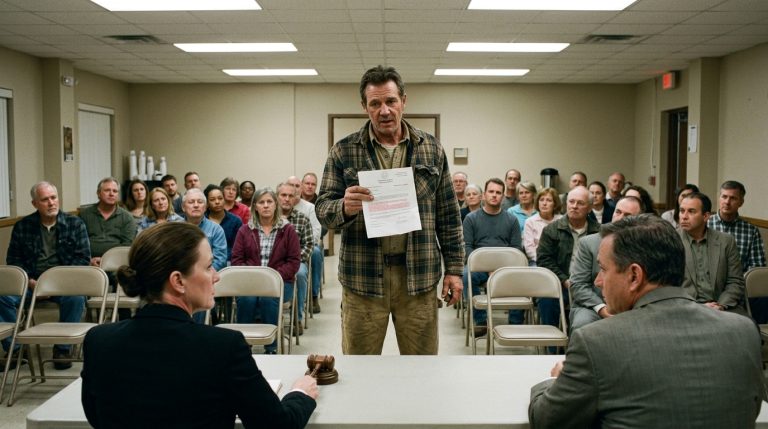
Her glasses caught the pale fluorescent light as she scanned the faded ink of the 1950s timber deeds.
“Is there any language in this recorded easement that conditions access on digital entry codes or neighborhood permission?” she asked, looking directly across the room at Caleb’s attorney.
“No, your honor,” the lawyer muttered, shifting uncomfortably in his seat.
Judge Porter closed the folder with a sharp snap that echoed off the high plaster walls.
“The right of way is permanent and unrestricted,” she said, her voice carrying a calm, immovable authority. “A locked steel gate, regardless of whether a keypad is provided, constitutes a direct unlawful obstruction.”
She looked straight at Caleb, who sat stiffly in the front row with his jaw clenched tight.
“The defendants are ordered to remove the gate within fourteen days at their own expense,” she ruled. “Failure to comply will authorize the plaintiff to clear the obstruction.”
Outside on the stone steps, Caleb caught up to me before I could reach my truck, his face flushed dark with anger.
“You’re actually going to push this legal technicality to the bitter end?” he demanded, his hands shaking slightly with suppressed outrage.
“I’m just trying to use the road that belongs on my deed,” I said.
“This is going to make things very difficult for everyone,” he snapped, turning on his heel and storming toward the parking lot.
CHAPTER 5: THE BLADE MEETS STEEL
Russ Bennett sat up high in the cab, his weather-beaten face expressionless as he worked the levers to warm the tracks.
I walked over to the stone pillar, entered the digital code one last time to watch the gate swing wide, and slid the folded court order deep into my jacket pocket.
“Ready when you are,” Russ shouted over the heavy rumble of the exhaust.
“Let’s clear the road,” I said.
Russ didn’t rush. He eased the massive yellow blade forward until it met the decorative steel bars with a flat, echoing screech.
The hinges groaned under the torque, then snapped with a sharp metallic crack that sent vibrations through the frozen ground.
The cut stone pillars fractured like old bone, tumbling into the gravel as the heavy tracks rolled right over the wreckage without slowing down.
Within five minutes, the entire barrier was pushed aside into the ditch, leaving a wide-open path straight back to the timberland.
Caleb’s SUV came barreling down the lane just as Russ idled the machine down, tires kicking up fresh mud as he slammed to a halt.
Caleb flung his door open and scrambled out, his face mottled red with fury as he pointed a shaking finger at the twisted metal.
“What in the world do you think you’re doing?” he shouted, his voice cracking with outrage. “You just destroyed private property!”
“You had fourteen days to remove an unlawful obstruction,” I said, pulling the court order from my pocket and holding it out toward him. “The court authorized the remedy.”
Caleb snatched the paper from my hand, his eyes darting frantically across the lines in search of a loophole that didn’t exist.
“This isn’t over,” he snarled, his chest heaving as he looked between me and the silent bulldozer. “You’ll pay for every inch of this.”
Marissa stepped out of the passenger side, her hand gently touching his arm to pull him back from the edge.
“Let’s just go,” she whispered, her voice drained of fight.
Caleb glared at us one last time, climbed back behind the wheel, and threw the vehicle into reverse, spitting gravel as he tore back toward the highway.
CHAPTER 6: THE SETTLED DUST
Two weeks after the gate came down, a fresh civil claim for destruction of property and emotional distress landed on Henry Dalton’s desk.
Henry didn’t even look up from his coffee when he handed the envelope back across the table.
“Some folks simply don’t know how to lose with dignity,” he said, tapping a finger against the new court notice.
Judge Porter dismissed the claim in less than an hour, slapping Caleb with full legal fees and a court-ordered reimbursement for four thousand two hundred dollars in road repair costs.
When we stepped out onto the courthouse steps that afternoon, Caleb didn’t shout or try to block my path.
He climbed straight into his SUV without a single glance backward and drove out of the county for good.
Summer passed, and the half-built house sat quiet with its blinds drawn half-mast against the sun, until new buyers finally moved in by the following spring.
A young couple walked up our driveway carrying a homemade pie and knocked on the back door.
“We just wanted to introduce ourselves,” the husband said, stepping into the kitchen as the screen door clicked shut.
We sat down around the wooden table, and I laid out the maintenance schedules, the logging seasons, and the history of the seventy-year-old right of way.
“Seems entirely straightforward,” the wife said, slicing off a piece of pie.
It was.
People ask me if I regret how hard we had to push to keep that road open.
Maybe life would have been easier for a month or two if I had just typed in their digital code and surrendered an inch of ground.
But a right isn’t something you rent from a neighbor with deep pockets, and a boundary line isn’t a favor waiting to be revoked.
When you write it down clear and defend it with common sense, the truth outlasts the steel, the stone, and the short-lived anger of anyone trying to rewrite the map.