The Concrete Kingdom Crumbles: How a Retired Veteran Turned an HOA Tyrant’s Federal Weapon Against Her
CHAPTER 1: THE FLORAL MUUMUU
That’s not a pond, Sergeant. That’s a federal crime scene, and I’m the one who reported it.
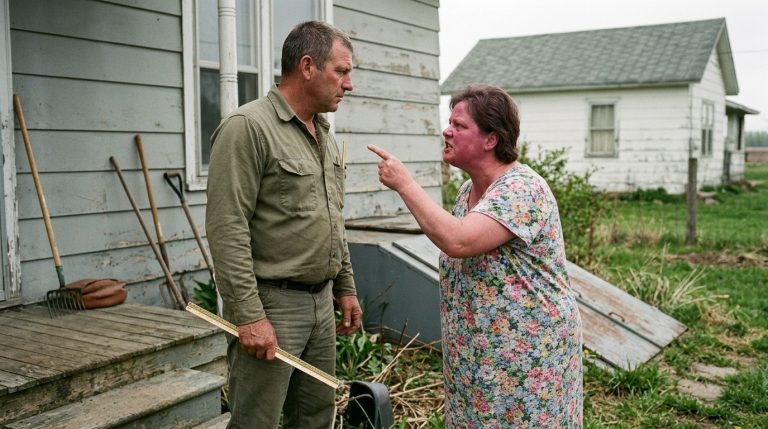
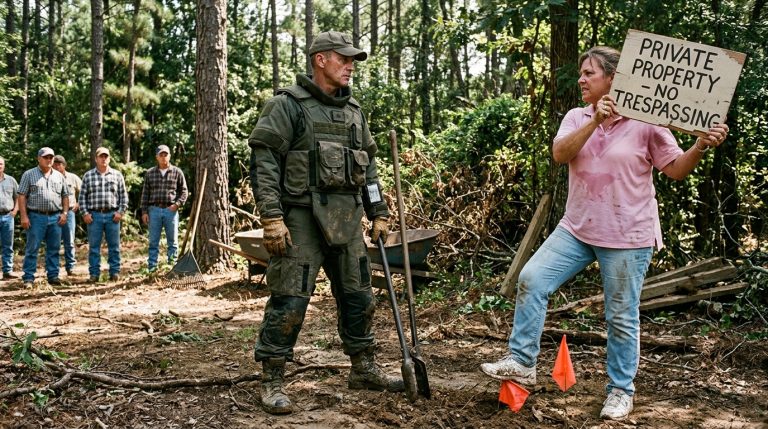
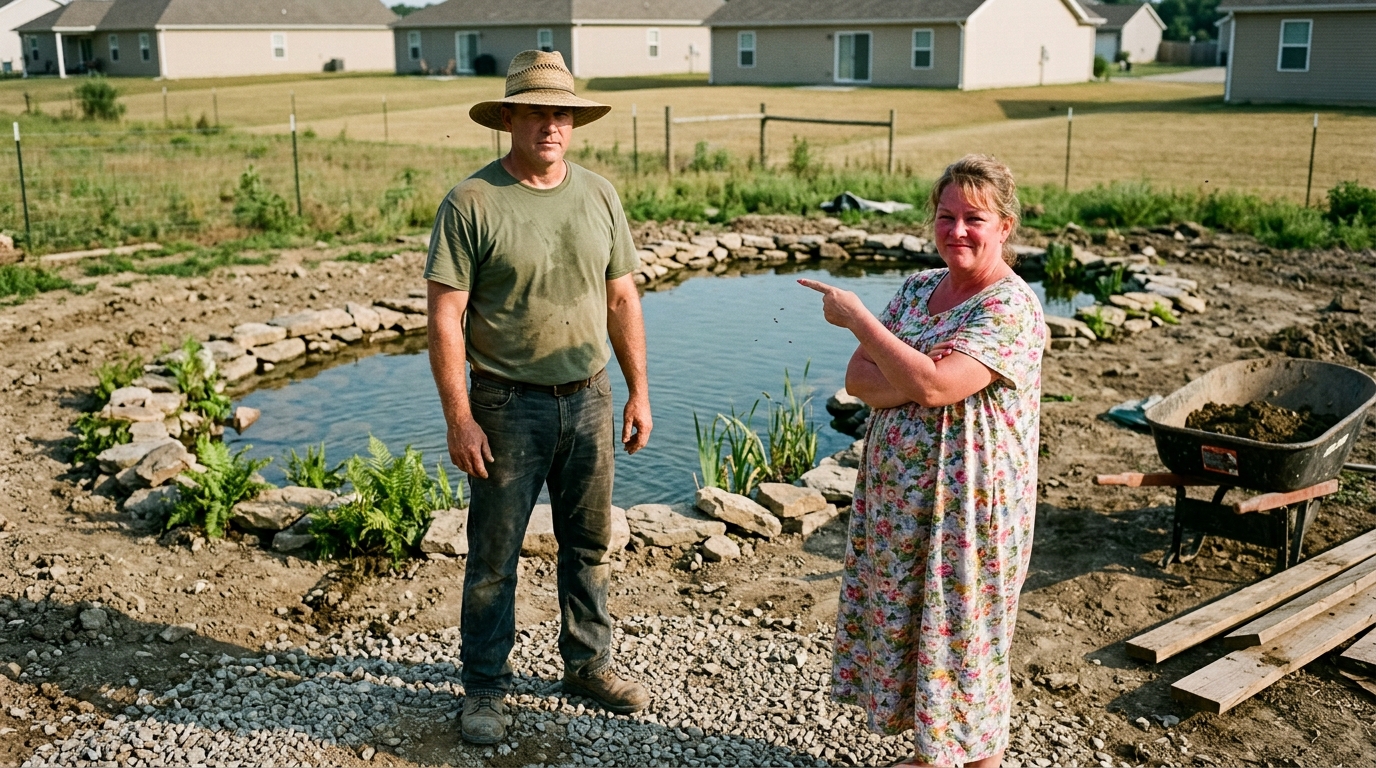
The words hung in the humid afternoon air, thick and unwelcome as the swarm of gnats buzzing around my hat. Karen stood on the edge of my property line, her floral-print muumuu a garish splash of color against the deep greens of the ten acres I called home. Her arms were crossed over her chest, a posture of absolute authority worn like a general’s uniform. Her face, flushed with sun and self-righteous indignation, was set in a triumphant smirk.
I didn’t reach for my files or step forward to argue. I just stood there with my hands loose at my sides, feeling the dry dust of the gravel drive under my boots. After twenty-two years as an Army combat engineer clearing mines and building bridges under conditions most people only see in movies, I knew the look of a commander who had outrun her logistics. She thought she had called in an airstrike on my position.
She was pointing a manicured finger at the half-acre kidney bean-shaped pond I had spent the last six months carving out of a damp, fern-choked hollow. It wasn’t some concrete-lined swimming hole. It was a living ecosystem fed by a natural spring, lined with native stone, and already teeming with dragonflies and bullfrogs. To me, it was peace after a lifetime on high alert. To her, it was an affront to her meticulously curated kingdom of beige siding and uniform lawns.
I let out a slow, measured breath through my nose, keeping my weight evenly balanced.
Karen dropped her hand, her smirk tightening into something sour. I trust you’ve submitted the required architectural review application for this modification, Sergeant Thorne. Our covenants require board approval for any landscape alteration. You’ll need form 11B in triplicate, a certified survey, and an environmental impact statement.
My old engineering brain didn’t calculate a lethal threat; it calculated the sheer exhaustion of dealing with an unbroken streak of unearned entitlement. My primary reference binder—the 3-inch archive of county permits, soil surveys, and state approvals—was sitting safely on my office desk. But out here on the gravel, separated from my paperwork, I had only my boots, my common sense, and the steady hum of the spring-fed water trickling over the stones.
My property deed explicitly exempts agricultural and wildlife management features from architectural review, Karen, I said, keeping my voice low and level. This qualifies as both.
That’s a matter of interpretation, Sergeant, she snapped, her voice rising above the hum of the dragonflies, and I am the interpreter.
She turned her golf cart around with a sharp crunch of gravel and drove off, leaving behind the heavy scent of crushed pine needles and a rising simmer of cold fury in my chest. I didn’t chase after her or shout a warning. I just watched the dust settle over my boots, knowing full well that a paper envelope bearing bad news would soon be sliding into my mailbox.
CHAPTER 2: THE FEDERAL ENVELOPE
The paper felt cold against my skin, carrying the unmistakable weight of a federal inquiry.
Sarah stood across the wooden kitchen table, her eyes tracking the sharp, military creases I had pressed into the letter.
Marcus, what does this mean? Can they really make us fill it in?
I folded the top edge down with deliberate precision, keeping my movements slow and grounded.
It means Karen followed through. It means we have a fight on our hands, but they haven’t found us guilty of anything yet. This is just the start of an investigation.
My office was quiet, save for the hum of the refrigerator and the distant, steady rush of the spring-fed creek outside.
My primary 3-inch binder of permits, surveys, and state approvals sat on the shelf across the room, completely inaccessible for this initial wave of defense.
I couldn’t rely on that pre-compiled archive. I had to build my defense from scratch using raw memory, satellite printouts, and direct logic.
I spread out large-scale aerial maps of the property from five years prior, locating the exact boundaries of the pre-existing marshy depression.
Every coordinate had to match the state’s official wetland maps if I wanted to survive Henderson’s upcoming site visit.
I flipped through a separate stack of papers, pulling out the crumpled, petty violation notices Karen had stuffed into my mailbox over the past year.
A $100 fine for a visible trash can on a quarter-mile private drive. A warning about bluebird houses disguised as unauthorized livestock.
Each notice was an absurd paper cut designed to wear down my patience through sheer administrative friction.
Now, laid out side by side on the desk, they stopped looking like random annoyances and started looking like a neat, undeniable pattern of targeted harassment.
I picked up the phone and dialed the number printed at the bottom of the USACE letterhead.
A tired, raspy voice answered on the second ring, identifying himself as compliance officer Henderson.
Mr. Henderson, this is Marcus Thorne, retired Army combat engineer, I said, keeping my tone flat and professional. I received your notice regarding the property on Cypress Creek Estates.
There was a brief pause on the line as the title registered.
Sergeant Thorne. I have your file right here. Someone reported an unauthorized discharge into a protected wetland.
I have a complete layout of the springhead and topographical surveys ready for your review, I replied, staring out the window toward the damp hollow. I believe you’ll find the work constitutes an ecological enhancement, not a destruction.
Henderson let out a dry, weary breath that crackled through the speaker.
Alright, Sergeant. We like proactive landowners. Let’s schedule a site inspection for next Tuesday at 1000 hours. Have your records ready.
Tuesday at 1000 hours works, I said, setting the receiver back into its cradle.
I looked back down at the desk, my fingers brushing against the edge of the satellite map.
The battlefield was mapped, but the real test would come when the federal inspectors walked the damp earth of my property without my main binder to guide them.
CHAPTER 3: THE INSPECTION WALK
Compliance officer Henderson stepped out of the white sedan first, his boots hitting the packed gravel with a heavy, flat thud.
A younger woman with a waterproof clipboard tucked under her arm followed him, scanning the tree line with sharp, analytical eyes.
I met them on the front porch, my hands steady and my mind clear of any paperwork safety nets.
Mr. Henderson, Dr. Evans—glad you made it out, I said, offering a firm handshake.
Henderson gripped my hand back, his gaze tired but entirely focused.
Let’s see what you’ve built here, Sergeant. Show us the water source.
We walked down the gentle slope from the house, navigating the tall grass and damp earth toward the kidney-bean basin.
Dr. Evans knelt near the upper edge, her fingers brushing against the native stone I had placed around the springhead.
You encased the groundwater source directly without altering the natural flow, she noted, jotting a quick line on her clipboard.
That’s correct, I replied, keeping my boots planted firmly on the moist soil. I wanted a self-sustaining habitat, not a stagnant ditch.
Henderson paced the lower dam I had engineered, poking the soil with a narrow metal rod to test the grade and compaction.
He didn’t offer immediate praise, but his silence was clean of bureaucratic hostility.
The complainant alleged you filled a protected wetland to put this in, Henderson said, gesturing broadly across the acreage.
I pointed toward the untouched cattails swaying softly on the far bank.
The core wetland remains completely intact, and the open water actually expands the overall habitat footprint.
Dr. Evans stood up, brushing a stray leaf from her knee, and nodded in agreement.
His assessment is accurate. This constitutes an environmental enhancement, not a destruction.
I felt a quiet, hard-earned release settle into my shoulders, knowing the first major hurdle had been cleared through raw logic rather than paper archives.
Then, as Henderson turned to pack his metal rod into its case, a bright flash of floral fabric flickered through the distant trees.
Karen stood near her property line, half-hidden behind a pair of binoculars, watching our every move with unmistakable anxiety.
Henderson noticed my glance and followed it across the boundary line, letting out a long, slow sigh of pure weariness.
Is that our complainant over there?
CHAPTER 4: THE MAGENTA SAMPLE
Dr. Evans knelt beside the water’s edge, her boots sinking slightly into the soft, muddy soil of the bank.
She leaned in close to the mouth of the plastic pipe where a steady trickle was leaking into the current.
A sharp, chemical odor drifted up from the rocks, cutting straight through the clean scent of pine and damp earth.
I smell chlorine, she said, her voice dropping into a tight, professional register. A lot of it.
Compliance officer Henderson straightened up instantly, his tiredness vanishing behind a mask of strict, hard-edged focus.
He unclipped a compact testing kit from his vest and dropped to one knee beside the biologist.
Draw a sample from the outflow. Let’s see what we’re dealing with.
Dr. Evans filled a small glass tube with the leaking water, holding it up against the morning light.
Henderson added three drops from a dropper bottle, and the liquid inside the vial flashed instantly into a vibrant shade of magenta.
Well, look at that, Henderson muttered, his eyes narrowing as he stared across the stream. That isn’t standard runoff. That’s raw pool chemistry.
Across the shallow creek, Karen’s immaculate green lawn sloped upward toward her large, sparkling backyard swimming pool.
Does your neighbor’s pool feature an active backwash system, Sergeant? Henderson asked, not taking his eyes off the house.
I believe it does, I replied, letting a quiet, hard-earned satisfaction settle into my chest.
Henderson stood up, pulling out his notebook to log the precise GPS coordinates of the discharge point.
Dr. Evans, photograph the pipe, the discoloration on the rocks, and the plume dispersing into the current. This inspection just changed scope.
Over on the opposite bank, Karen lowered her binoculars with a jerky, panicked movement.
She started pacing back and forth across her grass, her phone pressed hard against her ear as she tried to call for backup that wasn’t coming.
CHAPTER 5: THE TABLES TURN
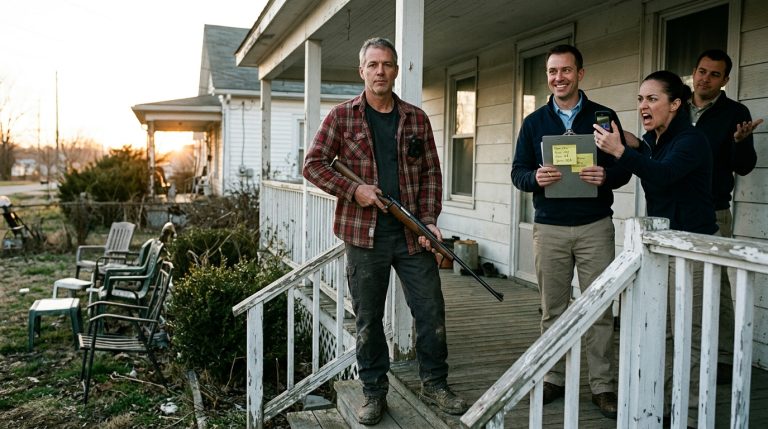
Karen met them near her lounge chairs, her arms locked tightly across her chest in an instinctive posture of defense.
Henderson spoke first, his voice carrying clearly across the water while he pointed directly down toward the hidden discharge pipe.
Karen shook her head with violent vehemence, her hands flying up to dismiss the claim before Dr. Evans stepped forward and held up the magenta-tinted vial.
The color drained from Karen’s face instantly, her defiant scowl cracking into a mask of sudden, dawning terror.
She began pointing frantically toward her pool pump, then back toward the house, trying to shift the blame onto an invisible contractor.
Henderson didn’t blink, remaining an immovable wall of federal authority against which her panicked excuses broke into pieces.
He handed her an official document, which she accepted with fingers that visibly trembled against the paper.
Over on my side of the creek, I picked up a pen and completed my formal witness statement detailing the pipe’s long history.
When Henderson and Evans walked back across the shallow stone crossing, they gave me a crisp, professional nod of acknowledgment.
That neighbor of yours is going to have a very long month, Henderson said, sliding my signed statement into his portfolio.
Through the trees, Karen stood utterly frozen on her patio, staring down at the federal notice like it was a live grenade.
CHAPTER 6: THE NOCONFIDENCE COLLAPSE
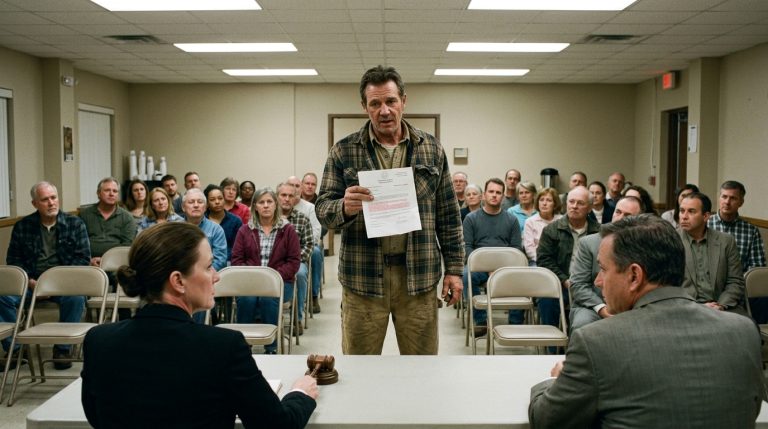
Karen stood at the front of the room, flanked by her husband and a lone remaining board member, clutching a prepared statement with shaking fingers.
She launched into a self-pitying speech about her years of thankless service, framing herself as a lone warrior holding back the forces of chaos.
This man with his unapproved pond has mounted a personal vendetta against me, she shouted, pointing a trembling finger straight at my chest.
The room remained dead silent, stripped of the fear she had weaponized for years.
Art Donaldson rose slowly from his seat, buttoning his jacket with measured, calm precision before stepping up to the microphone.
He didn’t raise his voice or use empty rhetoric; he simply laid out the timeline of harassment followed by the hard federal notice of violation.
Mrs. Miller used her position to wage a personal war while committing a severe Clean Water Act violation in her own backyard, Art stated plainly.
The vote was called, moving through the rows like a wave of quiet, undeniable common-sense justice.
When interim president Tom announced ninety-eight votes for the recall against only three dissenting, a collective exhale swept across the room.
Karen froze for a single second, her face twisting between absolute fury and disbelief, before she turned and stormed out through the double doors.
Six months later, her house sat vacant behind a weathered for-sale sign, the multi-thousand-dollar remediation trenches cutting across her lawn as a permanent monument to overreach.
Back on my own land, the afternoon sun dipped low behind the towering Georgia pines, casting a silver path across the surface of the spring-fed water.
Sarah walked down the slope with two ceramic mugs of coffee, stopping beside the wooden bench I had built near the bank.
We sat down in the cooling dusk, listening to the deep, resonant chorus of bullfrogs settling into the reeds.
There were no warning letters in the box, no golf cart patrols rattling down the gravel, and no threats left on the horizon.
There was only the quiet, living breath of the ecosystem and the deep, steady peace of a mission fully accomplished.