The Frequency of Silence: A Pragmatic Defense of Infrastructure Amidst the Decay of Suburban Order
CHAPTER 1: The Severance
The monitor didn’t just blink; it bled. A wall of crimson text washed over the emergency map, freezing the real-time coordinates of a paramedic crew deep in the ridge lines. My office, typically a sanctuary of steady, rhythmic data, turned into a tomb of static. The fiber uplink, a lifeline I’d spent months reinforcing against weather and wear, had been severed.
I didn’t panic. Panic is a luxury for those who don’t hold the lifeline. I transitioned instantly to the fallback satellite relay, my fingers dancing across the keys, calculating the latency hit. The connection was brittle, a thin thread of data compared to the fiber, but it held the rescue crew’s coordinates steady enough to breathe.
Then, the dog started.
It wasn’t a standard alert. It was a sharp, jagged sound of someone standing where they didn’t belong. I pushed away from the desk, the office chair scraping against the floorboards, and moved to the back door. The late afternoon light hit the yard with the harsh, desaturated quality of a dying season, turning the tall, dry grass into brittle stalks of rust-colored iron.
There she was.
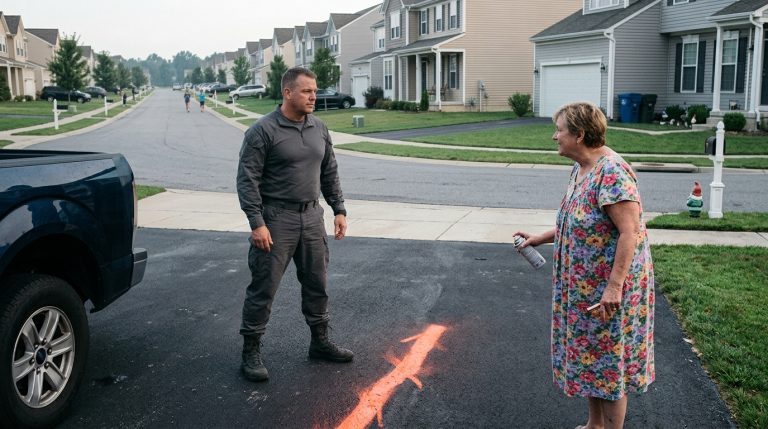
Karen stood near the utility fence, her beige windbreaker blending into the bleached suburban backdrop. She held a clipboard with the practiced, predatory grip of a parking enforcement officer, and from her wrist, the silver arc of garden shears caught the light. At her feet, the protective conduit lay open, a clean, professional cut exposing the shimmering glass fibers within.
She didn’t look like a saboteur. She looked like a neighbor correcting a mistake.
“It’s just an eyesore,” she said, her voice smooth and brittle as glass. She was smiling, that tight, polite mask of HOA-sanctioned morality. “Your Netflix, your games—they’ll survive a few days offline. I told you, this conduit doesn’t match the neighborhood’s aesthetic.”
I stared at the cut, at the silver shears, and then back at her. The air smelled of dry earth and impending heat. My mind didn’t go to anger; it went to the tactical cost. Every second she stood there was a packet of data lost in the buffer.
“Do you know what you just cut?” I asked, my voice dangerously low.
“An ugly wire,” she replied, gesturing toward the fence line with her clipboard. “You should thank me. I’m cleaning up the clutter you’ve allowed to fester.”
She was so certain of her reality—a world where the width of a grass blade mattered more than the pulse of an emergency network. I looked past her shoulder, toward the street, and noticed a dark sedan idling two houses down, its windows tinted too heavily for a neighborhood known for its open-curtain policy. My pulse didn’t quicken, but it sharpened.
The conduit wasn’t the target. It was the bait. And as she turned to leave, the silence of the street felt heavier, laced with a deliberate, cold intent that went far beyond lawn maintenance.
CHAPTER 2: The Weight of the Cut
The iron-scented air in the backyard felt thin. I didn’t move until the sound of Karen’s sensible shoes retreated, clicking rhythmically against the pavement of the sidewalk, a sound that felt entirely too precise for someone who had just committed a federal offense. She didn’t look back. She didn’t have to. For her, the “ugly wire” was gone, and therefore, the problem was solved.
I turned my attention to the conduit. It wasn’t just a severed cable; it was a surgical strike. The cut was clean, executed with the cold, deliberate focus of someone who knew exactly what they were disabling. My hands hovered over the exposed fibers, my fingers itching to trace the damage, but I forced them to remain steady. I needed to see it, not touch it. Touching would be an admission of panic, and panic is a variable that leads to errors.
The phantom memory of a month ago flickered in the back of my mind—the mobile dialysis van that had sat for two days, a lifeline for an elderly neighbor, being towed on Karen’s orders because it sat “too close to the aesthetic perimeter.” At the time, I had written it off as her brand of pathological rigidity. Now, looking at the shredded fiber, the perspective shifted. This wasn’t just rigidity; it was a systematic removal of anything that didn’t fit a curated, artificial reality.
I stepped back, my boots crunching on the dry, rust-colored dirt. I kept my eyes on the dark sedan still idling two houses down. It didn’t pull away. It didn’t move. It was a watcher, a piece of equipment in its own right, observing the neighborhood with the same detached, clinical indifference that I used to monitor the county’s rescue teams.
My phone vibrated against my hip—a frantic, buzzing notification from the backup satellite relay. The rescue crew was still in the woods, still in the dark, and my improvised bridge was struggling to translate their GPS packets through the heavy atmosphere.
I didn’t run. I walked, measuring every footfall, keeping my posture neutral. I needed to be the ghost in the machine, not the target. Once inside, I locked the back door—a pointless gesture against the kind of people who carried wire cutters in broad daylight, but necessary for my own mental equilibrium. The office was a sea of amber light and blinking error logs.
I sat down and stared at the monitors. The red lines of the emergency grid mapped out the county, a skeleton of connection that was currently suffering a stroke. I pulled up the security footage from the camera mounted on the eaves of my roof. The wide-angle lens captured the moment with agonizing clarity: Karen, the clippers, the snip, and then the subtle, almost imperceptible nod she gave toward the idling sedan before she walked away.
The nod wasn’t for me. It was a report.
My throat felt dry, the air in the room tasting of hot circuits and dust. I realized then that I wasn’t just competing with a local HOA president; I was competing with an entire architecture of erasure. I began to map the network logs, looking for the footprint of the sabotage. It wasn’t just a physical cut; there were diagnostic packets trying to ping the relay node, probing for a vulnerability in my fallback satellite configuration. Someone was waiting for the system to buckle completely.
I leaned back, the leather of my chair creaking in the absolute, heavy silence of the house. I had to fix the fiber, yes—the county needed the throughput—but the more I looked at the logs, the more I understood that the repair wasn’t the goal. The goal was to prove the system had been attacked, and to do that, I couldn’t just mend the wire.
I had to let them think they had won.
I reached for my toolkit, pulling out a length of standard-gauge communication cable. It looked almost identical to the fiber uplink to the untrained eye, but it was just copper, just dead weight. I began stripping the ends, my movements methodical, practiced, and cold. If I was going to be the “clutter” they wanted to remove, I would make sure the next time they tried, they weren’t just cutting a wire. They would be walking straight into the heart of a diagnostic trap.
The hum of the computer fans grew louder, a steady, low-frequency drone that masked the sound of the house settling around me. I finished the work on the dummy cable and stared at it for a long, silent moment. This was the first move. Not a defensive one, but an invitation. I would leave the “repair” for the morning, a visible sign that the amateur was trying to fix his amateur mess.
I checked the status of the rescue crew again. They had stopped moving. The signal was a flatline.
I didn’t pray, and I didn’t hope. I opened a fresh file, labeled it with a timestamp, and began to document the voltage drops and the timing of the probes. The house was quiet, but for the first time in years, it felt like the entire neighborhood was watching me. And for the first time, I was ready to watch them back.
CHAPTER 3: The Forensic Pivot
The house held its breath. Outside, the shadows stretched across the lawn, long and jagged like rusted blades, while inside, the glow of the monitors provided the only pulse of life. I didn’t move from the desk for a long time. The dummy cable sat coiled beside me—a silent witness to the plan I was unfolding. My gaze was fixed on the high-definition replay of the security footage, frozen on the precise moment Karen’s shears hit the conduit.
I zoomed in. The software, usually tasked with calculating signal latency and packet loss, now served a different purpose. I enhanced the image, sharpening the pixels around the severed conduit. There.
The indentation on the plastic housing wasn’t a clean shear mark. It was asymmetrical. A standard garden shear, even a heavy-duty model like the one Karen carried, would have left a crushing, semi-circular imprint. But there was a secondary scrape, a faint, metallic groove that suggested a secondary tool had been used to pry the casing away first.
I leaned closer, the smell of ozone from the overheated processors filling my nostrils. Karen might have been the one to snip the wire, but she hadn’t opened the housing herself. She didn’t have the technical finesse for it. Someone had prepped the site. Someone had loosened the conduit, making it an easy target for her performative rage.
The realization sat heavy in my gut, cold and grounding. This wasn’t just a neighborly dispute over aesthetics. It was a coordinated setup, a bridge built between an HOA president’s delusion and a corporate bottom line.
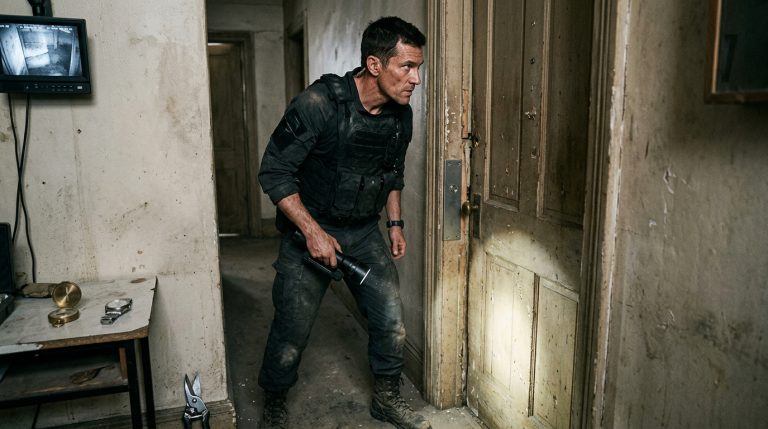
I stood up, the chair pushing back with a sharp, dissonant rasp against the floorboards. I needed to see the site again, not as a victim of vandalism, but as an investigator. I grabbed my flashlight—a heavy-duty piece of equipment with a beam that could cut through the thickest twilight—and walked out into the backyard.
The night air had cooled, leaving the scent of parched earth and iron. The conduit lay open like a wound. I knelt, my knees pressing into the dry, unyielding ground. I didn’t use my hands immediately. I clicked the flashlight on, the beam cutting a brilliant, sterile path through the darkness, and angled it against the casing.
The groove was there, distinct against the plastic. It wasn’t the work of an amateur. It was the work of a technician—someone who knew exactly how much force to apply without triggering the tamper-evident seals on the primary housing. My heart rate stayed slow, rhythmic, efficient. I was the sovereign of this patch of earth, and I was being invaded.
I reached out, my fingers tracing the edge of the casing. The plastic was still slightly warm, or maybe that was just the memory of the sun. I pulled a small digital caliper from my pocket and measured the scrape. It was precise, measured in millimeters. This was a professional job.
I stood up and panned the light toward the perimeter of my fence. The dark sedan was gone, replaced by the crushing silence of the suburban night. But I saw something else—a small, disturbed patch of gravel near the base of the fence, where the soil was darker than the surrounding yard. Someone had stood there, watching, for a long time.
I didn’t try to track them. That would be an amateur’s move, a desperate attempt to catch a ghost. Instead, I stood in the center of the yard and allowed myself to feel the weight of the situation. They thought they were dealing with a recluse who clung to his hardware like a security blanket. They didn’t realize that my hardware was the only thing holding the county’s communication grid together. Every probe, every cut, every move they made was being logged on a local, offline server they couldn’t touch.
The wind picked up, a dry, rattling sound through the fence slats. I felt a flicker of something—not fear, but a cold, sharpening resolve. If they wanted to play a game of systems and infrastructure, they had picked the wrong man to challenge.
I walked back toward the house, my steps steady and quiet. I needed to cross-reference the timing of these probes against the county’s recent vendor bidding cycles. I knew the name Marcus—it appeared in the margins of the internal communications, a persistent, aggressive bidder who had been blacklisted for “reliability concerns” two years ago. If he was behind this, the trail wouldn’t be in the HOA bylaws. It would be in the digital debris he left behind in his haste to take over the relay contract.
As I entered the house, the hum of the monitors greeted me like an old friend. I bypassed the main desk and moved to the terminal that hosted my secure, internal archives. I didn’t just have logs; I had the complete history of every packet that had ever traveled through this relay. I began to filter the data, stripping away the noise, searching for a specific signature—a diagnostic handshake that Marcus’s systems would have used to probe my node.
The process was slow, a grinding, methodical labor that demanded absolute focus. The house grew darker as the evening deepened, the edges of the room disappearing into shadow. I didn’t care about the darkness. My world was defined by the flicker of code and the slow, steady build of a case that would do more than just protect my backyard—it would dismantle the foundation of the corruption that had turned my neighborhood into a testing ground for corporate ambition.
I worked until the small hours, my eyes burning but my mind crystal clear. The connection was there. A faint, residual echo of a login attempt from a device registered to an affiliate company of Marcus’s. He hadn’t just sabotaged the line; he had attempted a remote injection. He had tried to break into the county network through my node.
I sat back, the monitor’s light washing over my face in a pale, sterile glow. I had the smoking gun. But a gun is useless if you don’t know how to aim it. I needed to make them believe the sabotage had worked. I needed to lead them right into the trap.
CHAPTER 4: The Geometry of the Trap
The screen glowed with the stark, unforgiving light of a command prompt. I didn’t look away. I had the connection, the digital fingerprints of Marcus’s infrastructure-hunting software. It was messy, arrogant code—the kind written by someone who expected the target to be a standard home router, not a relay node hardened against regional disasters. I copied the signature, isolated it, and began to architect the decoy.
My movements were precise, stripped of wasted energy. I walked back out to the utility fence, the cold air biting at my skin. This time, I brought the dummy hardware—an empty casing fitted with enough copper wire to mimic the impedance of a real fiber line. I installed it in the exact spot where the original had been severed.
Midway through tightening the mounting bolts, the house lights flickered. A sharp, localized dip in power. A surge. My heart didn’t race; it slowed, calibrating. It was a remote ping, a “heartbeat” check from the sabotaging software. They were testing the line, verifying the break. I didn’t reach for the kill switch. I stayed motionless, letting my presence be a dark shadow against the fence, a man doing nothing but fixing a wire. If they were watching via a remote camera or a nearby drone, they would see only a homeowner, tired and frustrated, trying to restore his connection.
I finished the installation, the metal feeling cold and unforgiving against my palms. I didn’t test it. I walked back inside, my footsteps silent on the dry earth. The power dip had left a trace—a momentary lag in my internal logging. I sat back down at the desk and started the process of “opening” the network. I didn’t leave it wide open; that would trigger any half-decent security protocol. Instead, I created a simulated “unstable” connection, a weak, stuttering signal that would be agonizingly tempting to a corporate shark like Marcus.
It was a delicate game of geometry and timing. I had to convince them that the relay was failing, that it was a dying animal, ready to be replaced by whatever superior system Marcus wanted to pitch to the county.
I spent the next six hours refining the decoy. I layered the fake diagnostic traffic with just enough noise to look like hardware decay, not software manipulation. It was a masterpiece of misdirection, built on the assumption that Marcus would be looking for weaknesses, not for a trap.
My reflection caught in the monitor’s black edge as the screen dimmed. I looked exhausted—hollow-eyed, skin pale from the recycled air of the office—but my hands remained steady. I hadn’t eaten in twelve hours. The thought of food seemed abstract, irrelevant. The only thing that mattered was the integrity of the relay and the coming move.
I stood up and walked to the kitchen, the floorboards groaning under my weight. The house felt like a submarine—a pressurized vessel of logic and copper wire navigating a sea of suburban hostility. I poured a glass of water, the liquid cold and sharp, and stared out the window toward the street. The neighborhood was asleep, the houses dark, the manicured lawns silent. To anyone else, it was a peaceful, orderly place. To me, it was a minefield.
I returned to the desk and checked the logs. The “heartbeat” pings from the external source had stopped. They were satisfied. The decoy was accepted.
I tapped a single command, initiating the monitoring sequence. It was a silent trigger. The moment the dummy line was clipped, the relay would dump a complete, encrypted diagnostic package to the county legal server, alongside the high-resolution footage from the perimeter cameras. It wouldn’t just be an alarm; it would be a dossier.
I sat there for a long time, listening to the hum of the cooling fans. The house was quiet, the air thick with the smell of ozone and the faint, lingering scent of the dry, iron-rich earth from the yard. I closed my eyes for a second, not to sleep, but to visualize the next forty-eight hours.
The strategy was set. The bait was in place. The only variable remaining was the human element. Would Marcus be patient enough to wait, or would his arrogance force him to strike again tonight?
I didn’t guess. I didn’t hope. I watched the cursor blink on the screen—a rhythmic, steady pulse that measured out the wait. The trap was set, and the game had shifted from defense to a quiet, lethal sort of patience.
CHAPTER 5: The Incursion
I didn’t move from the desk when the motion sensor at the back fence chimed. The sound was soft, almost melodic, but in the quiet of the office, it hit like a physical blow. I remained still, my hands resting on the keyboard, my breathing matched to the steady, artificial hum of the processors. The bait was in place. The trap was primed. Now, the predator was arriving to feed.
I watched the second monitor, the one linked to the low-light perimeter camera. A figure had stepped over the low utility fence. He moved with a practiced, heavy-footed confidence—not the hurried, frantic movements of a petty vandal, but the deliberate pacing of a man who owned the space he walked in. Marcus. He wasn’t wearing a mask; he didn’t need to. He believed he was merely correcting a technical error, tidying up a messy installation.
My muscles ached, a deep, bone-weary fatigue that I ignored. I stood up and moved to the hallway, staying within the shadows of the floor-to-ceiling cabinets. I didn’t reach for a weapon—violence was a failure of logic, a blunt instrument in a game of razor-edged calibration. I reached for my phone and opened the live-streaming app that fed the video directly to the county’s secure diagnostic server.
Outside, the silhouette leaned over the utility box. I could hear the faint, metallic clink of a toolkit being set down on the gravel. He was meticulous. He didn’t just grab and pull; he assessed, using a small, pen-sized light to inspect the connections I had spent the last two days faking.
The air in the hallway felt stagnant, smelling of old paper and the sharp, ozone-tang of the electronics. I watched him work. He was confident, his posture loose and relaxed. He was going to cut the decoy line, just as I had planned, and in doing so, he would trigger the very diagnostic dump that would pin his identity to the crime.
Then, the unexpected happened.
Marcus stopped. He didn’t reach for the wire cutters. Instead, he pulled a small, handheld scanning device from his belt—a signal sniffer. He pointed it toward the fence, toward my office window, toward the house itself.
My breath hitched. A sniffer. He wasn’t just here to cut a wire; he was checking for a local mesh network, checking to see if the relay was actually active or if it was being monitored. If he picked up the signal from my internal diagnostic sensors, he would know the trap was set. He would know the house was an observation post.
I didn’t panic. I moved back to the desk, my movements fluid and quiet, and entered a series of overrides. I had to kill the internal wireless mesh, turning the house into a dead zone, effectively “blinding” myself to save the trap. It was a risk—if I killed the signal, I lost the real-time feedback of the sensors—but if I didn’t, he would see me coming.
I pressed ‘Enter’. The internal network indicators on the wall-mounted console flickered and died. The house went silent, the digital ghost-presence stripped away.
Outside, Marcus paused. He held the sniffer, watching the display. For a heartbeat, the world teetered on the edge of discovery. If he saw even a trace of the internal loop, he would walk away, and the leverage I had spent so much time crafting would dissolve into nothing.
He lowered the device. He turned back to the conduit.
He didn’t see the signal because there was nothing to see. He was the one in the dark now. He reached for the wire cutters, his movements confident and final. Snip.
The sound was faint, even through the double-paned glass, but it felt like a gunshot. The dummy cable fell to the gravel.
In that same micro-second, the relay logic triggered.
The diagnostic package—the logs, the connection timestamps, the evidence of his previous injection attempts—was launched toward the county server. But he didn’t know that. He stood there, satisfied, his work complete, already turning back toward the fence. He believed he had finally silenced the “ugly wire” and cleared the path for his own replacement system.
I watched him walk away on the low-light feed, his gait almost jauntily rhythmic, a man who had just secured a future contract. I didn’t follow. I didn’t call out. I stood in the dark of my office, the screens around me now showing nothing but the static of disconnected logs, and felt the heavy, creeping reality of the escalation. He thought he had won. He didn’t realize that in cutting the wire, he had just signed the warrant for his own investigation.
But as he disappeared into the shadow of the neighbor’s house, a new, cold sensation settled in my chest. This wasn’t just a win. I had committed the county to a war I would now have to help manage. My quiet, routine life of signal maintenance was over. The game had escalated, and the next move wasn’t mine to make—it was the county’s.
I checked the monitor again. The file transfer was complete. The evidence was safe in the hands of the authorities. I sank back into my chair, the sudden, sharp silence of the room feeling heavy, like the air before a storm. I had succeeded, but the victory tasted like dust and dry, rusted iron. I had pulled the thread, and now the entire tapestry was starting to unravel.
CHAPTER 6: The Digital Paper Trail
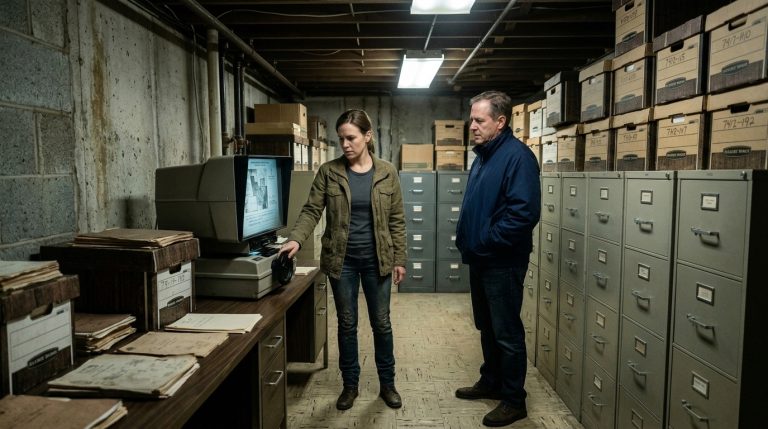
I didn’t turn the monitors back on. In the darkness, the room felt like the interior of a vault. I sat at the auxiliary terminal—a standalone unit not connected to the main relay—and began the work of extraction. The file I had launched was not just a log of Marcus’s sabotage; it was a comprehensive forensic audit. I had spent the last hour tracing the packet headers, de-obfuscating the routing paths, and matching the timestamp of the sabotage to the administrative login logs of the HOA’s internal management portal.
The connection wasn’t just possible; it was definitive.
I scrolled through the lines of code, the pale text reflecting in my tired eyes. There it was: an encrypted metadata stamp, a digital signature that bridged the gap between Marcus’s firm and the HOA’s “aesthetic consulting” contracts. They weren’t just neighbors and a disgruntled contractor. They were business partners. The HOA had been receiving “consulting fees” from Marcus’s firm to identify and eliminate any competing infrastructure that could potentially house independent emergency nodes.
My stomach turned, a cold, oily sensation of disgust. It was so simple, so mundane, and so profoundly corrupt. They were selling the neighborhood’s stability, piece by piece, under the guise of lawn maintenance and property values.
I didn’t have time to be angry. Anger is a volatile fuel that burns out too quickly. I needed the cold, steady burn of pragmatism. I exported the findings into an immutable, hashed format, creating a record that couldn’t be altered or deleted. I didn’t store it on the house network; I pushed it to a secure, off-site cloud storage locker, the credentials of which were hidden inside the emergency broadcast frequency itself—a place no corporate snoop would think to look.
A low, vibrating hum began to build in the house—the cooling fans on the auxiliary terminal struggling with the load of the encryption. I leaned back, listening to the sound, and felt the first true wave of exhaustion hit me. It wasn’t just the lack of sleep; it was the realization of how much I had been forced to dismantle.
My phone vibrated. A notification from the county’s emergency lead, a woman I’d only ever known by her handle, Apex.
Data received. The disruption is documented. Who is the primary?
I hesitated, my finger hovering over the keyboard. If I named Marcus, I was pulling the trigger on a legal and corporate war. If I didn’t, the county might just dismiss the sabotage as a local nuisance.
I typed: Marcus Vane. Vane Solutions. The HOA president is the facilitator.
I hit send. The room felt suddenly, impossibly large, as if the walls had been peeled back. I had escalated, and there was no going back. I had traded the quiet, anonymous security of my relay work for the crosshairs of a corporate entity and a corrupt neighborhood board.
I walked to the kitchen and splashed cold water on my face. The mirror showed a man who looked older than he had forty-eight hours ago, with shadows etched under his eyes and a tense, jagged line at the corner of his mouth. I didn’t recognize him, but I knew his mission.
Outside, the neighborhood was still silent. The streetlights cast long, orange cones of light onto the pavement, illuminating the peaceful, manicured driveways. It looked exactly the same as it had yesterday, but it felt entirely different. It felt like a facade, a thin layer of paint over a rotting structure.
I went back to the office and stared at the dark screens. I knew what would happen next. They would notice the transmission. They would see the logs, the metadata, the trail I’d left for them to find. And they wouldn’t go quietly. Marcus wasn’t a man who accepted failure, and Karen… Karen was a person whose entire sense of self was built on the foundation of the rules she dictated. She would fight.
I checked the status of the dummy relay, the empty conduit still lying in the gravel. I needed to be ready for the next move. If they couldn’t cut the line, they would go for the person responsible for it. They would look for a way to discredit me, to turn the neighborhood against me, or to pressure the county to revoke my status as a relay node.
I grabbed my physical records—the paper notes, the original hardware schematics, the hard copies of the HOA bylaws I’d marked up with specific contradictions—and organized them into a single, tactical file. I was playing a game of chess against two opponents, one who had money and one who had the delusion of authority.
I sat back down in the chair, the leather creaking in the silence. I wasn’t waiting for the storm anymore. I was preparing to be the eye of it. I had the truth, and for the first time in this neighborhood, that was going to be the most dangerous weapon on the board.
CHAPTER 7: The Tribunal of Aesthetics
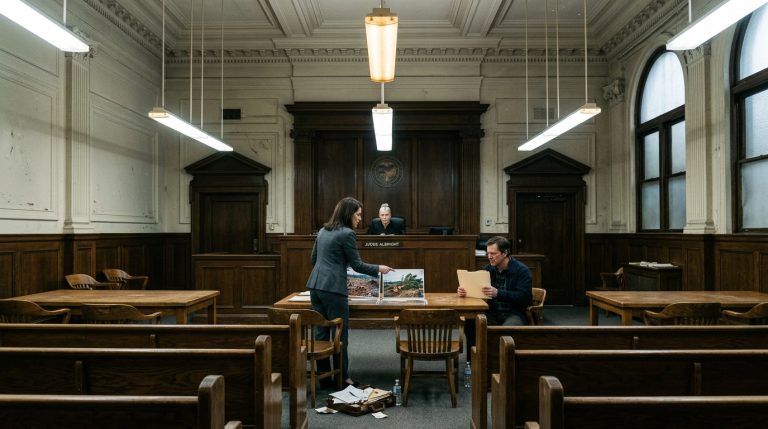
The community center smelled of stale coffee and industrial floor wax. I walked toward the front of the room, the hardwood floor groaning under my feet with every step. The air felt thick, charged with the nervous, shifting energy of a neighborhood that knew something was coming but didn’t know the shape of it. Karen sat at the head of the table, her clipboard set firmly in front of her like a shield. She looked expectant, her smile polished and dangerous. She didn’t know I had the audit. She thought I was there to answer for the “clutter” of my hardware.
The room fell silent as I reached the projector controls. Some neighbors shifted in their plastic chairs, their eyes darting between me and Karen. A few looked sympathetic, others hardened by the HOA’s relentless, arbitrary enforcement of the last few months.
“Mr. Miller,” Karen said, her voice cutting through the room with the sharpness of a razor. “We are waiting. You have been given the floor to explain why your private equipment continues to violate our community aesthetic standards.”
I didn’t answer her. I didn’t acknowledge the “violation notice” she was tapping her fingernails against. I simply plugged my phone into the projector cable.
“This isn’t about aesthetics, Karen,” I said, my voice quiet, stripped of any inflection. “It never was.”
I clicked the remote. The screen flickered, the white light washing over the room before settling on a crisp, high-definition image of the backyard utility conduit. The room murmured. I tapped the remote again—the video of Marcus, clear and identifiable, cutting the decoy wire.
Karen’s expression didn’t crumble; it hardened. She leaned forward, her eyes narrowing. “This is clearly a fabricated attempt to deflect from your own negligence,” she began, her voice gaining volume, reaching for the authority she had wielded for years. “This proves nothing but your own obsession with—”
I didn’t let her finish. I clicked again. The screen shifted to the metadata audit—the digital bridge between Marcus’s firm and the HOA management portal. I began to scroll through the transaction logs, the lines of code highlighting the specific consulting fees paid to the board for “infrastructure consultation services.”
“This is a forensic audit of the HOA’s administrative portal,” I said, my voice steady, echoing off the high, vaulted ceiling. “Every payment from Vane Solutions, every administrative override used to sabotage county emergency relays, and every email coordinating the timing of these incidents. It’s all here. It’s not an aesthetic concern. It’s a criminal conspiracy to replace protected infrastructure with proprietary, government-subsidized hardware.”
The room went deathly, terrifyingly silent.
I looked at the neighbors. I saw the realization dawn on them, the shock of finding out that the “rules” they had been living by were just the tools of a corporate heist. The man who had been fined for his solar panels looked at the screen, then at Karen, his face reddening with a slow, building fury.
Karen stood up, her composure finally fracturing. She looked toward the back of the room, her eyes searching for the support of her hand-picked neighborhood patrol, but they were already shrinking into the shadows, aware that the game was finished.
“You don’t know what you’re doing,” she hissed, her voice trembling. “This is private business. You have no authority to access these logs.”
“The logs are public record because they interact with the county emergency grid,” I replied. “And the county legal team is currently parked outside.”
The double doors at the back of the room swung open. Two men in dark, windbreaker-style jackets—the kind that didn’t hide the shapes of radios and credentials—stepped inside. They didn’t run. They didn’t shout. They just walked toward the front table with the heavy, unhurried pace of men who had finished their investigation.
Karen turned, her face a mask of sudden, cold realization. She looked back at me, her eyes meeting mine for a fraction of a second—not with the fire of a crusader, but with the hollow, defeated look of a person who had spent her life building a castle out of sand.
“You think you’ve won?” she whispered, so low that only I could hear.
I didn’t answer. I watched as the officers reached the table, their presence ending the pretense of the meeting. The atmosphere in the room shifted, the tension breaking into a chaotic swirl of whispers, anger, and the heavy, settling realization of what had actually been happening in our streets. I hadn’t just won a debate; I had dismantled the entire structure of the control that had governed our lives.
I turned off the projector. The room went dark, the screen fading into a dull, gray rectangle against the wall. The hum of the projector fan—the last piece of the machine that had exposed them—faded into the silence, and for the first time in months, I felt the air in the room start to change. It was still stale, still smelling of coffee and floor wax, but it was finally, truly still.
CHAPTER 8: The Frequency of Resilience
The fallout wasn’t an explosion; it was a slow, agonizing dissolution. The county officials didn’t need to do much more than hand over the dossiers to the local news stations. Within forty-eight hours, the narrative that had been so carefully curated by Karen and Marcus began to tear at the seams. It wasn’t about the “ugly wire” anymore. It was about the fraud, the secret consulting fees, and the deliberate endangerment of the regional emergency network for the sake of a corporate contract.
I watched it all from my office, the screens flickering with local news loops. Karen’s house was empty, a ‘For Sale’ sign staked into the lawn like a tombstone. Marcus, faced with the overwhelming evidence of the packet logs and the metadata audit, had gone dark, his office shuttered and his firm under federal scrutiny. The neighborhood patrol members had been quietly picked up for questioning, their prior records providing the final push for the fraud charges.
I stood by the back fence, my hands resting on the cool, solid wood. The conduit was no longer a makeshift repair; the county had sent out a crew to replace the entire line with reinforced, industrial-grade housing. They had even installed a small, unobtrusive motion-sensing spotlight, a quiet nod to the fact that the node was officially part of the region’s protected infrastructure.
The hum was back—stronger, more resonant. It was a vibration I could feel in my fingertips, the literal heartbeat of a network that was finally doing what it was designed to do.
The repair was not just technical. I reached out and touched the metal plaque the county had installed. Emergency Communications Relay: Resilience in Crisis. It was a small, cold piece of brass, but it felt like a final, permanent stake driven into the ground. It was an acknowledgement that the struggle hadn’t been an inconvenience; it had been a necessity.
I looked toward the street. A neighbor—the one who had been fined for his solar panels—was walking his dog. He stopped when he saw me, his expression softening. He nodded once, a brief, wordless gesture of solidarity, and kept walking. It was the first time in years he had actually looked at me, rather than through me, as if I were a piece of equipment that didn’t fit the aesthetic.
The truth had moved through the neighborhood like a sudden, cleansing storm. It had washed away the pretense of the HOA, the performative order, and the quiet, crushing weight of the bylaws. What remained was just… people. Ordinary people living in ordinary houses, now aware of the fragility of the things they depended on.
I went back inside and turned off the monitors. The office felt different—less like a bunker, more like a workspace. The files that had occupied my every thought for weeks were archived, closed, and put away. I walked to the kitchen and made coffee, the familiar ritual of grinding the beans and waiting for the water to boil feeling strangely heavy with purpose.
I sat by the window and watched the afternoon light soften. The dry, rust-colored earth of the backyard was finally drinking in a light, steady rain—the first real rain of the season. It smelled of wet stone and renewed life, a scent that cut through the lingering, metallic taste of iron and ozone that had defined the last month.
I realized then that I hadn’t just saved the relay. I had stopped the erosion of the life I’d built here. The peace was real now, because it was earned. It wasn’t the forced, artificial quiet of a managed neighborhood; it was the honest, messy, and resilient silence of a place that knew the cost of its own stability.
I took a sip of the coffee, letting the warmth settle into my chest. I wasn’t the sovereign protector anymore, just a person who kept the signal moving. And as the rain continued to fall, steady and rhythmic against the windowpane, I listened to the hum of the relay—the only constant in a world that had finally, thankfully, started to find its own voice.