A Vineyard Owner Uncovers Stolen Water Lines Feeding an HOA’s Gala Lake and Waits for the Pumps
CHAPTER 1: THE HOLLOW LINE
The brass needle on the north manifold fluttered five pounds below the red hash mark and refused to climb. Everett Sloan held the ball of his thumb against the housing, feeling the hollow flutter of air trapped inside the casing where solid, cold well water should’ve pushed back. Seventy-two hours out from harvest, the cabernet fruit hung taut on the wires, their skins tight enough that two hot afternoons without line pressure would prune them into bitter raisins.
“Pump’s running clean down at the pit,” Ross said, spitting a sunflower hull into the powdery gray dirt between rows. He carried an eighteen-inch pipe wrench by the jaw, its forged handle scored from years of riding the floorboard of an old flatbed. “Storage tank sits at full float. Meter says we’re pushing eight hundred gallons a minute, but row forty through eighty ain’t dripping enough to wet a postage stamp.”
Everett didn’t answer right away. He wiped mineral scale off the sight glass with his work shirt, watching the tiny red impeller spin at half-stroke. Water didn’t vanish into thin air. If the master meter recorded volume leaving the reservoir, and the vines were starving, the loss was bleeding out between the intake and the fence line.
He climbed into the cab of the battered diesel truck without killing the ignition, leaving the door unlatched so the latch clattered against the striker. Ross hopped onto the tailgate, his steel toes banging the bumper as they crawled along the northern easement where the slope pitched upward toward the limestone ridge.
The boundary fence was six-strand barbed wire, rusted silver and tangled in wild blackberry canes. On Everett’s side, the vineyard floor was dry, cracked earth dusted with chalky volcanic loam. Above them, perched on the bulldozed terraces of Brier Crest, manicured rye grass rolled down like an emerald rug, damp and smelling of synthetic fertilizer.
Two hundred yards up the property line, where the ditch dropped into a culvert, the dust smelled wrong. It carried the faint, swampy odor of freshly turned clay.
Everett cut the engine. He stepped down into the dry ditch, his boots crunching over dead cheatgrass. A strip of artificial turf, bright green and coarse as plastic broom bristles, had been pinned over the ditch bank with landscape staples. He hooked his fingers beneath the edge and jerked. The turf peeled back with a tearing sound, shedding rubber crumbs across a six-inch PVC coupling freshly cemented with purple primer that hadn’t fully cured.
The illegal collar bit straight into Alder Ridge’s buried six-inch mainline. From the junction, a heavy black poly-pipe snaked through the scrub oak, heading straight through the chain-link fence into Brier Crest’s service corridor.
Ross dropped into the ditch beside him, raising the wrench. “I’ll crack the joint right here. Cap it with a blind plug.”
“Leave it,” Everett said, his voice flat. He knelt, pressing two fingers to the plastic pipe. It was vibrating under hard, steady suction. “You cut it now, they tear out the uphill end before the sun goes down, and we’re left eating the bill for two million gallons.”
He scrambled up the bank, pushing through the brush toward the crest. Fifty yards past the fence line, the trees opened onto the back of the Brier Crest clubhouse. Where an empty flood detention basin had sat dry for ten years, an artificial lake stretched three acres across the hollow, complete with a floating timber stage, a churning center aerator, and white folding chairs lined up across the lawn under strings of Edison bulbs.
A banner strung between two light poles caught the wind: Brier Crest Founders Gala — 20 Years of Excellence.
Near the water’s edge, a woman in a tailored cream blazer was gesturing with a clipboard at a crew unloading cases of champagne. Everett stood at the property line, his boots caked in dry ditch clay, watching his harvest ripple across the fake pond.
CHAPTER 2: THE PAPER SHIELD
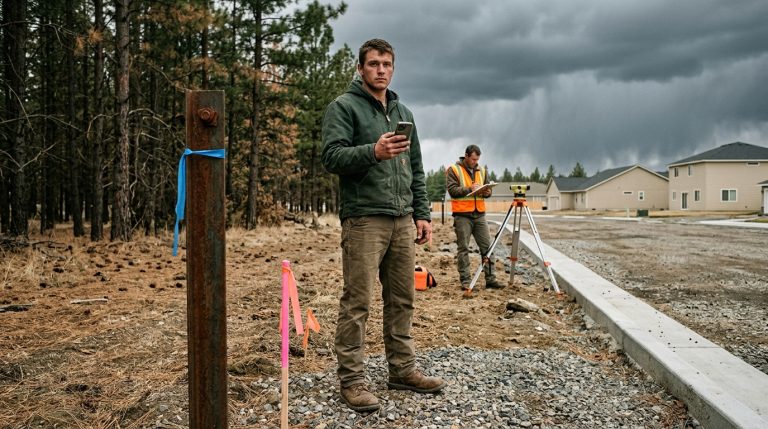
Four minutes up the ridge cut, the air turned cool and smelled of fresh chlorine and wet sod. Everett didn’t step through the chain-link gap; he stopped where the surveyor’s iron pipe rose two inches out of the hardpan, his boot heel planted squarely on his own side of the line.
Ross came up behind him, breathing hard through his teeth, the heavy pipe wrench swinging loose against his canvas work pants. Across twenty yards of manicured rye, three caterers in black aprons unloaded wooden crates of stemware onto folding tables. In the middle of the basin, the aerator tossed a twenty-foot rooster tail of foam into the afternoon sun, showering mist over plastic turf that had never seen a drought.
Joselyn Pembroke stepped off the clubhouse terrace before Everett could reach the gravel service road. She didn’t hurry. Her cream blazer was pressed crisp down the lapels, sunglasses pushed up into graying hair that sat fixed against the hill breeze. A man in a dark poplin suit walked half a step behind her, carrying a leather folio tucked under his arm.
“You’re off the service path, Mr. Sloan,” she said. She stopped four feet short of the iron boundary pin, her eyes skimming past Everett’s dirt-streaked forearm to settle on Ross’s wrench. “This area is closed to through traffic until Monday morning.”
“The line’s mine,” Everett said. He kept his hands flat against his thighs, feeling the dried lime crust on his knuckles. He didn’t look at her face; he looked at the black four-inch poly-pipe where it vanished beneath the turf near her deck. “Six-inch main off the north well. Your collar’s pulling forty pounds of head pressure out of my block three days before we pick.”
“The utility corridor is shared infrastructure,” the man with the folio said. He had the dry, rapid cadence of an associate sent out to clear an entry gate. He unzipped the leather folder, pulled a clear plastic sleeve from the pocket, and held it out without crossing the survey pin. “Brier Crest holds an agricultural-supplemental easement across the north perimeter. Section four, clause B. Entered into record seven months ago.”
Everett took the sheet. The plastic was warm from the car seat. Beneath the county header, the text cited temporary access for fire suppression and ornamental grade stabilization. At the bottom, squeezed between two lines of boilerplate, was a signature.
Everett Sloan.
The tail of the S curled upward, cutting across the line before flattening out—the exact hitch his left wrist made ever since he broke it bailing hay back in ninety-eight. It was clean. Too clean. The ink didn’t have the slight bleed that cheap ballpoint pens left on rough bond paper; it looked like a high-density scan burned onto cotton stock with an office laser.
“I never signed this,” Everett said.
Joselyn smiled, the small, tidy movement of someone confirming an appointment. “Your office returned it in February, Mr. Sloan. If your record-keeping down at the barn is disorganized, that’s hardly the association’s fault. We have four hundred people arriving tomorrow evening. The basin stays full.”
Ross shifted his weight, the wrench clinking against a fence post. “You stole two million gallons through a bootleg tap. We can have a backhoe up here in twenty minutes and dig that pipe out of the dirt.”
“Try it,” Joselyn said, her voice dropping into a level, flat register. “The moment your bucket touches this easement, my counsel files an emergency injunction for malicious interference with community fire reserves. The sheriff’s substation in town will have deputies on your boundary before you can pull a tooth out of the ditch. You’ll spend harvest week answering a contempt citation while your fruit rots on the wire.”
Everett looked down at the paper in his hand. A red ant crawled across the laminated border, paused at the corner, and dropped into the dry cheatgrass.
He didn’t tear the sheet. He didn’t shout. Shouting gave them an entry in the incident log; it gave the lawyer a reason to call the county dispatcher and claim agricultural sabotage.
“Who notarized the entry?” Everett asked.
The lawyer reached for the document, but Everett didn’t hand it back. He folded the sleeve once down the center, creasing the thick plastic with the side of his thumb, and slipped it into his breast pocket behind his notebook.
“That document is association property,” the lawyer said, his chin coming up.
“It’s got my name on it,” Everett said.
He turned his back on the lake, the fountain, and the white folding chairs. He took Ross by the elbow, gripping the denim of his sleeve hard enough to leave a mark, and guided him back down the slope toward the diesel truck idling in the dust below.
“We ain’t just walking away,” Ross muttered, his face red under his cap. “That water’s ours, Everett.”
“It’s running into their pond right now,” Everett said, climbing into the driver’s seat and pulling the door shut until the rusted latch caught with a dull metallic slam. “Let it run. Grab the line file from the glove box and find the direct desk number for water compliance. We aren’t calling the sheriff.”
CHAPTER 3: THE FLUVIAL CODE
Twenty-two hours later, the top canopy on block four began to cup like dried tobacco. Everett stood between two trellis posts with his knife out, nicking a cane until the green cambium showed dull and thirsty beneath the gray bark. Forty-eight hours without full pressure and the berries would start shedding sugar back into the rootstock to survive.
A white county truck bounced down the washboard perimeter track, its heavy suspension clattering over the dry ruts before idling out behind his flatbed.
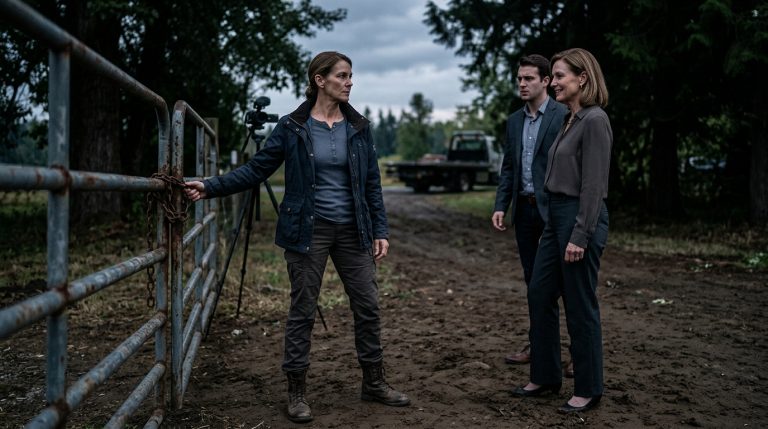
Tessa Galloway stepped down into the dust. She wore steel-toed field boots scuffed white at the caps and a tan vest stuffed with surveying pins, pipe calipers, and a clip-board under clear plastic. She didn’t offer a handshake. She reached straight into the bed of her truck for a three-ring binder of registered property plats.
“Show me the tap,” she said.
Everett led her up the ditch. Ross followed ten paces back, carrying a sledge and two wooden survey stakes.
At the culvert, the artificial turf lay crooked where Everett had tossed it the afternoon before. Tessa dropped to one knee, ignoring the dry burs sticking to her cargo pants. She pulled a brass caliper from her pocket and snapped it around the six-inch PVC collar, reading the metric groove.
“Non-spec industrial coupling,” she muttered. She tapped the solvent weld with her thumbnail. “Purple primer’s still tacky in the bead. They ran this inside of seventy-two hours.”
“They’re drawing forty pounds,” Everett said. He kept his boots planted in the silt, staring at the high water mark on the ditch culvert instead of her clipboard. “Master meter down at the pumping vault recorded two point seven million gallons since the first of the month.”
Tessa flipped a page on her board. “The association filed a temporary supplemental access petition on Tuesday. Claimed an existing agricultural reciprocal right.”
“There’s no reciprocal right,” Everett said. He pulled the creased plastic sleeve from his breast pocket and handed it across. “They brought that out to the fence yesterday. My name’s signed on the bottom.”
Tessa glanced at the penstroke, then tipped the paper toward the noon sun. Her eyes narrowed on the fine toner dots around the signature margin. “That’s a flatbed scan from a thirty-pound bond original. Who notarized it?”
“Nobody,” Everett said. “Just her and the kid with the briefcase.”
Tessa didn’t comment. She slid the document under her clipboard band, climbed out of the ditch, and pushed through the scrub oak toward the Brier Crest fence line. Everett and Ross followed.
Above them, the artificial lake sat like a pane of dark glass under the mid-day heat. Three men in white polo shirts were testing the floating stage’s sound system, their voices booming across the water through twin speaker arrays: Check. One, two. Check.
Tessa didn’t look at the stage. She walked the perimeter slope, her boots sinking two inches into fresh-laid sod, until she reached the riprap rock lining the bank. She pulled a laminated map from her binder—the county’s 2008 flood mitigation survey.
“Everett,” she called, not looking back. “What was this basin designated for when the ridge subdivided?”
“Storm runoff,” Everett answered, stopping at the boundary pin. “Dry catchment. Meant to hold flash wash off the highway cuts and drain through a twelve-inch perforated culvert down into the creek bed.”
Tessa bent down and dug her fingers into the mud between two rocks. She brought up a handful of thick, black poly-liner, rubbery and puncture-sealed.
“They sealed the bed,” she said, her voice dropping into a hard, professional calm. “They dredged out the intake weir and laid four-millimeter pond liner right over the soil profile. There’s no emergency overflow.”
“What does that mean for the line?” Ross asked, stepping up with the sledge.
“It means Joselyn Pembroke doesn’t just have an unauthorized agricultural tap,” Tessa said, standing up and wiping raw muck onto her jeans. “She dammed a designated flood mitigation structure without an engineered civil permit. If a three-inch rain hits that ridge with this basin holding two million gallons, the earthen bank gives out and drops sixty tons of slurry straight onto your lower rows and the county road.”
Before Everett could speak, a utility golf cart hummed up the service road from the clubhouse, kicking up a rooster tail of crushed gravel. Joselyn stepped out from under the canvas roof before the wheels stopped rolling. She was holding a manila folder, her smile tight as a cinch strap.
“Inspector Galloway,” Joselyn said smoothly. “I trust our legal counsel provided your division with the amended utility filings this morning.”
Tessa closed her binder with a sharp slap that echoed across the water. “Your legal counsel filed an unnotarized scan with a suspected fraudulent endorsement, Ms. Pembroke. And you’ve converted a state-regulated stormwater catchment into a private holding pond without an engineered discharge path.”
Joselyn’s smile didn’t break, but the skin around her eyes tightened. “This basin holds temporary water for an association milestone. Our engineers have verified the structural load.”
“Then you can show those stamps to the district magistrate on Monday,” Tessa said. She walked straight to the black poly-pipe protruding from the turf, pulled a red vinyl lock-out tag from her vest, and cinched it through the bypass valve handle with a heavy-gauge steel cable. She snapped a bronze padlock shut through the eyelet. “Under Title Forty-Two of the state agricultural water code, this tap is sealed pending forensic review. If this lock is tampered with before harvest concludes, it’s a Class C felony.”
Joselyn didn’t yell. She looked past Tessa, her gaze locking onto Everett with cold, venomous clarity.
“You think this saves your fruit, Sloan?” she said, her voice barely carrying over the hum of the clubhouse coolers. “The basin is already full. The gala starts at eight tomorrow night. Whatever petty paperwork you’ve managed to stir up won’t drain a single drop before my guests arrive.”
She turned on her heel and stepped back into the cart.
Everett looked down at the padlocked line. The black pipe had stopped shuddering. Through the quiet, he could hear the faint, dry clatter of dying cabernet leaves shaking in the valley wind behind him.
CHAPTER 4: THE NIGHT LEDGER
Thirty-one hours after the lock snapped shut on the bypass line, Everett’s phone vibrated against the formica table of the Highway 12 diner. He didn’t pick it up until the third ring, his calloused thumb sticking to the grease-filmed glass.
“Mr. Sloan?” The voice on the receiver came thin, clipped by the rattle of an idling air conditioner. “Sit in the corner booth facing the highway. Don’t wave.”
Paige Ellison slipped into the vinyl seat across from him two minutes later. She was forty, maybe forty-five, wearing a windbreaker zipped to the collar and running shoes dusted with road grit. She didn’t look at Everett’s face. She set a heavy canvas tote bag between her knees, her fingers twitching against the strap like she was waiting for a siren.
“The board had an executive session at six,” she said, her voice barely louder than the hum of the pie cooler behind the counter. “Joselyn told the members the county tag was an administrative misunderstanding over stormwater permits. She told them she’d handle the fine out of discretionary funds.”
Everett wrapped his hands around his thick ceramic mug. The coffee had gone lukewarm, a dark oily skin forming over the top. “My north block’s holding pressure now. But the leaves are scorched. It’s going to cost me eighty tons of fruit on the crush.”
“You think this was about your fruit?” Paige unzipped the bag with a slow, deliberate pull of the brass teeth. She hauled out a two-inch stack of green-bar computer paper, folded accordian-style, the edges perforated and worn soft from handling. “Look at the utility line item for March of last year.”
Everett pulled the ledger across the table. His thumb hovered over the numbers, the skin dry and rough against the faint blue ink.
The figures didn’t make sense. Brier Crest had added twenty-two luxury parcels on the north bench eighteen months ago—pool installations, sodded acreage, ornamental fountains along the boulevards. Yet the water expenditures logged under municipal district billing hadn’t climbed. They had dropped thirty-four percent.
“That’s impossible,” Everett said. “You can’t add sixty thousand square feet of turf in a drought and cut municipal draw.”
“You can if you don’t buy it from the district,” Paige said. She slid a yellow carbon invoice across the table, her finger tapping the contractor block. “Dean Hollowell. Excavation and site grading. Seven separate checks cut from the capital reserve account between January and June. One hundred eighty-six thousand dollars.”
Everett read the line description: Subsurface drainage remediation and perimeter grade stabilization.
“No blueprints attached,” Paige whispered. “No competitive bidding. When I asked for the engineering sign-off, Joselyn told me the files were archived with the county. When I checked with the clerk’s office on my lunch break, there was nothing. Not an application. Not a soil test.”
She leaned in, her eyes bloodshot, tracking a logging truck shifting gears out on the asphalt.
“She didn’t dig that line last week for her party, Mr. Sloan. She put the main trunk in eighteen months ago. She’s been siphoning your deep-well feed every single night between midnight and four in the morning. That’s how she kept the HOA assessments flat while building out the estate amenities.”
A waitress clattered a tray of heavy plates onto the counter behind them. Paige flinched, pulling her hands back into the sleeves of her windbreaker.
Everett didn’t move. He stared at the yellow carbon slip. The math clicked into place with the dull, sickening weight of an engine throwing a rod. The two point seven million gallons taken over the last two weeks hadn’t been an isolated theft. It was just the surge—the desperate push to flood the detention basin to capacity before her four hundred guests walked onto that floating timber stage.
“There’s something else,” Paige said, pulling a folded printout from her inside pocket. It was a screenshot of an email, the timestamp reading three in the morning six months back.
Joselyn’s address was at the top. The message to Dean Hollowell had only two sentences:
Run the vineyard feed after midnight. Nobody checks those meters manually anymore.
Attached to the bottom was a scanned image file: Sloan_Ag_Auth_1998.pdf.
Everett looked at the penstroke on the screen. It was the same broken wrist hitch on the tail of the S. The maintenance contract he’d signed with the old citrus co-op twenty-six years ago, back before the developers bought the orchard and bulldozed the trees for Spanish-tile mansions. She’d kept the signature on file, waiting until she needed a clean piece of paper to lay over the trench.
“Why are you giving me this?” Everett asked.
Paige pulled the tote bag back onto her lap, her knuckles white against the nylon. “Because the board voted to levy an emergency five-thousand-dollar assessment on every homeowner in the development to fight your injunction. She’s using our money to buy the lawyers to cover her theft. And she’s got Hollowell scheduled to trench a third line out past the clubhouse ridge tomorrow morning.”
Everett folded the paper down the center, creasing the edge sharp with his thumbnail. “Where does the third line go?”
Paige looked out through the plate-glass window, toward the ridge where the sun was beginning to drop behind the scrub oaks.
“It doesn’t go to an amenity, Mr. Sloan,” she said. “It goes straight up to her private gate.”
CHAPTER 5: THE GALA DRAIN
Twenty-six hours later, at fourteen minutes past eight in the evening, the ridge smelled of roasted prime rib, hairspray, and five feet of standing canal water. Everett stood behind the service trailer with his hands wedged deep into his jacket pockets, watching the floating timber stage sway under four hundred pairs of polished shoes.
Above the lawn, hundreds of Edison bulbs cast a golden sheen across the fake pond. Crystal champagne flutes caught the glare, and the banner hung dead straight in the dead heat: Built to Last.
On the stage, Joselyn Pembroke raised a fluted glass toward the terrace. Her gown was midnight blue, tailored to the floor, without a speck of ditch dust on the hem.
“To twenty years of vision,” her voice came over the twin speaker arrays, clean and bright. “To the people who know that what we build up here belongs to the ones who have the courage to protect it.”
A ripple of applause broke through the tables. Glasses went up.
Behind the tree line, a starter motor whined, caught, and died with a wet backfire.
Joselyn’s chin tilted up, her voice pressing louder through the microphone. “To twenty years of—”
The second starter caught with a sharp, concussive bark. A three-cylinder diesel industrial pump roared into life, followed half a second later by the deep, churning thrum of an eight-inch centrifugal intake. The timber stage lurched three inches toward the bank, the sudden draw of current snatching at the anchoring lines until the eyelets shrieked against galvanized bolts.
Across the lawn, heads swung toward the cedar hedge.
Malcolm Dyier stepped through the gap in the fence, wearing high-visibility orange over field canvas, clipboard clamped to his chest. Behind him, four county utility crewmen in yellow rubber boots wrestled a heavy corrugated discharge hose into the rock culvert, its steel-banded coupling rattling against the limestone riprap.
Joselyn froze with her glass high. The center fountain gave a violent, spitting cough, choked on a slurry of silt, and died.
“Stop the line,” she snapped into the live microphone, the sound popping hard across the valley. She didn’t wait for the sound technician to cut the feed. She stepped off the floating ramp, her heels sinking two inches into the sodden bank, and made straight for Malcolm. “You shut those engines off right now. You’re trespassing on private association property during a sanctioned milestone.”
Malcolm didn’t break stride. He pulled a folded sheet of yellow legal stock from under his clipboard clip and held it flat against her face. “Emergency Dewatering and Flood Safety Order. Signed at four-fifteen by the county magistrate. Unauthorized modification of a regulated detention basin. You’re sixty acre-feet over structural capacity with forty-knot gusts forecast before midnight.”
Joselyn snatched the page and ripped it down the fold. The paper tore with a sharp rip, the halves fluttering onto the wet grass.
Tessa Galloway stepped up behind Malcolm, her hand already deep in her vest. She pulled out a fresh duplicate, unfolded it, and laid it directly onto the hood of a catering van parked by the hedge. “Keep tearing them, Ms. Pembroke. The clerk ran thirty copies.”
On the lawn, the music died. Four hundred people stood along the water’s edge, champagne flutes lowering, their reflections fracturing as the lake dropped six inches in under three minutes. A dark rim of greasy gray muck began crawling up the bank, smelling of rotting weed and sour well lime.
“Turn them off,” Joselyn whispered, her voice dropping out of the public register into something jagged and thin. Her fingers clenched on the fabric of her skirt, bunching the blue silk. “Give me until eleven. Just let them clear the lawn.”
“The water isn’t yours to keep until eleven,” Everett said.
She turned. Her eyes raked him from his scuffed boots to the grease pencil behind his ear, the disgust bare and ugly on her face. “You crawled up here with your farm dirt to ruin four hundred people’s evening over an irrigation bill.”
“Look at the bank,” Everett said.
The water fell another foot, sucked down through the twin hoses. Near the floating stage, the mud broke open.
A four-foot steel manifold surfaced through the gray sludge, its flanges painted with yellow industrial epoxy. Three separate supply lines branched off the central trunk like the ribs of an animal. Two ran west toward the community sprinklers. The third, an unpermitted three-inch high-pressure line, ran straight east through the cut in the bedrock, climbing the private terrace toward the iron gates of Joselyn’s home.
Dean Hollowell was already standing at the edge of the ditch, his leather tool belt sagging on his hips, county deputies flanked two paces behind his shoulders.
“Show them the box, Dean,” Tessa said.
Hollowell didn’t look at Joselyn. He stepped into the six-inch slurry, the mud sucking at his knees, and hauled back an iron vault lid buried in the silt.
Inside sat three independent pulse meters and an aluminum bypass valve engineered to divert sixty gallons a minute around the association’s billing head. Stamped into the brass plate of the third submeter was a line of hand-punched letters: JP-RES.
On the terrace above, a man in a dinner jacket lowered his drink. “That’s the capital reserve project?”
“Paige,” another voice called from the tables. “What did we pay Hollowell for?”
Joselyn backed away from the mud line, her heel catching on an exposed root. She stumbled, righting herself with one hand against a wooden light stanchion. The Edison bulbs hummed overhead, buzzing in the rising wind. She looked at the guests, her mouth opening, but the words caught behind her teeth.
Nobody moved toward her. Two board members stepped back into the shadows of the clubhouse breezeway, folding their arms.
Everett didn’t walk out into the mud. He stayed on his side of the surveyor’s pin, his thumb resting against the brass casing of the gauge in his pocket.
Beneath the roar of the diesel pump, the exposed distribution line let out a long, hollow gurgle as the last two million gallons of stolen water broke through the seals, rushing down into the dark culvert where it belonged.
CHAPTER 6: THE SETTLED SILT
Eight weeks after the county pumps pulled the bottom out of Brier Crest, the valley air smelled of sour fermenting grape skins and wet oak leaves. Everett sat on the turned-up bottom of a five-gallon grease bucket on the crusher pad, using the small blade of his pocket knife to clean clay out of the tread of his work boots.
Down along the gravel drive, the flatbed trailer stood empty, its wooden bed stained dark purple from the last press run of the cabernet. The clusters had come in small—twenty percent light on total tonnage from the four days the north line ran dry—but the brix held firm at twenty-four. The juice was in the stainless tanks, cold-settling under sulfur without a pump running.
Ross stepped out of the tank barn, wiping sticky syrup off his forearms with a red rag. He carried two heavy tumblers by the rims, the amber liquid inside catching the late afternoon gray.
“Tessa Galloway’s clerk dropped the final inspection certificate by the gate box,” Ross said. He handed a glass across, his boot heel scuffing the concrete floor. “Permanent six-inch backflow preventer registered on the county plat. Monitored pulse valve wired straight to the agricultural commissioner’s desk. Nobody puts a spade into that ditch without triggering an alert in town.”
Everett took the glass. The glass was cool, beaded with moisture from the cellar room. He didn’t take a sip right away. He turned the tumbler in his hand, feeling the raised mold line down the side of the glass.
Across the valley, the ridge sat bare under the autumn overcast.
The floating stage was gone. The white banner had been hauled down weeks ago, leaving only two bare timber poles sticking out of the hillside. Where Joselyn’s decorative lake had rippled under string lights, the old flood detention basin sat open to the sky—an ugly, dished hollow of dried, cracked gray silt, scored by survey stakes and the deep tread marks of county backhoes that had dug out the illegal manifold.
High on the crest above the basin, a wrought-iron gate stood open to the asphalt. A red-and-white real estate sign was wired to the stone pillar, the corner of the vinyl banner flapping every time the north wind came down through the notch.
“Paige Ellison called the office this morning,” Ross said, leaning his hip against a stack of clean picking lugs. “Said the HOA audit cleared. Board voted to restore the emergency reserve through a special assessment on the developer’s unsold lots. She said Joselyn’s lawyer tried to settle the pump fuel bill for ten cents on the dollar, and the county attorney laughed him out of the room.”
Everett looked up at the stone pillars on the ridge. “She out of the house?”
“U-Haul was up there on Tuesday,” Ross said. “Two guys loaded the patio furniture and cleared out before noon. Paige said she didn’t even come back to pick up the mail.”
A red-tailed hawk banked over the dry scrub oak along the fence line, dropping low toward the wash where the wild blackberries were shedding their leaves.
The wind shifted, bringing the faint, mineral smell of the season’s first coastal rain pushing over the ridgeline. A drop hit the tin roof of the crusher shed with a sharp tick, followed by another two seconds later against the hood of the flatbed.
Down in the basin, where the four-millimeter plastic liner had been torn out and hauled to the municipal landfill, the raw clay soaked in the moisture. A thin trickle of brown wash was already beginning to crawl through the rocks toward the twelve-inch culvert at the bottom, moving slow and steady down the natural slope toward the creek bed, exactly the way the grade had been cut twenty years before anyone poured a foot of decorative concrete.
Ross raised his glass, the amber whiskey level with his chin. “To keeping what’s ours.”
Everett watched the water find the culvert pipe. He held his glass still against his knee, feeling the chill of the rain begin to settle into the old break in his left wrist.
“To the fence line,” Everett said.
He took a slow drink, set the heavy tumbler down on the concrete pad, and walked out into the rows to check the line drains before the storm took hold.