The Weight of the Protocol: Navigating the Rusted Fault Lines of a Collapsing Community Order
CHAPTER 1: THE WEIGHT OF THE STEEL
The temporary cage was bolted into the asphalt with a grating, metallic shriek that set my teeth on edge. It looked alien here—bright, reflective silver against the dull, salted gray of the parking lot. I stood by the window of my living room, the space now warm but feeling smaller than it had yesterday. My breath didn’t fog the glass anymore.
The technician, a man whose coveralls were stained with the permanent soot of a dozen jobs like this one, stood back to admire the geometry of his work. He didn’t look up. He didn’t look at the blackened, empty patch of snow where the red Mercedes had sat just hours ago. He simply checked his clipboard, tucked a pencil behind his ear, and walked toward his utility van. The metal of the cage was immovable, a stark contrast to the yellow tape that had disintegrated under Lena’s hands.
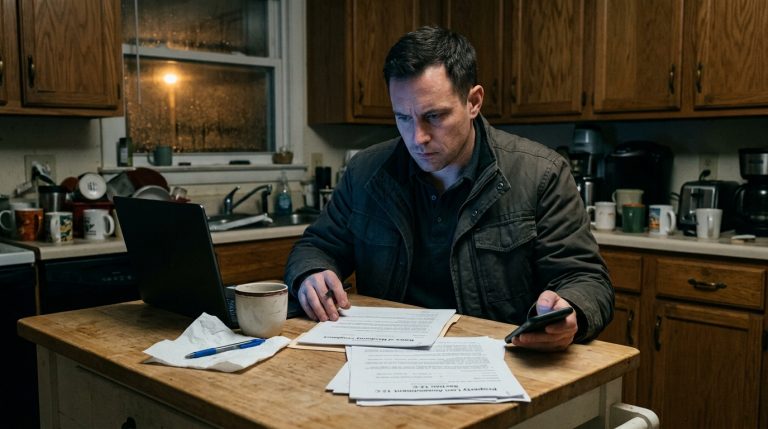
I turned away from the window. The living room felt heavy, not with cold, but with the pressure of what had been avoided. My desk was a map of documentation—printouts of emails, the fire department’s formal reports, the timestamped logs of every interaction with Lena Caldwell. They looked different now, less like a shield and more like a map of a disaster that had been waiting to happen.
There was a soft, tentative knock at the door. I didn’t reach for it immediately. I waited, counting the seconds, measuring the weight of the air. It wasn’t the heavy, assertive pounding of the HOA president. It was light, almost apologetic.
I opened the door to see Mrs. Gable from 4B. She was clutching a thermos, her coat buttoned all the way to her chin. She looked at the new reflective cage in the lot, then back at me, her eyes tracing the line of my face as if looking for signs of the explosion she’d heard but hadn’t seen.
“They’re installing cameras next,” she whispered, her voice barely carrying over the distant hum of the storm.
I leaned against the doorframe, feeling the rough texture of the wood grain against my shoulder. “Cameras don’t fix pipes, Mrs. Gable.”
“No,” she said, her grip tightening on the thermos. “But they might keep people from cutting the locks.”
She stepped slightly closer, the movement stiff. There was something in her hand, hidden beneath the thermos—a folder, thin, weathered, and marked with a smudge of grease. She didn’t hand it to me. She just held it, the paper catching the harsh, flat light of the hallway. It was a file labeled 2022 Landscaping, the ink faded to a rusted brown.
“I found this,” she said, her eyes darting toward the stairwell. “In the common room bin. Someone was cleaning out the HOA office in a hurry this morning.”
I looked at the folder, then at the reflective cage outside. The wind kicked up, rattling the windowpane. I didn’t take the folder, not yet. I just looked at the label, the rust-colored ink, and realized that the explosion hadn’t ended the conflict. It had only cleared the surface, leaving something deeper and far more damaged exposed to the light.
CHAPTER 2: THE PAPER TRAIL
I took the folder. The cardboard felt abrasive against my fingertips, a texture like dried salt. Mrs. Gable didn’t let go immediately. For a heartbeat, the folder was a bridge between us—a shared, terrified understanding of what was inside. Then, she released it, her eyes tracking the movement of a police cruiser that rolled slowly down the street, its blue lights extinguished, leaving the neighborhood in a state of suspended, uncertain quiet.
“I shouldn’t have been looking,” she whispered, her voice cracking. “But the smell… it didn’t leave after the fire trucks went. It just hung in the hallway, near the office door. I thought it was the gas, but when I saw the janitor dumping those boxes…”
She didn’t finish. She just nodded once, pulled her coat tighter, and retreated into the shadows of the stairwell, her boots clicking with a hollow, rhythmic sound on the concrete. I closed the door, the lock clicking into place with a finality that felt heavier than before.
The living room was quiet, save for the low, steady hum of the furnace—the sound of a system trying to maintain order in a space that felt compromised. I moved to the desk, laying the folder down alongside my own records. The contrast was immediate. My documents were crisp, printed, and precise—the result of a methodical, defensive response to an immediate threat. The papers in Mrs. Gable’s folder were the opposite: hand-written invoices, scribbled notes on napkins, and official-looking letterheads that lacked the standard verification stamps. They weren’t records; they were logs of a quiet, slow-motion theft.
I opened the folder. The first page was a contract from 2022. It detailed a massive landscaping overhaul for the central parking lot and the surrounding green belts. The cost was astronomical, nearly three times the annual maintenance budget for the entire neighborhood. I remembered the year—the summer the drainage failed, the winter the pipes froze, the season where the HOA claimed they had no funds to clear the emergency access paths.
They had diverted the money, but they hadn’t put it into the ground. I flipped the page, my thumb catching on the rough edge of a receipt. It was for materials—heavy-duty steel bollards, industrial-grade reflective paint, premium road-bed fill—items that had never been installed. The landscaping company listed at the bottom was a shell corporation; I recognized the address as a vacant lot on the industrial side of the city.
The weight of the realization didn’t hit me as a shock, but as a grinding, mechanical friction. It explained everything. The neglect wasn’t an oversight. It was a strategy. By letting the infrastructure degrade, Lena and her associates had created a constant state of emergency. They used that emergency to bypass standard oversight, to “expedite” repairs that were never intended to be permanent, and to siphon the resulting funds into the void. The red Mercedes hadn’t just been a symbol of her arrogance; it had been a key, a necessary piece of a much larger, more expensive puzzle of maintenance.
I picked up my phone. My hands were steady now, the tremor of the previous hours replaced by a cold, pragmatic clarity. I didn’t need to call the police yet. I needed the baseline. I started a new document, labeling it simply: Infrastructure Audit.
I began cross-referencing. I laid the invoices from the 2022 landscaping folder next to the utility company’s official site inspection reports I had gathered from the fire department. If the landscaping work had been performed as claimed, the soil compaction would have been documented. The utility reports showed no such work; instead, they showed deep, unmitigated erosion around the gas line, the exact cause of the leak.
The paper trail was a straight line, rusting and neglected, but unbroken. I sat there for hours, the light in the room shifting from the flat white of the storm to the deep, bruising violet of dusk. The furnace kicked on and off, a heartbeat in the dark. Every time it hummed, I thought of the compromised gas line beneath the asphalt—a ticking clock that Lena had treated as a personal obstacle.
I reached the bottom of the folder. The final document was a short email thread, printed out and stapled. It wasn’t about landscaping. It was a list of names—the “Maintenance Priority” list. My address was at the top, marked with a hand-drawn circle. Beside it, in Lena’s looping, confident script, was a single word: Obstruct.
It hadn’t been a parking dispute. I was a variable they hadn’t accounted for, a resident who recorded, who checked, who insisted on the standard, and that made me a threat to the entire architecture of their theft. I looked at the list, then at the empty lot outside. The reflective cage stood there, solitary and bright, a beacon of the new rules. But the rot wasn’t just in the soil. It was in the foundation of everything I had assumed to be legitimate.
I stood up, my joints stiff from the hours of stillness. The house felt less like a shelter and more like a fortress. I needed to move, to act, but the logic of the situation was clear. If I presented this now, they would simply scrub the digital records and blame the “lost” physical files. I had to wait for the system to cycle. I had to let them think the explosion had scared me into silence.
I walked to the window. The snow was falling again, a fine, dusting curtain that threatened to bury the evidence of what had happened that morning. I stared at the spot where the Mercedes had been, the charred earth beginning to turn white again. My phone sat on the desk, the screen dark. I left it there. I didn’t need a signal to see the truth. The system was broken, but it was still a system. And if you understood its mechanics, if you knew where the friction was, you didn’t have to break it yourself. You just had to show it where the rust was holding it back.
I walked to the kitchen and put the kettle on. The sound of the water, a dull, rushing vibration, felt like a preparation. I wasn’t just a resident anymore. I was an auditor of a collapsing, rusted truth. And as the steam began to rise, curling into the cold air of the kitchen, I knew the next step wasn’t a confrontation. It was a calculation. I would wait, I would gather, and I would let them make the mistake that finally, irrevocably, broke the seal.
CHAPTER 3: THE UNSEEN CORROSION
The kettle whistled, a thin, sharp sound that cut through the silence of the kitchen like a serrated blade. I pulled it from the burner, the metal heat seeping through the handle into my palm—a grounding, physical discomfort that helped snap me out of the trance of the invoices. I poured the boiling water into a ceramic mug, the dark liquid swirling in the dim light of the kitchen.
I didn’t drink it. I carried it back to the desk, the heat radiating against my chest. Outside, the parking lot was a landscape of frozen shadows. The new reflective cage caught the occasional sweep of a passing car’s headlights, glowing with a sterile, artificial intensity. It was a marker of safety, yet it felt like a scar on the skin of the neighborhood.
I sat back down, the chair groaning under the weight of the moment. My focus shifted to the physical reality of the maintenance closet. It was located on the ground floor of my building, a space I had walked past a thousand times without ever really seeing. It was a heavy, industrial-grade door with a rusted, recessed lock that the HOA claimed was for “authorized personnel only.” But after the explosion, after the chaos of the fire crews and the utility technicians, the protocols had loosened. The building superintendent, a man who had spent three decades trying to keep the pipes from bursting and the heat from failing, was likely in a state of terminal exhaustion.
I checked my watch. 2:00 a.m. The hour of the wolf.
I stood up, leaving the coffee to cool, and moved to the closet near the front door. I pulled on my winter gear—heavy, insulated trousers, a thick wool sweater, and boots that had seen more salt and slush than they ever should have. I checked my pocket. A small, tactical flashlight, the kind that focused light into a singular, piercing beam. I didn’t want to light up the hallway; I wanted to see only what was necessary.
The hallway was cold, the air thick with the smell of damp concrete and the faint, lingering odor of burned rubber from the parking lot. I walked to the elevator, then stopped. No. The elevator was a mistake. If the building’s power fluctuated, or if a camera was triggered by the motion, I’d be trapped. I took the stairwell, my boots making no sound on the rubber treads.
Every step down was a lesson in the building’s decay. The banisters were cold, the paint peeling away in long, jagged strips that felt like dried skin. The air grew colder as I descended, the scent of stagnant water and old, trapped heat becoming more pronounced. This was the building’s digestive system—the plumbing, the electrical, the heating lines. Everything Lena had neglected, everything she had siphoned the budget away from, lived here.
I reached the basement level. The door to the maintenance area was just as I remembered: a heavy steel door, the paint a dull, oxidized gray. I reached for the handle. It didn’t budge. But then I noticed the hinges. They were old, the pins worn down by years of friction and lack of lubrication. I didn’t need to force the lock. I just needed to apply leverage to the door itself, tilting it just enough for the latch to clear the strike plate.
I exhaled, feeling the air rattle in my chest, and leaned my shoulder into the metal. The friction of iron against iron shrieked, a high, metallic protest that seemed to echo through the entire basement. I froze, my heart hammering against my ribs, but the sound died as quickly as it had begun. The door swung inward.
The room smelled of wet dust and the distinct, acrid tang of ozone. I clicked on the flashlight, the beam cutting through the gloom. Dust motes danced in the light, swirling around rows of rusted metal shelves packed with abandoned equipment: broken pipe wrenches, rolls of brittle electrical tape, and boxes of faded paperwork.
I moved to the back, toward the filing cabinet that the superintendent always kept locked. It was a relic, a four-drawer cabinet that looked like it had been salvaged from a scrap yard. It wasn’t locked. The key hung in the lock, a simple silver thing that rattled with every vibration of the building’s aging boiler.
I opened the top drawer. Files. Hundreds of them. Not the polished, digital spreadsheets Lena used for the residents, but the real, paper records. I pulled out a handful, my fingers trembling as I flipped through them. Water Pump Replacement, 2021. Cost: $4,500. I looked at the next document—a handwritten note from the contractor, stapled to a quote for half that amount. Invoiced for the difference to HOA slush account.
I stood there, the weight of the documentation settling over me like a shroud. This wasn’t just a landscaping project. It was the entire history of the building’s maintenance, a decades-long erosion of the infrastructure, paid for by the residents and pocketed by those who claimed to be serving them. The smell of the basement, the dampness, the rust—it was all a symptom. They had been starving the building for years, letting it slowly die so they could harvest the parts.
A floorboard creaked above me.
I killed the light, the room plunging into an absolute, suffocating darkness. I held my breath, listening, my back pressed against the cold, iron-hard edge of the filing cabinet. The sound came again, a slow, deliberate footfall on the concrete of the hallway. Someone was coming down the stairs. I gripped the flashlight like a weapon, the metal cold and biting against my skin. I wasn’t just observing anymore. The rot was starting to move, and I was standing in the middle of its heart.
CHAPTER 4: THE WHISPER NETWORK
I didn’t move. The silence in the room became a physical weight, thick with the smell of wet dust and decaying paper. The footfalls continued, slow and rhythmic—a heavy, dragging sound, like boots over concrete. Scrape, step. Scrape, step. They weren’t the hurried movements of a panicked superintendent. They were measured, the gait of someone who owned the space, someone who knew exactly where the light switches were and why they were currently toggled off.
My fingers tightened around the flashlight, the cool metal biting into my palm. I stayed pressed against the side of the filing cabinet, my breath hitching in my throat. The beam of my flashlight remained off, a black void that felt safer than any visual truth. I could see the faint outline of the maintenance room door, a rectangle of slightly lighter darkness against the abyss of the basement. A shadow flickered across it—a tall, elongated shape that paused, hovering in the doorway.
My mind raced through the layout. If they came in, they would head for the workbench. They wouldn’t look behind the cabinets. Not immediately. I had seconds. I needed to know who it was, but the risk of being found was absolute.
The figure stepped into the room. The light from the hallway, dim and flickering, caught the edge of a coat—heavy wool, dark. It was the same cut as the one Lena Caldwell had worn the morning of the explosion. My stomach dropped. The sound of a heavy key ring clinked—a distinct, metallic jingle that belonged to the HOA maintenance office.
The person didn’t switch on the overhead lights. Instead, they navigated by the pale, ambient glow from the corridor. They walked straight to the cabinet beside mine. The rust shrieked as they forced a drawer open, the sound agonizingly loud in the dead air. I held my breath, my lungs burning. They weren’t looking for me. They were looking for something specific.
Clack. Clack. Clack. Papers were being shuffled, sorted, and then—silence.
I leaned my head just enough to peek around the cabinet’s edge. The figure was facing away from me, the light silhouetting a frame that felt dangerously familiar. It was the superintendent, his shoulders hunched, his movements sluggish and heavy. He held a thick ledger—a different one than what I’d found—and he was tearing pages out, one by one. He crumpled them into a ball, his hands trembling.
He was destroying evidence.
The realization hit me with the force of a physical blow. He wasn’t the victim; he was the clean-up crew. He had been the one to maintain the facade of the building while Lena stripped its soul, and now that the explosion had drawn the fire department’s scrutiny, he was erasing the trail before the official audit could begin.
I felt a surge of cold, pragmatic fury. This wasn’t just Lena’s theft. It was a partnership. Every time I had called him about the pipes, every time he had told me it was “just the cold,” he had been protecting the architecture of the embezzlement.
I shifted my weight, and the floorboard beneath my boot, aged and warped, let out a sharp, pathetic groan.
The superintendent went rigid. The paper in his hand crinkled. He didn’t turn around immediately. He simply stopped, his head tilting toward the sound. “Who’s there?” His voice was a rasp, thin and reedy, devoid of any authority.
I didn’t answer. I reached out, my fingers finding a heavy, rusted pipe wrench lying on the shelf beside me. I shifted it, the metal clinking against the shelf. It was a mistake, a reflex. The sound echoed like a gunshot.
“I know you’re back there,” he called out, his voice gaining a sudden, dangerous edge. He started to turn, the light from the hallway finally catching the profile of his face. He looked older than his years, his skin sallow and pitted with the stress of a man holding back a collapsing dam. He reached into his pocket and pulled out a heavy, industrial flashlight of his own.
He didn’t turn it on. He just held it, his thumb hovering over the switch.
“You think you’re the first one to come down here?” he asked, his voice barely a whisper now, echoing off the concrete walls. “You think you’re the first resident who thought they found the truth in a drawer? This building isn’t a home to you, and it never was. It’s a machine. And machines have to be fed.”
I realized then that I wasn’t just observing a theft. I was standing in the middle of a narrative he had been writing for thirty years. I stepped out from behind the cabinet, my own flashlight still dark, my posture low and defensive.
“It’s not a machine,” I said, my voice steady, stripped of the fear that had been paralyzing me moments before. “It’s a liability.”
The superintendent blinked, his eyes adjusting to the darkness, trying to pin down my shadow. He started to lift his flashlight, his thumb pressing down. I didn’t wait. I flicked my own light on—a blinding, direct beam that slammed into his eyes, pinning him in the white center of the room. He screamed, dropping the ledger, his hands flying to his face.
I didn’t strike him. I didn’t need to. I stepped forward, the beam of my light steady, cutting through the dust and the dark. I didn’t speak. I just watched as the weight of his secret finally pinned him to the floor, his authority melting away like snow on a hot pipe. He stumbled back, hitting the wall, his lungs heaving.
The truth didn’t need a speech. It only needed the light. And as he stared at me, his eyes watering, I knew the whisper network wasn’t just a rumor among neighbors anymore. I had found the heart of the machine, and it was rusted through. Now, the only question was how much more of the building would come down when I finally pulled the lever.
CHAPTER 5: THE CONFRONTATION OF RECORDS
The superintendent’s eyes remained squeezed shut, his face twisted into a mask of sudden, frantic pain as the white spot faded from his vision. He fumbled against the concrete wall, his boots sliding on the grit. I didn’t move; I kept the light trained on him, the beam steady. The room seemed to shrink, the shelves of rusted equipment closing in.
“You don’t understand,” he gasped, his voice regaining its thin, reedy composure, though his chest heaved with every word. “You think you’ve found a trail? You’ve only found the trash they let me keep. Do you really think Lena Caldwell would leave the real signatures in a room that floods every time the spring melt hits?”
I took a slow step forward, the light tracking his movement. “I think you’re holding the ledger that says otherwise.”
He looked down at the floor where the book lay, its spine cracked, pages splayed like the wings of a dying bird. He made a desperate, lunging movement toward it, his hand outstretched, but I kicked the ledger deeper into the shadows beneath the workbench. He stopped, his shoulders slumping. The rage vanished, replaced by a dull, hollow exhaustion. He looked up at me, his eyes rimmed with red, the skin around them sallow and thin.
“Take it,” he whispered. “Take it and see what it buys you. A fine? An eviction notice? A lawsuit that takes five years to bankrupt you? You’re playing with a machine that has been grinding people into dust since before you signed your first lease.”
He was trying to neutralize the threat, using the same tactics he’d used for years—drowning the opposition in the exhaustion of the process. I didn’t let him. I ignored his cynicism and moved to the ledger. I knelt, the concrete cold and damp against my knees, and retrieved it. The cover was worn smooth, the leather stained by decades of basement grit. I opened it to the last page. The entries were meticulous, detailed, and completely incriminating.
But as I scanned the dates and the figures, a colder realization set in. He was right about one thing: these weren’t just Lena’s numbers. They were the building’s numbers. The names on the payout lines weren’t just local shell companies; they were the parent organizations that owned the entire neighborhood. The kickbacks, the landscaping “overhauls,” the emergency maintenance fees—it was a systemic siphon. Lena was just the operator on the ground. The machine went much higher up.
I stood up, the ledger tucked securely under my arm. The superintendent watched me, his gaze flickering between the book and the dark rectangle of the doorway. He was waiting for me to react, to shout, to threaten. I gave him nothing. I stayed silent, my posture deliberate and calm.
“I’m not looking to be bought,” I said, my voice quiet in the hollow space. “And I’m not looking to be evicted. I’m looking for an audit.”
“An audit?” He let out a dry, hacking laugh that turned into a cough. “The auditors were paid off before you even unpacked your boxes. You don’t take a file like this to a government office. You take it to the people who are actually losing money.”
He gestured vaguely toward the hallway, his fingers trembling. “The other buildings. The ones that haven’t exploded yet. They’re all being bled in the same way. You think you’re a whistleblower? You’re just a nuisance.”
The friction of the situation was intensifying. Every word he spoke felt like a layer of rust flaking off, revealing the ugly, jagged iron beneath. I realized that my presence here had already been noted—the security system for the building was linked to the central office, and my entry, while quiet, would have triggered a log. They would know I was here. They would know I had the ledger.
I turned toward the door, my flashlight beam sweeping the room one last time. Everything looked different—the rusted tools, the piles of old wire, the damp, rotting shelves. It wasn’t just a storage space; it was a museum of neglect, a monument to the things that had been left to fail so that someone else could profit from the debris.
“Stay here,” I commanded.
“And if I don’t?” he challenged, though he didn’t move from the wall.
“Then you can explain to the fire captain why you were burning records in an area that’s currently under a formal safety investigation.”
He went still. The threat of the fire department—the one authority that actually had the power to lock down the entire block—was the only lever that still worked. He turned his face away, his jaw tight.
I walked out of the room, the ledger tucked tight against my side. The hallway was silent, the air stagnant and thick. I didn’t head back to the elevator. I moved toward the service entrance, a heavy door that led directly out into the alleyway behind the complex. I pushed it open, the cold night air rushing in, biting and clean.
I stood in the alley for a moment, the snow swirling around my boots, the silence of the neighborhood broken only by the distant, rhythmic thrum of the city. I was out, but the confrontation had changed the map. I wasn’t fighting for my own safety anymore. I was holding the key to a door I hadn’t realized I was trying to open. And as I turned and started to walk toward the main street, the weight of the ledger felt like the only thing keeping me upright against the wind. The next move wasn’t mine to make; it was the machine’s. And now, at least, I was ready for it to grind to a halt.
CHAPTER 6: THE FINANCIAL COLLAPSE
The alley was a funnel for the wind, a narrow throat of concrete and brick that amplified the storm’s low, mournful howl. I didn’t stop moving. I kept my head down, the ledger pressed against my ribs, protected by the bulk of my winter coat. Every shadow cast by the flickering streetlamps felt like a sentinel, and the crunch of my boots on the frozen slush seemed deafeningly loud.
I needed distance. I needed a place where the infrastructure—the power, the locks, the watchful eyes of the HOA’s network—couldn’t reach me. I cut through the labyrinth of the maintenance service access, staying away from the main thoroughfare where the cameras were mounted. My mind was a whirlwind of the figures I’d seen in the ledger. It wasn’t just embezzlement; it was a systemic liquidation. They were selling the neighborhood’s future, piece by piece, to cover the mounting interest on loans they’d taken out in the association’s name.
As I reached the corner of the residential block, I saw a familiar sedan idling near the entrance. It wasn’t a police cruiser; it was an unmarked black vehicle, its exhaust blooming in the frigid air like a ghostly shroud. My heart hammered against my ribs, a dull, thudding rhythm that matched the pulsing of the city’s grid.
I ducked behind a dumpster, the rusted metal cold enough to sting. I had to get to the bank’s night depository—the only place where I could trigger a verified, time-stamped deposit of the physical documents into a secure system. If I could get these records into the hands of the bank’s fraud division, they wouldn’t be able to ignore the internal discrepancies. The bank wouldn’t care about HOA politics; they would only care about the sanctity of their ledger.
I peeked around the corner. The sedan hadn’t moved. A figure stood outside, leaning against the hood, a cigarette glowing orange in the gloom. It was one of the security contractors the HOA hired for “perimeter enforcement.” They weren’t police, but they were authorized to remove “trespassers.”
I felt the ledger again, my fingers tracing the hard spine. Then, I felt something else—a small, plastic rectangle clipped to the back of the ledger’s binding. I pulled it free, the movement precise and calculated. It was a high-security key card, the plastic dull and scratched, bearing the stylized emblem of the parent firm that managed the entire district’s property portfolio. It was an access key, a skeleton key to the entire district’s administrative centers. The superintendent hadn’t just been hiding a ledger; he had been holding onto the master bypass.
The realization brought a sudden, dangerous clarity. This wasn’t just a local theft. This was an invitation to enter the parent firm’s digital vaults. If I could use this card at the regional administrative center downtown—the one place not controlled by the local HOA—I could map the entire network of embezzlement.
I moved away from the dumpster, my path changing. I couldn’t go to the bank; it was already being watched. I had to go to the administrative center. It was a risk, a gamble that pushed me into the heart of the machine, but it was the only way to break the deadlock.
I stepped out of the alley and into the storm. The snow was falling in dense, heavy curtains, turning the world into a blur of white and gray. The cold was a physical presence, a weight that tried to slow my movements, but I forced my muscles to keep the rhythm. Every step was a decision, a calculated refusal to let the inertia of the system decide my fate.
I reached the main bus terminal, the neon signs flickering in the white-out. I didn’t take the bus; I walked toward the regional light rail platform, a place where anonymity was a currency. I blended into the sparse crowd, the ledger tucked deep in my coat, the key card cold against my palm.
As the train arrived, its metal wheels shrieking in protest against the ice, I saw them. Two figures in dark overcoats, their eyes scanning the platform. They were looking for someone who looked like a resident, someone who didn’t belong in the administrative sector. I stood in the middle of the crowd, my face obscured by my scarf, my gaze fixed on the ground.
The train doors hissed open. I stepped inside, the heat of the cabin hitting me with the force of a furnace. I moved to the furthest car, the metal floor vibrating beneath my feet. I leaned my head against the cold glass of the window, the city blurring into a smear of light and shadow. I was halfway to the heart of the machine. The ledger was heavy, the key card was a promise, and the storm was still howling, determined to erase everything I touched. But for the first time, I didn’t feel like a target. I felt like the grit in the gears, the piece of rust that would finally force the whole thing to seize.
CHAPTER 7: THE NEW FOUNDATION
The train didn’t just stop; it shuddered, a long, grinding protest of metal against iron rails that threw me against the seat in front of me. Then, the silence. Total, absolute, and pressing. The emergency lighting flickered to a dim, sickly red, washing the cabin in the color of a warning light. My heart kicked against my ribs, a frantic, uneven rhythm. I didn’t wait for the intercom. I knew what this was—a controlled shutdown of the grid.
I felt the ledger against my ribs, the hard edges pressing into my side, and the master key card tucked deep into my glove. I was in the gut of the city now, trapped in a steel tube miles beneath the surface. I looked toward the end of the car. The doors were locked, but the train had stopped in a service transition zone. I could hear footsteps on the ballast outside—heavy, methodical, and echoing off the tunnel walls.
They weren’t looking for a resident anymore. They were looking for an anomaly.
I moved to the manual release lever, the metal cool and slightly damp with condensation. I pulled. The doors shrieked and slid open just enough for me to slip through. I hit the gravel of the tracks, the air down here thin and stale, smelling of ozone and pulverized rock. I didn’t use the flashlight. I let my eyes adjust, the red emergency glow from the train car casting long, distorted shadows across the tunnel walls.
I began to walk, my steps light and deliberate. The service exit was fifty yards ahead—a steel bulkhead door that I knew would accept the key card I’d taken. If I could reach the administrative sub-level, I could patch directly into the district’s server. I wouldn’t need a public terminal. I could upload the ledger’s contents directly to the city’s independent watchdog portal, an anonymous, high-security server that bypassed the HOA’s local network entirely.
A beam of light swept across the tunnel ceiling, a harsh, white cut in the darkness. It was coming from the direction of the station. They were in the tunnel. I broke into a run, my boots kicking up clouds of dust that shimmered in the gloom. I reached the bulkhead door, my breath coming in short, ragged bursts. I pulled the key card from my glove and pressed it to the scanner.
The light on the panel turned green, a silent, efficient affirmation. The door clicked, the pneumatic seal breaking with a low, pressurized hiss. I slipped inside and slammed it shut, the heavy locking mechanism engaging with a finality that made the whole wall tremble.
I was in a service conduit, a narrow, vertical shaft that climbed toward the administrative hub. It was lined with pipes, cables, and conduits—the nervous system of the entire district. I didn’t see wires; I saw the evidence of the machine. The rust on the pipes, the fraying insulation, the haphazard patches where they had skimped on materials to pay for their kickbacks. It was all here, exposed in the cold, dim light of the emergency strips.
I started to climb. The ladder was vertical, rungs of cold, oxidized iron that bit into my palms. My muscles burned, the exhaustion of the last two days finally catching up to me, but I didn’t stop. Every rung was a step away from the rot, a move toward a foundation that hadn’t been bought.
As I reached the top of the shaft, I saw the terminal. It wasn’t a public interface; it was a maintenance port, tucked into a wall of solid steel. I pulled the ledger out, opened it to the index of internal codes, and began to enter the sequences. The screen didn’t glow with a welcoming prompt; it flickered, the system sensing the intrusion, its firewalls waking up like a startled animal.
I typed the codes, my fingers moving with a cold, mechanical precision. Verification Accepted. The screen bloomed with data—a cascading scroll of accounts, transfers, and signatures. It was all there. Not just the landscaping. The housing subsidies, the emergency maintenance funds, the insurance premiums. It was a digital map of the embezzlement, an infrastructure of lies that spanned the entire city.
I hit the upload command. The progress bar began to crawl—10%, 20%, 30%. I heard the sound of grinding metal behind me. The bulkhead door was being cut. The hiss of a thermal torch, the smell of burning steel—they were coming through.
I stood at the terminal, the progress bar the only thing that mattered. It hit 80%, 90%. A chunk of the bulkhead door fell away with a hollow, ringing thud, and the light of the torch flooded the corridor. I didn’t turn around. I kept my eyes on the screen, my hands resting on the cold steel of the console, waiting for the final, flickering confirmation that the truth was gone—safely uploaded, beyond their reach, and ready to tear the entire system down.
CHAPTER 8: THE SETTLING DUST
The bulkhead door groaned as the last piece of metal gave way, sagging inward with a heavy, screeching shudder. Heat poured into the conduit—a thick, acrid wave of scorched paint and ozone. I stood motionless, my shadow stretched long and thin against the pipes, my hands still pressed against the terminal console. The progress bar blinked: Upload Complete.
The figure in the doorway moved with a heavy, deliberate step, a silhouette framed by the blinding intensity of the cutting torch. It wasn’t the superintendent. It was the district manager, his suit impeccable, his face a mask of practiced, boardroom indifference. He stepped over the threshold, his gaze tracking the terminal screen before settling on me. He didn’t rush. He didn’t shout. He simply adjusted his cufflinks, the gesture almost jarring in its normality.
“You’ve been a very expensive variable,” he said, his voice smooth, carrying no hint of the violence of the torch. “Do you have any idea what you’ve just done? You haven’t exposed a crime. You’ve dismantled the financial solvency of every household on this block.”
I stood my ground, my pulse hammering a steady, rhythmic beat against the silence of the conduit. “I’ve exposed the theft. If the solvency was built on stolen funds, then it was never solvent to begin with.”
He laughed, a dry, dismissive sound. He reached into his coat pocket—not for a weapon, but for a small, handheld tablet. He tapped the screen, and the main terminal display flickered, then darkened. The upload was done, but the reach of his network was absolute. “The watchdog portal you accessed? It’s a closed-loop monitoring system maintained by our firm. You haven’t sent the data to the world; you’ve sent it directly to our archives. All you’ve done is provide us with a convenient record of who exactly needs to be… removed.”
The cold that filled the conduit wasn’t the winter air anymore. It was the realization that the system’s architecture was even more insidious than I had imagined. They hadn’t just built the machine; they owned the diagnostic tools as well.
He took another step toward me, his movements predatory and calm. “You wanted truth? You’ve got it. But truth is only useful if it has a market. And today, your market value is zero.”
He reached out to take the ledger from my arm. I didn’t pull away. Instead, I moved my hand to the master key card still clipped to my glove. I pressed the override sequence—the final entry I hadn’t uploaded, the one I had saved for the very end.
The terminal erupted. A high-pitched, harmonic whine filled the conduit, and the maintenance console began to glow with a brilliant, pulsing violet light. The master key card wasn’t just a key; it was a physical interrupt command for the district’s power grid. As I jammed it into the port, I felt the surge of electricity travel up my arm—a searing, visceral shock of pure data.
The entire district’s power grid flickered once, then failed. The silence that followed was absolute. The torch died. The terminal went dead. The district manager staggered back, the light of his tablet vanishing as the grid crashed, hard and sudden. In the darkness, the only sound was the heavy, rhythmic thrumming of my own breath.
I didn’t wait. I turned and scrambled down the maintenance ladder, the rungs biting into my palms, the descent a blur of motion. I hit the tunnel floor and didn’t stop, running until my lungs burned and my legs felt like lead. I didn’t head for the station. I headed for the emergency ventilation shaft, the one that led to the surface of the alleyway behind the administrative center.
When I emerged, the city was in total darkness. The skyline, usually a blaze of artificial light, was a jagged, hollow silhouette against the stars. The power failure had triggered an immediate, cascading shutdown. Sirens began to wail in the distance—not a rhythmic, organized sound, but a scattered, chaotic chorus of emergency response.
I walked toward the residential block. The streets were cold, the air crisp and still. The HOA’s security network was dead. The cameras were blind. The gates were frozen open. For the first time in years, the community was just a collection of buildings, quiet and dark.
I reached my home, my boots crunching on the frozen, unplowed snow. I went inside, the house feeling strange in the absolute darkness. I walked to the kitchen and found the old, cast-iron fireplace where I’d stashed the original maintenance records, the ones the superintendent hadn’t been able to destroy. I pulled them out, laid them on the floor, and, for the first time in weeks, I struck a match.
The light was small, flickering, and warm—a gentle, golden glow that danced across the rusted surfaces of the room. I watched the papers curl, blacken, and turn to ash. There was no victory speech. There was no grand reveal. Just the smell of burning paper and the steady, settling quiet of a house that finally felt like it belonged to itself.
I walked to the window and looked out. The parking lot was empty, the reflective cage a dark, non-descript shape in the night. The city was slowly beginning to wake up—the first, tentative flickers of power returning, the sound of distant voices, the rhythm of life starting to normalize. I reached out and touched the windowpane. It was cold, but it didn’t frost over. The heat was holding.
I sat down in the dark, my hands resting on the cool wood of the chair. The machine had been broken, its gears seized, its power cut. The dust was settling, the rust was finally still. And as the first light of dawn began to gray the sky, I knew the foundation was still there—not the one they had built, but the one that remained when everything built on lies had finally, irrevocably, fallen away. I was tired, my bones aching with the weight of the last few days, but the silence wasn’t threatening anymore. It was just peace.