A Quiet Awakening: How the Heir of Stone Found the Language of the Living Heart
CHAPTER 1: THE TASTE OF ASH
The dining room of the Montgomery estate was a cathedral of curated silence. Sunlight filtered through the floor-to-ceiling windows, illuminating dust motes that danced in the air, mocking the stillness of the massive mahogany table. Caleb pushed a fork through the yolk of his eggs benedict. The golden liquid bled across the plate, a perfect, vibrant yellow that should have been appetizing, yet he felt as hollow as the antique suit of armor standing guard in the hallway.
Across the expanse of polished wood, his father, Harrison, was a statue of unyielding ambition. The elder Montgomery did not eat; he consumed information, his eyes darting across a glowing tablet as if he were scanning a battlefield. The sharp, rhythmic clicking of his stylus against the screen was the only heartbeat the house possessed.
Caleb looked out the window toward the ten-car garage. He knew, with a detached, distant certainty, that his own midnight-blue sports car was parked somewhere in that sprawl of concrete and chrome. He couldn’t remember if he had driven it yesterday or three days ago. It was just another expensive accessory, like the watch on his wrist or the heavy silence that pressed against his chest.
Caleb, the voice came—not loud, but weighted with the density of lead.
The stylus stopped clicking. Harrison didn’t look up. The school called again. Another F.
Caleb felt a familiar, dull throb behind his eyes. He didn’t want to defend the grade. He didn’t want to explain that the history of his family, the railroad titans and steel moguls, felt like a story about someone else, a myth he had been forced to inhabit. He simply shrugged, his shoulder hitting the back of the high-backed chair with a soft thud.
It was boring, Dad.
Harrison finally looked up. His eyes, the color of a winter sea, locked onto Caleb’s. There was no rage there, which made the disappointment infinitely worse. There was only a terrifying, clinical assessment.
Your great-great-grandfather laid rails across a continent. Your grandfather forged empires in the Great Depression. I built a global firm from the skeleton of a small loan. We are the architects of the modern world, Caleb. And you find the record of our existence boring.
Caleb’s throat felt dry. He looked down at his plate, the eggs now cold, the Hollandaise sauce beginning to congeal into an oily film. He wanted to say that he didn’t feel like an architect, but a ghost. He wanted to say that he was drowning in a sea of gold, and he was terrified that if he reached for help, he would only find more coins.
He stared at a small, dark stain on the edge of the mahogany table, a tiny imperfection in the perfect wood. It was a faint, jagged scratch, likely left by a misplaced glass years ago. For some reason, he couldn’t take his eyes off it. It was the only thing in the room that looked like it had lived.
What is your story, Caleb? Harrison asked, his voice cutting through the morning stillness.
Caleb opened his mouth, but the truth remained trapped behind his teeth. He felt a sudden, frantic urge to run, to leave the glass and steel and find something—anything—that felt real.
As he turned to leave, his gaze caught a flash of movement in the reflection of the silver serving dish. A small, blonde girl in a plain apron was moving quietly through the library alcove, her head bent over a book. She wasn’t dusting; she was holding a heavy, leather-bound volume as if it were a compass.
Caleb paused. He had seen the maid’s daughter a dozen times, but he had never seen her. She looked up, her blue eyes sharp, steady, and entirely unafraid. In her hand, she clutched a book that seemed to be vibrating with an energy he couldn’t name.
The information gap in his mind widened. Why would a girl with nothing look at a book as if it were the map to a kingdom?
CHAPTER 2: THE ARCHITECTURE OF DUST
Caleb remained rooted to the marble floor of the library, the air feeling suddenly thick with the scent of vanilla-tinged dust and decaying paper. His eyes were fixed on the girl—Clara—who had returned to her task as if his presence were merely a shifting shadow in a room she already knew by heart. She did not look up again. She did not offer him a polite nod or a shy smile. She simply smoothed her cleaning rag over the ornate trim of the mahogany shelving, her movements rhythmic, precise, and entirely devoid of the performative urgency Caleb was used to seeing in the staff.
For seventeen years, he had treated the library as an ornamental backdrop, a place to hide from tutors and his father’s relentless gaze. He had walked past these shelves a thousand times, his mind filled with the static of his own boredom. Now, the space felt alien. The sheer volume of knowledge surrounding him—unopened, unread, and fundamentally ignored—pressed against his skin. It was an inventory of human thought that he had allowed to become nothing more than furniture.
He took a tentative step forward. The sound of his shoe against the polished floor felt jarringly loud, like a gunshot in a tomb.
Clara’s hand paused. She was reaching for a dust-heavy volume on the bottom shelf, her fingers brushing the spine with a tenderness that bordered on reverence. She did not turn, but her voice drifted over her shoulder, clear and devoid of any subservient tremor.
You’re still standing there, Caleb. The shadows are getting longer. If you’re looking for a book, the inventory list is in the desk drawer. If you’re looking for something else, you’re in the wrong place.
Caleb opened his mouth, then closed it. The arrogance he usually wielded like a blunt instrument—the reflexive sarcasm, the dismissive shrug—felt suddenly flimsy, like a thin layer of gold leaf over lead. He wasn’t sure what he wanted. He only knew that the suffocating emptiness of his morning, the feeling of the eggs turning to ash in his mouth, had been replaced by a sharp, piercing curiosity.
I’m not looking for a book, he said. His voice sounded thin, unpracticed.
Then you’re wasting time, she replied, finally standing and turning to face him. She was small, but her posture had an anchor-like stability that made her seem taller than she was. She held her cleaning cloth bundled in her palm, a utilitarian object that she treated with the same respect one might afford a tool of great importance.
Caleb looked at the book she had pulled—Meditations. He had seen it on his syllabus, had paid a kid from the honors track fifty dollars to summarize it so he could fake his way through the quiz. He had never actually held it. He walked closer, his eyes scanning the frayed edges of the binding.
Does it help? he asked, gesturing vaguely to the book.
Help with what? she countered.
With… being here. With the boredom. With not feeling like a ghost.
Clara watched him, her blue eyes cataloging him with a surgical precision that made him feel like he was being unspooled. She didn’t smile, nor did she mock him. She simply tilted her head, the movement mirroring the way she’d studied the baseboards earlier.
You’re asking the wrong question, Caleb. Boredom is just a symptom of someone who doesn’t know how to look at the world they’re standing in. You think you’re a ghost because you’ve spent your life acting like the world is just a backdrop for your own unhappiness.
The words landed with the weight of a physical blow. A sudden, intrusive thought—a psychological phantom—flickered through his mind: the image of his father at the head of that gargantuan table, speaking into his tablet, never once looking at his son as a person, but as a project to be debugged. He realized with a jolt that he had been trying to out-ghost his father, to become so invisible and so indifferent that he couldn’t be touched by the expectations that fueled the Montgomery machine.
I don’t know how to look, he admitted, the confession tasting bitter.
Clara knelt back down, her attention returning to the baseboard, the detail of her work clearly far more interesting to her than the heir to a billion-dollar empire. She rubbed at a stubborn spot of wax, her focus absolute.
My mother is going to be finished in ten minutes. If you want to learn how to see, you have to be ready to get your hands dirty. Not with money, not with prestige. With the actual work of being alive.
Caleb hesitated. The logical part of his brain, the part conditioned to prioritize cost-benefit ratios, told him to turn around. To walk back to his room, pick up his phone, and scroll until the world stopped feeling so uncomfortably large. But the silence of the library—a silence that felt less like a prison and more like a waiting room—held him in place.
He leaned against one of the towering shelves, the wood cool against his back. He realized he didn’t want to leave. He wanted to understand why this girl, standing in the dust of his father’s house, seemed more grounded than anyone he had ever met.
What do I do? he asked.
She picked up the cloth, tucked it into her apron pocket, and looked at him. Her expression was completely serious.
You start by admitting that you don’t know anything at all. Then, you meet me in the garden tomorrow at sunrise. Before the rest of the world wakes up.
She stood and gathered her cleaning supplies, her movements flowing and efficient. She didn’t wait for his confirmation; she simply moved toward the kitchen, leaving Caleb in the echoing vastness of the room. He reached out and touched the spine of the book she had left on the chair. The texture was rough, worn, and deeply real—the first thing he had touched all day that didn’t feel like it belonged to someone else.
He stood in the library for a long time after she had gone, the shadows stretching across the floor, marking the slow, inevitable passage of time. He was no longer just the boy who was failing school. He was now the boy who had an appointment at sunrise, a realization that felt like a crack in the foundation of his entire world.
CHAPTER 3: THE GARDEN OF UNCERTAINTY
The transition from the library’s protected air to the outside world was a violent shift. As Caleb stepped onto the terrace, the morning mist clawed at his skin, damp and clinging. He hadn’t slept, his mind caught in a loop of the previous night’s exchange: Clara’s steady eyes, the way she treated that cleaning rag like a scepter of authority, and the audacity of his own promise. Now, as the gray light of dawn bled over the horizon, the reality of what he had agreed to settled into his bones like frost.
He walked down the winding gravel path toward the estate’s inner garden. His feet crunched rhythmically against the loose stones—a sound he had ignored for years but which now seemed to amplify the silence of the massive property. The Montgomery estate was designed for visual perfection, a landscape architect’s dream of manicured hedges and imported stone, yet as Caleb pushed through the wrought-iron gate, the space felt fundamentally different.
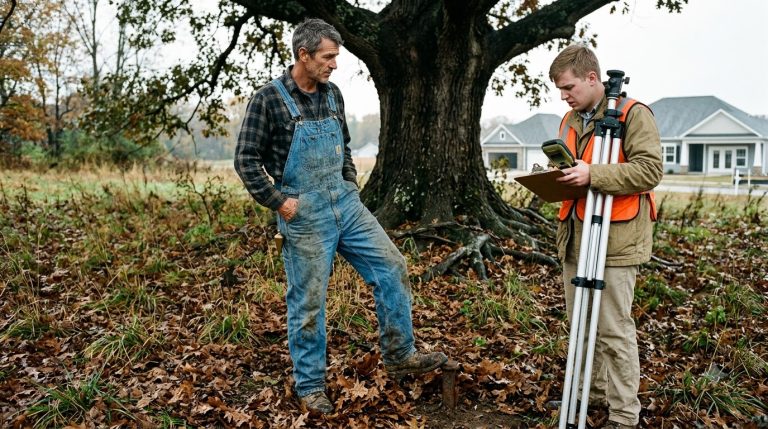
He saw her under the great oak tree. The mist curled around its ancient trunk, making the tree seem as though it were breathing. Clara was there, just as she had promised, but she wasn’t waiting passively. She was kneeling by a patch of earth near the roots, her hands buried in the soil. She wore simple, faded overalls that were stained with dark, rich mud. Beside her sat a small, empty glass jar.
She didn’t look up as he approached. The silence between them was heavy, not with the comfortable quiet of companions, but with the test he had unknowingly signed up for. Caleb stopped three feet away, his expensive leather boots looking absurdly out of place against the raw, damp earth.
I’m here, he said, his voice sounding small against the vast, morning-hushed landscape.
Clara’s hands moved with practiced grace, clearing away a layer of dead leaves to reveal the soil beneath. She didn’t acknowledge him immediately, giving him the space to feel the weight of his own intrusion. Finally, she wiped her hands on her trousers and pointed to the ground at the base of the oak.
What do you see, Caleb?
He stared. He saw grass. He saw the dark, gnarled roots of the tree protruding like the knuckles of an old man. He saw dew droplets, heavy and pearlescent, hanging from the blades of grass. It was a familiar scene, yet in the context of her request, it felt like a trap. If he said ‘dirt,’ he was failing. If he said ‘nature,’ he was being superficial.
I see… the tree, he started, his voice tightening. I see the grass. The dew.
Clara stood up slowly, her expression unreadable. She wasn’t judging him—that would have been easier to handle. She was waiting for him to break through a wall he didn’t even realize was there.
That’s what’s on the surface, she said, her tone level, clinical. Everyone sees the surface. People spend their entire lives looking at the surface of the world, never wondering why the grass grows unevenly near the roots, or why the dew clings to one side of the leaf and not the other. You’ve spent seventeen years walking past this tree without ever once asking yourself what it’s doing.
She stepped back, giving him the space to crouch. Get closer.
Caleb hesitated, then lowered himself into the mud. The cold dampness soaked through his trousers, a sensation that sent a shiver up his spine. He leaned forward until his face was inches from the ground. At first, the perspective was jarring—a jumble of brown earth and tangled stems. But as he forced his eyes to adjust, the blur began to resolve into order.
He saw a tiny, translucent beetle navigating the landscape of a pebble. He saw the way the soil was textured, dark and porous, and how a single, vibrant green sprout was fighting for space against the weight of a fallen acorn. It was a frantic, hidden struggle, occurring in total silence.
There, she whispered.
He followed her gaze. A tiny, nearly invisible spiderweb was strung between two blades of grass, anchored to the base of the oak. It was fragile, shattered in a dozen places by the weight of the morning dew, yet the spider was there, moving with purpose, attempting to weave a new strand across the gap.
He’s not giving up, Caleb muttered, the realization slipping out before he could filter it.
Why would he? Clara asked.
Because it’s broken. Because the wind already ruined it once.
Clara leaned down beside him, her presence steady. Nature doesn’t deal in ‘broken’ the way you do. It only deals in ‘what’s next.’ You look at a failure and you see an end. You see a reason to quit, a reason to complain, a reason to stop trying because the result isn’t perfect. This spider sees an opportunity to keep building.
Caleb watched the spider, his breathing slowing. He felt the cold air, the dampness of the earth, the way the world felt incredibly big and he felt, for the first time, like he was actually a part of it, rather than just an observer of it. The arrogance he had used to protect himself from his father’s disappointment began to dissolve.
It’s about paying attention, he said, a sudden clarity washing over him.
It’s about seeing the story in the small things, she corrected.
A sudden, jarring sound shattered the moment—the loud, mechanical hum of a landscaping crew’s leaf blower firing up on the far side of the estate. The noise was invasive, violent, and completely erased the fragile quiet they had managed to hold. The spider, startled by the vibration, retreated into the safety of the oak’s bark. The spell was broken.
Caleb felt a surge of genuine frustration. He wanted to go over there, to tell them to stop, to keep the world quiet. Clara, however, didn’t move. She just watched the noise disturb the garden, her face calm, almost amused.
Why aren’t you annoyed? he asked, rising to his feet and wiping his hands on his ruined trousers. That’s our work. That’s our peace.
She looked at the direction of the noise and then back at him.
Because the world doesn’t stop just because you’ve decided to start paying attention, Caleb. The chaos is part of the story, too. The question isn’t how to keep the world quiet. The question is how to keep seeing, even when it’s loud.
Caleb looked at the oak tree, then back at the house, where the lights were beginning to flick on in the kitchen. He had a bus to catch. He had a life of expectations and failures to return to. But as he walked back toward the gate, he felt a strange, new weight in his pocket—the glass jar she had left behind for him to hold, empty and clear, waiting to be filled with the details he had spent seventeen years ignoring.
CHAPTER 4: THE CALCULATION OF SECRETS
The transition from the garden to the interior of the mansion was a descent into a different kind of silence. Inside, the Montgomery estate did not breathe; it hummed with the steady, filtered vibration of climate control and expensive, unseen machinery. Caleb walked through the hallway, his boots—still bearing traces of the garden’s damp earth—leaving a faint, rhythmic trail of grit on the polished marble. He felt like an intruder in his own life, a glitch in the perfect, high-gloss system his father had spent a lifetime perfecting.
He didn’t go to his room. He walked toward the study, drawn by a compulsion he couldn’t quite name. The door was slightly ajar, a sliver of warm, golden light spilling onto the floor. Harrison was inside, his silhouette framed against the massive, leather-bound wall of books that no one ever touched.
Caleb paused in the doorway. He watched his father for a moment, unseen. Harrison was hunched over his desk, his brow furrowed in a way that made him look human—almost small. He was reviewing a file, his fingers hovering over a spreadsheet. There was no arrogance in his posture now, only a weary, repetitive exhaustion.
Caleb felt a strange, cold pulse in his throat. He thought of the spider he had watched that morning, its persistence against the wind. He thought of Clara’s words: The world doesn’t stop just because you’ve decided to start paying attention.
He stepped inside. The floorboards didn’t creak, but Harrison looked up instantly, his eyes snapping to the door with the predatory sharpness of a man who lived in a state of constant, low-level combat.
You’re home early, Harrison said, his voice clipped. He didn’t look at Caleb’s muddy boots; he looked through them, his gaze already sliding back to the screen.
I didn’t take the bus, Caleb said, his voice steady. He hadn’t meant to say it, but the lie felt like a stone in his stomach. He had walked, taking the long way around the perimeter, just to feel the ground under his feet.
Harrison’s fingers stopped on the mouse. He looked up, his expression hardening. A Montgomery doesn’t walk, Caleb. We arrive. We don’t wander.
Caleb stepped forward, feeling the grit of the garden soil beneath his feet. He saw the folder on the desk—the interim report from Northwood. It was open, the numbers glaring and red, a testament to his “failure.” His father’s thumb was resting on a column of figures.
Is that what this is? Caleb asked, gesturing to the file. A failure to arrive?
It’s a record of your trajectory, Harrison replied, his voice rising, just a fraction. An indicator of where you are going. And right now, the data is abysmal. I’ve looked at these reports for three years. Every single one is a carbon copy of the last. A lack of focus. A lack of interest. A complete absence of ambition.
Caleb felt a prickle of heat behind his eyes. He wanted to scream that the data was wrong because the metrics were wrong. He wanted to tell his father that he was measuring the wrong things, that he was looking at the car but missing the engine entirely. But the lesson from the garden—nature doesn’t understand pride—held him back.
Maybe the data isn’t the whole story, Caleb said, his voice surprisingly calm.
Harrison laughed, a short, sharp sound that held no humor. Data is the only story, Caleb. It’s the only thing that doesn’t lie to you. It doesn’t have emotions, it doesn’t have excuses, and it doesn’t care about your ‘perspective.’ It just is.
As Harrison turned back to his screen, his hand slipped, causing the mouse to click on a secondary window—a hidden, password-protected directory that Caleb had never seen before. It was open for only a fraction of a second, but in that moment, Caleb’s eyes caught a title: Montgomery Security Audit – Q3 – Internal.
It wasn’t an academic report. It was a list of names, dates, and account numbers. And among them, he saw a name that made his breath hitch: Thompson.
His heart began to hammer against his ribs. He felt a sudden, dizzying sense of displacement. Why was that name in a secure company audit? Why was a maid’s last name part of his father’s encrypted corporate data?
He blinked, and Harrison shifted, closing the window with a sharp, impatient flick of the wrist.
Get out, Caleb, his father said, his voice tight. Go to your room and study. I have work to do.
Caleb didn’t argue. He turned and walked out of the room, his mind racing. The connection was there, hidden in plain sight, a piece of a puzzle he hadn’t even known existed until this moment. He felt a cold dread, but beneath it, a strange, electric thrill.
He didn’t go to his room. He went to the library, his steps light and silent, his focus entirely on the memory of the name on that screen. He walked into the darkened room, the smell of dust now familiar and welcoming. He realized that the decoy secret—the idea that he was just a lazy boy failing at school—was rapidly unraveling.
He reached into the dark alcove where Clara usually sat. He felt for the small, worn paperback she had left behind earlier that day. His hand brushed something else—a small, folded piece of paper tucked between the pages. He pulled it out.
It was a copy of the very same audit report he had seen on his father’s screen, but with handwritten notes in the margins—notes in a script he recognized, a delicate, precise, and entirely familiar hand.
He hadn’t stumbled into a failure; he had stumbled into a war.
CHAPTER 5: THE THRESHOLD OF COLLAPSE
The paper felt impossibly heavy in Caleb’s hand. It wasn’t just a document; it was a map to a catastrophe. As his eyes tracked the handwritten notes in the margins—the precise, angular script that he now recognized as Clara’s—the silence of the library transformed. It was no longer the peaceful, dust-moted quiet of a sanctuary, but the tense, pressurized stillness of a vault that had been breached.
He stood in the alcove, his heart rhythmically slamming against his ribs, a frantic cadence that seemed loud enough to echo off the towering, leather-bound spines surrounding him. He stared at the list of names. Thompson. The name jumped off the page, a jagged tear in the fabric of the life he thought he knew. If this document was true, then his father hadn’t just been a hard man; he had been a man who sacrificed others to preserve the pristine, sterile facade of the Montgomery empire.
A floorboard groaned in the hallway outside.
Caleb moved instinctively, his body reacting with a desperate, unthinking grace. He folded the paper, his fingers shaking as he slid it back into the deep, dark spine of the book Clara had left behind. He shoved the book onto the shelf, not in its rightful place, but deep into the shadows of the second row, behind a set of encyclopedias that hadn’t been touched in a decade.
The door to the library swung open.
Harrison Montgomery stepped into the room. He was still wearing the same tailored suit, but the edges of his posture seemed frayed, the air around him charged with a dark, restless energy. He held a glass of amber liquid, the ice clinking softly against the crystal—a sound that cut through the silence like a scalpel.
Caleb.
The name was not a question; it was a tether, pulling Caleb back into the reality he had been trying to outrun. Harrison looked at him, his gray eyes sweeping the room, lingering on the library shelves, then returning to Caleb’s face. He didn’t look like a CEO; he looked like a man who was hunting for a ghost.
I didn’t expect to find you here, Harrison said. The library isn’t exactly your preferred habitat for late-night reflection.
Caleb kept his hands shoved deep into the pockets of his jeans, hiding the tremor he couldn’t stop. I couldn’t sleep, he said, trying to mimic the detached tone he had spent years mastering. I was just… looking for something to read.
Harrison stepped further into the room, his movements slow, deliberate. He walked to the center of the library, the light from the overhead chandelier casting long, skeletal shadows across the floor. He stopped in front of the shelves where Caleb had just been standing.
Looking for something to read, he repeated, his voice devoid of warmth. And did you find it? Or did you just find more ways to waste your time in a place that holds nothing you’re capable of understanding?
Caleb felt a surge of cold, sharp resentment, but he swallowed it. He looked at his father’s hand—the way the knuckles were white as he gripped the glass. The man wasn’t just tired; he was teetering on the edge of a breakdown. The pressure of maintaining the illusion was visibly fracturing his composure.
I think I understand more than you give me credit for, Caleb said. He took a step toward his father, the mud still caked onto his boots. I think I understand that you’re terrified.
Harrison froze. The glass stopped moving. He turned his head slowly, his eyes narrowing until they were nothing but slits of cold, unyielding gray.
Terrified? Of what? A boy who can barely pass a high school exam? A boy who’s spent his life drifting in the wake of a name he never earned?
Of being exposed, Caleb said, his voice rising, gaining a strength he didn’t know he possessed. Of finding out that your castle is built on nothing but sand and the people you’ve decided to discard along the way.
The silence that followed was absolute. Harrison took a step forward, closing the distance between them. The smell of his cologne—expensive, sharp, and metallic—filled Caleb’s senses, stifling and cold.
You’ve been talking to her, Harrison said, his voice a low, dangerous whisper. The girl. The maid’s daughter. You think she knows something? You think she’s given you a key to something that doesn’t exist? She’s a child, Caleb. And you are playing with fire in a house that is far more fragile than you could ever imagine.
He reached out, his hand snapping up to grab Caleb by the shoulder. The grip was iron, bruising.
If you think you can dig up the past, you’re mistaken. The past is buried for a reason. Because if it ever came to light, it wouldn’t just be my empire that fell. It would be everything you think you are. Everything you think you own.
Harrison let go, a sudden, violent gesture that sent Caleb staggering backward. He gestured to the room, to the entire estate that stood outside the windows, hidden in the darkness.
Go to bed, Caleb. And if I see you in this room again—if I catch you anywhere near these books, or anywhere near that girl—you will find out exactly how much you can lose. You think you’re a ghost? I will make you a ghost. I will strip away every privilege, every cent, every scrap of identity you have left, and you will find out what it’s like to really be nothing.
Harrison turned and walked toward the door, his steps heavy, the clink of the ice in his glass the only sound in the suffocating room. He didn’t look back.
Caleb stood in the dark, his shoulder aching, his breath coming in ragged gasps. He looked at the shelf where he had hidden the note. He had failed. He hadn’t been able to hide his own knowledge, and he had only accelerated his father’s suspicion. He was a cornered animal, and he realized with a sickening clarity that he had no exit strategy.
He had to get that paper, and he had to get out, but the house was no longer a home—it was a prison, and the warden knew he was planning to escape.
CHAPTER 6: THE VELOCITY OF TRUTH
The darkness of the library was no longer a sanctuary; it was a cage. Caleb stood paralyzed by the echoes of his father’s voice, the threat of becoming a “ghost” vibrating in the hollow space of his chest. He could hear the heavy, measured cadence of Harrison’s footsteps fading into the distance, moving toward the master wing. Every second that ticked by felt like a tightening of a noose.
He turned toward the shelves, his hands trembling as he reached into the shadows. He didn’t care about being quiet anymore. He shoved the encyclopedias aside, his fingernails scraping against the rough wood, until his fingers brushed the edge of the paperback. He pulled it out, the spine creaking in the stillness. He flipped through the pages, his heart pounding a frantic rhythm against his ribs.
There. The folded paper.
He grabbed it, his breath coming in sharp, shallow stabs. He needed to be out. He needed to get to Clara. He didn’t know how, he didn’t know when, but the information in his hand felt like live coal—it was burning him, and he couldn’t hold it for long. He darted toward the library’s side exit, a small, rarely used door that led directly to the estate’s rear stone terrace.
As he threw the door open, the world slapped him in the face. A sudden, violent squall had descended over the valley. The sky, which moments ago had been a bruised purple, was now an absolute, roiling black, and the rain was falling in thick, stinging sheets. The wind shrieked through the manicured hedges, stripping away the artificial order of the garden and turning the elegant pathways into slick, treacherous rivers of mud and slate.
Caleb stepped out, the cold rain instantly soaking his shirt, the shock of it clearing his head with brutal efficiency. He couldn’t go back in. The house had become a mechanism of surveillance, and every hallway was a potential trap. He started to run, his boots slipping on the wet, uneven stone.
He had to get to the staff quarters—a small, detached cottage near the service gate where Susan and Clara lived. He scrambled over the terrace wall, his hands raking against the rough stone, tearing his skin, but he didn’t feel the pain. He only felt the overwhelming need to reach the only person who understood the language of the storm.
The path through the rose garden was a gauntlet. The wind whipped the heavy branches of the bushes, the thorns lashing out like barbed wire. He pushed through, the smell of ozone and crushed earth filling his lungs. His vision was blurred by the downpour, the estate appearing as a surreal landscape of distorted shapes and flickering, distant security lights.
He saw a shadow move near the rose trellises.
Caleb dove behind a stone fountain, his lungs burning. He peered through the gloom. It was a security guard, a flashlight beam cutting through the rain, sweeping rhythmically across the path. Harrison hadn’t waited. He was already locking the estate down. Caleb watched the beam, the light hitting the fountain with a blinding glare, and he realized with a jolt of terror that he was being hunted in his own home.
He waited, the water from the fountain mixing with the rain, cascading over him. He was shivering, his muscles locked in a spasm of cold and adrenaline. He looked at the paper in his pocket, now protected only by the thin fabric of his jeans. If they caught him with it, it was over. Not just for him, but for Clara.
He waited until the guard turned toward the east wing, then he bolted.
He didn’t run like an heir; he ran like a survivor. He stayed low, hugging the perimeter of the hedges, using the chaos of the storm to mask his movement. He reached the service gate, the metal cold and slick under his palms. He didn’t try to climb it—that would have been suicide. He crouched, sliding his body beneath the narrow gap where the gate met the earth, the mud coating his face and hair.
He was on the other side.
The staff cottage was dark, but a faint, amber glow emanated from the window. Caleb stumbled toward it, his legs feeling like lead. He pounded on the door, the sound lost in the thunder, then hammered again, harder, his voice a strained, broken rasp.
Clara!
The door opened just a crack, the silhouette of a woman appearing. It was Susan. Her eyes widened, her face draining of color as she saw the mud-streaked, drenched mess of a boy standing on her threshold.
Caleb? What are you doing—
I have it, he gasped, clutching at his pocket, his hand shaking uncontrollably. I have the audit.
Susan’s face hardened. She looked past him into the driving rain, searching for shadows, then pulled him inside with a sudden, violent strength. She locked the door, the bolt clicking with a finality that made Caleb realize he had just crossed the point of no return.
He was in the room, the heat of the cottage hitting him like a wall. Clara was standing by the table, her sketchbook open, her eyes wide as she looked at him. She didn’t look surprised. She looked, for the first time, deeply, profoundly worried.
You weren’t supposed to come here, she said, her voice barely audible over the gale.
I had no choice, Caleb said, collapsing into a chair, the floor beneath him turning dark with the water dripping from his clothes. He pulled the paper from his pocket, the ink bleeding slightly from the moisture, but the names—the evidence—still clear, a damning indictment of the man he called father.
I saw him, Clara. He knows.
Clara moved toward him, taking the paper from his hands. She looked at the report, her eyes scanning the lines she had already memorized. She looked up at her mother, a silent, frantic conversation passing between them. The room felt small, the storm outside battering the walls, and Caleb knew that the sanctuary he had sought was just as fragile as the one he had left.
He was no longer just the Montgomery heir. He was a fugitive, and the weight of the truth he held was enough to burn the whole kingdom to the ground.
CHAPTER 7: THE ARCHITECTURE OF A FALL
The cottage smelled of damp wool and the fading heat of a wood-burning stove. Outside, the storm continued to beat against the walls, but inside, the silence was worse. Susan Thompson stood by the window, her hands pressed against her apron, while Clara held the report, her face illuminated by the flickering, dying light of a kerosene lamp.
Caleb felt a profound, aching hollowness. He had come here looking for a weapon to use against his father, but looking at the faces of the woman and the girl who had been destroyed by his family’s ambition, he realized he hadn’t found a weapon—he had found a mirror.
My brother, Susan whispered, her voice barely a breath. He wasn’t just a programmer. He was the one who built the foundational architecture for your father’s first company. He knew where the flaws were. He knew how it was built. That’s why he had to be removed. He didn’t just know the secrets; he knew the man behind them.
Caleb looked at the report again. The names, the dates, the encrypted transfers—they weren’t just data points. They were the footprints of a man who viewed his life as a series of strategic maneuvers.
He didn’t just blame your brother to save money, Caleb said, his voice trembling. He did it because your brother was the only one who could prove the empire was a lie. He didn’t build it from a loan, did he?
Susan shook her head slowly. He built it from ideas that weren’t his. He built it by systematically dismantling the people who helped him start. My brother just happened to be the last one left who could prove it.
Caleb felt the floor sway beneath him. For years, he had been told the Montgomery myth. The railroad, the steel, the tech—the grand, heroic progression of a family of titans. Now, it was stripped away to reveal a cold, desperate reality: a man terrified of being exposed as a fraud, a man who would ruin generations of families to keep his own shadow from being seen.
The truth isn’t in the report, Clara said, her voice sharp, cutting through the heavy air. The truth is that he doesn’t know how to exist without the lie. If the lie stops, he stops.
Caleb stood, his legs feeling weak. He looked at his hands—the same hands that had signed the report cards, the same hands that had been held by his father in the photos in the study. He saw the lineage of the fear. He realized why his father was so hard, why he was so obsessed with results. It wasn’t about success. It was about survival. A survival predicated on the total destruction of anyone who looked too closely.
We have to take this to the press, Caleb said, his voice hardening. We have to make it public.
Susan looked at her daughter. The silence was long, a heavy, suffocating pressure that seemed to draw the oxygen from the room.
It’s not that simple, Clara said. You know how he works. If we go to the press, he’ll have it killed before it hits the print. He owns the board, he owns the lawyers, and he owns the narrative. He will destroy us, and he will make sure no one ever hears the truth.
Then how do we win? Caleb asked, the desperation in his voice rising. If we can’t tell the truth, what do we do?
You don’t fight him with the truth, Clara said, her eyes meeting his with a chilling, calm focus. You fight him with his own architecture. You find the one flaw in the system that he thinks he’s already fixed. You don’t burn the house down; you turn off the power.
Caleb stared at her. He realized that the training in the garden, the lessons in the library, the way he had been forced to “see”—it hadn’t just been about his grades. It had been about this. Clara hadn’t just been cleaning; she had been preparing. She had been waiting for the moment when the Montgomery machine would finally be vulnerable.
He looked at the report, then at the storm raging outside. He felt the phantom weight of his father’s hand on his shoulder, the threat of being erased. He realized that if he wanted to save himself—if he wanted to save Clara and her family—he couldn’t just walk back into that house. He had to become the very thing his father feared most: the one flaw in his perfect, iron-clad world.
He stood, his resolve hardening into something cold and sharp.
Tell me, he said, his eyes locking onto Clara’s. Tell me where to start.
Clara moved to the table, picking up a pen and a blank sheet of paper. She began to draw—not a map, but a diagram. The architecture of a collapse.
As she spoke, the room seemed to shrink around them, the world outside forgotten. The storm continued to scream, but Caleb didn’t hear it. He only heard the rhythm of the strategy, the cold, calculated logic of the undoing. He was no longer a boy looking for approval; he was an architect, and he was finally ready to dismantle his father’s kingdom, piece by painful piece.
CHAPTER 8: THE SILENCE OF THE ARCHITECT
The walk back to the main house was a gauntlet of ghosts. The storm had broken, leaving behind a world slick with silver water and the heavy, musky scent of wet pine. Caleb moved through the gardens with the quiet intensity of a predator, his skin still prickling from the cold, his mind a steel trap of everything Clara had explained. He carried the diagram in his pocket, the paper damp but readable—a roadmap to the precise point where his father’s empire relied on the very deception it claimed to have eradicated.
He reached the front entrance, bypassing the locked gates by knowing the blind spot in the security perimeter—a detail he had never cared about until he started to see. He entered the library, the air still holding the sharp, metallic tang of his father’s cologne.
Harrison was there, standing by the fireplace, the dying embers casting flickering, rhythmic light across his rigid features. He was holding a ledger—a real, physical book, an anachronism in his world of digital surveillance. He looked up, his eyes weary, the battle for control already having drained the life from his face.
You came back, Harrison said, his voice quiet, almost devoid of its usual cutting edge.
I came back to end it, Caleb replied, his voice firm, echoing in the vast, silent room.
He didn’t scream. He didn’t make a speech. He simply pulled the diagram from his pocket and laid it on the mahogany table, right next to the ledger. He pointed to the specific connection Clara had highlighted: the redundant server logs that his father had been manipulating to route blame away from his own board members and onto innocent scapegoats like Susan’s brother.
It’s all here, Dad. The transfers, the timing, the sequence. It’s not just one mistake. It’s the infrastructure of your entire reputation.
Harrison stared at the paper. He didn’t look angry; he looked diminished. He leaned over the table, his fingers grazing the ink-stained diagram, his hands shaking with a tremor he could no longer hide.
You think this is a victory, Harrison whispered. You think that by showing this, you’re saving yourself. You’re just burning the house down with both of us inside.
No, Caleb said, stepping forward. I’m just turning off the power. The house was already hollow, Dad. You were just the one living in the dark to keep us from seeing it.
For a long moment, the only sound was the crackle of the fireplace. Harrison sank into his chair, the weight of his legacy finally crushing the structure of his resolve. He wasn’t the king of the estate anymore; he was a man who had spent his life running from the fact that he was ordinary, and that his ordinary life had been bought with extraordinary cruelty.
He looked up at Caleb, his eyes glassy. The arrogance that had been his shield for decades was gone, replaced by a raw, painful, and deeply unsettling clarity.
What happens now? Harrison asked, his voice a ghost of its former power.
Now, we fix it, Caleb said. We clear the names. We restore the dignity you stole because you were afraid of the truth. And then, we start over. Not as a company, but as people.
Harrison said nothing. He simply pushed the ledger toward his son, a symbolic surrender of the power he had once cherished above all else.
The payoff didn’t come in a sudden, dramatic outburst. It came in the quiet, methodical work that followed. Over the next month, the “Montgomery Scandal” played out, not in the screaming headlines of the press, but in the slow, agonizing process of restoration. Harrison Montgomery resigned, his reputation not destroyed, but permanently corrected. He spent his final weeks as the head of the firm systematically dismantling the fear-based structure he had built, ensuring that those who had been discarded were made whole, their lives mended by the very resources he had once used to break them.
The denouement was quiet. The estate was sold, the vast, empty rooms filled with the sounds of moving crews rather than the silence of ghosts.
Caleb spent his final afternoon at the estate sitting in the garden, near the great oak tree. He was holding the small glass jar Clara had given him, now filled with nothing but the clear, morning air. He picked up a small piece of wood from the garden—a fragment of a trellis that had been broken during the storm—and began, with a small pocketknife, to shave away the jagged, splintered edges.
He was repairing it. Not because it was valuable, but because it had been broken.
Clara walked up the path, her hands tucked into her pockets, her expression one of quiet, settled peace. She watched him for a while, the silence between them no longer a test, but a connection.
You’re learning, she said.
I’m seeing, Caleb replied, setting the piece of wood down.
They stood together for a long time, watching the sun dip below the hills, painting the world in shades of warm, honest gold. The fear was gone, replaced by the heavy, grounding reality of a life that was finally his own. He was no longer the heir to an empire of stone; he was a man building a house of earth, and for the first time, he knew exactly how much it cost to stand on his own feet.