The Legacy on Oak Creek: A Grounded Veteran Stands His Ground Against HOA Tyranny
CHAPTER 1: THE LINE IN THE DIRT
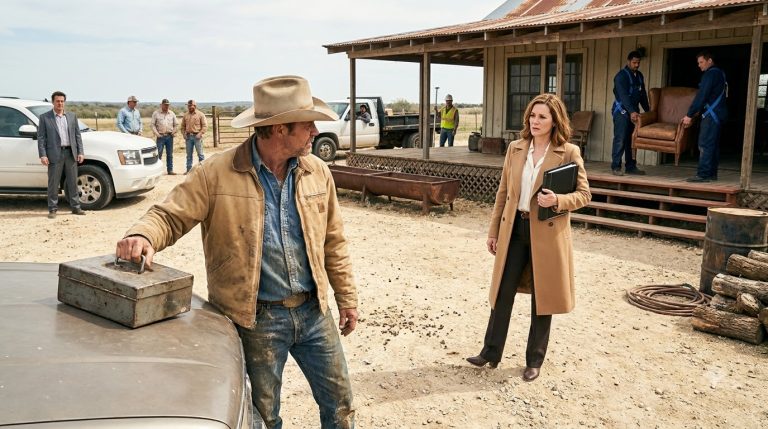
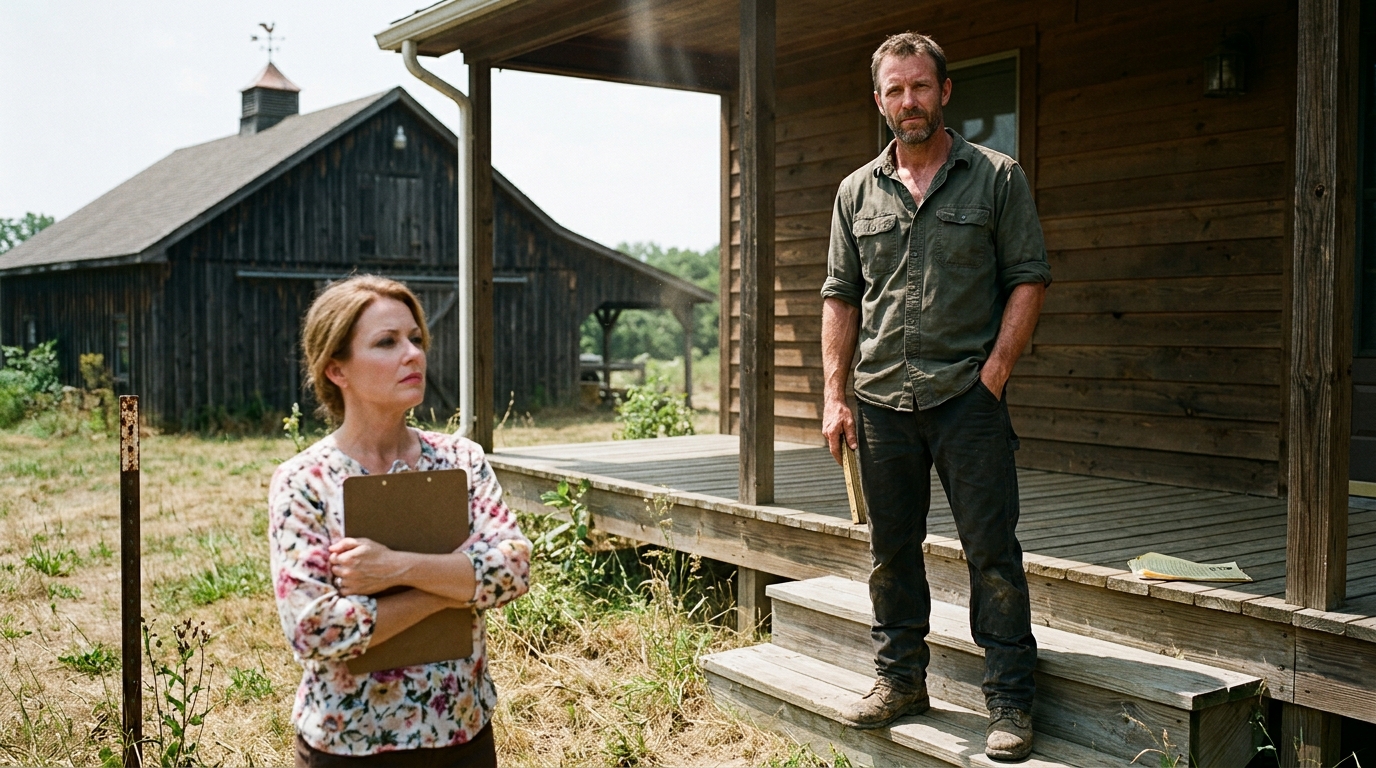
The cheap paper didn’t even rustle in the heavy July heat. It just sat between Karen Thompson’s manicured fingers like a loaded weapon aimed straight at my dad’s memory.
“Bylaw 17, Section C, Mr. Hayes,” she said. The floral print on her blouse looked stretched to its absolute limit, the bright pink petals strained over her chest as she pressed the clipboard against herself like body armor. “The association is assuming control of the structure for the betterment of Whispering Pines.”
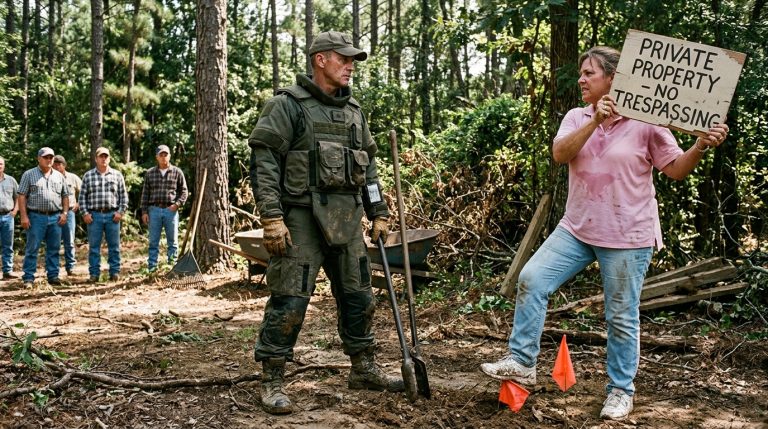
I didn’t reach for the paper. I stood on the porch step, two feet above her, watching the sweat bead along her hairline and ruin the expensive powder on her forehead. Ten feet behind her, the property line marker—a rusted iron pin my father drove into the dirt in the summer of ’91—sat buried under a cluster of weeds. She was well over it.
“That barn isn’t in Whispering Pines, Karen,” I said. My voice came out low, flat, and dry as gravel.
“Everything visible from the main avenue impacts our property values,” she replied, her chin snapping up. Her eyes flicked past my shoulder, locking onto the dark, weathered oak timbers of the barn two hundred yards back. “It’s an aesthetic blight. It’s unapproved agricultural mass. You’ve ignored six violation notices.”
I reached into the front pocket of my canvas work shirt. My thumb brushed the worn edges of my father’s brass-hinged carpenter’s ruler. Snap. Snap. I unfolded the first two six-inch segments inside my pocket, feeling the cold, heavy metal lock into place. It kept my hands from shaking. It kept the twenty-five years of Army Combat Engineer training from deciding how to clear an intruder off my grass.
“My deed was filed with the county in 1948,” I said, keeping my eyes locked on hers. “The subdivision was cut out of the Miller farm ten years ago. I didn’t sign your covenants. I don’t pay your dues.”
“The board passed a emergency amendment last winter,” she said, taking one step closer and thrusting the paper toward my chest. “External hazards to community standard fall under our jurisdiction now. You have fourteen days to bring the wood framing into architectural compliance or surrender access for remediation.”
She meant paint. She meant slapping a coat of beige latex over hand-planed white oak that my dad and I spent three summers framing while I was home on leave.
“You’re standing on private land, Karen,” I said softly.
She let out a short, wet laugh that didn’t reach her eyes. “We’ll see what the board says at the special hearing on the fifteenth. Consider yourself served, Jack.”
She dropped the paper onto the top porch step. The heavy stock hit the cedar board with a dull thud. She turned on her heel, her thick wedge heels digging deep, ugly divots into my lawn as she marched toward her white SUV parked on the shoulder.
I didn’t pick up the paper right away. I pulled the brass ruler out of my pocket, unfolding the remaining sections until it formed a rigid, six-foot bar of solid metal. I stepped off the porch, walked down to the property pin, and laid the brass edge flat against the turf where her heels had cut into the sod.
She was nine feet inside the line.
I turned back toward the barn. The cupola on top still held the copper weather vane my dad soldered himself, glowing like dull fire in the late afternoon sun. A cold, quiet anger settled deep in my ribs—not the hot rage that makes a man yell, but the slow, heavy kind that makes him start measuring distances and calculating load capabilities.
Karen wanted a war over a piece of paper. She had no idea how much stress a solid foundation could actually take before it crushed whatever was underneath it.
CHAPTER 2: WHISPERS ACROSS THE FENCE
The rusted barb wire was cold against the flat of my thumb, the iron strand bent twice near the post where Martha’s climbing roses choked out the bottom rail.
Across the property line, Martha snapped her hand pruners shut with a sharp, metallic clack. She didn’t look up immediately. Her gloved fingers reached into the bush, tugging away a dead yellow leaf before she wiped the sweat off her cheek with her forearm.
“You’re standing on your side of the wire, Jack,” she said, her voice dry as dead cedar. “That’s a rarity these days.”
“I like to keep track of where my dirt ends,” I said. I pulled my thumb back, letting the wire settle with a faint, vibrating hum. “Nice mailbox.”
Martha’s shoulders tightened under her linen shirt. She turned, pointing the heavy steel blades of her pruners straight at the jet-black, HOA-approved post sitting at the edge of her gravel driveway. The old cream-colored box she’d painted herself fifteen years ago was sitting in her wheelbarrow, dented and half-covered in grass clippings.
“A hundred dollars a month,” she said, her voice dropping an octave. “Two notices in June, then the fine hit my pension check’s automatic withdrawal. They called it an ‘unauthorized color variance’.”
“Karen?”
“Who else?” Martha spat onto the dirt near her boots. “She sat at that board meeting in May, tapped her pen on the table, and told me the cream paint was dragging down the appraisal on the house across the street. The house that’s been vacant since November.”
I reached into my shirt pocket, my knuckles brushing the folded brass ruler. I didn’t pull it out. The friction of the metal hinge against my skin was enough.
“She handed me a forfeiture notice an hour ago,” I said. “Says the association is taking the barn.”
Martha’s pruners froze mid-air. Her pale blue eyes snapped up, locking onto mine through her thick wire-rimmed glasses. The smug silence of the afternoon suddenly felt heavy, broken only by the distant hum of a lawnmower three streets over in the beige maze.
“She can’t do that,” Martha whispered. “The barn was there before they even cut the roads in.”
“She thinks a piece of paper on board letterhead changes a county deed,” I said. “She’s relying on people getting tired. She relies on a hundred-dollar fine making a widow switch out her mailbox so she doesn’t have to fight.”
Martha’s jaw worked silently. A dark red stain of anger flushed up her neck, mottling her paper-thin skin. “It’s not just the mailbox, Jack. It’s the pool dues. They raised our quarterly assessment by thirty percent last fall. Said the maintenance fees on the new facility exceeded projections.”
“Did she show you the invoices?”
“Invoices?” Martha let out a harsh, dry bark of a laugh. “She gave us a one-page summary printed on yellow paper. ‘Facility Upkeep: $50,000.’ When Dennis asked to see the contractor receipts at the annual meeting, she told him the board had fiduciary discretion and that line-item audits were too complex for regular residents to review.”
My thumb pressed hard against the brass hinge in my pocket until the sharp corner bit into my skin. A quarter-million-dollar pool project. Round numbers on a single sheet of yellow paper. No line items. No contractor names.
“Where does the association keep the hard copies of the budget, Martha?”
“In the clubhouse filing cabinet,” she said, taking a step closer to the wire. “Key stays on the hook behind the front desk. But Karen locks the building at five every night.”
“The county records building downtown stays open until four,” I said, looking past her toward the suburban rooftops stretching out into the sun. “And they don’t lock their files for board members.”
“What are you looking for, Jack?”
“I’m looking for the structural blueprints,” I said, stepping back from the fence. “Karen wants to talk about unapproved structures. I think it’s time we measured hers.”
CHAPTER 3: PAPER WORK AND DIRTY DIRT
Sitting at a wooden viewing table in the dusty basement archives of the county recorder’s office, holding a heavy manila folder under flickering fluorescent light, the smell of old paper felt like cold comfort.
The clerk upstairs had handed me the physical ledger with a tired shrug, pointing me down the concrete stairs. No digital shortcuts. Just miles of metal shelving and cardboard boxes holding every deed, permit, and business filing registered in this precinct since the county was carved out of farmland.
I flipped past the original land plat for Whispering Pines—my grandfather’s signature resting near the bottom margin—and pulled the filing stack for corporate entities registered to the subdivision’s address.
The first sheet was a business filing for Thompson’s Premier Landscaping LLC.
I pulled my dad’s brass ruler out of my pocket, sliding the six-inch hinge flat against the date line on the incorporation document. July 14, two years ago. The registered agent address matched Karen Thompson’s house on Pine Needle Way.
I checked the HOA’s annual filings right beneath it. The line item for landscaping jumped from sixteen thousand dollars to fifty-two thousand dollars in August of that exact same year. A no-bid contract, awarded straight to her own living room.
Layer 1 broken. She wasn’t just power-hungry; she was skimming dues straight out of her neighbors’ bank accounts to pay her own mortgage.
I reached for the second folder—the municipal building permit index for lot 14B, the clubhouse and pool parcel.
I turned the divider tab. Nothing.
I flipped to the next sleeve, my thumb dragging across the empty paper pockets where the county inspector sign-offs should have been stapled. There was an application for a fence replacement from six years ago. There was a water meter installation record from 1998.
For the $250,000 commercial swimming pool sitting behind the clubhouse, there was zero documentation. No excavation permit. No electrical load sign-off. No pressure test for the main plumbing lines. No structural seal from a licensed engineer.
I closed the folder, the heavy cardstock slapping shut with a sharp crack that echoed down the quiet basement corridor.
Karen hadn’t just cut corners to save a few bucks on county fees. She’d built a quarter-million-dollar hazard completely off the books, hiding behind her clipboard and thirty-percent dues hikes while standing on my lawn calling my oak barn a blight.
I slid the documents back into the archive box, tucking the brass ruler into my shirt pocket.
The HOA hearing was less than a week away. Karen was expecting a frightened old man pleading for his father’s legacy. She had no idea the paper trap was already built.
CHAPTER 4: THE SECRET COALITION
Leaning against the bed of my pickup truck parked near the neighborhood mail kiosks at 6:15 PM, holding a copy of my grandfather’s county deed, I watched the evening rush of commuters turn off the main road into Whispering Pines.
A silver sedan pulled up to the metal bank of boxes. A young man stepped out, his tie loosened at his collar, his eyes dark with the kind of bone-deep exhaustion that comes from twelve-hour shifts and two hours of highway traffic.
“Mr. Rodriguez?” I asked, stepping back from the truck bed.
He paused, a stack of junk mail clutched in his hand, his body locking up the way people do when they expect a process server or an HOA auditor. “Yeah? Jack, right? The guy with the barn.”
“The guy with the barn,” I nodded. I didn’t reach into my pocket for the brass ruler this time. I pulled two folded pages from my work folder and laid them flat against the tailgate. “You got hit with a seventy-five dollar ticket last Thursday.”
Rodriguez let out a short, angry breath, his shoulders slumping. “A plastic toddler slide in my fenced backyard. Karen called it an ‘unapproved permanent structural addition.’ My daughter is three, Jack. She wants three hundred dollars to file an architectural review variance for a forty-dollar piece of molded resin.”
“Look at this,” I said, tapping the top sheet on my tailgate.
He leaned over, squinting under the harsh orange glow of the streetlamp. His eyes scanned the LLC incorporation sheet, then moved to the HOA landscape ledger.
“That’s Karen’s home address,” he said, his voice dropping as he pointed at the registered agent line. “Fifty grand? We’re paying fifty grand a year to her own company?”
“And that’s just the small money,” I said. “There’s a special board hearing on Thursday. She called it to seize my property.”
“She can’t do that—”
“She thinks she can because nobody shows up to stop her,” I interrupted cleanly. “She counts on everyone being too tired from work to sit in folding chairs for two hours. She counts on you paying seventy-five dollars for a plastic slide because fighting it takes time you don’t have.”
“What good does showing up do?” Rodriguez asked, his jaw tightening as he looked down at his daughter’s slide violation letter tucked in his mail. “She controls the board. Janice and Bob just vote however she points her finger.”
Martha stepped out from behind the hedge near the kiosk path, her black leather handbag tucked firmly under her arm. “Not if there are twenty people standing in the back of the room holding copies of those filings, Carlos.”
Rodriguez looked between Martha and me, his eyes flickering over the physical evidence on my truck bed. “You have proof she’s self-dealing?”
“I have the county filing stamps,” I said. “And I have something much bigger that I’m saving for seven o’clock Thursday night. But I need people in those seats who aren’t afraid to ask where their dues went.”
“Count me in,” Rodriguez said, his knuckles turning white around his mail stack. “And I’m calling Gable on the corner. They fined him last week because his tomatoes were three inches taller than the vinyl fence.”
“Don’t tell them what we found,” I warned, closing the folder. “Let Karen think she’s walking in to give a speech to an empty room.”
CHAPTER 5: THE TRAP AT THE CLUBHOUSE
Standing at the wooden podium inside the community clubhouse at 7:10 PM on Thursday, looking directly at Karen Thompson seated behind the long folding table, the overhead fluorescent lights buzzed with a dull, steady hum.
Karen adjusted her floral jacket, her clipboard resting on the table like a shield. Janice and Bob sat on either side of her, eyes locked on the front row where Martha, Carlos Rodriguez, and Mr. Gable sat shoulder to shoulder with fifteen other residents filling every metal chair in the room.
“Mr. Hayes,” Karen said, her voice dropping into the loud, practiced cadence she used for HOA meetings. “You have five minutes to state why the board should defer immediate administrative remediation of the non-compliant structure on lot 2B.”
I reached into my pocket. My thumb unfolded the brass carpenter’s ruler, snapping the metal joint into place under the lip of the podium. Snap.
“My deed was filed in 1948,” I said, keeping my voice level. “The county plat explicitly exempts lot 2B from the Whispering Pines HOA covenants. The association has zero legal jurisdiction over my land.”
Karen leaned forward, a thin, smug smile pulling at the corner of her mouth. “We’ve reviewed your deed, Jack. But under Section 17C, the board retains emergency authority over external structures that impact overall community appraisal values. Your weathered barn is a direct blight.”
She lifted her small wooden gavel, resting it on her palm. “Unless you have a structural engineer’s variance stamped by an approved contractor, the board will proceed with the forfeiture vote.”
“Speaking of approved contractors,” I said, laying a single sheet of paper onto the table in front of her. “Let’s talk about Thompson’s Premier Landscaping LLC.”
Karen’s posture went rigid. The color drained from her cheeks so fast the heavy blush on her jawline looked like wet paint.
“That has nothing to do with this hearing—”
“Fifty-two thousand dollars in no-bid contracts,” I said, laying a second page over the first. “Transferred directly from community dues into a corporate account registered to your home address three months after you took office. Martha has the yellow budget summaries right there in the front row.”
Janice turned her head slowly to stare at Karen. Bob’s mouth opened, then snapped shut.
“This is an outrage!” Karen slammed her hand flat on the table, her clipboard sliding an inch across the wood. “You’re throwing baseless accusations to distract from your own violations!”
“I’m not finished,” I said.
I pulled the last folder from my jacket and laid the county archive index flat between her hands.
“Let’s talk about your crowning achievement. The two-hundred-and-fifty-thousand-dollar community pool sitting behind this wall.”
Karen gripped the edge of the table, her knuckles turning chalk-white. “The pool is a private community asset—”
“There are no permits,” I said.
The room went dead silent. Behind me, Mr. Gable leaned forward in his chair.
“I spent three hours in the county basement archives yesterday,” I continued, holding her glare. “No excavation permit. No electrical load inspection. No structural sign-off. No certificate of occupancy. In the eyes of the law, that pool doesn’t exist.”
“That’s a lie!” Karen screamed, her voice cracking as she stood up so fast her chair screeched backward against the linoleum floor. “The contractor handled the paperwork!”
“There is no paperwork, Karen,” I said, leaning over the podium until I was six inches from her face. “And without permits, your commercial liability insurance is completely void. If a child slips on that deck or gets hurt near that uninspected pump house, every single homeowner in this room can be sued personally for their homes.”
Carlos Rodriguez stood up in the second row, his face dark with fury. “Is this true?”
“He’s making it up!” Karen shouted, her clipboard trembling in her hand as she pointed it wildly at the crowd. “He’s trying to sabotage this neighborhood because he won’t paint his ugly barn!”
She swung the gavel down against the table with a deafening CRACK.
“The vote stands!” she shrieked, her eyes wild and bloodshot. “The board authorizes immediate seizure of the barn! Meeting adjourned!”
Nobody moved toward the door. Behind her, Janice slowly pulled her hand back from the table, refusing to raise it.
Karen stood alone behind the table, breathing heavily, her face mottled red as she realized nobody was leaving.
CHAPTER 6: THE WEIGHT OF CEDAR
Standing on the front porch of my ranch house at 8:00 AM on Saturday, holding a mug of black coffee as a county inspector truck pulls up to the community pool gate down the road, the morning air felt clear and still.
The white truck with county seals on the door parked near the clubhouse. A man in a high-visibility vest stepped out with a clipboard, walked the perimeter fence, and attached a bright red stop-work order directly over the latch.
A SUV cut around the corner, its tires screeching against the asphalt before stopping hard on my gravel shoulder.
Karen Thompson slammed her door shut. Her floral shirt was wrinkled, her eyes bloodshot behind her oversized sunglasses. She marched straight up my driveway, holding a yellow legal pad like a weapon.
“You think you won, Jack?” she yelled, her voice trembling with dry rage. “You think destroying this community makes you a hero? The county is levying a five-thousand-dollar daily fine against the association until that pool is brought up to code or filled in!”
I took a slow sip from my mug. “That sounds like a problem for the board.”
“There is no board!” she screamed, her arms flailing against the humid air. “Janice resigned last night! Bob turned his keys over to Mr. Gable! You ruined ten years of property value growth because you wouldn’t paint your ancient wood frame!”
“My father built that frame,” I said, stepping off the porch until I stood two inches from the rusted property stake in the dirt. “And he built it on land you had no right to touch.”
“I’m filing a personal harassment suit!” she spat, her heels digging into the gravel as she leaned into my face. “I’m calling the sheriff! I’m calling the district attorney!”
“The district attorney already has your LLC filings,” Mr. Gable’s voice carried over the fence line. He walked up the shoulder holding a manila envelope, Mr. Rodriguez right beside him. “We submitted the landscaping invoices and bank statements to the county prosecutor at nine this morning, Karen.”
Karen spun around, her mouth opening, but no sound came out. Her knees gave a tiny, involuntary buckle before she caught herself against the hood of her SUV. She looked at Gable, then at Rodriguez, then back at me.
No speech. No grand apology. Just the cold, ugly realization that her audacity had finally run out of runway. She scrambled back into her driver’s seat, slammed the door, and reversed down Oak Creek Road so fast the tires kicked up a cloud of gray dust.
“The recall petition hit eighty-five percent this morning,” Mr. Gable said, stopping at the edge of my lawn. “We’re holding an emergency vote Tuesday to dissolve section 17C and audit the rest of the accounts.”
“Good,” I said. “Let me know if you need help clearing out the pool site.”
Carlos Rodriguez gave a quiet, firm nod. “My kid’s slide is staying in the yard, Jack.”
“Keep it there,” I said.
They turned and walked back toward the subdivision, their voices drifting over the fence as they talked about organizing a weekend cleanup for Martha’s garden.
I walked past the porch, taking the gravel path around the side of the house toward the barn. The white oak timbers stood tall, solid, and straight against the blue sky, the cedar shingles catching the bright morning light.
I set my coffee mug down on the worktable near the double doors. I reached into my shirt pocket, pulled out my dad’s brass carpenter’s ruler, and folded it back into a tight, neat rectangle before setting it beside the tin of clear oil sealant.
I picked up the wide bristle brush, dipped it into the sealant, and laid the first wet coat against the grain of the oak door.
The wood darkened instantly, taking on a rich, deep shine that showed every mark of my father’s hand plane from thirty years ago. I kept my arm moving steady and even, working down the length of the timber in silence.
The weather vane turned once in the light breeze above, pointing straight true, and the neighborhood behind me was finally quiet.