The Weight of the Wings: A Study in Grace, Professionalism, and the Unseen Architecture of Valor
CHAPTER 1: THE FRICTION OF ASSUMPTIONS
The fluorescent lights of the mess hall hummed with an aggressive, sterile frequency that seemed to vibrate through the plastic chairs. Sierra Knox kept her gaze fixed on her tray. The grilled chicken was lukewarm, and the mashed potatoes were a uniform, flavorless white, but she focused on them with the intensity of a pilot pre-flighting a cockpit. She was a woman in a royal blue blouse surrounded by a sea of digital marpat, and to the man sitting across from her, she was nothing more than an error in the system.
Captain Davis’s uniform was a testament to vanity. His sleeves were rolled to a knife-edge, his nametape perfectly aligned, his posture a carefully curated advertisement for the Marine Corps. He leaned forward, his grin not reaching his eyes, as he repeated the question for the benefit of the junior lieutenants hovering at his shoulders.
“Ma’am, with all due respect, I still haven’t heard your call sign.”
Sierra finally looked up. Her eyes were clear, steady, and entirely devoid of the fluster he clearly expected. The silence at their table had begun to bleed outward, dampening the surrounding conversations like water soaking into a dry towel. Marines were creatures of pattern, and a pattern being broken—like a civilian failing to apologize for their perceived intrusion—was a signal that drew eyes.
She didn’t reach for her ID. She didn’t offer a defense. She simply allowed the quiet to stretch, a palpable, heavy thing that made the cutlery clatter seem miles away.
“I’m not here for the flight brief, Captain,” she said, her voice even, stripped of any defensive inflection. “I’m here for lunch.”
Davis’s smile tightened, the skin around his eyes pinching. He was accustomed to the world bending in response to his questions; here, the woman in the blue blouse was acting as if he were a minor atmospheric disturbance. He pushed his chair back, the metal legs shrieking against the linoleum—a sharp, serrated sound that cut through the mess hall’s hum.
“This is a secure facility,” Davis said, dropping the pretense of curiosity for the weaponized tone of command. “You’re in a space reserved for personnel and cleared contractors. I’m going to need to see your ID, and then I’m going to need you to come with me to the duty office.”
Sierra felt the weight of the sage green flight jacket draped over her chair. Her hand hovered near the fabric, her fingers grazing the worn threads of the Grim Reaper patch. She could end this in two seconds. She could produce the card that would turn his face the color of wet ash. But as she looked at him, she didn’t see a villain; she saw a man so deeply invested in the armor of his rank that he had forgotten how to see the person underneath.
She stood up. The movement was deliberate, calm, and utterly lacking in fear.
“Captain,” she said, her voice dropping into a register that felt like the quiet before a storm. “You have two choices. You can return to your seat and finish your meal, or you can proceed with this. But I feel obligated to tell you that the second option will have a significant and negative impact on your career.”
The air in the mess hall didn’t just thin; it froze. Davis looked at her, truly looked at her, for the first time, and for a split second, the mask of his arrogance cracked. But then, he caught the eyes of his lieutenants. The trap of his own ego had closed. He had to finish what he started, even as the first cold, dark realization of his mistake began to settle in the pit of his stomach.
CHAPTER 2: THE ECHOES OF THE TOWER
Colonel Jensen’s arrival had functioned like a hydraulic press on the atmosphere of the mess hall; it had crushed the frantic, chaotic energy of the confrontation into a dense, singular point of absolute obedience. Now, as the trio of senior officers moved toward the center of the floor, the sound of the room shifted. It was no longer the idle chatter of lunch-goers, but the synchronized, heavy thud of boots on linoleum as two hundred Marines stood in silent acknowledgement of command.
Sierra stood her ground. Her posture, while relaxed, carried the imperceptible rigidity of a pilot who had spent thousands of hours in a seat that required absolute physical composure. She kept her eyes on Jensen, acknowledging the rank with a subtle, respectful nod as he approached. The space between them felt charged, a bridge spanning years of operational history.
“Major Knox,” Jensen repeated, his voice resonant, cutting through the residual tension of the hall like a warm light. He stood before her, his posture that of a man who held the weight of the entire base on his shoulders, yet here, in the presence of this specific guest, he leaned in with a near-human softness. “I must apologize for the reception. We were not aware you were on board today.”
Sierra allowed herself a small, tired breath. The adrenaline that had sharpened her senses during the confrontation with Davis was beginning to ebb, leaving behind the familiar, hollow ache of fatigue in her shoulders. She looked past Jensen, toward the female officer standing at his side—Major Evans—who watched the scene with a sharp, professional curiosity that didn’t miss the way Sierra’s hand rested, almost unconsciously, near the sage green flight jacket draped over her chair.
“Colonel, no apology necessary,” Sierra replied, her tone leveled to a professional, steady register. “I was just grabbing a bite to eat.”
Jensen didn’t move immediately. He seemed to be parsing the situation, his eyes scanning the surrounding room where the young Marines remained standing, their heads still turned toward the small, isolated table. It was a display of respect that felt almost performative, a ripple effect of the power dynamic he had just reset.
“We have space in the O-Club if you’d prefer a quieter environment, Major,” Jensen offered.
“That won’t be necessary, Colonel,” Sierra said, her voice gentle but firm. She didn’t want the spectacle. She didn’t want the O-Club’s polished wooden tables or the polite, forced conversations that would undoubtedly follow. She wanted to finish her lunch, to keep the space between her identity and the legend as thin as possible. She felt the eyes of a young corporal at a nearby table; he was looking at her flight jacket with a hunger that spoke of unspoken questions.
Her gaze drifted back to Major Evans. “The only thing we need to do is make sure our people understand the standard. The same standard for everyone.”
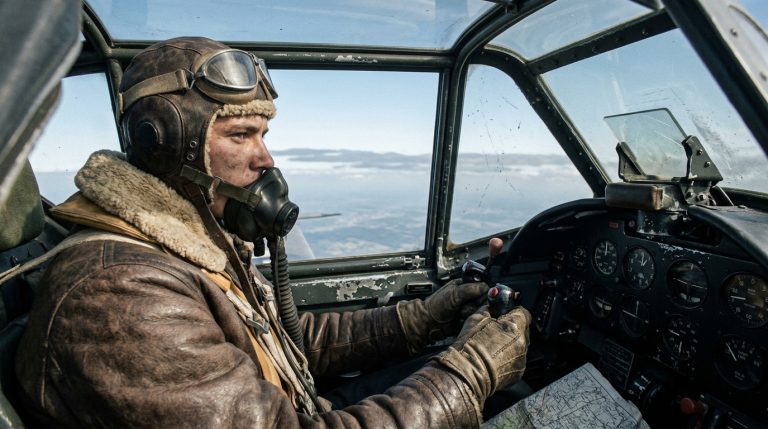
As she spoke, the world seemed to slow, the sensory details of the mess hall sharpening. She noticed the way the light caught the dust motes dancing above the tables, the faint, lingering scent of JP-8 fuel that sometimes seemed to haunt her gear, and the distant, rhythmic hum of the base’s air conditioning. It was a mundane scene, yet the history she carried—the memory of a night spent flying in a cockpit that felt like a burning oven—thrummed beneath her skin.
She remembered the way the control stick had felt: tacky, slick with the hydraulic fluid that had sprayed from a severed line. That fluid had been the color of life, a dark, viscous reminder that when things fell apart, the only thing that held them together was the quiet refusal to yield.
“Don’t soften the standard,” Sierra continued, her voice dropping into a register that only Jensen and Evans could catch. “Just apply it fairly. See the uniform, not the person wearing it.”
Major Evans nodded once, a sharp, decisive gesture that indicated she had heard the subtext. Sierra could see the shift in the other woman’s posture—the subtle move from observer to participant. It was the same look of tactical understanding that she had seen in briefing rooms across the world, a look that said, I see what you’re doing, and I’ll ensure it stays buried.
Jensen lingered for a moment longer, his presence a shield against the rest of the room. “I’ll have Major Evans assist you with the coordination for the briefing, then. We’ll meet in the command center at 0800 tomorrow.”
“Understood, Colonel,” Sierra said.
As the command trio turned to leave, the mess hall began to breathe again. The scraping of chairs resumed, but it was quieter now, more cautious. Sierra sat back down, the plastic of the chair cool beneath her. She felt the heavy, lingering gaze of the room, but she pulled her tray closer, focusing on the simple, tactile act of finishing her lunch.
The battle with the captain was over, but the friction remained. She felt a sudden, intrusive memory—not of the combat mission, but of a lecture at the Academy. An instructor, voice dry as parchment, talking about “aviatrixes” as if they were museum pieces. She felt a phantom irritation flare in her chest, a sudden, sharp, and entirely unreliable spark of cynicism. She gripped her fork, her knuckles whitening.
She took a slow, deep breath, forcing the phantom irritation back into the dark corner of her mind. Focus, she told herself. Just the lunch. Just the mission.
She looked at the sleeve of her blouse, then at the jacket. She was, for all intents and purposes, invisible again. But she knew that for the next twenty-four hours, she would be the ghost in the machine of this base, the one who had survived the fire only to be forced to navigate the cold, gray politics of the living. She looked toward the window, watching a jet tear across the blue expanse of the sky, its roar a low, comforting rumble that vibrated through the floorboards. She was a ghost, but she was a ghost who knew exactly how much weight she could move.
CHAPTER 3: THE ECHOES OF THE TOWER
Sierra didn’t move for a long moment after the heavy double doors swung shut behind Colonel Jensen and his staff. The mess hall had returned to its functional rhythm—the metallic clatter of trays, the murmur of conversation—but it was a brittle, fragile sound. She could feel the stares of the Marines sitting at the periphery of her vision. They were curious, perhaps even cautious, now that the “woman in the blue blouse” had been identified as something far more formidable than a visitor.
She pushed her tray away. The grilled chicken was cold, a small, unappetizing square left in the corner. She didn’t need it anymore. She picked up her flight jacket from the back of the chair. Its weight was familiar—a comforting, grounded density that reminded her of why she did this. The worn patch of the Grim Reaper seemed to watch her, the stitching slightly frayed at the edges.
She stood, her movements controlled, economical. She didn’t rush toward the exit. To leave in a hurry would be to acknowledge the discomfort of the room, and she had no interest in validating that. Instead, she walked with a measured, deliberate pace, navigating the narrow aisle between the rows of tables.
As she neared the exit, the air changed. The sterile, cooled atmosphere of the interior gave way to the dry, sun-baked heat of the California afternoon. The transition was sharp, the sudden brightness of the sun forcing her to squint.
“Major Knox?”
The voice was tentative, belonging to Major Evans, who had clearly doubled back. She was standing near a low-slung administrative building, the desert heat shimmering off the pavement behind her. Her uniform was as crisp as Colonel Jensen’s, a stark contrast to Sierra’s civilian attire.
Sierra stopped. “Major.”
“The Colonel wanted me to ensure you had transportation back to the guest quarters,” Evans said. Her eyes were sharp, scanning Sierra’s face with a mix of professional detachment and genuine, if guarded, respect. “There’s a car waiting.”
“I’m fine to walk, Major,” Sierra replied. “The air is good.”
“As you wish.” Evans stepped closer, her tone dropping, losing its formal edge. “I’ve been tracking the files since the call came through from Master Gunnery Sergeant Cole. I… I wanted to say that the story the Colonel told wasn’t just a legend to some of us. It was a catalyst.”
Sierra felt a sudden, sharp, and entirely unbidden memory: a drafty classroom at the Academy, the smell of floor wax and stale coffee, an instructor gesturing toward a slide of a 1940s propeller plane. He’d talked about “pluckiness” and “grit,” his voice patronizing, his eyes skimming over the women in the room as if they were ghosts. The memory was an intrusive phantom, a bitter reminder of the slow, grinding effort required to be seen for something other than a trope.
She felt her jaw tighten, a familiar, involuntary response to the echo of that stale, patronizing air. She suppressed it, anchoring herself in the present—the heat of the sun, the rough texture of the jacket in her hand.
“Catalysts come and go, Major,” Sierra said, her voice steady. “But the standard? That has to be maintained. Every day. By everyone.”
“We’re trying,” Evans said. She didn’t look away. “It’s hard to change a culture that doesn’t know it’s broken.”
“That’s exactly why you don’t call it ‘changing culture,'” Sierra said, turning her gaze toward the flight line, where a pair of jets were preparing for takeoff. Their presence was a steady, rhythmic pulse in the distance. “You call it doing the work. You don’t look for the applause or the validation. You just keep the line straight.”
She began to walk again, her boots clicking against the pavement. She didn’t wait for Evans to follow. The journey back to the quarters was long, winding through the sprawling, functional architecture of the base. Every step was a tactical decision, a way to process the residue of the morning’s confrontation.
She wasn’t thinking about Davis anymore. He was a symptom, a small, noisy error in a much larger system. Her thoughts were on the briefing tomorrow. She had to present the tactics, to strip away the jargon and show these commanders what it actually meant to survive in a low-visibility, high-stakes environment. She had to translate the fire and the fear into something they could understand, something they could build into their own training.
She reached her quarters—a small, modest room that looked out over the parade deck. It was quiet here, the noise of the base muffled by the thick, concrete walls. She set her jacket on the chair and went to the window, watching the sun begin to dip toward the horizon.
The desert sky was turning a deep, bruised purple, the colors bleeding into one another in a way that reminded her of oil on water. She felt the weight of the day, a deep, bone-weary exhaustion that was not just physical, but systemic. She had done the work today. She had stayed on station. But as she watched the shadows stretch across the parade deck, she wondered if the correction she had forced would hold, or if the system would eventually drift back to its default, flawed orbit.
She took a breath, the air in the room cool and still. She wasn’t finished. She had one more day, one more briefing, one more chance to leave a mark. She turned away from the window and began to organize her gear for the next morning. Everything had a place. Everything had a purpose. It was the only way to keep the ghosts at bay.
CHAPTER 4: THE CLASSROOM OF HUMILITY
The transition was not marked by fanfare or the dramatic sweep of a commander’s arrival; it was marked by the hum of an office printer.
Captain Davis stood by the copier, his posture lacking the knife-edged crispness of the previous day. He was in his service Charlies, the khaki fabric looking slightly rumpled. He stared at the machine as it spat out pages of training curriculum, his expression one of hollowed-out shock. When he realized he wasn’t alone, he didn’t snap to attention—he merely stiffened, a reflex that felt more like self-preservation than discipline.
“Major,” he said, his voice a dry rasp that lacked the syrupy arrogance of the mess hall.
Sierra walked past him toward the supply cabinet. She was looking for a marker to annotate her briefing slides, her eyes scanning the cluttered shelves of a room that clearly hadn’t been reorganized in years. “Captain,” she acknowledged, keeping her focus on the task.
She reached for a black permanent marker, but her hand stopped. Resting on the edge of the shelf, beneath a stack of dusty tactical manuals, was a thin, gray file folder marked Sensitive: Operational Conduct. It was slightly askew, as if shoved in a hurry. She recognized the classification code from the JSO detachment logs. It shouldn’t have been in an administrative staff office.
Her gaze flickered to Davis. He had returned his attention to the printer, his jaw tight.
“The Colonel mentioned you were handling the new curriculum,” Sierra said, her voice neutral. She kept her tone light, the way a pilot might check in with a wingman during a routine, boring leg of a flight. “How’s the transition coming?”
Davis turned, his eyes briefly landing on the file Sierra had noted, then darting away. The hesitation was minuscule, but to Sierra, it was as loud as a warning light. “It’s… it’s a process, ma’am. The Colonel wants a total overhaul of the leadership module. Not just the conduct training. He wants a deeper dive into operational integration.”
“That’s a significant scope for a desk reassignment,” she observed, picking up the marker and tucking it into her pocket. She didn’t touch the file. She didn’t need to. The discrepancy was enough. This wasn’t just a punishment for his behavior; it was an attempt to keep him contained in a role where he couldn’t do further damage, yet the file suggested he was still being fed sensitive, possibly restricted, material.
“I’m doing what I’m told,” Davis replied, his voice hardening. There was a flicker of the old anger there, but it was buried under a thick layer of resentment. “I have my orders.”
“And the orders are to teach everyone else how to be professional, is that it?”
“Something like that,” he muttered. He picked up the stack of papers from the printer, his movements rigid. “If you’ll excuse me, I have a meeting with the Sergeant Major.”
As he walked past her, he kept his head down. Sierra watched him leave, the office door clicking shut with a finality that underscored the quiet tension in the room. She stood alone in the small space, the air thick with the smell of toner and stale coffee.
She turned back to the shelf. She reached out and pulled the file folder just enough to see the header. It wasn’t administrative. It was a list of personnel currently under review for ‘professional conduct infractions.’ It was a list of names, and Davis’s handwriting—jagged and hurried—was in the margins, marking check-boxes next to names of junior officers.
The weight of it felt like a stone in her chest. Davis wasn’t just being humbled; he was being used as an enforcer. The system wasn’t correcting itself; it was merely consolidating its own defensive mechanisms, using a disgraced captain to keep the rank and file in line.
She looked at her own hands. They were steady, the same hands that had held a control stick while the world outside her canopy dissolved into tracers and flame. She had come here to brief them on tactics, to show them that respect was a prerequisite for survival. She hadn’t expected to find that the institutional rot went deeper than the ego of one man.
She reached for her phone, but stopped. To report this to Jensen would be to start a fire she couldn’t control. To ignore it would be to betray the very standard she had fought to protect. She felt the phantom ache in her shoulders return—the exhaustion of being the one who always noticed the red light on the panel when everyone else was busy admiring the view.
She tucked the marker into her pocket, turned, and walked out into the corridor. The hallway was empty, the fluorescent lights flickering in a monotonous, rhythmic pulse. She needed to breathe. She needed to find the perspective she had cultivated over a career of flying through the dark. The mission had changed. It wasn’t just about the briefing anymore. It was about seeing through the decoy of Davis’s “reassignment” and finding the truth of what was actually being built in the shadows of this base.
She walked toward the command center, her boots striking the floor with a rhythmic, percussive sound that echoed in the emptiness. She was a ghost in the machine, and for the first time in a long time, she felt the familiar, cold clarity of an upcoming dogfight.
CHAPTER 5: THE BRIEFING OF BROKEN LINES
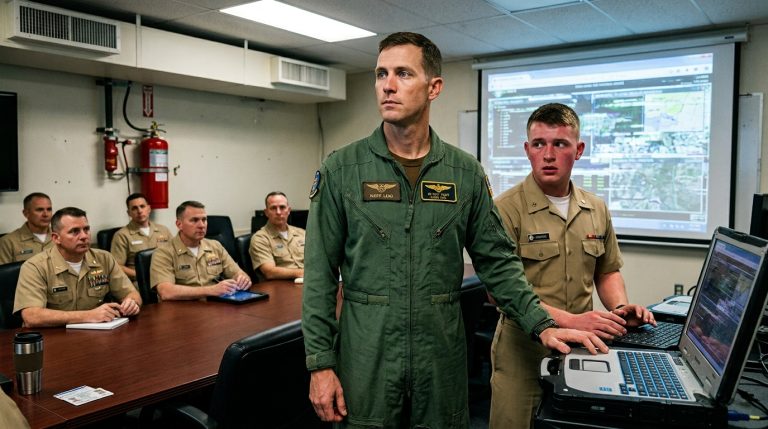
The command center was a cavern of blue-tinted light and the low, constant chatter of status updates. Sierra paused at the entrance, her eyes adjusting to the artificial dimness. It was a space designed for clarity, but as she walked toward the central briefing podium, she felt the familiar, grating friction of an environment built on layers of obfuscation. Major Evans was already there, adjusting the projector, her movements efficient and quiet.
“The room is ready, Major,” Evans said, not looking up. “The staff is arriving in five minutes. Most are expecting a lecture on flight safety.”
“They’re going to get something else,” Sierra replied. She stood at the podium, her hands resting on the cold, brushed metal. She felt the weight of the flash drive in her pocket—the one containing the unfiltered reports, the ones that didn’t make it into the glossy, sanitized slides Evans had prepared for her.
Just as she began to check the connection, the lights in the room flickered—a sudden, sharp strobe effect that sent the monitors into a chaotic, scrambled dance of static. The hum of the cooling fans spiked, a high-pitched whine that set Sierra’s teeth on edge. The entire command center surged, the air growing thick with the smell of scorched ozone—the smell of electronics fighting a losing battle.
“Power fluctuation,” Evans muttered, her hand flying to her comms device. “Techs are on it. It’s just a momentary glitch.”
But it wasn’t just a glitch. The security monitors shifted, the feed briefly bypassing the standard loop to show a live, silent image of the administrative office Sierra had just left. On the screen, she saw a figure—Davis—rummaging through the file cabinet she had identified earlier. He wasn’t filing; he was purging. He moved with a frantic, desperate intensity, his hands grabbing armfuls of folders and shoving them into an incinerator bag.
The image vanished as quickly as it had appeared, the monitors snapping back to their usual, placid display of flight patterns and weather reports.
Sierra’s pulse hammered a steady rhythm against her neck. She looked at Evans, who seemed entirely unaware of the brief intrusion on the screen. The captain wasn’t just enforcing rules; he was destroying the paper trail of his own overreach. The decoy secret—that he was a useful tool of the institution—was dissolving. He was a liability, and he knew it.
“Major,” Sierra said, her voice dropping to a controlled, sharp whisper. “Did you see that?”
“See what?” Evans looked up, her expression genuinely confused. “The power flicker? It happens when the base grid balances the load.”
“The monitor,” Sierra corrected, gesturing toward the main console. “The administrative feed.”
Evans checked the console, her brow furrowed. “That feed is closed-circuit, Major. Only the Sergeant Major and the Colonel have access. There’s no way it would show up here.”
Sierra didn’t press it. The fact that the feed had appeared at all suggested a system anomaly, or perhaps someone—someone with far more clearance than a disgraced captain—was watching the purge. She felt a cold, sharp spike of apprehension. If the base command was allowing Davis to clean up his own mess, then the institutional rot wasn’t just systemic; it was protected.
The doors at the back of the room opened, and the first of the senior staff began to filter in. They were senior pilots, men and women who had spent years flying under the shadow of the same expectations Sierra had fought her entire career. They didn’t look at her with awe; they looked at her with a weary, professional skepticism.
Sierra took a breath, the air in the room tasting of recycled coldness. She looked at the first slide of the prepared presentation—a sanitized, corporate-friendly breakdown of flight protocols—and then at the thumb drive in her pocket.
She could play the game. She could give them the lecture on safety and walk away, leaving Davis to his incinerator bag and the base to its comfortable, broken status quo. Or she could pull the drive.
She stepped away from the podium, walking into the center of the room. She could feel the gaze of the Colonel as he took his seat at the end of the long, rectangular table. He looked expectant, his face a mask of command, yet his eyes betrayed a flicker of something else—a silent, unspoken question.
“Ladies and Gentlemen,” Sierra began, her voice filling the cavernous room, steady and devoid of the corporate polish Evans had suggested. “Before we discuss flight safety, I want to discuss the cost of the lines we fly.”
She didn’t look at her notes. She looked directly at the Colonel.
“A wingman is not a commodity,” she continued, her voice resonating off the polished walls. “And the strength of a detachment is not found in the crispness of a sleeve or the conformity of a uniform. It is found in the integrity of the information we provide to one another when the flight is going south.”
She saw the staff shift, the collective air in the room hardening. She had skipped the pleasantries. She had bypassed the expected. She felt the heavy, silent pressure of the command staff watching her, their reactions a mix of irritation and curiosity. She wasn’t just giving a briefing anymore; she was starting a fire.
She reached into her pocket, her fingers brushing the cold metal of the drive. The room seemed to shrink, the voices of the staff fading into a dull roar, leaving only the sound of her own steady, rhythmic breathing. She had one chance to change the geometry of this conversation, to force them to look at the rot, but to do so was to declare war on the very structure she was trying to fix.
The Colonel’s eyes narrowed, his gaze locking onto hers. He knew. He had seen the reports, he had known about the conduct reviews, and he had let it happen. The realization hit her with the force of a high-G turn, leaving her momentarily breathless. She wasn’t here to teach them; she was here to hold a mirror to their complicity.
She pulled the drive from her pocket, holding it visible in her hand. The metal reflected the cool, blue light of the monitors, a small, unassuming piece of evidence that carried the weight of a truth they were all desperate to keep buried.
“Let’s talk about the reports that don’t make it into the files,” she said.
The silence that followed was absolute, a void that seemed to swallow the very oxygen in the room.
CHAPTER 6: THE SILENCE OF THE SHADOWS
Sierra held the drive steady. Her posture remained fixed, a calm, deliberate defiance that didn’t waver even as the temperature in the command center seemed to rise by several degrees. The Colonel, seated at the head of the table, hadn’t blinked. His gaze was locked onto hers, a battle of wills played out in the sterile, blue-lit theater of the command office.
“Major,” the Colonel said, his voice dropping into a register that wasn’t command, but caution. “You understand the implications of what you’re suggesting. You are bypassing established protocols for internal review.”
“Protocol is a tool, Colonel,” Sierra replied, her voice stripped of all warmth. “It’s meant to maintain order, not to provide cover for institutional failure. These files,” she gestured with the drive, “don’t represent a breakdown in safety protocols. They represent a breakdown in the fundamental standard of this command.”
She stepped forward, placing the drive onto the polished mahogany of the briefing table. It looked fragile, almost insignificant against the massive, integrated communication arrays.
“Captain Davis isn’t a rogue element,” she continued, her gaze sweeping the room. “He is a symptom. He acts with the confidence he does because he operates in an environment where the ‘standard’ is applied only when it’s convenient. When we ignore the way personnel are treated—when we prioritize the appearance of order over the reality of it—we don’t just lose efficiency. We lose the trust that makes a wingman a wingman.”
She heard a chair scrape behind her—someone shifting, uncomfortable. She didn’t turn. She knew the room was divided. There were those who were terrified of what that drive contained, and those who were waiting for someone to finally say what they had been whispering in the smoke pits for years.
“I didn’t come here to cause a disruption,” Sierra said, her voice quiet, almost conversational now. “I came here to do my job. But part of my job is ensuring that the pilots I train, the teams I work with, aren’t being sabotaged by their own leadership before they even reach the flight line.”
The Colonel rose. He was a man of impressive stature, his uniform a seamless extension of his authority, yet as he stood, he looked suddenly, vividly human. He walked around the table, the rhythmic tap of his heels echoing in the cavernous space. He stopped in front of Sierra, looking down at the drive, then back at her.
“And if I refuse to open this?”
“Then I have other channels,” Sierra said, the threat implicit and absolute. “But I think you’d prefer to handle this internally, Colonel. The optics of an external investigation into how this base manages its personnel… that’s a story even you won’t be able to rewrite.”
The Colonel went still. The room felt suspended in time, the very air vibrating with the tension of his decision. He reached out, his hand hovering over the drive. The movement was slow, deliberate.
Suddenly, a series of alarms erupted throughout the command center. A piercing, rhythmic tone that sent red strobe lights flashing across the ceiling. The main screens flipped, the tactical data replaced by a massive, pulsing ‘ERROR’ code that cascaded down every monitor.
“Sir!” Major Evans shouted over the din, her face pale. “The server grid is being purged. Someone is initiating a hard wipe on all local files!”
Sierra turned. The monitors were flashing images—snippets of the personnel logs she had seen in Davis’s office. It was a chaotic, rapid-fire display of documents, redacted files, and personal memos being erased in real-time.
“Davis,” Sierra realized, the name cold in her mouth.
He hadn’t been cleaning his own office; he had been installing a backdoor. The power surge she had experienced earlier hadn’t been a glitch; it had been the catalyst.
“Shutdown the server!” the Colonel roared, his earlier calm vanishing into a mask of pure, frantic command. “Sever the external connection!”
But the monitors remained locked, the stream of data accelerating. The base was being wiped clean, and with it, every piece of evidence of the command’s failure. Sierra looked at the drive on the table. It was the only thing left.
“It’s too late,” Evans said, her voice small. “The grid is down.”
The lights went out, leaving the room in a thick, suffocating darkness, broken only by the dim red glow of the emergency lights. The silence returned, but this time, it was hollow, empty of everything but the smell of burnt plastic and the realization that the system had just burned itself down to protect its own reputation.
Sierra stood in the dark, her hand finding the drive on the table. She pulled it back, tucking it into her pocket. The evidence was safe, but the damage was done. The truth was now a ghost in a machine that had successfully committed suicide. She had her proof, but she was standing in the ruins of the very institution she had tried to save.
She turned toward the Colonel, who was a dark silhouette in the emergency light. “You want to know what was on here, Colonel? You just watched it vanish. Now you have to decide if you’re going to hunt the man who did it, or if you’re going to let him finish the job.”
The Colonel didn’t answer. He just stood there, staring at the blank, dead monitors, his silence the final, damning piece of the puzzle.
CHAPTER 7: THE ARCHITECTURE OF ACCOUNTABILITY
The red emergency lights cast long, distorted shadows across the consoles, turning the command center into a theater of ghosts. Sierra didn’t retreat. She stood perfectly still, letting her eyes adjust to the low light. Beside her, the Colonel remained a statue of frozen uncertainty, his silence now feeling less like a lack of command and more like a tactical surrender.
“We need a localized terminal,” Sierra said, her voice cutting through the panic of the staff. She turned toward Major Evans. “The server grid is being wiped externally. If we can isolate a standalone workstation, we might be able to pull a snapshot before the overwrite hits the master record.”
Evans snapped to attention, the professional veneer momentarily overriding her fear. “There’s an old training terminal in the back of the briefing room. It’s off-grid. It shouldn’t be affected by the master override.”
“Show me.”
They moved through the dark, the air thick with the smell of scorched ozone and the low, frantic murmurs of the staff. Every step was measured, a calculated movement through a space that had shifted from a hub of administration to a front line. Sierra kept her hand in her pocket, her fingers resting on the drive. It was the key, but it was also a target; if Davis was purging the grid, he was doing it to keep that drive from being contextualized.
They reached the terminal. It was a dusty, forgotten relic of a different era, its screen showing a flickering command prompt. Sierra sat, the chair creaking under her weight. She plugged the drive into the side port. The terminal whirred to life, a series of green, archaic characters scrolling across the screen.
She didn’t need to be a systems engineer; she just needed to know how to navigate the logic of the file structure. She began to filter the data, looking for the mirrored logs of the personnel conduct infractions.
“Major,” Evans said, hovering at her shoulder. “The Colonel is asking for a status report. He’s… he’s trying to establish a secure line to the Base Commander.”
“Tell him to wait,” Sierra said, her eyes fixed on the screen. The files were there, hidden behind a series of sub-directories that should have been restricted to the Sergeant Major’s office. She saw the connections—the names, the dates, the specific incidents of ‘professional conduct’ that had been flagged and then quietly suppressed. It wasn’t just Davis. It was a network. A web of senior staff who had used the training module to identify, monitor, and ultimately push out anyone who didn’t fit their narrow, rigid definition of ‘The Marine Standard.’
The realization was a punch to the gut. The institution wasn’t just broken; it was designed to break the people who didn’t conform to the ghost of a military culture that had long since outlived its own utility.
She felt a phantom heat flare in her peripheral vision—the memory of the burning cockpit, the acrid, sickening scent of fuel and electrical fire. Hang on, buddy. She had told her wingman that, and she had meant it. She wouldn’t let this system burn her fellow officers, even if they were the ones who had built the fire in the first place.
“I have it,” she whispered.
“What is it?” Evans leaned in, her face illuminated by the green glow of the monitor.
“The full audit trail,” Sierra said. “It’s not just the conduct logs. It’s the email chains, the meeting notes, the directives signed by the staff to bypass EO procedures. It’s a complete roadmap of the bias.”
She felt a movement behind them—a shadow detaching itself from the gloom of the room. She didn’t turn. She knew the cadence of those footsteps.
“That’s a very interesting file, Major,” a voice said, low and devoid of the syrupy, theatrical quality it had once held. Captain Davis stood in the doorway, his silhouette framed by the dim light of the corridor. He held a sidearm, his hand steady, his eyes reflecting the flickering red of the emergency strobes.
Sierra remained seated. She didn’t reach for her own weapon, even though she knew her sidearm was holstered at her hip. She kept her hands on the keyboard, her posture relaxed, her gaze fixed on the screen.
“It’s not just a file, Captain,” she said, her voice calm, a sharp contrast to the frantic energy radiating from the man in the doorway. “It’s a ledger. And it’s already uploading to the secure server at the Pentagon’s JSO liaison office. Even if you wipe this terminal, the truth is already in transit.”
Davis hesitated, his weapon dipping slightly. He looked at the drive, then back at Sierra. The arrogance was gone, replaced by a raw, desperate fear. He looked like a man who had finally realized he was the one flying the plane into the mountain.
“You don’t understand,” he said, his voice trembling. “They’ll just bury it. They’ll bury you with it.”
“Maybe,” Sierra said, finally turning to face him. Her eyes were clear, steady, revealing nothing. “But I’m not the one holding the gun, Captain. I’m the one holding the history. And the history is finished.”
The room seemed to hold its breath. The silence was absolute, a void that stretched between them, filled only by the low, rhythmic ticking of the terminal. Sierra waited, her hand hovering over the ‘Execute’ key, the weight of the moment pressing down on her like an extra thousand pounds of G-force.
CHAPTER 8: THE HORIZON OF THE STANDARD
Captain Davis did not pull the trigger. He didn’t even move. He stood in the threshold of the dark doorway, the sidearm in his hand appearing suddenly, absurdly heavy, as if the reality of what he was being asked to protect had finally manifested in its physical weight. His gaze flickered from Sierra to the terminal screen, where the upload progress bar had reached one hundred percent. The silence of the command center was replaced by a soft, mocking chime from the computer—the sound of a digital door closing.
“It’s done, Captain,” Sierra said. Her voice wasn’t triumphant; it was merely a statement of fact. She didn’t look at him anymore. She didn’t have to. She stood up, her movements slow, deliberate, the exhaustion finally catching up to her.
Davis let the weapon drop. It hit the floor with a dull, heavy thud, the noise amplified by the cavernous, empty room. He didn’t look at it. He looked at Sierra, his face a landscape of shattered assumptions. He had spent his career believing that the armor of his rank was impenetrable, that the ‘Standard’ was something he could define, protect, and enforce. Now, he was just a man in a rumpled uniform, staring at the debris of his own ideology.
“They’ll come for you,” he whispered.
“They’ve been coming for me my entire career,” Sierra replied, walking past him. She didn’t pause. She moved toward the exit, the heavy, reinforced doors of the command center swinging open to reveal the morning light.
The aftermath did not happen in a flash of lightning. It happened in the quiet, steady erosion of a system that had built itself on exclusion. Over the following weeks, the evidence Sierra had secured—the ledger of suppressed conduct, the directives designed to circumvent oversight—did exactly what she intended. It didn’t just expose Davis; it exposed the architecture of the bias that had allowed him to thrive. The Colonel was quietly reassigned, the ‘Standard’ was formally rewritten to emphasize transparency, and the training module Sierra had helped define became the new, non-negotiable benchmark for the entire air station.
Three months later, Sierra was back at the base for a final, formal debrief. The mess hall was different—quieter, perhaps, but there was a palpable shift in the air. The ‘stale air of assumption’ had been replaced by a more neutral, professional hum.
She was sitting at a table near the window, the same one where Gunny Cole had once watched her with guarded curiosity. She was wearing her flight uniform, the sage green jacket with the Reaper patch draped over the back of her chair. She felt, for the first time in years, completely, achingly visible.
A shadow fell across her tray. She looked up. It was Davis. He was in civilian clothes—a simple, nondescript shirt and slacks. He looked tired, but the raw, frantic edge had been scrubbed away, replaced by the quiet, subdued demeanor of someone who had spent a lot of time reading the fine print of their own failure.
“Major,” he said. He didn’t salute. He just stood there, waiting for acknowledgment.
“Captain,” she replied. She gestured to the empty chair. “Sit.”
He sat. He didn’t say anything for a long time, just stared at the tray, his hands clasped on the table. “I’m leaving the service,” he said finally. “The resignation was accepted last week.”
“What will you do?”
“I don’t know. Something quiet, I think.” He looked at her then, his gaze direct. “I spent a long time being the guard at the gate. I never stopped to ask what I was actually keeping out.”
Sierra looked out the window at the flight line. The jets were taking off, one after another, their roar a powerful, steady rhythm that vibrated through the floorboards. She thought of her wingman, the night of fire and fear, and the memory of that cockpit—the sticky fluid, the red lights, the absolute, unwavering refusal to let a teammate fall. That night had been the genesis of her call sign, but this—this morning, this quiet, scarred landscape—was the true test of what it meant to lead.
She reached into her bag and pulled out a small, silver coin—the one she had been rolling between her fingers whenever the shadows grew too long. She pushed it across the table. It was a simple, unmarked piece of metal, worn smooth by years of friction.
“Keep your eyes open,” she said. “The horizon is always moving.”
Davis looked at the coin. He didn’t touch it. He just nodded, a small, humble gesture that acknowledged the weight of the advice. He stood, turned, and walked away, his gait no longer the rigid, performative strut of an enforcer, but the steady, measured pace of someone who had finally learned how to walk on their own.
Sierra watched him go until he disappeared through the doors. She felt a deep, profound sense of peace—not the peace of victory, but the peace of a job done with absolute, uncompromising integrity. She turned back to her lunch, the morning light playing on the surface of the coffee in her cup. She was a pilot, a major, a ghost, and a leader. And as she looked out at the sky, the vast, open, and utterly indifferent blue, she knew that she would always, always have her wingman’s back.
The story wasn’t over—it would never be over as long as there were lines to be flown and biases to be broken—but for now, the air was clear. And that, she thought, was enough.