The Weight of Wings: A Story of Quiet Resilience and the Unseen Scars of Duty
CHAPTER 1: The Standard of Silence
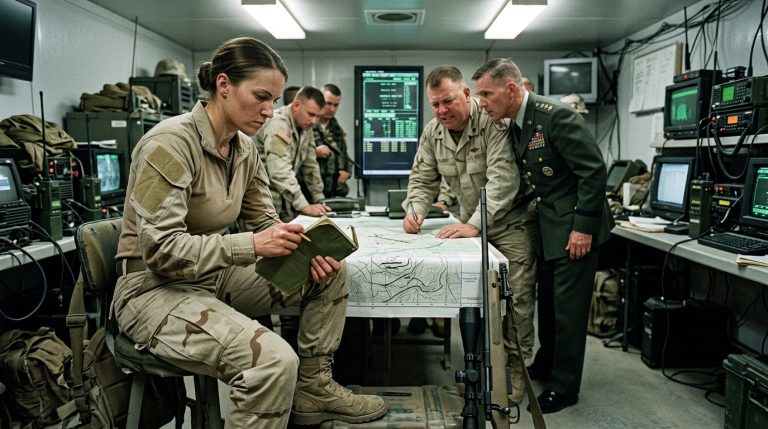
The sterile hum of the air conditioning in the briefing room felt more like a vibration in the floor than a sound. It was an environment designed for precision, for the cold exchange of tactical data, and for the rigid adherence to rank. Lieutenant Peterson, standing barely a foot away, was a man who lived within the borders of his handbook. His uniform was starched to the point of brittleness, his posture an architectural project of over-eagerness.
“Ma’am, this area is for brief attendees only,” he said, his hand raised in that flat, dismissive palm-out gesture that spoke more of a traffic stop than a professional courtesy.
Amelia didn’t look up immediately. She finished pouring the coffee into the small ceramic cup, her movements measured. She was an object of focus in a room full of noise. Every eye at the mahogany table had turned, their whispers dying out in the wake of the lieutenant’s perceived authority. He saw a woman in a green flight suit, his eyes sliding over her rank insignia as if they were merely decorative trim. He was a man performing a role for the senior officers he imagined were watching.
“I am an attendee, Lieutenant,” Amelia said. Her voice was low, devoid of the sharp edge that would have triggered a defensive surge. It was simply a fact, stated with the weight of someone who knew exactly where she stood.
Peterson’s jaw tightened. The rejection of his assumption didn’t cause him to pause; it caused him to dig in. He glanced at her hair, tucked into a regulation bun, and then back to her eyes. He was committed to the narrative he had constructed: that she was an interloper.
“Spouses and administrative staff aren’t cleared for this brief,” he countered, his voice rising, pitching for the room. “I’m going to have to ask you to wait outside.”
Amelia turned to face him. She was smaller than the men surrounding the table, yet the way she stood—shoulders back, weight centered—made the floor beneath her feel solid. Her eyes, a calm, clear blue, didn’t reflect the irritation that should have been there. Instead, she looked at him with a detachment that made the lieutenant’s face flush with an undefined, growing anger.
She reached into the shoulder pocket of her flight suit, her fingers moving with the mechanical ease of a pilot prepping for a routine check, and produced her common access card. She held it out. It was a simple piece of plastic, but in the sudden quiet of the facility, it felt like an anchor dropped into the middle of a storm.
Peterson snatched it. His thumb brushed hers, a fleeting, electric contact that he immediately ignored. He scanned the card, the rank, the photo, but the information seemed to bounce off his internal conviction. He stared at it, turning the card over to look at the magnetic strip, hunting for a flaw that didn’t exist.
“This could be an admin error,” he muttered, the words becoming a wall between him and the truth. He walked toward the secondary security terminal, his movements sharp and aggressive, the click of his heels sounding like gunfire in the room.
Amelia watched him go. She didn’t move to stop him. She didn’t argue. She simply adjusted her collar, her fingers tracing the frayed edge of the golden wings stitched above her pocket. They were worn thin, the fabric beneath them soft and pilled from years of harness straps and survival vests.
It was then that she saw it—not the lieutenant, not the room—but a flicker of movement in the corner of her vision, a subtle discrepancy in the way the light hit the projector screen. It was an out-of-place reflection, a shimmering distortion that suggested the secure feed on the screen wasn’t just displaying data; it was being routed through a secondary, unauthorized server. Her heart didn’t race; it slowed. The lieutenant was playing a game of ego, but the room itself was hiding something much larger.
The lieutenant turned back to her, his smirk a fragile shield. “It says here you’re naval aviation,” he sneered, loud enough for the back row to hear. “Public affairs, I assume? Or maybe a meteorologist?”
The insult was meant to strip her of her status, but as she looked at him, she realized he wasn’t just insulting her. He was the distraction. The true breach was already pulsing behind the screen, and she was the only one in the room who had seen the color of the signal shift.
Please type “2” to continue.
CHAPTER 2: The Echo of the Wire
The lieutenant’s voice—thin, arrogant, and entirely devoid of the weight of experience—was still vibrating in the air, but Amelia barely heard it. The air in the room, previously filtered and climate-controlled to the point of sterility, now carried the phantom scent of ozone and salt-drenched rain.
She stared at the secondary terminal. The projection on the screen flickered, a jagged pulse of static that seemed to synchronize with a phantom rhythm in her own chest. Her mind, conditioned by years of landing a forty-thousand-pound machine on a moving, pitching deck in the absolute dark, didn’t panic. It did what it had always done: it recalibrated.
She remembered the third wire. The North Atlantic was a living thing, a black, churning expanse that wanted to swallow anything that dared to touch its surface. She remembered the deceleration—a physical shock that hit her like a hammer, the seat harness digging into her shoulders, the world folding in on itself until there was nothing but the mechanical integrity of the hook, the wire, and the scream of the engines fighting the urge to plunge into the abyss. That was the reality of her wings. They weren’t pins on a uniform; they were the scars left by every moment she had defied the gravity that Peterson now so casually mocked.
Peterson was still tapping at the keyboard, his movements jagged and nervous. He didn’t see the flickering signal on the secondary monitor. He was entirely consumed by the smallness of his own crusade.
“Public affairs,” he muttered again, the smirk etching deeper into the corners of his mouth. He was waiting for her to break, waiting for the defensive stutter that would justify his intrusion.
Amelia took a breath, the air tasting not of coffee, but of the cold, metallic reality of a cockpit. She needed to know what was hidden behind that feed. If the lieutenant was the distraction, then the actual security breach was buried in the data he was currently ignoring. She realized then that the “procedural issue” he claimed was real—not because she was an imposter, but because the facility’s security had been compromised from within.
“Lieutenant,” she said, her voice cutting through the hum of the room like a blade through silk. She didn’t raise her volume, but the clarity of her tone forced a pause in his tapping. She took a step toward him, her movements economical. She wasn’t an administrative officer, and she wasn’t a spouse. She was a weapon systems officer and a flight lead. She moved with the predatory patience of a pilot holding a steady glide slope.
Peterson glanced back, his brow furrowing. The air of superiority faltered for a heartbeat, replaced by a flicker of confusion. “I told you to stand down, Commander. I’m running the secondary verification.”
“You’re running a loop,” she said, her eyes tracing the flickering signal on the monitor over his shoulder. She could see the data packets now—irregular, unauthorized, bleeding into the encrypted briefing stream. It was sloppy, a frantic attempt to hide something by burying it under legitimate traffic. “If you continue to ping the local server, you’ll trigger a hard lock on the entire facility’s grid. And since you’re already logged in as the lead auditor, the system will mark this room as the point of failure.”
It was a gamble. She didn’t know if the architecture of this specific system was the same as the ones she’d trained on, but the logic of hierarchy held true. The system would always protect its own integrity, and the person holding the keys would be the first one to be scorched.
Peterson’s hands stopped on the keys. The arrogance in his face curdled into a sickly pale uncertainty. “That’s… that’s not possible. The manual says—”
“The manual doesn’t account for a compromised node,” Amelia interrupted, keeping her voice low, transactional. She had to move him, to gain access to the terminal without causing a scene that would draw the attention of the others sitting at the table. If they saw the flickering feed, the game would be over before she could identify the threat.
The Marine colonel, halfway down the table, was watching them. His face was a map of old battles, and he was squinting, a spark of recognition forming in his eyes—a memory of a dusty tent in Helmand and a voice over the radio. Amelia saw the transition happen in his expression, the way his hand hovered over his own device. He knew something was wrong. She had to use that.
She didn’t look at the Colonel. She looked only at Peterson, using the full weight of her rank—the O-4 gold leaf pinned to her collar—to anchor his focus.
“You want to protect the facility, Lieutenant?” she asked, stepping into his personal space, her presence filling the gap he had left with his uncertainty. “Then stop looking at my credentials and look at the screen. You’re holding the door open for the very breach you’re trying to prevent.”
She reached out, her hand steady, and placed it over his on the console. It was a firm, grounding pressure. “Step back. Let me see the logs. If I’m a risk, I’ll take the blame. But if you walk away now, you’re just a junior officer who caused a total system blackout. Is that the career you want?”
Peterson’s breath hitched. The pride that had fueled his entire display was being replaced by the cold, biting reality of accountability. He stared at the screen, then at her, his eyes darting to the senior officers at the table who were now leaning forward, the silence of the room becoming a heavy, suffocating pressure.
He didn’t move yet. He was still fighting the urge to double down, to protect the fragile lie he had built. But he was looking at her wings—really looking at them this time—and the way they caught the harsh fluorescent light, frayed and unpolished. He saw not a decoration, but a history he couldn’t comprehend.
“I… I don’t see anything,” he whispered, though his voice lacked the bite of his earlier accusations.
“Then move,” she said, her voice dropping to a command level that brook no further resistance.
He stepped back, his boots scuffing on the carpet. As he retreated, Amelia took his place at the terminal. Her fingers moved over the keys—not with the erratic, performative energy of the lieutenant, but with the measured, rhythmic precision of a pilot running a pre-flight checklist. The flickering on the screen didn’t stop, but she began to peel back the layers of the digital interference.
Underneath the decoy security feed, she found it. A hidden channel, encrypted, siphoning tactical data from the very briefing they were about to attend.
She didn’t gasp. She didn’t call out. She simply locked the data and initiated a silent trace. The information wasn’t being leaked to an external enemy; it was being routed to an internal address. The realization hit her with the cold force of the North Atlantic.
She turned back to look at the room, her gaze sweeping over the colonels and captains, the men and women who held the keys to the mission. She realized with a sickening clarity that the “procedural issue” wasn’t just a lieutenant’s folly. She had stumbled into a cage, and the lock was being turned from the inside.
CHAPTER 3: The Fragile Architecture of Trust
The transition was subtle, the kind of mechanical death that only someone who spent their life listening to the health of an aircraft could detect. The constant, low-frequency thrum of the air-handling unit cut out, leaving behind a sudden, ringing silence. The temperature in the SCIF—the Sensitive Compartmented Information Facility—began to climb, the air growing thick and stagnant.
Amelia’s fingers were still poised over the terminal. On the screen, the illicit trace had reached 88 percent. It was a digital map, a breadcrumb trail leading away from the facility’s secure server and toward a private, off-network terminal. It was sophisticated, designed to look like routine background noise, but in the hands of someone who understood the physics of data flow, it was as obvious as a leaking hydraulic line.
“Commander?”
The voice belonged to the Marine colonel. He was no longer leaning back in his chair. He was standing, his movements slow and deliberate, his eyes fixed on the back of Amelia’s head. The rest of the room had become an uncomfortable gallery, the junior officers shifting in their seats, their faces tight with the mounting tension of the unspoken.
Amelia didn’t turn. She couldn’t afford to. If she broke the connection now, the trace would be lost, and the digital footprint would be scrubbed clean. “One moment, Colonel,” she replied, her voice steady, though she could feel the heat radiating from the terminal’s tower. The system was struggling to maintain the encryption bridge she had forced open.
“We have a briefing to start, Commander,” the Navy captain at the head of the table rumbled. He sounded like a man who was losing his patience with the theater of the morning. “The Iranian interdiction scenarios are time-sensitive. If the Lieutenant has verified your clearance, take your seat.”
Amelia felt the prickle of sweat at her hairline. She looked at the screen. 92 percent.
The lieutenant was standing near the door, his face a ghostly mask of shock. He was watching the monitor, his eyes darting between Amelia and the screen, his arrogance replaced by a frantic, hollow-eyed realization that he had been the pawn in a much larger game. He didn’t know what was happening, but he knew enough to see that the woman he had tried to evict was now operating in a world he didn’t understand.
Suddenly, the screen flickered violently. A red warning banner flashed across the console: CRITICAL COOLING FAULT.
The entire terminal began to whine, a high-pitched protest from the failing internal cooling fans. The room’s lights dimmed momentarily, then surged back to full, harsh brilliance. The power fluctuation was a massive, uncontrolled variable. Amelia felt the connection stutter. She had to choose: dump the raw data to her own personal device, or maintain the integrity of the trace until it hit 100 percent.
She chose the trace. It was the only way to prove the origin.
“Power is failing,” the Marine colonel said, his voice closer now. He was standing just behind her, his shadow falling over the console. He reached out, his hand hovering near her shoulder, his intent unreadable. Was he there to stop her, or to shield her?
Amelia didn’t flinch. She kept her focus on the flow of data. 96 percent. 97 percent.
“I need you to stay back, Colonel,” she said, her voice a low, hard line. “This system is live. If the grid drops before this trace is cached, it’s going to trigger a wide-area purge. We will lose everything.”
The colonel hesitated. He looked at the screen, then at the Navy captain, and then back at Amelia. The name Spectre seemed to hang between them, a shared memory of a different kind of pressure—the kind that came when you were pinned under fire in the middle of a war zone.
“Do what you have to do,” the Colonel murmured, his voice dropping so low it was meant only for her. “But if this is a setup, we’re all going down.”
99 percent.
The terminal gave one final, screeching protest. The screen went black.
The silence that followed was absolute. The heat in the room was palpable, a stifling weight. Amelia pulled her hand back, her knuckles white, her fingers trembling slightly from the sheer concentration of the last few minutes. She turned slowly to face the room.
The Navy captain was standing now, his hands gripping the mahogany table until his fingers were as pale as his face. “What was that, Commander?”
Amelia took a breath, the air thin and hot in her lungs. She looked at the room, then at the lieutenant, who seemed on the verge of collapse. She had the trace, cached in the secondary memory buffer of the terminal before the crash. She had the proof that the facility was being manipulated. But she also realized that the moment she spoke, she was declaring war on someone in this room.
“There’s a malfunction in the network, sir,” Amelia said, her voice level. “Someone has been mirroring the secure data. The system initiated a hard-lock to prevent further leakage.”
It was a half-truth, a tactical misdirection. She wasn’t ready to reveal the extent of the corruption, not until she knew who she could trust. She looked at the Marine colonel, who was still standing near her, his gaze intense. He held her eyes for a moment, a silent acknowledgment of the storm they were now both standing in.
The Navy captain’s gaze shifted to the lieutenant. “Peterson. Was this under your purview?”
The lieutenant looked up, his voice cracking. “I… I was only following the standard audit procedure, sir. I didn’t know.”
Amelia saw the trap closing. The lieutenant was the perfect scapegoat—the overzealous, incompetent junior officer whose “mistake” would provide the perfect cover for the real perpetrator to clean up their tracks. She had to decide. If she let Peterson take the fall, she was complicit in the very lack of integrity she had fought to defend. If she cleared him, she put the target squarely on her own back.
“He was following orders, sir,” Amelia said, her voice ringing clear in the stillness. “He was working off an automated security protocol that had been altered at the source. He’s as much a victim of this as anyone else.”
The room remained still. The air conditioning kicked back on with a sudden, metallic groan, the rush of cool air doing nothing to settle the heat of the tension. The captain stared at her, his expression unreadable.
“We’ll see about that, Commander,” he said, his voice cold. “I’m suspending this brief until security can sweep the server. Everyone stay in your seats. No one leaves until this is resolved.”
Amelia walked back to her chair, her steps steady. She sat down, her back straight, the frayed wings on her chest catching the light. She had triggered the alarm, but the beast she had awakened was far from beaten. She felt the heavy, suffocating pressure of the room, and for the first time in her career, she realized that the most dangerous battles weren’t the ones fought in the sky, but the ones fought in the shadows of the very people you were sworn to protect.
CHAPTER 4: The Quiet Weight of Truth
The suspension of the brief was not merely a tactical delay; it was a vacuum into which the entire power structure of the room collapsed. Amelia remained seated, her hands folded neatly on the mahogany surface. Beside her, Lieutenant Peterson looked like a man watching his own funeral. The captain’s eyes were locked on her, a challenge of authority that demanded a submission she could not afford to give.
“Commander Wilson,” the captain began, his voice a low rumble that seemed to vibrate the table. “You have made a very bold assertion. If you have proof of a systemic compromise, produce it.”
The room was so quiet that the rhythmic, mechanical ticking of the cooling system sounded like a gavel. The Marine colonel leaned forward, his presence a silent pillar of support. Amelia knew that revealing the data now would be explosive. It wouldn’t just implicate a system; it would expose the person sitting at the head of the table—the very man currently demanding her evidence. She had recognized the internal routing address during the trace. It belonged to the captain’s own administrative terminal.
She didn’t rush. She retrieved her personal device, the cache from the console now securely uploaded. She stood up, the chair scraping against the floor in the absolute silence. Every eye in the room followed her as she walked toward the head of the table.
“I don’t have proof of a breach, Captain,” she said, her voice clear and devoid of tremor. She placed the device on the table, face down. “I have proof of a diversion.”
The captain’s face tightened. He looked at the device, then back at her. “Explain.”
“The security alert that Lieutenant Peterson triggered was not a mistake,” Amelia continued, her gaze steady, locking onto the captain’s. “It was an automated response to a bypass code injected into the grid from your terminal five minutes before the brief began. I didn’t unlock the grid, sir. I simply traced the signal back to its point of origin.”
The room exploded into a murmur of disbelief. The captain stood, his composure fracturing. “That is an absurd accusation, Commander.”
“It’s not an accusation,” Amelia replied, her voice cooling, shedding the layers of professional decorum to reveal the steel underneath. “It’s a technical reality. If you open that file, you’ll see the routing logs. You’ll see exactly who prioritized the bypass, and who stood to gain from the chaos of a ‘procedural issue’.”
The Marine colonel stepped forward, his hand hovering over the device. “I’ll authenticate this, Captain.”
The captain’s bravado vanished, replaced by a sudden, frantic calculation. He realized he was surrounded—not by a room of subordinates, but by officers who had spent their lives serving a standard that he had betrayed. He looked around, searching for an exit, a counter-move, but there was none. His defeat was not violent; it was the quiet, systematic collapse of a man who had underestimated the weight of the very rules he sought to exploit.
He didn’t speak. He simply sat back down, his shoulders slumping, his face draining of all color. The poetic justice was absolute; he had been out-maneuvered not by superior force, but by the very integrity he had tried to dismantle.
“Master Chief,” the Marine colonel said, his voice clipped. “Secure the captain’s terminals. Let’s bring in the investigators.”
As the room descended into a flurry of motion, Amelia stepped back. The fire that had burned in her eyes during the confrontation began to settle, replaced by a deep, hollow fatigue. She walked back to her chair, her steps heavy. She reached out and touched the gold wings on her chest, the frayed threads rough under her fingertips. She had won, but the victory felt like a scar.
She looked over at Lieutenant Peterson, who was still standing by the door, watching the captain being led out. His face was a study in confusion and budding humility. He looked at Amelia, and for the first time, he didn’t see a target. He saw the person he had been fighting against—and the person who had saved him from becoming exactly what the captain was.
“Commander,” the colonel said, stepping up beside her. He offered a slight, respectful nod. “You did well today.”
“I just did what the standard required, Colonel,” she replied quietly.
She turned and walked out of the briefing room, the heavy doors swinging shut behind her. The hallway was empty, the fluorescent lights humming their familiar, sterile tune. She reached into her pocket and pulled out a small, frayed piece of wire she had kept from her days as a trainee—a reminder of the first time she had ever snagged a wire on a carrier deck. She fiddled with it, the metal cool and familiar in her hand, a small, grounding anchor for a heart that had been through too much today.
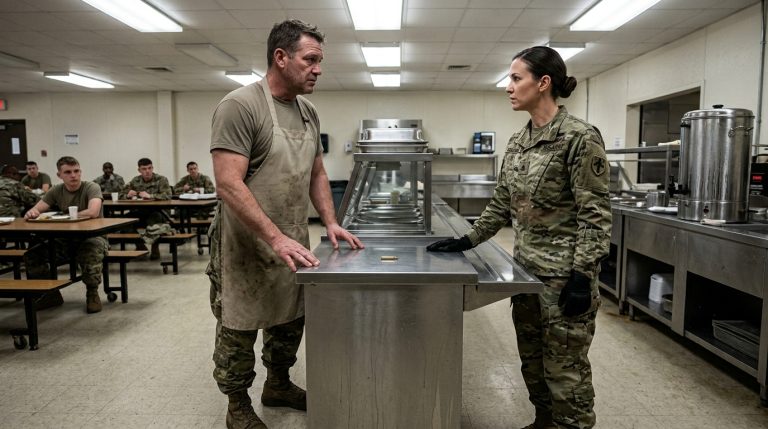
She walked toward the commissary, the weight of the day pressing into her bones. She wasn’t Spectre, or a lead pilot, or a threat to the hierarchy. She was just Amelia, and for the first time in years, that was enough. She walked into the quiet, faded light of the hallway, a sense of peace settling over her like a warm blanket. She had defended the standard, and in doing so, she had finally begun to repair the frayed edges of her own soul. The mission was complete, the truth was out, and the quiet, steady rhythm of her own life was finally, mercifully, returning.