Rusted Nails and Broken Rules: How a Retired Civil Engineer Defended His Slice of Silver Lake
CHAPTER 1: THE FIRST CITATION
The cedar planks smelled like fresh sap and summer.
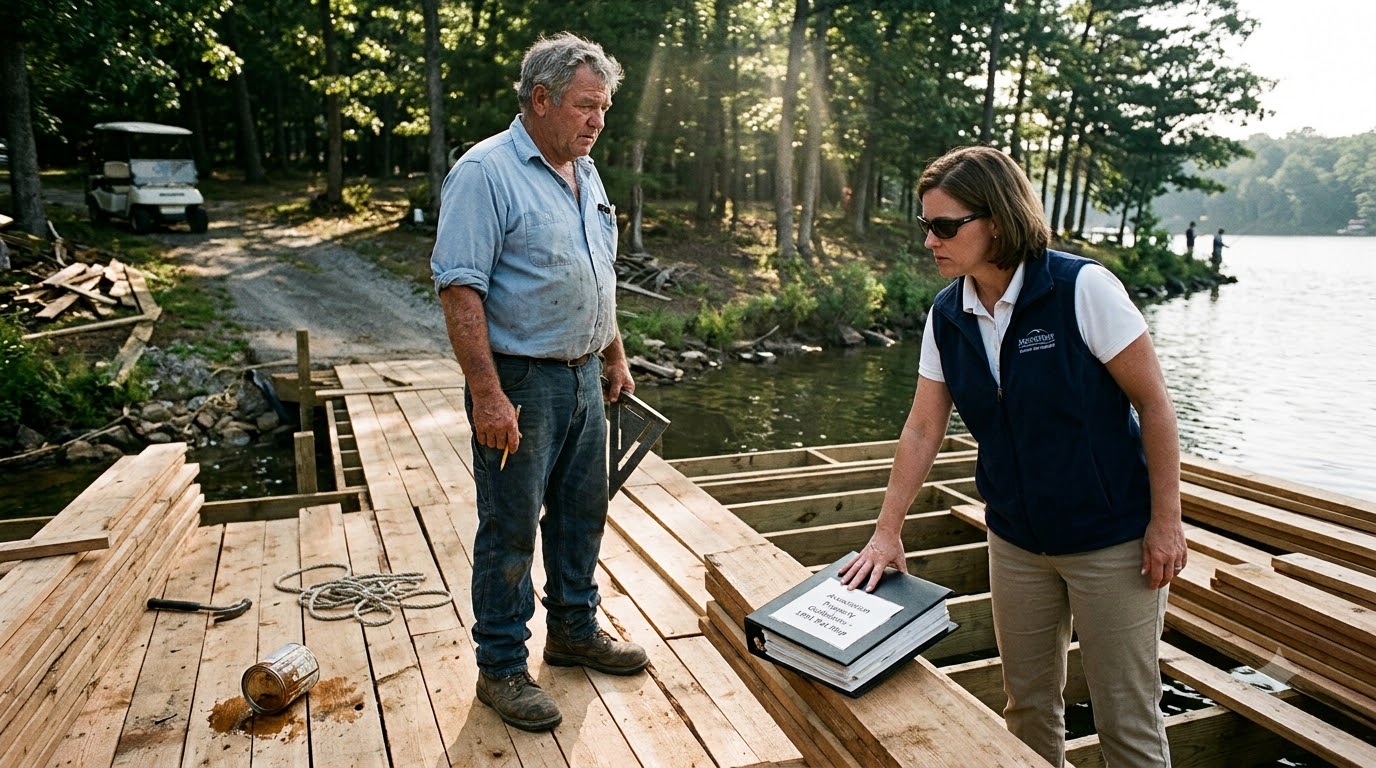
Arthur wiped a bead of sweat from his forehead with the back of a calloused thumb, adjusting the steel carpenter’s square in his grip. After four decades of staring at concrete blueprints and traffic calculations, the simple geometry of a lakeside dock was supposed to be the reward.
Then came the harsh crunch of golf cart tires on loose gravel.
A white cart with a blinking yellow strobe bolted to the roof rolled right up to the edge of the property line. Karen Carter didn’t offer a wave or a polite nod. She sat upright in her navy vest, sunglasses perched high on her nose, holding a thick three-ring binder like a weapon.
“Welcome to the Silver Lake Community Association,” Karen said, her voice clipped and devoid of warmth. “Annual dues are six hundred dollars, and those landscaping planks are out of compliance.”
Arthur didn’t drop his hammer.
He looked past her, noting the worn tread of the tires and the grease smeared on the cart’s plastic fender—signs of a machine driven hard across every private inch of the cove. He thought of the realtor’s map, clear and blue, proving they sat entirely outside any valid jurisdiction.
“We checked the county plat before we laid a single board, Karen,” Arthur said, his voice flat and steady, worn down by years of dealing with municipal red tape rather than scared of it. “We aren’t in your association.”
Karen dropped the thick binder onto his freshly hammered deck boards with a heavy thud.
“Everyone around here plays by my rules,” she snapped, tapping a manicured fingernail against the cover before spinning the cart around in a sharp, gravel-spitting arc.
Arthur picked up the binder.
The pages inside smelled faintly of stale office coffee and petty authority. He tossed it onto the porch table, refusing to let an unearned piece of plastic disrupt the morning tide.
CHAPTER 2: PILES OF PAPERWORK
The county records office smelled like old glue and damp concrete.
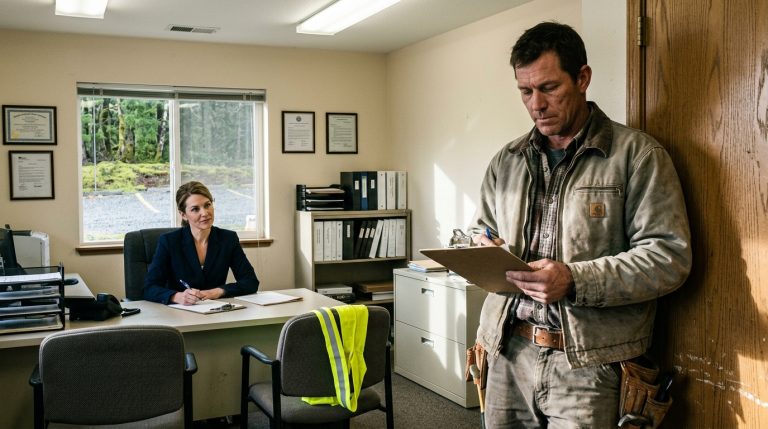
Arthur slid a heavy cardboard box across the stainless steel counter, his thumb tracing the worn edge of a 1991 plat map. His eyes strained against the harsh fluorescent glare as he flipped through the corporate filing histories for Silver Lake.
“Look right here, Dad,” Emily said, her finger tapping a highlighted line of digital text on a public terminal. “The state filings didn’t just stall. They flatlined eighteen months ago.”
Arthur adjusted his wire-rimmed glasses.
The corporate charter for the Silver Lake Community Association had been administratively dissolved for non-payment of state fees and failure to file annual reports. On paper, the governing board did not exist, yet the white golf cart continued to roam the gravel roads collecting unauthorized cash.
“A phantom operation,” Arthur muttered, leaning back against the cold counter. “Collecting dues for a corporation that was legally dead before we even bought the lot.”
He pulled a scarred steel carpenter’s square from his coat pocket, running his thumb over its right-angled edge. It was an old habit whenever a blueprint failed to match the physical terrain.
“She’s been running a ghost ship,” Emily said, her voice dropping into a quiet, analytical register. “Every fine, every fee, every mandatory assessment—it’s all completely outside the law.”
A sudden clang echoed from the hallway as a heavy metal door swung shut in the records office, jarring the silence. Arthur didn’t flinch, but his grip on the steel square tightened.
“We need the financial ledgers,” Arthur said, sliding the box of papers back into his canvas bag. “If there’s no active corporation, where did all those six-hundred-dollar checks actually go?”
CHAPTER 3: THE CERTIFIED LETTERS
The kitchen table was buried under stacks of white envelopes and blue return receipts.
Arthur licked his thumb, pressing another postage stamp onto a envelope addressed to Gerald down the lane, feeling the dry adhesive catch against his calloused skin. It was steady, methodical work that demanded absolute precision.
“Every single lot owner on the cove gets one,” Arthur said, sliding the stack into a canvas carrier. “No exceptions, no hidden bypasses.”
Emily leaned against the doorframe, arms crossed, watching the rows of paperwork with a tight expression.
“They won’t like seeing corporate dissolution papers in their mailboxes, Dad,” she warned, shifting her weight. “Karen’s grip relies entirely on people not looking past the title.”
“That’s why we’re putting the facts right in front of them,” Arthur replied, picking up his steel carpenter’s square and sliding it into his tool pocket. “Truth doesn’t need a flashing yellow strobe light to make noise.”
They walked out to the mailbox together just as the afternoon wind whipped across the gray water of the cove.
The flag went up with a sharp metallic click, signaling the dispatch of forty certified letters that would soon shatter the quiet surface of the neighborhood.
CHAPTER 4: THE STROBE LIGHT STARE
The engine of the golf cart remained cut, but the people inside didn’t move.
Karen sat upright in her navy vest, a clipboard resting flat against her knees, tracking every motion inside the kitchen window with cold, unblinking focus. Beside her, Ray sat slumped in the passenger seat, his heavy frame filling the cart, his gaze locked directly onto the freshly nailed cedar planks of the dock.
Arthur didn’t look away from the window.
He gripped his steel carpenter’s square, feeling the sharp, unyielding edge bite into his palm as the sheer weight of their surveillance pressed against the glass.
“They’re staking out the perimeter again,” Arthur said, his voice low and level as Emily walked into the room drying her hair with a towel.
“Let them look,” Emily replied, stepping up to the glass with steady posture. “Every hour they spend parked on public asphalt is an hour their phantom corporation unravels further.”
The golf cart lurched forward, tires crunching aggressively over the gravel border before stopping right where the grass met the driveway dirt.
Karen raised a pen, jabbing it toward the ground as if writing down a fresh infraction before lifting her sunglasses to glare directly through the glass.
Arthur kept his hand steady on the steel square, refusing to yield an inch of ground to the intimidation.
CHAPTER 5: THE BARREL ON THE DRIVEWAY
The afternoon sun hit the chrome plating of the pistol with a blinding, sudden glare.
Karen raised both hands, leveling the dark barrel straight toward the porch while her voice cracked across the gravel like a whip.
“You’re trespassing on private community property!”
Arthur froze, his boots planted on the warm cedar planks, feeling the cold air drop sharply down his spine.
“Karen, what on earth are you doing?” Arthur demanded, his voice thick with the exasperation of a man dealing with an absolute child wielding a dangerous toy.
Karen barked an order for him to stay back, her face twisted in absolute rage as her fingers tightened around the grip.
“Stay out of this, civil engineer!”
Emily didn’t flinch.
She stood ten feet away, barefoot on the gray asphalt, her hands raised with palms out in absolute calm as her voice cut through the heavy silence of the cove.
“Ma’am, my name is Emily Reed,” she said, steady and low, carrying the undeniable weight of county authority. “You are committing aggravated assault with a deadly weapon. Drop it now.”
Karen’s breath hitched, her hands beginning to shake violently as the reality of the uniform-less threat collided with cold legal terminology.
A sharp mechanical click echoed from down the road as patrol car sirens flared into life, closing the distance fast.
Karen’s grip slipped, and the pistol hit the asphalt with a heavy, hollow clatter.
CHAPTER 6: REBUILDING THE DOCK
The deputies led her toward the cruiser while she spat frantic denials, screaming about her property rights and demanding they arrest everyone else on the cove.
Arthur didn’t say a word.
He stood on the porch, his hand resting on the smooth wood of the railing, watching the flashing red cruiser lights fade down the gravel road.
The phantom association collapsed under the weight of its own fraud within days.
Neighbors who had hidden behind locked doors for two summers stepped out onto their lawns, trading casseroles and helping clear the brush near the water.
Tom from the hardware store called to organize a transparent, legally registered board with real books and zero hidden fees.
Arthur declined the title of chairman, but he agreed to handle the practical logistics and contracts for the community maintenance.
Peace didn’t arrive as a permanent miracle; it was something that had to be measured, anchored, and defended with plain facts.
Arthur picked up his hammer, dropping down beside the water to drive a fresh nail into the cedar dock.
The morning sun warmed the grain of the wood, and for the first time in twenty-one years of dreaming about this porch, the air smelled entirely like woodsmoke and quiet water.